26,299  PAGES BROWSED TODAY PAGES TODAY 71  ANTIQUES UPLOADED TODAY NEW ARRIVALS
ID #SA1226523
FOR SALE
£3,000
Email
Save
Johannes Lingelbach Return from the Hunt
Darnley Fine Art
for sale €3,510     $3,810
£3,000

Darnley Fine Art

Sellingantiques Verified Since Jul 2026
View Dealers Stock Page
Id #SA1226523
PDF SHARE
SAVE

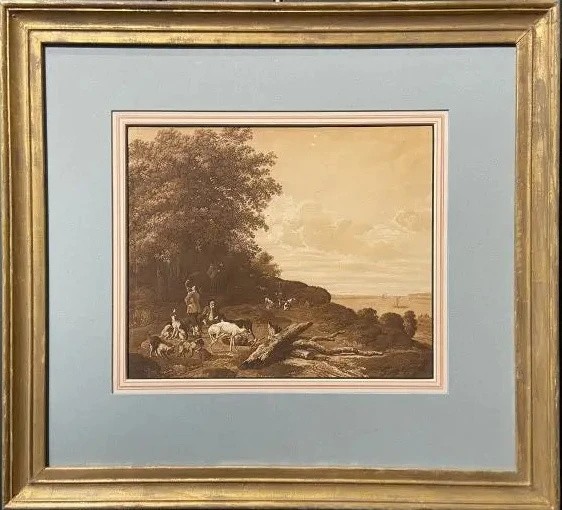
Johannes Lingelbach Return from the Hunt

17th century
For Sale by Darnley Fine Art
Description

Pen and ink, brown wash, heightened with white bodycolour

Image size: 9 x 10 1/2 inches (22.75 x 26.75 cm)

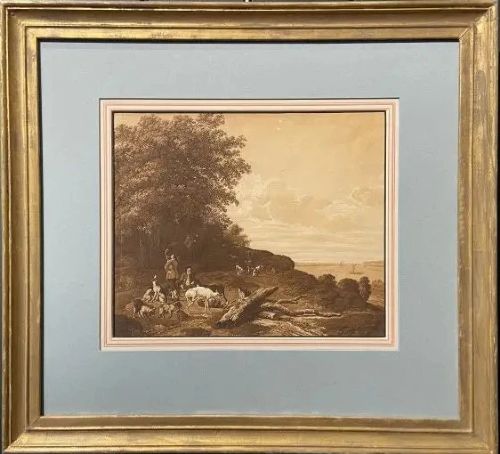
Mounted with handmade gilt frame

Lingelbach presents a scene from the end of a hunting trip and we can see that a group of dogs have already returned and surround their keepers. One man holds a horn to his lips and uses the instrument to summon the others, animals and huntsmen alike, to join them. Lingelbach has also used this narrative to display his considerable skill at depicting the details of an exposed countryside, taking great care to render each individual leaf, gnarled trunk of wood and weather-beaten patch of heather.
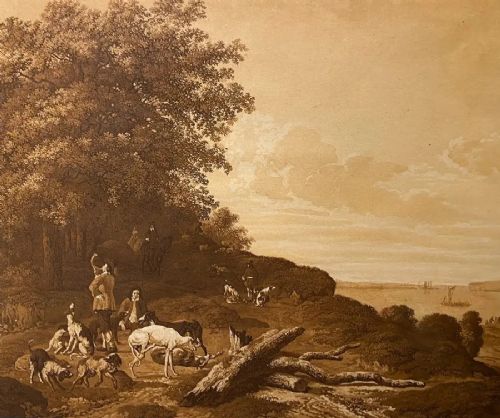
As with this piece, Lingelbach’s settings evoke a feeling of space and distance, as if they were being remembered. In common seventeenth-century Flemish and Dutch practice, he was called on to enliven other artists’ landscapes by painting in the staffage, the figures and animals that animate the scene. Meindert Hobbema regularly hired Lingelbach to populate his landscapes.

Johannes Lingelbach

Lingelbach was a German born painter, who was an influential artist from the second generation of the Bambocciate painters. The Bamboccianti were Dutch genre painters who visited Rome in the 17th Century and captured the city’s bustling piazzas and ports. The term Bamboccianti comes from the Italian word for “puppet”, which describes the puppet-like figures of the Dutch painter Pieter van Laer (1599 – 1642), called Il Bamboccio; the name also references a physical deformity Laer had.

Lingelbach followed Laer’s style in Roman genre works, bringing his own Italianate style into influence of Northern European painters. He is one of the few Dutch painters of the Bamboccianti, whose works are documented in depth, making his influence greater in the progression of the style, (Grove Dictionary of Art). Some of his works in Rome were once attributed to Pieter van Laer, but are now rightfully claimed to be Lingelbach’s, such as his, Roman Street Scene with Card Players, (National Gallery, London). These works show the Italian influence of Caravaggio (1571 – 1610) in their realism and refined chiaroscuro effect (Enchanting the Eye, by Christopher Lloyd). This is also seen in his work, A mounteback and other figures before a locanda with a capriccio view of the Piazza del Popolo, Rome, (Royal Collection, London).

As a youth Lingelbach was raised in Amsterdam and settled there after traveling to Italy and France. After returning to Amsterdam from Italy, around 1653, his work began to show an influence from Philips Wouwermans’ landscapes. His skill in painting genre figures is no less accomplished in his depictions of architectural and natural objects. He was often invited to paint the figures and animals within other artists landscape pieces, such as the Dutch master landscape painter, Meindert Hobbema (1638 – 1709) (Getty Center, Los Angeles). His study of architectural forms came from observing the paintings of another Bamboccianti, Viviano Codazzi, an Architectural Vedutisti, or view painter.

Physical Dimensions
Height
22.75cm (8.96")
Width
26.75cm (10.53")
Declaration

Darnley Fine Art has dated this Framed Antique Hunting Print to the 17th Century.

Reference Numbers
Sellingantiques Reference
SA1226523
Description
Pen and ink, brown wash, heightened with white bodycolour

Image size: 9 x 10 1/2 inches (22.75 x 26.75 cm)

Mounted with handmade gilt frame

Lingelbach presents a scene from the end of a hunting trip and we can see that a group of dogs have already returned and surround their keepers.
Darnley Fine Art

One man holds a horn to his lips and uses the instrument to summon the others, animals and huntsmen alike, to join them. Lingelbach has also used this narrative to display his considerable skill at depicting the details of an exposed countryside, taking great care to render each individual leaf, gnarled trunk of wood and weather-beaten patch of heather.

fig 1. A sepia-toned antique print depicting figures and hunting hounds in a rural landscape, set inside a grey-blue mount and a gilded wooden frame.
fig 1. Johannes Lingelbach Return from the Hunt

As with this piece, Lingelbach’s settings evoke a feeling of space and distance, as if they were being remembered. In common seventeenth-century Flemish and Dutch practice, he was called on to enliven other artists’ landscapes by painting in the staffage, the figures and animals that animate the scene. Meindert Hobbema regularly hired Lingelbach to populate his landscapes.

Johannes Lingelbach

Lingelbach was a German born painter, who was an influential artist from the second generation of the Bambocciate painters. The Bamboccianti were Dutch genre painters who visited Rome in the 17th Century and captured the city’s bustling piazzas and ports. The term Bamboccianti comes from the Italian word for “puppet”, which describes the puppet-like figures of the Dutch painter Pieter van Laer (1599 – 1642), called Il Bamboccio; the name also references a physical deformity Laer had.

Lingelbach followed Laer’s style in Roman genre works, bringing his own Italianate style into influence of Northern European painters. He is one of the few Dutch painters of the Bamboccianti, whose works are documented in depth, making his influence greater in the progression of the style, (Grove Dictionary of Art). Some of his works in Rome were once attributed to Pieter van Laer, but are now rightfully claimed to be Lingelbach’s, such as his, Roman Street Scene with Card Players, (National Gallery, London). These works show the Italian influence of Caravaggio (1571 – 1610) in their realism and refined chiaroscuro effect (Enchanting the Eye, by Christopher Lloyd). This is also seen in his work, A mounteback and other figures before a locanda with a capriccio view of the Piazza del Popolo, Rome, (Royal Collection, London).

As a youth Lingelbach was raised in Amsterdam and settled there after traveling to Italy and France. After returning to Amsterdam from Italy, around 1653, his work began to show an influence from Philips Wouwermans’ landscapes. His skill in painting genre figures is no less accomplished in his depictions of architectural and natural objects. He was often invited to paint the figures and animals within other artists landscape pieces, such as the Dutch master landscape painter, Meindert Hobbema (1638 – 1709) (Getty Center, Los Angeles). His study of architectural forms came from observing the paintings of another Bamboccianti, Viviano Codazzi, an Architectural Vedutisti, or view painter.

Height
22.75cm (8.96")
Width
26.75cm (10.53")
Date of Manufacture

Darnley Fine Art has dated this Framed Antique Hunting Print to the 17th Century.

Reference Numbers
Sellingantiques Ref
SA1226523
Darnley Fine Art
Sellingantiques verified Since Jul 2026
Dealer Profile

You can view the stock and full dealer information on the Darnley Fine Art Profile Page
PDF SHARE
SAVE
A sepia-toned antique print depicting figures and hunting hounds in a rural landscape, set inside a grey-blue mount and a gilded wooden frame.
1 / 2
Archive I A sepia-toned antique print depicting figures and hunting hounds in a rural landscape, set inside a grey-blue mount and a gilded wooden frame.

Johannes Lingelbach Return from the Hunt
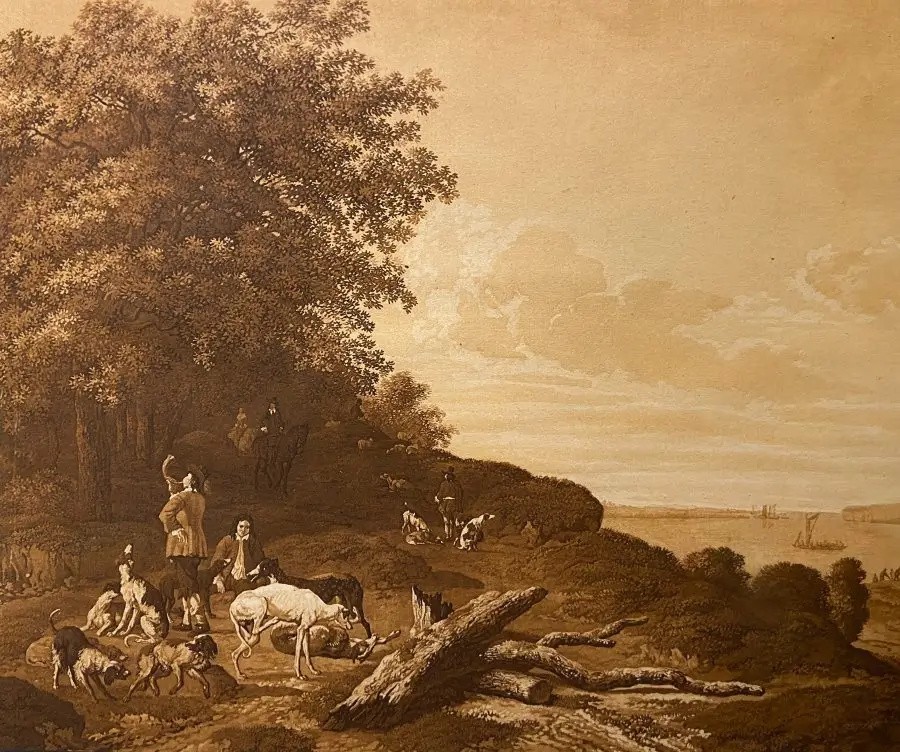
Archive II A sepia-toned antique print depicting figures and hunting hounds in a rural landscape, set inside a grey-blue mount and a gilded wooden frame. View II
FURTHER BROWSING

Visitors also looked at these ⇣

Enlarged Archival View
Telephone 0207 379 0499
Location
2-4 Cecil Court
London
WC2N 4HE
United Kingdom

Opening Times
Monday to Saturday: 10:30 - 5:30
(excluding Bank Holidays)
Dealer Profile Page sellingantiques.co.uk/dfa
Verified Since Jul 2026
Items For Sale 76
Darnley Fine Art
Verified Since Jul 2026
View Dealer Info
Location: 2-4 Cecil Court, London, WC2N 4HE, United Kingdom, , Opening Times, Monday to Saturday: 10:30 - 5:30, (excluding Bank Holidays)
Verified
Jul 2026
For Sale
76
A sepia-toned antique print depicting figures and hunting hounds in a rural landscape, set inside a grey-blue mount and a gilded wooden frame.
Johannes Lingelbach Return from the Hunt
Ref: SA1226523
A sepia-toned antique print depicting figures and hunting hounds in a rural landscape, set inside a grey-blue mount and a gilded wooden frame.
Detail View 1
Archival Detail
Every single antique dealer on our platform is individually approved by our internal team. We verify their professional trade history, ethical standards, and photographic quality to ensure a secure, high-standard buying environment. Upon joining, every dealer agrees to a strict 9-point code of conduct. While issues can occasionally arise, our dealers typically resolve them swiftly and directly with the buyer. In fact, since our founding in 2002, Sellingantiques has only had to step in to help resolve an issue on roughly five occasions—a true testament to the quality of our dealers and their dedication to your happiness.
Our dealers are highly experienced in packing and shipping fragile, high-value antiques. Because you are in direct contact with the dealer, you will be able to easily go through all available shipping and insurance options together to ensure your item arrives safely.
Antiques are the ultimate green purchase. By choosing historical pieces over newly manufactured goods, you completely eliminate the carbon footprint of modern mass production while preserving exceptional, timeless craftsmanship.

During the seventeenth century, Dutch artists frequently depicted scenes of country pursuits, equestrian subjects, and working hounds resting within expansive, naturalistic landscapes.

Historical prints from this period were created using copperplate etching or engraving techniques, printed with earth-toned ink onto heavy rag paper.

Authentic prints feature plate impressions along the image border, hand-engraved line work, and period-appropriate laid paper displaying watermark or chain line impressions under light.

Classical prints can be styled as focal artwork above a contemporary sideboard or grouped with complementary framed drawings on a gallery wall to introduce historical contrast.

Paper artwork requires acid-free mounting boards and UV-filtering glass, positioned away from direct sunlight, excess moisture, and fluctuating temperature levels.
items
Add keywords to the filter
Price
£100
£250000
Era
Movements
Material
Origin
Stock Location
Freshness
Online Payments
Categories