


Dutch Landscape Art
Dutch landscape art captures the distinct character of northern waterways, rural tracks and winter canals through centuries of painted observation.
Dutch Landscape Art
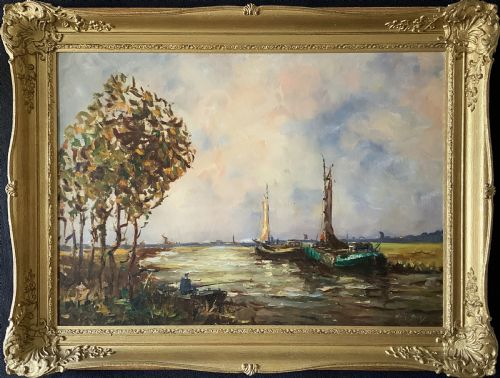
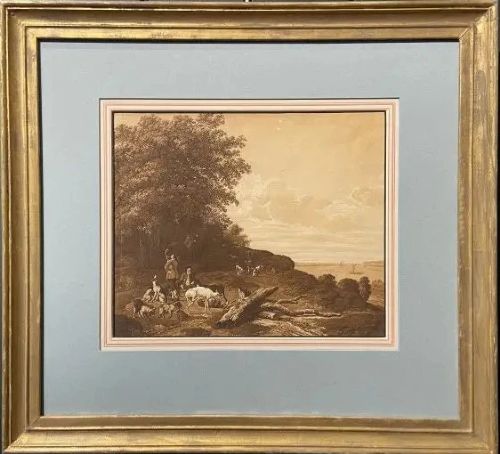
Dutch landscape art encompasses oil paintings and watercolours depicting the traditional scenery, coastlines and waterways associated with the Netherlands and the broader Dutch School tradition.
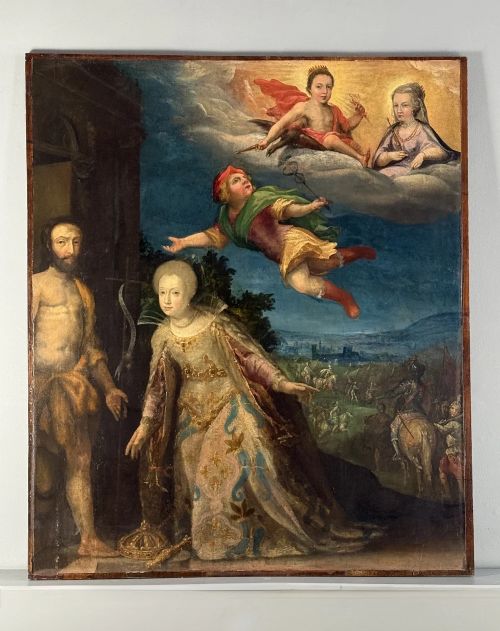
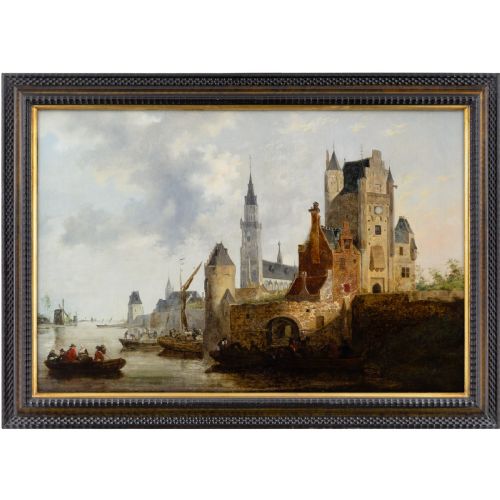
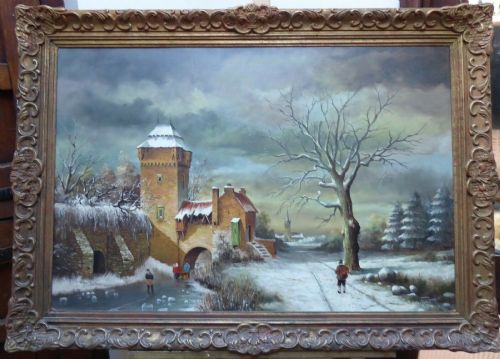
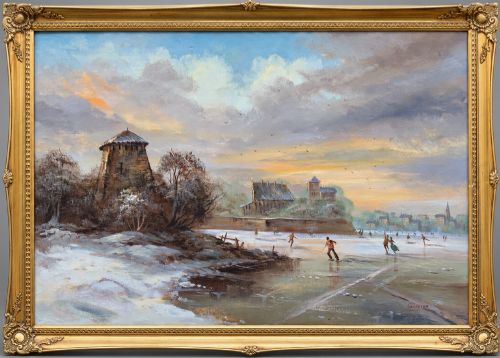
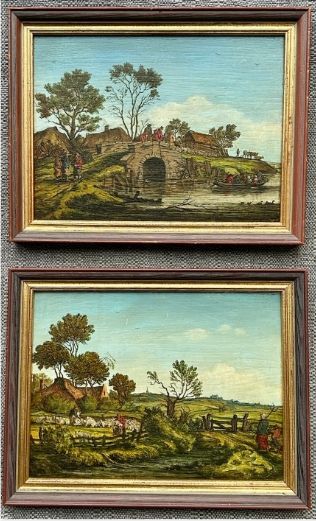
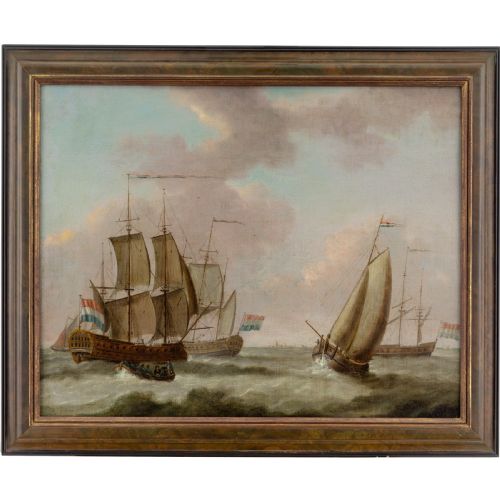
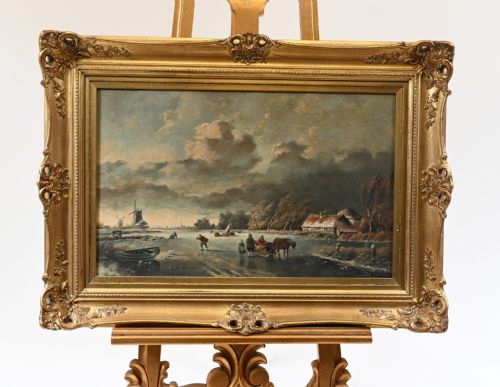
The selections span from the 17th century through the 18th, 19th and mid-20th centuries, recording changing interpretations of rural tracks, winter ice skaters and coastal shipping.
Works appear in various formats including oil on canvas, wood panels, paper and gouache, reflecting the evolving methods of painters over successive periods.
Materials and construction
Painters applied oil paint to stretched canvas, prepared wood panels and paper supports, occasionally utilising gesso grounds to prime the surface before detailing.
Gouache on paper appears alongside traditional oil compositions, while finished works frequently retain period framing finished in gilt.
Dutch Landscape Art Retail Price Guide 2026
Typical asking prices for dutch landscape art among the pieces listed under this phrase on Sellingantiques today, from the lower quarter to the upper quarter. They describe what is for sale here now, not the wider market.
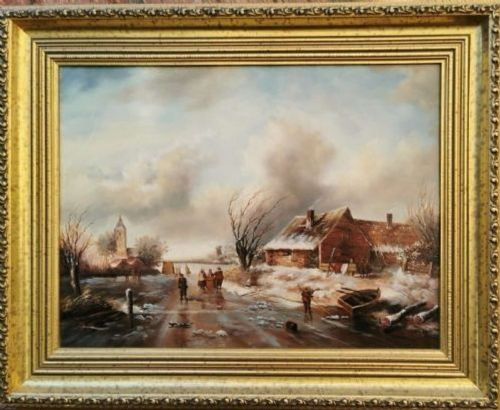
Several winter scenes capture children and skaters braving frozen Dutch canals, proving that past generations enjoyed a slippery slide just as much.
Judging the work
Quality rests in the handling of light, atmospheric depth and the precise rendering of atmospheric conditions such as winter skies or rolling seas.
Confidence of brushwork and the fidelity of architectural and maritime details distinguish accomplished compositions from more formulaic productions.
Karel Dujardin·Barent Gael·Nicolaas Martinus Wijdoogen·Hendrik Willem Schweickhardt·Johannes Lingelbach·Willem Bos·Pieter Cornelis Dommersen·Cornelis Van Poelenburgh·Thomas Bush Hardy·Adrian Van Porten·Cornelis Christian Dommersen·Willem Anton Alexander Knip·Johannes Philippus Galjaard·Abraham Hulk Snr·James de Rijk
The Dutch Landscape Art Glossary
- Dutch School
- A collective term for artists born or working in the Netherlands, sharing regional techniques and subject matter.
- Oil on Canvas
- Pigment mixed with drying oil applied to woven fabric stretched across a wooden frame.
- Wood Panel
- A rigid wooden support used by painters, frequently employed in earlier European traditions before canvas became dominant.
- Gilt
- A thin layer of gold leaf applied to picture frames and decorative wooden surfaces.
- Gouache
- An opaque water-based medium utilising pigment bound in water-soluble gum.
Dutch Landscape Art: Frequently Asked Questions
What subjects appear most often in Dutch landscape art?
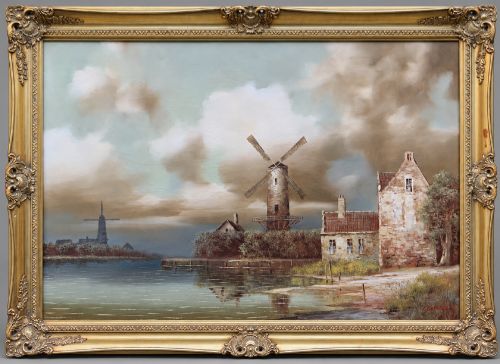
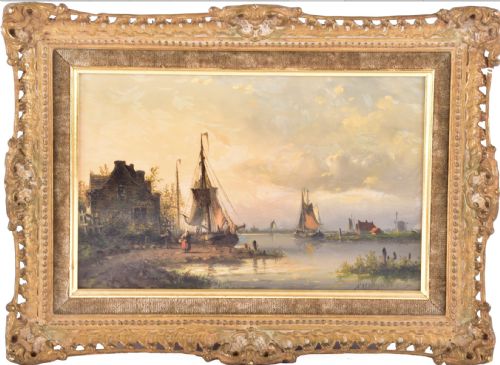
The selections frequently feature frozen canals with ice skaters, windmills near rivers, and maritime scenes with shipping off the coast.
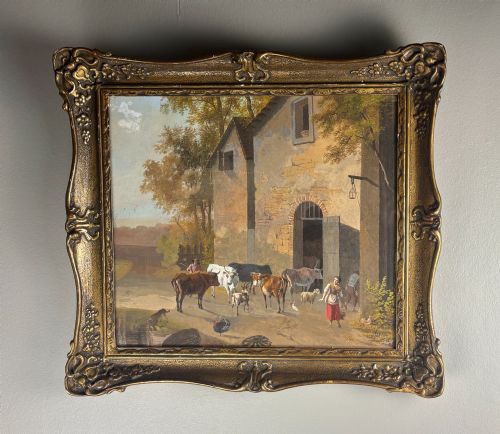
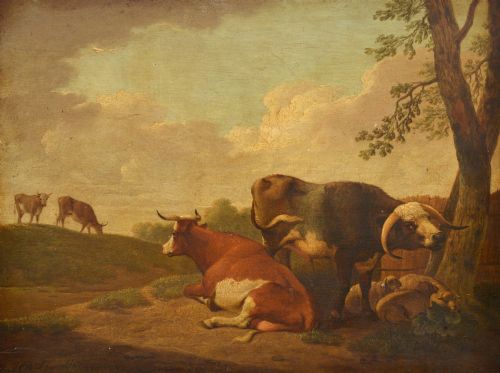
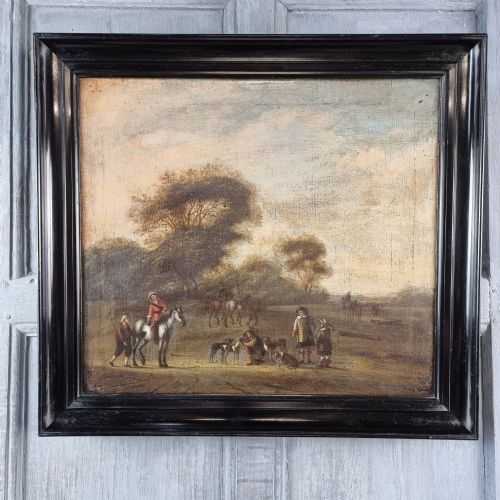
Rural tracks with figures, cattle grazing in pastures, and townscapes also recur across different centuries.
How do I identify the period of a painting?
Periods are often indicated by the framing materials, the preparation of the canvas or wood panel, and the stylistic convention of the brushwork.
Early works from the 17th century differ markedly in palette and composition from 19th-century realism or mid-century impressionism.
Are these works painted on canvas or wood?
Artists utilised both canvases stretched over frames and rigid wood panels depending on the period and the preference of the workshop.
Works on paper and gouache also appear among the selections alongside traditional oil paintings.
How should I care for an antique oil painting?
Keep paintings away from direct sunlight and steady humidity levels to protect the oil paint and canvas or wood support from warping.
Dust surfaces gently with a soft, dry brush without applying liquid cleaners or chemical solutions.