


Brown Wood Wall Art
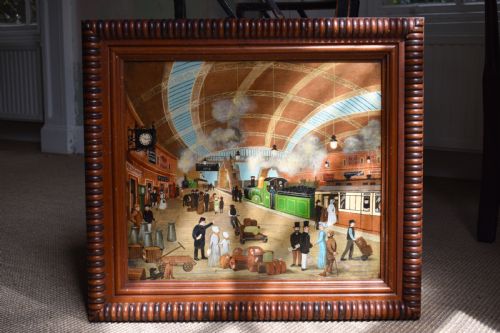
Brown wood wall art brings together centuries of framed oils, carved panels and mirrors set within warm timber.
Brown Wood Wall Art
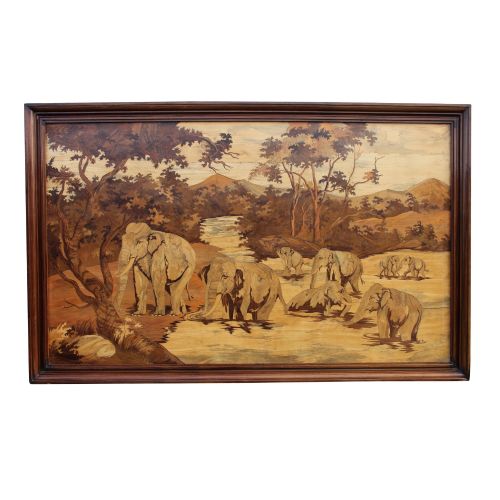
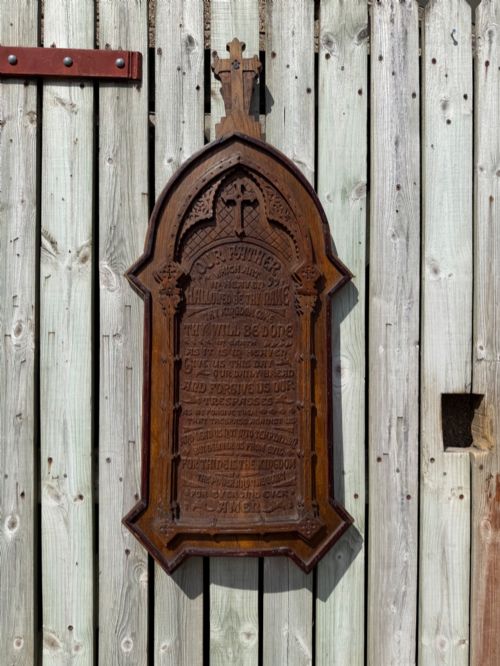
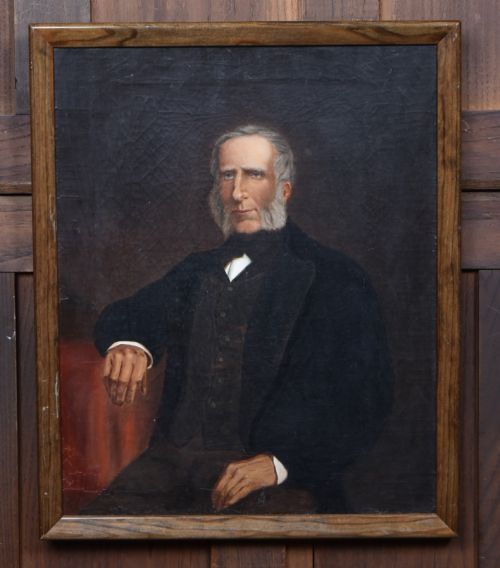
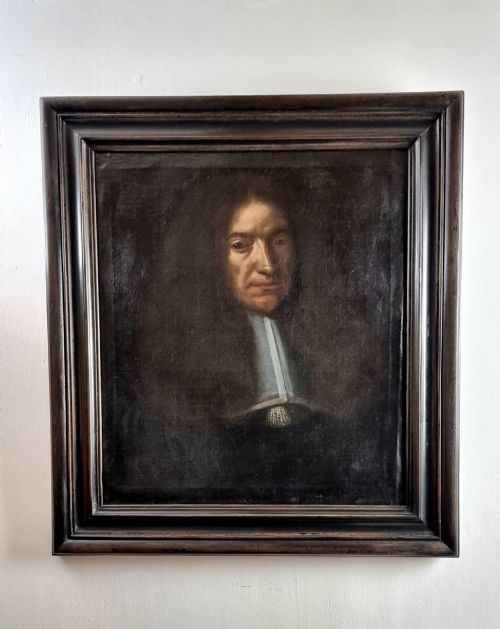
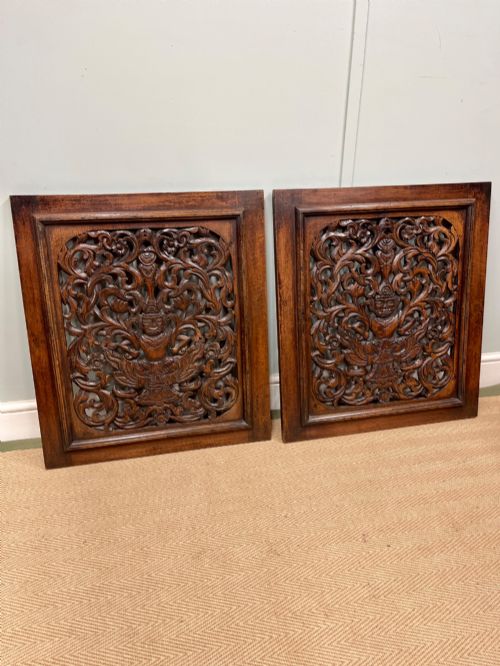
When you search for brown wood wall art, you encounter oil paintings on wooden panels, carved architectural fragments, framed prints, and wooden wall cabinets spanning the seventeenth to the twentieth centuries. The selection ranges from early oil paintings on wood boards and framed engravings to folk art carvings and heavy oak mirrors.
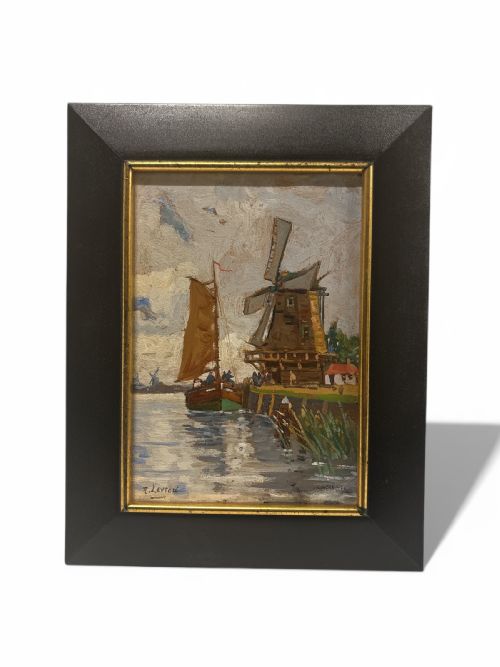
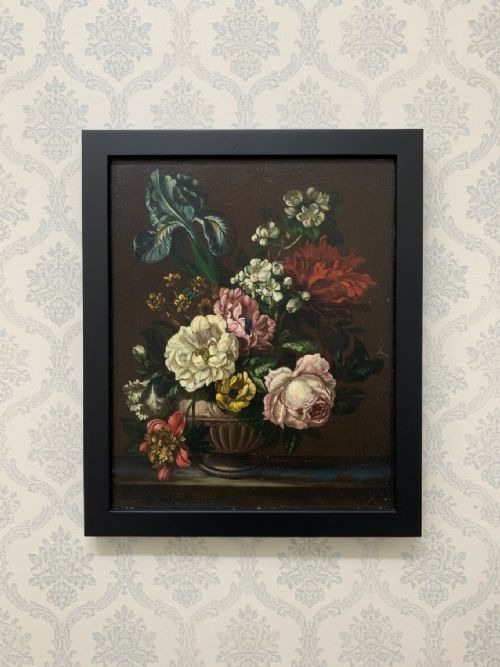
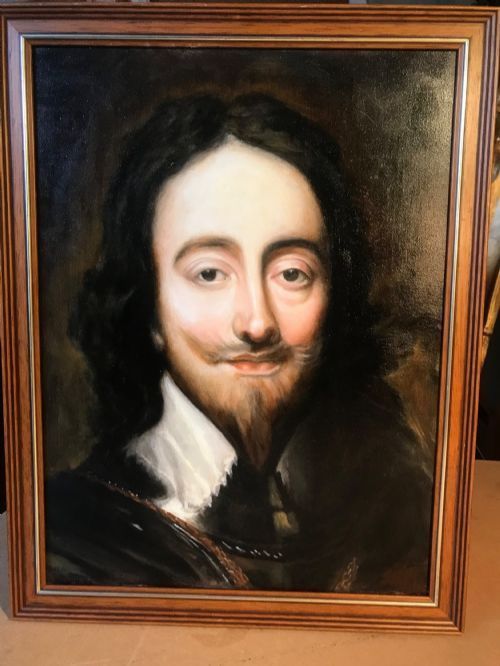
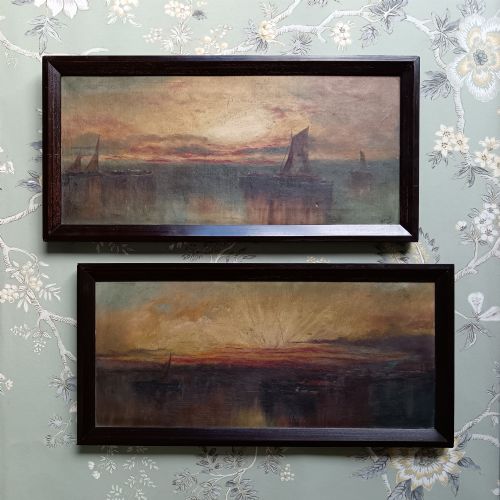
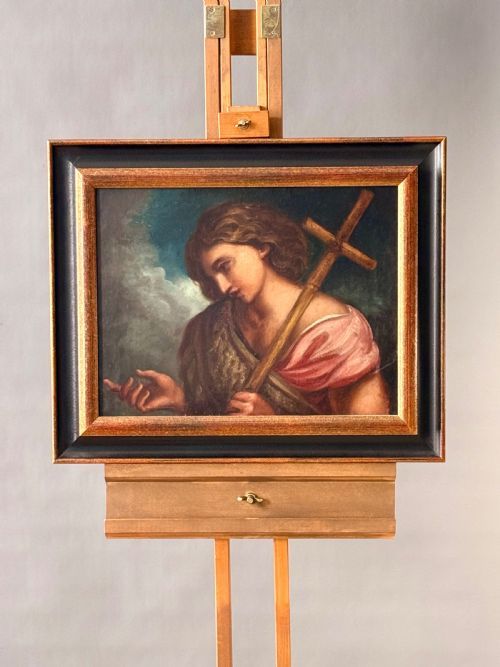
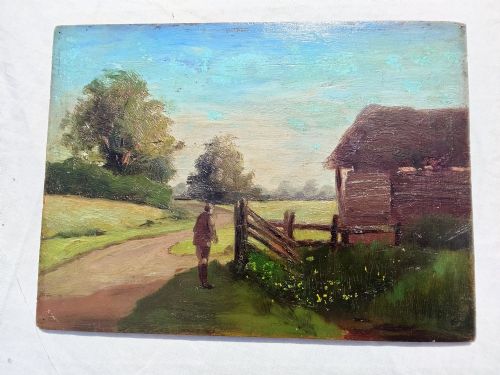
The most common pieces on this page are nineteenth-century oil paintings on board or panel, alongside framed prints and carved wooden panels originating from British, French, and Dutch schools. These objects rely on visible timber frames or wooden supports to present portraits, landscapes, and maritime scenes.
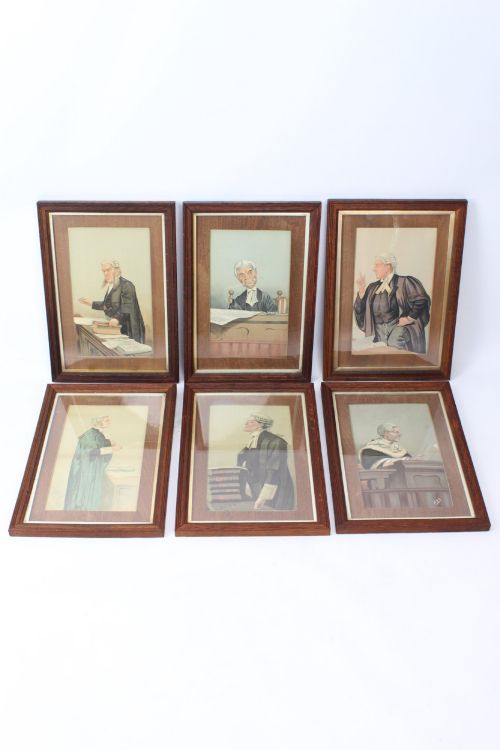
Period pieces such as Edwardian portraits, Georgian basso-rilievo pictures, and Victorian horse racing prints sit alongside earlier seventeenth-century carved panels and Spanish wooden crosses. Each item uses its wooden element as an integral part of the display, whether as a direct painting support or a substantial frame.
Materials and construction methods
The physical build relies heavily on timber, with oak, walnut, chestnut, and cork employed for panels, frames, cabinets, and tramp art mirrors. Makers select these woods for grain and stability, often shaping them into heavy rectangular borders or carved decorative reliefs.
Paint is applied directly to prepared wood panels, canvas, or board using oil, oil paint, pen, ink, wash, and gouache. Many framed works pair these painted or printed surfaces with original wooden mouldings and glass protection.
Carving and relief techniques appear in three-dimensional panels, deer heads, and cupboards, where artisans shape the timber by hand using gouges and chisels. Engravings and prints use paper secured inside timber frames, sometimes backed by original boards.
A nineteenth-century wool work tiger stares out with glass bead eyes, bringing unexpected fauna into the timber-framed lineup.
Distinctions in execution and condition
Quality rests upon the skill of the brushwork, the depth and precision of the wood carving, and the integrity of the original framing. Fine oil panels show controlled pigment application and distinct draftsmanship, whereas simpler decorative prints rely on the appeal of the subject matter.
The relationship between the artwork and its housing matters significantly, as pieces retaining their original period frames or carved wooden enclosures command greater attention from collectors. Altered panels, replaced mouldings, or heavy overpainting change the character of an object.
Material selection dictates longevity and visual weight, with dense hardwoods like oak and walnut holding crisp carved details better than softer woods. The crispness of a relief carving or the subtlety of a chiaroscuro oil painting separates standard decorative items from works of notable artistic merit.
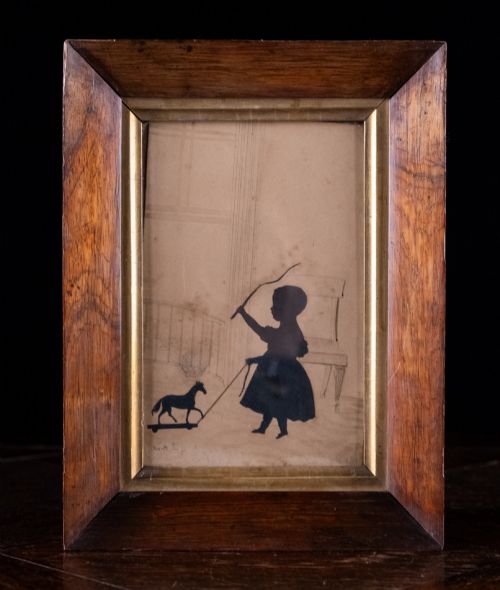
Tom Campbell·Samuel Dixon·Thomas Creswick·TB Hardy·Augustin Edouart
The Brown Wood Wall Art Glossary
- Oil on panel
- A painting executed directly onto a wooden board rather than canvas. This solid support often dates the work securely through the growth rings of the timber.
- Chiaroscuro
- A technique employing strong contrasts between light and dark to give a volumetric sense of three-dimensional form. It appears frequently in seventeenth-century and nineteenth-century tavern or portrait scenes.
- Tramp art
- A decorative style where items are fashioned from material scraps, such as cigar box wood, using pocket knives and notch-carving techniques. Cork tramp art mirrors demonstrate this intricate layering.
- Basso-rilievo
- A sculptural technique where figures project only slightly from the background plane. Samuel Dixon's pheasant pictures employ this method.
- Chromolithograph
- A colour lithographic printing process used to produce multi-coloured reproductions of art. Nineteenth-century examples like pugs and cats utilise this method to mimic original paintings.
Brown Wood Wall Art: Frequently Asked Questions
How do I identify a panel painting?
Examine the reverse of the artwork to check whether the pigment sits upon a wooden board rather than stretched fabric. Panel paintings often show grain patterns or maker marks on the timber back.
Inspect the edges where the painting meets the frame to see if the rigid wooden support is visible. Wooden panels remain stationary and do not yield when pressed gently.
Are these frames original to the art?
Many pieces retain their period frames, particularly nineteenth-century oils and eighteenth-century engravings housed in matching timber mouldings. Look for signs of age in the wood joinery and backboards.
Some works have been reframed later to suit changing tastes or to protect fragile edges. Examining the fit between the artwork and the rebate helps determine if they have travelled together.
How should I hang a heavy wooden panel?
Heavy carved oak panels, wall cabinets, and large oil paintings require fixings secured directly into wall studs or masonry. Wall art of this weight cannot rely on standard picture wire alone.
Distribute the load using sturdy mirror plates or flush mount brackets attached to the internal wooden frame. Ensure the wall structure supports the dense timber weight safely.
What is the difference between oil on board and canvas?
Oil on board uses a rigid wooden or composition support, resulting in a solid surface that resists punctures. Artists favoured boards for smaller studies and quick plein air sketches.
Canvas relies on a stretched fabric woven from linen or cotton, yielding slightly under pressure. Panel works generally offer a smoother surface texture compared to the weave visible on canvas.