




Classical Female Porcelain Statue
A classical female porcelain statue brings sculpted antiquity into a room, drawing the eye with graceful drapery and modelled form.
Classical Female Porcelain Statue
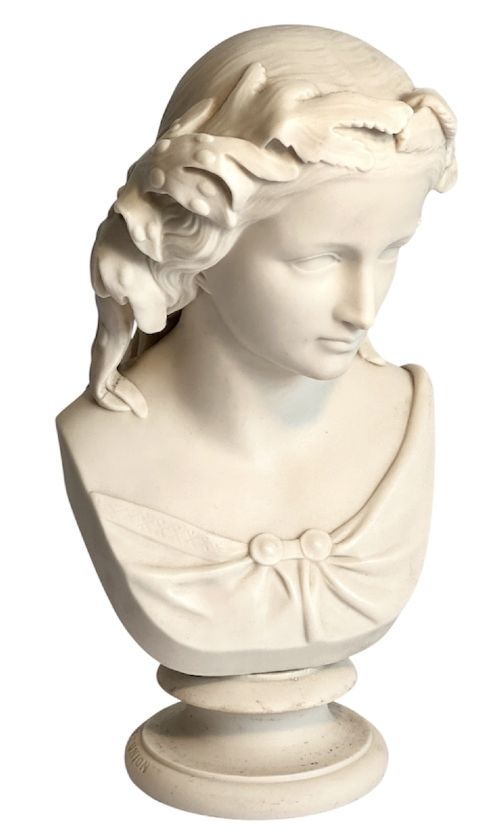
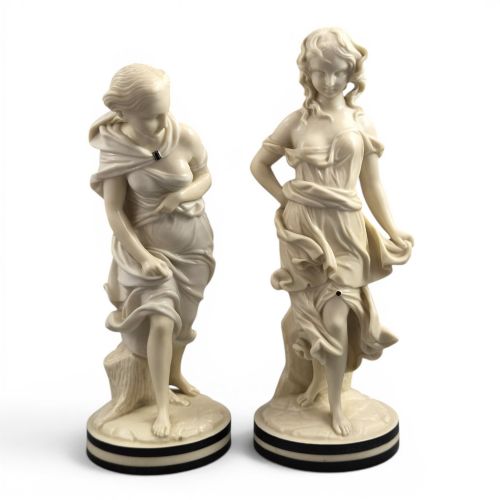
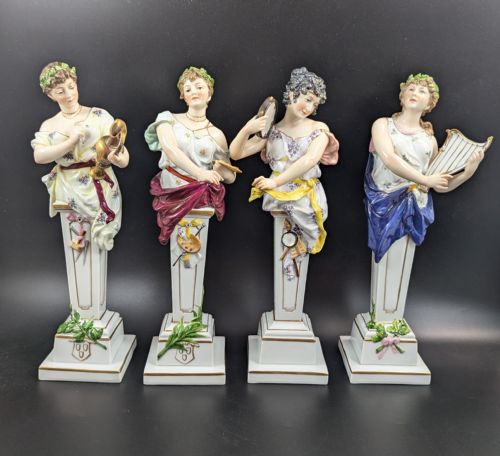
When you search for a classical female porcelain statue, you encounter figurines, busts, and statuettes depicting mythological or historical women. The pieces on this page span the nineteenth century through the early twentieth century, showing influences from Victorian Neoclassical to Art Nouveau styles. Most examples present single female figures holding attributes like doves, cornucopias, baskets of grapes, or jugs.
The common versions meeting this description include parian ware figures, bisque or biscuit porcelain studies, and enamel-decorated porcelain pieces. You will find works from English factories like Royal Worcester and Copeland alongside continental makers from Germany and France. These sculptures range from small mantel ornaments to monumental figures designed for display in period interiors.
Makers often drew inspiration from classical literature, sculpture, and allegory, naming their figures after characters such as Miranda, Virginia, or Clorinda. The resulting objects capture Victorian and Edwardian interpretations of classical antiquity, executed in matte unglazed bodies or brightly painted and gilded surfaces.
Factors that distinguish quality
The choice of ceramic body also determines the character of the piece, with dense parian ware offering a convincing simulation of carved marble compared to chalky, low-fired bodies. Hand-painting and enamel work add a further layer of distinction, where precise brushwork and controlled gilding elevate the artistic merit of the finished sculpture.
Listings feature pieces from the 1850s to the 1930s, utilising parian porcelain, bisque, enamel, and gold leaf across Victorian and Edwardian styles.
Royal Worcester·Copeland·Royal Dux·Volkstedt·Achille Mollica·James Hadley
The Classical Female Porcelain Statue Glossary
- Parian porcelain
- A fine, unglazed white porcelain developed in the nineteenth century to imitate carved marble. It is also known as parian ware.
- Bisque porcelain
- Unglazed ceramic fired once to create a matte, porous surface resembling marble. Biscuit porcelain is an alternative term for the same material.
- Neoclassical
- A style drawing inspiration from the art and culture of classical antiquity. It dominated much of the nineteenth-century production seen here.
- Shot enamel
- A specialised glaze effect used on porcelain that creates an iridescent, shimmering surface when viewed from different angles.
- Cornucopia
- A horn-shaped container overflowing with fruit and flowers, frequently held by classical figures as a symbol of abundance.
Classical Female Porcelain Statue: Frequently Asked Questions
How do I clean a parian figure?
Dust unglazed parian porcelain gently with a soft, dry brush to prevent dirt from settling into the porous surface. Avoid using water or chemical cleaners, which can stain the matte ceramic body.
For stubborn dust, a slightly damp cloth may be used with extreme care on glazed portions, but unglazed areas are best left dry to preserve their original texture.
What is the difference between parian and bisque?
Parian porcelain contains a higher feldspar content designed specifically to vitrify and mimic the weight and sheen of carved white marble. Bisque porcelain is simply standard porcelain left unglazed after its initial firing.
While both share a matte appearance, parian typically feels heavier and exhibits a more convincing stone-like density.
How can I date my porcelain figure?
Examine the base of the piece for impressed factory marks, model numbers, and registry diamonds that indicate the exact year of design or registration. Stylistic clues such as Victorian classical revival or Art Nouveau curves also help narrow down the decade of manufacture.
Comparing the modelling style to known works by makers like Royal Worcester or Copeland provides further chronological context.
Were these figures meant for daily use?
These porcelain figures served purely as decorative ornaments for mantelpieces, sideboards, and drawing-room display cabinets in Victorian and Edwardian homes. They were designed to showcase the owner's cultural interests and appreciation for classical art.
Because of their delicate unglazed surfaces and fragile extremities, they were handled infrequently.