






Classical Bronze Nude Statuette
A classical bronze nude statuette brings the disciplined forms of antiquity into private rooms, offering collectors portable mastery of the human figure.

Classical Bronze Nude Statuette
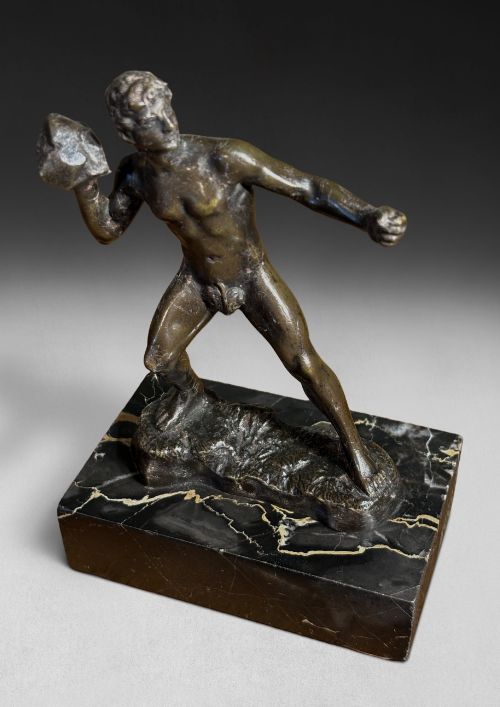
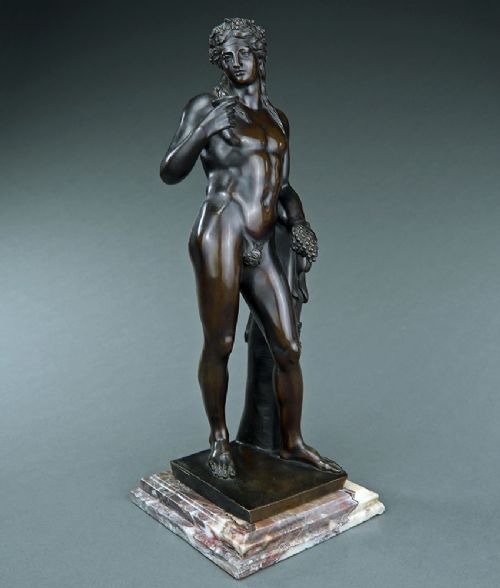
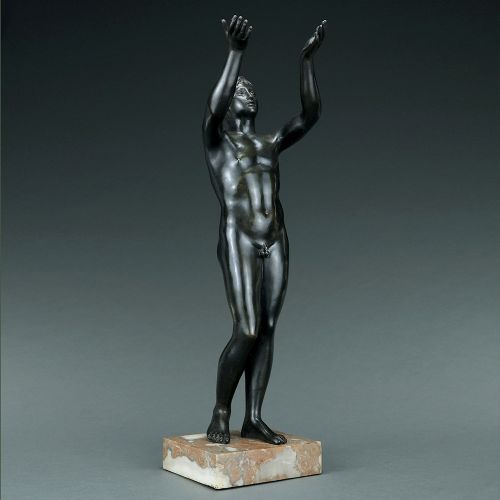
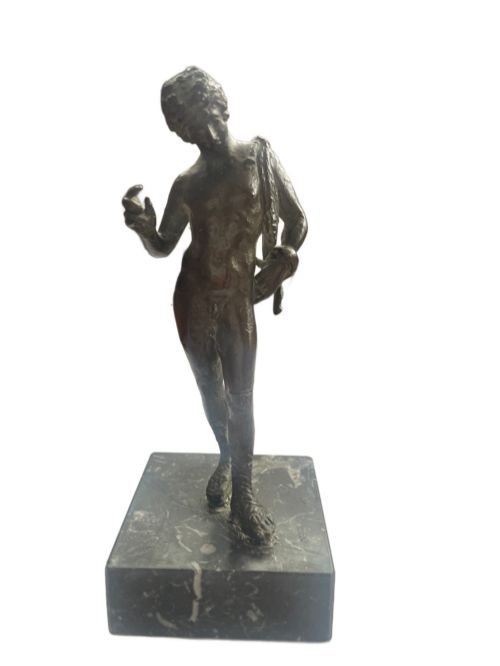
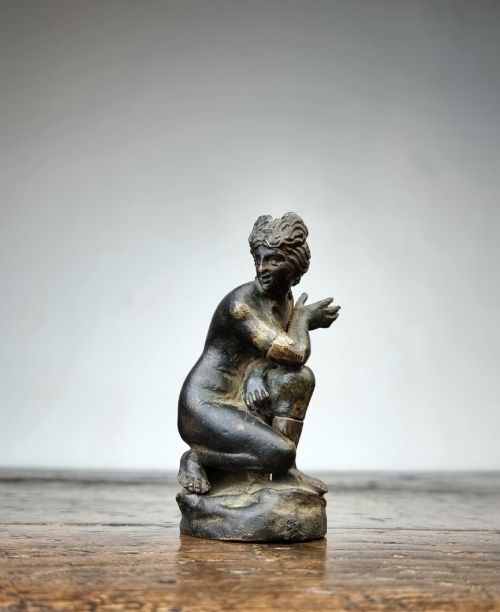
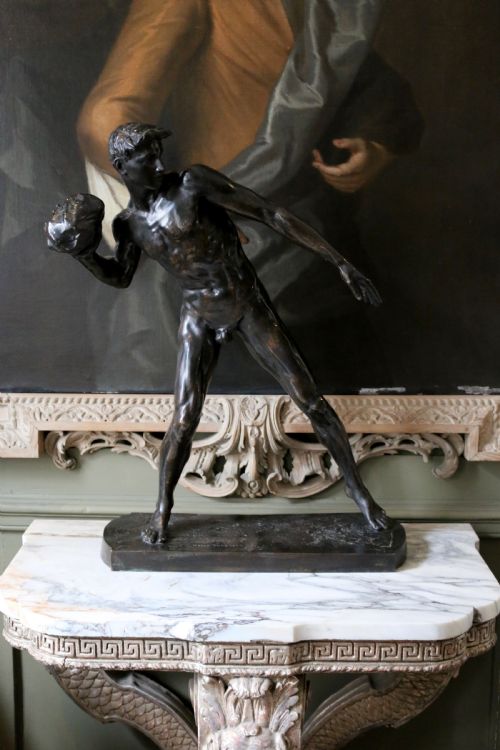
A classical bronze nude statuette represents mythological figures, ancient sculptures, and idealized human forms shaped across centuries. When searching this phrase, buyers encounter small-scale bronzes originating from Grand Tour travels, French foundries, and later Art Deco studios. These works translate monumental marbles and archaeological finds into intimate desktop or cabinet pieces.
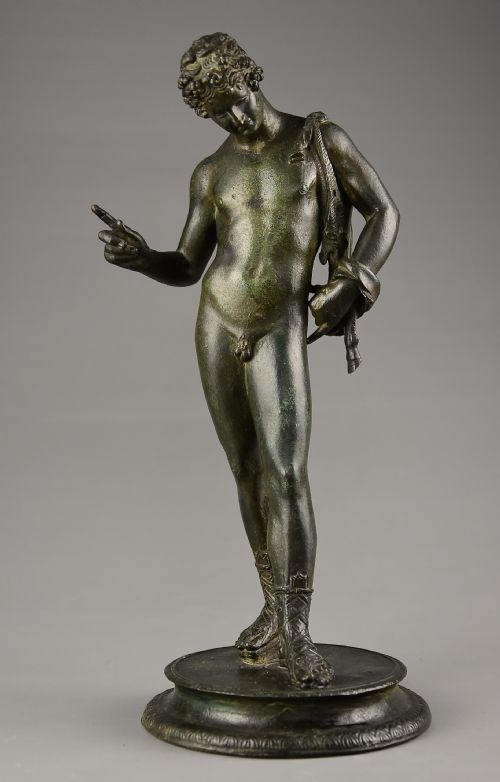
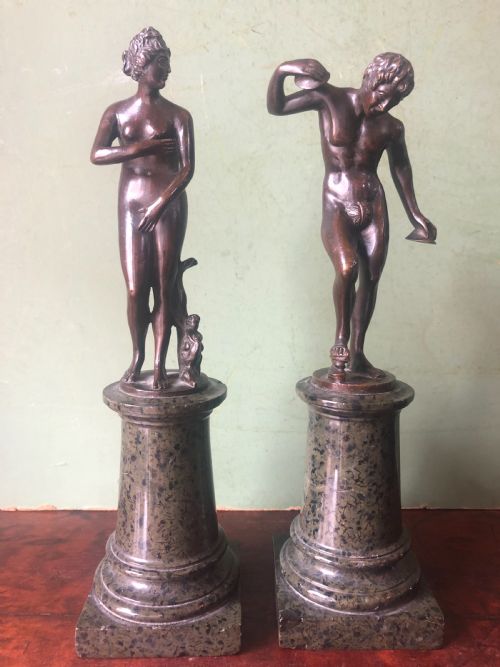
The versions most commonly met on this page date from the nineteenth century, including Neapolitan souvenirs and French reductions of famous antiquities. Subjects such as Narcissus, Venus, Bacchus, and dancers appear frequently, often mounted on bases of marble, fossil marble, or onyx. Each statuette captures the shifting aesthetic priorities of its era, moving from strict neoclassical revival toward more stylised modern lines.
Materials and Technique
These statuettes are cast in bronze, occasionally utilising silvered metal, and frequently set upon heavy plinths of marble, fossil marble, or onyx to provide stability and contrast. Founders employed traditional casting methods to capture musculature, drapery, and delicate facial expressions in miniature form. Patination was then applied by hand, producing surfaces ranging from deep dark green to warm golden brown.
The integration of metal and stone defines the construction of many pieces, particularly nineteenth-century Grand Tour souvenirs where the bronze figure is permanently pinned to a polished marble base. Tooling and chasing followed the initial cast to sharpen details in hair, fingers, and anatomical contours. The resulting objects combine the tensile strength of metal with the cool mass of geological bases.
Classical Bronze Nude Statuette Retail Price Guide 2026
Typical asking prices for classical bronze nude statuette among the pieces listed under this phrase on Sellingantiques today, from the lower quarter to the upper quarter. They describe what is for sale here now, not the wider market.
The design origins on this page range from Neapolitan Grand Tour souvenirs and Victorian new sculpture to French classical and Art Deco aesthetics.
Distinctions in Quality
The integration between the bronze figure and its stone base marks another clear distinction in craftsmanship. Finer pieces show careful fitting and secure mounting, while the quality of the marble or onyx itself contributes to the overall presence of the sculpture. Master founders achieved a balance of weight and proportion that elevates a simple souvenir into a compelling work of art.
Hamo Thornycroft·Albert Hussmann·Mario Korbel·Michele Amodio
The Classical Bronze Nude Statuette Glossary
- Grand Tour
- A traditional trip through Europe undertaken by upper-class young men in the eighteenth and nineteenth centuries to collect art and antiquities. Souvenirs purchased on these journeys included bronze reductions of famous ancient statues.
- Patination
- The chemical or natural treatment of a bronze surface to alter its colour and texture. Dark green and warm brown patinations are typical of nineteenth-century foundry work.
- Neoclassical
- A style spanning the eighteenth and nineteenth centuries that drew direct inspiration from the art and culture of classical antiquity. It prioritised balance, proportion, and idealized human forms.
- Reduction
- A smaller scale copy of a larger, often monumental sculpture. Founders achieved these smaller versions through mechanical scaling devices or skilled hand measurement.
- Fossil Marble
- A natural limestone containing visible prehistoric organic remains, frequently utilised as a contrasting base for nineteenth-century cabinet bronzes.
Classical Bronze Nude Statuette: Frequently Asked Questions
What is a classical bronze nude statuette?
A classical bronze nude statuette is a small sculptural work depicting the unclothed human form, inspired by ancient Greek or Roman art.
These pieces were produced across various periods, from seventeenth-century works to nineteenth-century Grand Tour souvenirs and twentieth-century Art Deco interpretations.
Where were these statuettes made?
Many were cast in European workshops, particularly in France, Italy, and Britain, during the nineteenth and early twentieth centuries.
Italian foundries specialised in producing Grand Tour souvenirs for travellers visiting archaeological sites in Naples and Rome.
How do I display them at home?
These pieces suit placement on mantelpieces, bookshelves, desks, or dedicated display cabinets where their patinated surfaces can catch the light.
Because many include heavy stone or marble bases, they remain stable on flat surfaces without requiring complex wall mounts.
How can I tell the period?
Dating relies on the style of the casting, the type of patination, and the materials used for the associated bases, such as fossil marble or onyx.
Nineteenth-century Grand Tour pieces often reference specific excavated antiquities, while later twentieth-century works adopt Art Deco stylisation.