



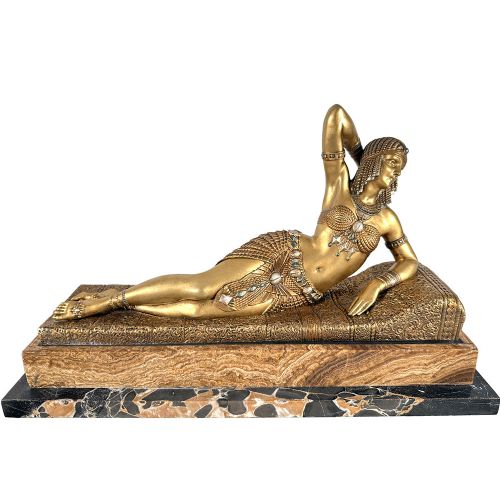


French Bronze Nude Statue
These pieces unite cast metal figures with French foundry work, giving interiors a distinct classical or modernist focal point.

French Bronze Nude Statue
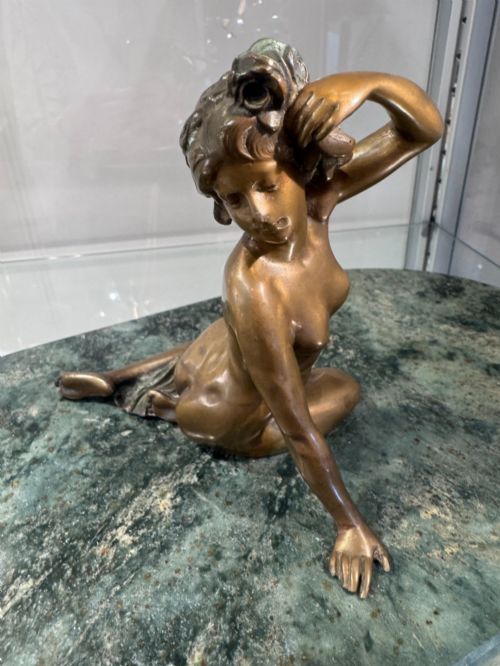
A french bronze nude statue represents the human form cast in metal, emerging primarily from nineteenth-century classical traditions and progressing into twentieth-century modernism. These works take the form of freestanding sculptures, desk ornaments, bookends, and occasional table lamps.
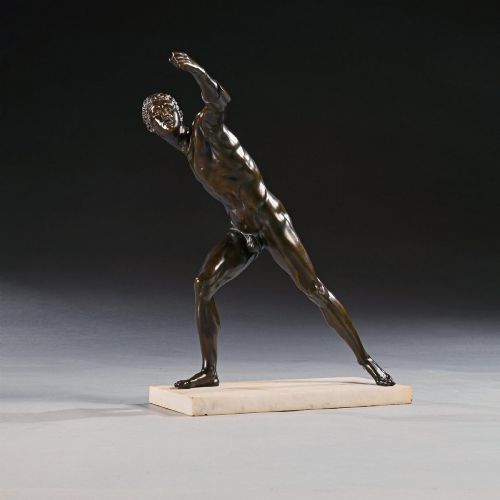
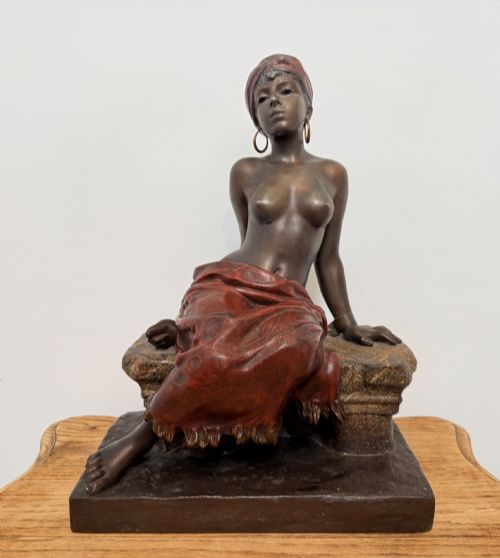
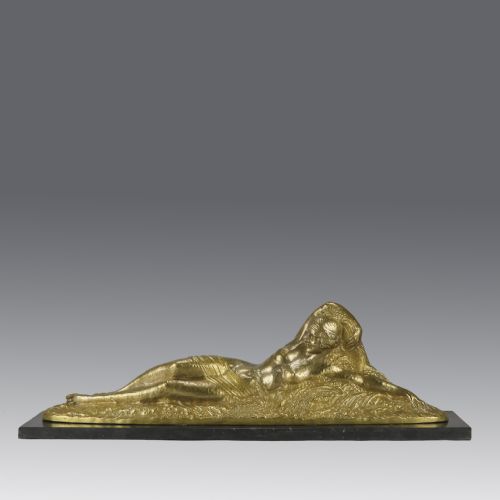
The pieces appearing on this page span the Victorian era, the Art Nouveau period, and the Art Deco movement. Figures range from mythological subjects and classical reductions to stylised dancers and reclining bathers.
How they were made
Foundries produced these works using the lost-wax method or sand casting, capturing intricate details in the metal before hand-finishing the surface. Artisans then applied patination, silvering, or gilding to achieve specific tonal effects on the bronze.
Many figures integrate a secondary support material, mounting the cast bronze onto bases of marble, onyx, slate, or stone to provide stability and visual contrast.
Listings feature works cast in bronze, silvered bronze, and gilt bronze, frequently mounted on bases of marble, onyx, and slate.
What varies in quality
The quality of the mount also influences the overall integrity, seen in the precise fitting of the bronze to its marble or onyx base and the depth and durability of the applied patina.
Ferdinand Barbedienne·Demetre Chiparus·Sibylle May·Pierre Le Faguays·James Pradier·Susse Freres
The French Bronze Nude Statue Glossary
- Patination
- The chemical treatment applied to the surface of the bronze to alter its colour and tone. This process protects the metal while accentuating the contours of the figure.
- Lost-wax casting
- A metalworking process where a molten bronze is poured into a mould created from a wax model. This technique allows for complex, highly detailed sculptural forms.
- Grand Tour
- A nineteenth-century practice where travellers collected small-scale bronze reductions of classical antiquities. These souvenirs replicated famous sculptures found in European museums and sites.
- Chasing
- The manual process of refining a raw bronze casting using small chisels and hammers. Artisans use this method to clear out excess metal and sharpen surface details.
- Reduction
- A smaller copy of a larger, well-known sculpture. Foundries produced these scaled-down versions to make classical and salon art accessible for domestic display.
French Bronze Nude Statue: Frequently Asked Questions
How do I clean a bronze statue?
Dust the surface gently with a soft, dry cloth to prevent the accumulation of grit and particulate matter. Avoid using harsh chemical polishes or water, as these substances can strip the original patination.
Apply a very thin layer of microcrystalline wax periodically if the metal requires protection from atmospheric moisture. Buff the surface lightly after application to maintain an even, subdued sheen.
What periods do these sculptures cover?
The works span from the nineteenth century through the Victorian era, encompassing Neoclassical and Orientalist aesthetics. You will also encounter Art Nouveau pieces from the early decades of the twentieth century.
Later works transition into the geometric forms and stylised figures associated with Art Deco design. Each era employs distinct postures and treatments of the human form.
Are these figures mounted on stone?
Many figures incorporate bases made from marble, onyx, slate, or stone to anchor the weight of the metal. These plinths provide a stable foundation for the sculpture while offering a textural contrast to the patinated bronze.
Some pieces integrate the stone directly into the composition, such as marble sections supporting seated or reclining figures. Check the base attachment to ensure the bronze remains secure.
How do I distinguish Art Nouveau from Art Deco?
Art Nouveau figures, dating around the turn of the twentieth century, favour flowing lines, natural motifs, and dynamic drapery. The poses often reflect organic movement inspired by plants and classical mythology.
Art Deco examples, emerging predominantly in the nineteen-twenties and thirties, showcase geometric stylisation, clean angles, and athletic dancers. The posture in these later pieces tends to emphasise symmetry and architectural structure.