




Academic Sculpture Female Figure
An academic sculpture female figure brings the disciplined form and classical poise of nineteenth-century European ateliers directly into a modern interior.

Academic Sculpture Female Figure
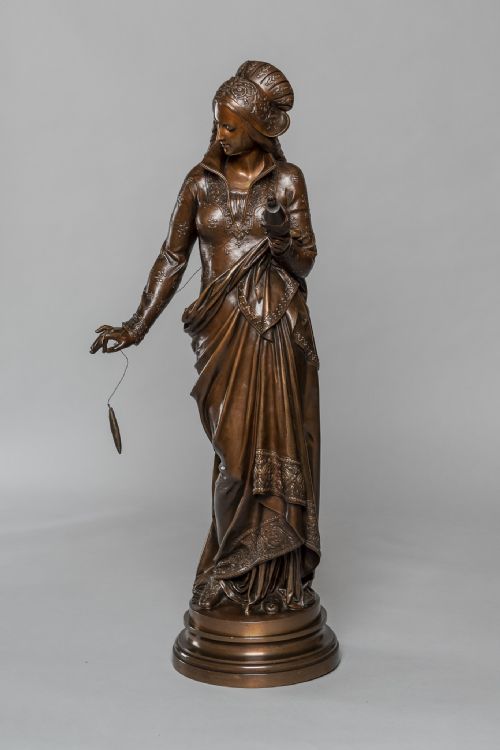
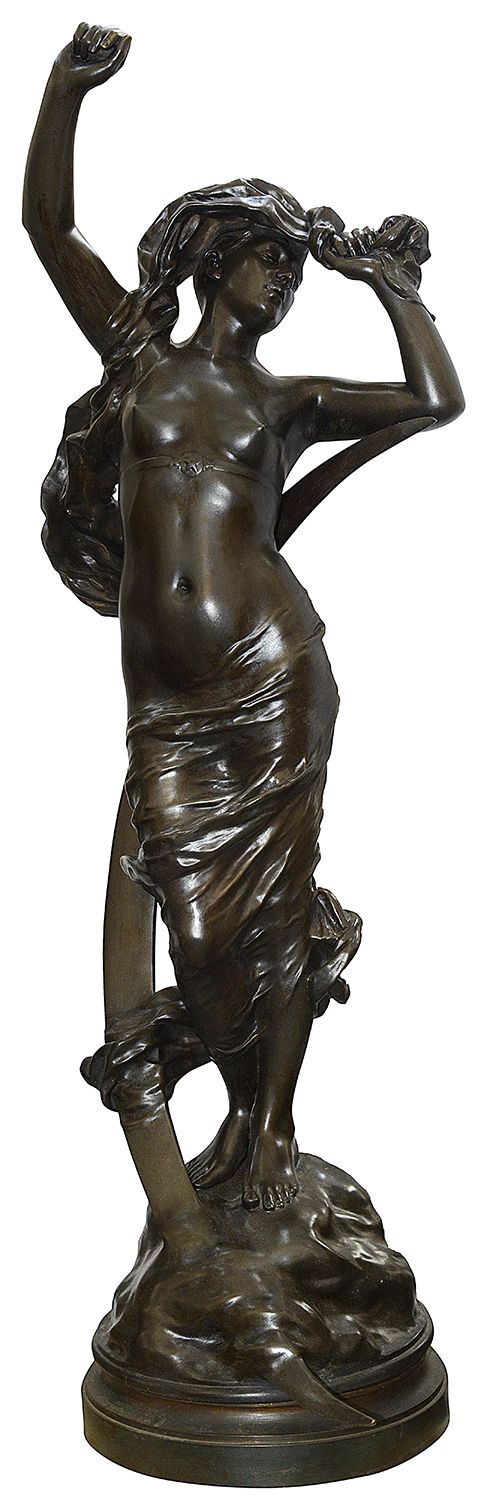
When searching for an academic sculpture female figure, you encounter nineteenth-century works originating primarily from French foundries and studios. These pieces capture mythological heroines, allegorical representations like Aurora, and classical maidens with rigorous anatomical precision.
The versions most commonly met on this page span the Victorian era, specifically the decades between 1860 and 1900. They appear as full-length bronze statues, portrait busts, and smaller tabletop musician or bather figures.
Works from this tradition reflect the rigorous standards of the French academy, where sculptors trained to render the human form with absolute fidelity. The subjects range from narrative literary figures such as Mignon to symbolic depictions of meditation and huntresses.
Materials and foundry techniques
Foundries utilised traditional lost-wax or sand casting methods to translate clay models into enduring bronze. The resulting metal often received a dark patinated finish to accentuate the musculature and drapery of the female subjects.
Makers combined patinated bronze with contrasting elements such as red marble and ormolu mounts. Busts frequently paired cast metal portraits with carved stone plinths or variegated marble bases.
Signatures, foundry stamps, and titles were often chased directly into the bronze base after casting. This meticulous post-casting work defined the high standard of nineteenth-century French bronze production.
Academic Sculpture Female Figure Retail Price Guide 2026
Typical asking prices for academic sculpture female figure among the pieces listed under this phrase on Sellingantiques today, from the lower quarter to the upper quarter. They describe what is for sale here now, not the wider market.
The listings show pieces dated between eighteen-sixty and nineteen-hundred, originating predominantly from French studios and foundries.
Differentiating quality across the range
The distinction between standard workshop output and top-tier studio pieces rests upon the crispness of the chasing and the naturalism of the anatomy. Master sculptors rendered hands, hair braids, and facial expressions with exceptional subtlety.
Heavier casting and complex compositions involving chariots, multiple figures, or integrated marble plinths indicate higher ambition and greater expense during production. Finer patination preserves subtle tonal variations across the bronze surface rather than presenting a flat, uniform appearance.
S. Kinsburger·Claudius Marioton·Houdebine·Devaulx·Albert Carrier-Belleuse·E. Laurent·Aug. Moreau·Hans Schork·Eutrope Bouret·A. Gaudez·Henri Ple·J C De Blezer·Louis Ernest Barrias
The Academic Sculpture Female Figure Glossary
- Academic Realism
- An artistic style characterised by strict adherence to classical ideals of form, anatomical accuracy, and narrative clarity. It dominated nineteenth-century European official art exhibitions.
- Patinated Bronze
- Bronze metal treated with chemical solutions to produce a specific surface colour, most commonly dark brown, green, or near-black. This finish protects the metal and highlights sculptural detail.
- Ormolu
- Gilt bronze produced by applying a finely ground high-carat gold mercury amalgam to a bronze object. The technique creates a brilliant golden decorative surface.
- Lost-wax casting
- A metalworking process where a molten metal is poured into a mould that has been created by means of a wax model. The wax is subsequently melted and drained away.
- Allegorical figure
- A symbolic human representation embodying an abstract idea such as meditation, night, or water. These subjects allowed nineteenth-century sculptors to explore idealised female forms within a narrative framework.
Academic Sculpture Female Figure: Frequently Asked Questions
What defines an academic sculpture female figure?
These pieces are nineteenth-century bronze and marble works created under the influence of European art academies. They portray women from mythology, literature, and allegory with strict anatomical accuracy.
Artists focused on idealised beauty, classical drapery, and narrative storytelling. The resulting figures range from intimate tabletop studies to large exhibition statues.
How were these bronze figures signed?
Sculptors typically inscribed their surnames directly into the bronze base or plinth during the casting and finishing process. Foundry marks and cast-in titles also appear on many pieces.
These signatures link the works to specific nineteenth-century Parisian studios and makers. They serve as primary indicators of authorship and origin.
Where should I display a bronze statue?
Bronze statues require stable placement on sturdy furniture or dedicated pedestals that can support their considerable weight. Keep them away from direct heat sources and bright sunlight to protect the patina.
Touching the metal frequently transfers oils from the skin that can alter the patina over time. Occasional dusting with a soft, dry cloth is sufficient for routine maintenance.
How do I identify the period of a figure?
Nineteenth-century dating relies on stylistic cues, foundry techniques, and inscribed signatures matching known active dates of the makers. Clothing styles, hair braiding, and neoclassical motifs also point to the Victorian era.
Base materials provide further clues, as mixed media like red marble and ormolu were characteristic of French production between eighteen-sixty and nineteen-hundred.