





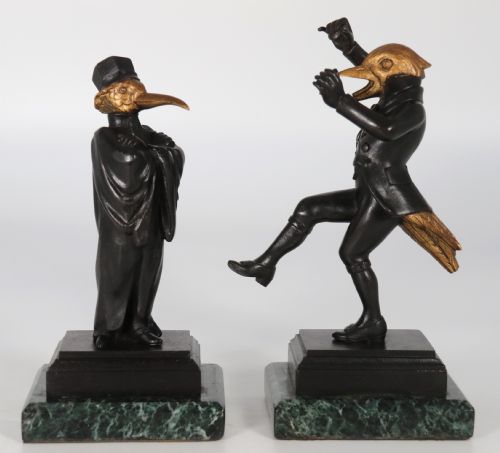
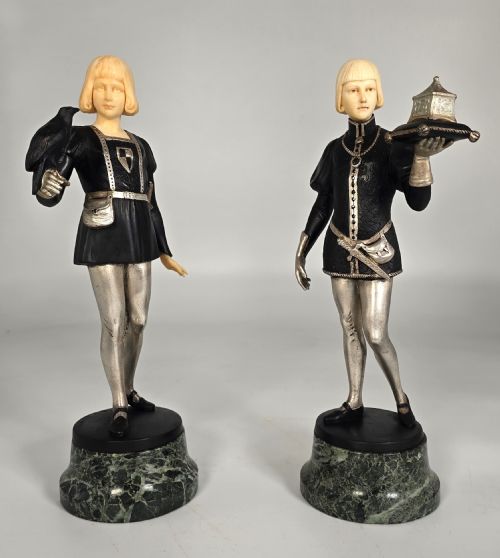


Green Marble Bronze Figurine
A green marble bronze figurine brings together cast metal and polished stone, offering the weight and presence collectors seek for a desk or mantel.

Green Marble Bronze Figurine
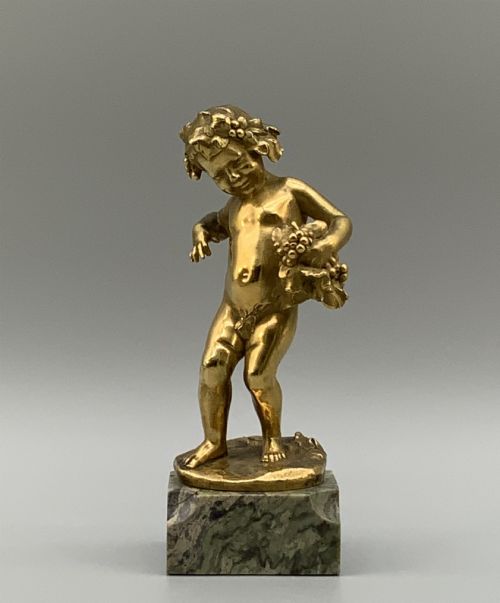
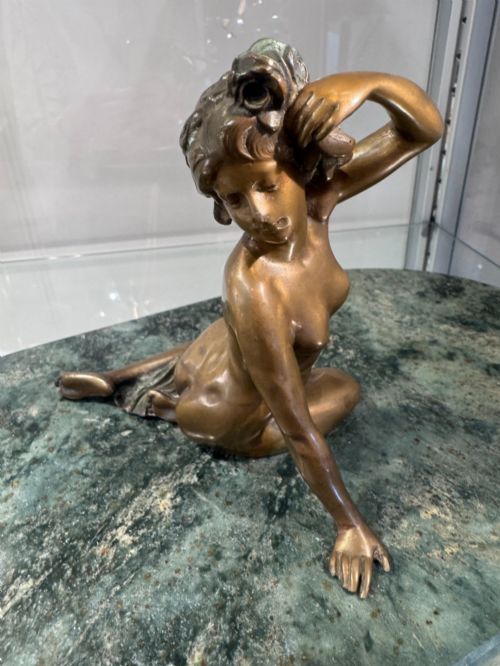
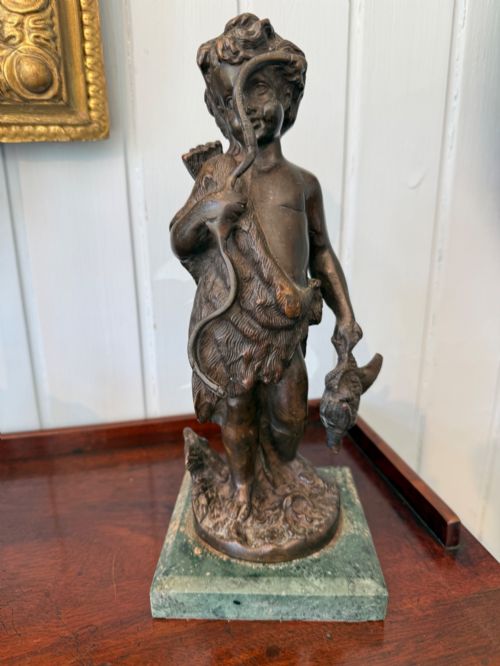
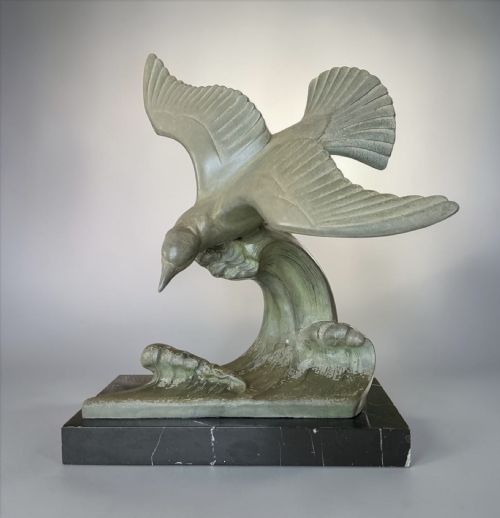
A green marble bronze figurine combines a metal cast figure with a stone plinth or base, spanning periods from the nineteenth century through the art deco era. These pieces take various forms, including classical figures, animal studies, and dancers mounted directly onto marble or onyx blocks.
The objects appearing here originate largely from nineteenth century French workshops and twentieth century modernist studios. Buyers encounter works cast in bronze, silvered bronze, and spelter, paired with polished green marble bases that anchor the composition.
Materials and construction
Foundry workers cast the figures using traditional bronze or spelter methods, employing patinated, silvered, or cold painted finishes to render skin, feathers, and drapery. These metal castings are secured to heavy bases of green marble or onyx using threaded rods or pins.
The stone bases are cut, shaped, and polished to display the natural veining characteristic of green marble. Artisans match the geometry of the plinth to the posture of the figure, whether rectilinear for art deco dancers or circular for classical busts.
The listings combine nineteenth century classical subjects with art deco forms, paired across marble, onyx, and bronze.
Quality and execution
The grade of the marble base and the precision of its fit to the bronze indicate the standard of production. Tighter mechanical joints and denser, more uniform stone distinguish workshop pieces of high ambition from simpler commercial castings.
Charles Louis Malric·Susse Frères·Jules Bonheur·Paul Édouard Delabrierre·Gotthilf Jaeger·Antoine L Barye·Rene Andre Varnier·Josef Lorenzl·Pierre le Faguays·Jose Dunach·L Bureau
The Green Marble Bronze Figurine Glossary
- Bronze
- An alloy of copper and tin utilised for casting sculpture. It takes patination well and holds fine surface detail.
- Spelter
- A zinc alloy used as a substitute for bronze in decorative figures. It is lighter and softer than bronze, often finished with paint or electroplating.
- Patina
- The surface coloration developed on metal through age or chemical treatment. It protects the metal and adds depth to sculptural shadows.
- Animalier
- A nineteenth century artistic movement focused on the realistic depiction of animals. Practitioners studied anatomy closely at menageries.
Green Marble Bronze Figurine: Frequently Asked Questions
How do I clean the marble base?
Dust the stone with a dry microfibre cloth to remove surface grit.
Avoid commercial chemical cleaners that can etch the polished surface of the green marble.
Is spelter the same as bronze?
Spelter is a zinc alloy, whereas bronze is a copper and tin alloy.
Bronze offers greater weight and durability, while spelter was used for more accessible decorative pieces.
How are figures secured to marble?
Makers typically drilled through the base and secured the metal figure using a threaded bolt and nut.
This connection holds the heavy sculpture firmly to the stone plinth without damaging the material.
What periods do these figures cover?
The pieces span the nineteenth century through the nineteen thirties.
Styles shift from classical nineteenth century subjects to art deco and art nouveau designs.