

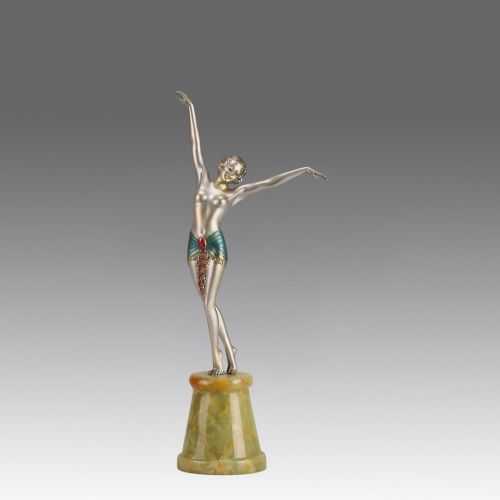
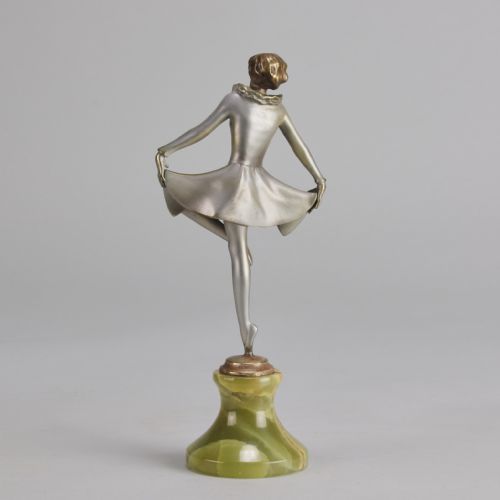
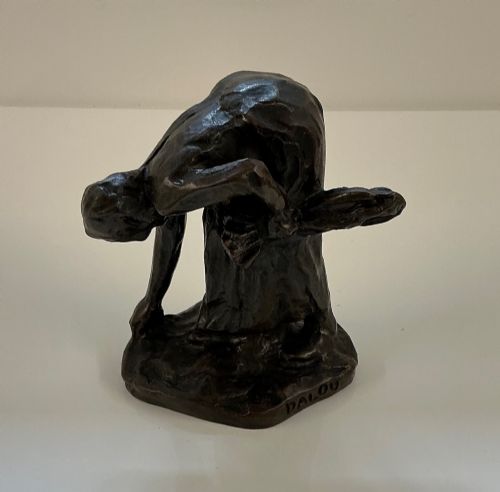
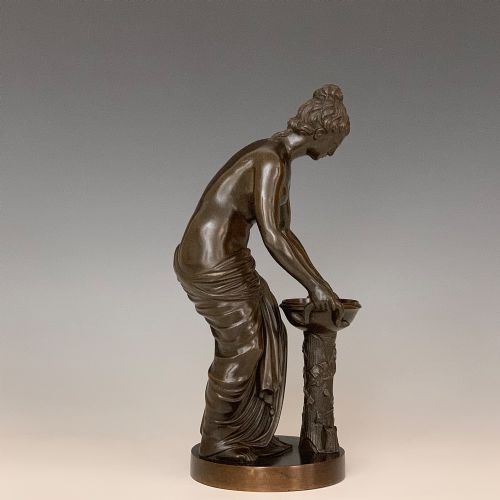
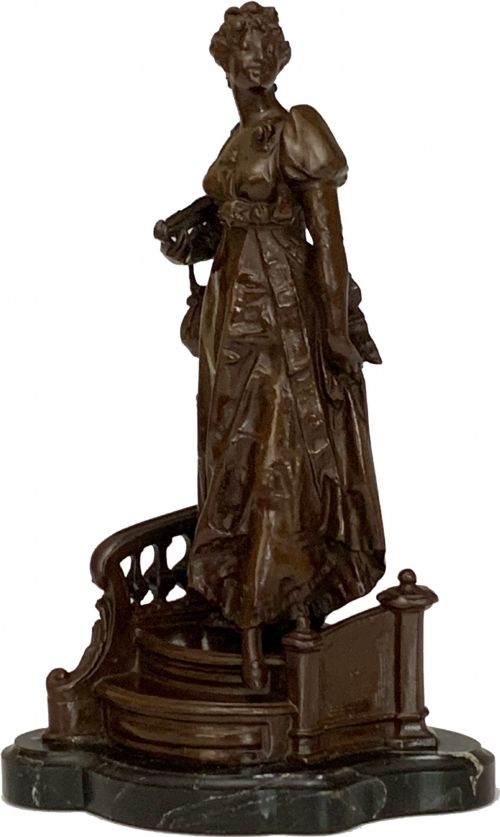
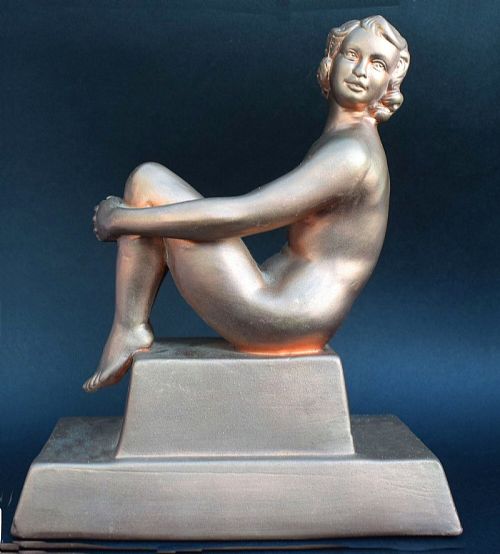

Bronze Female Statuette
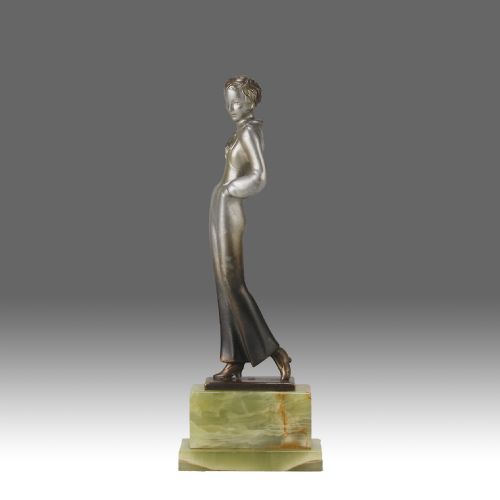
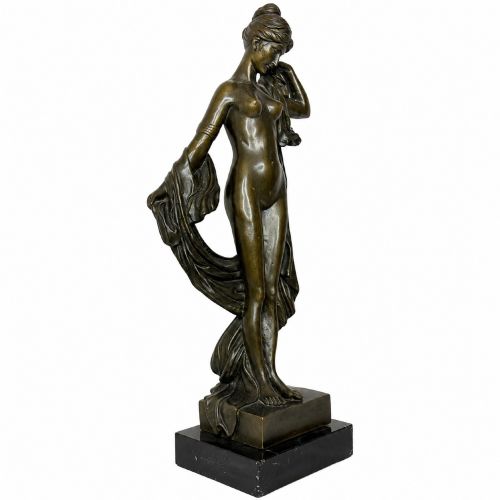
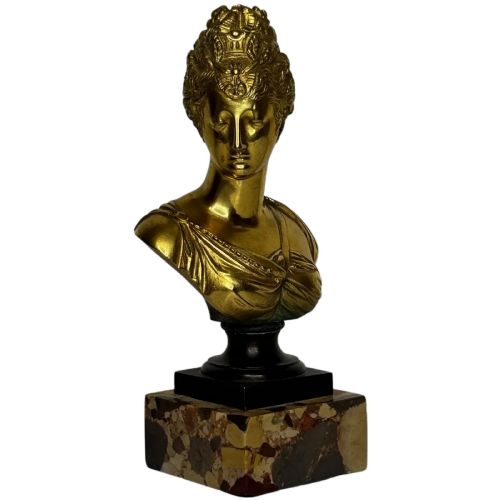
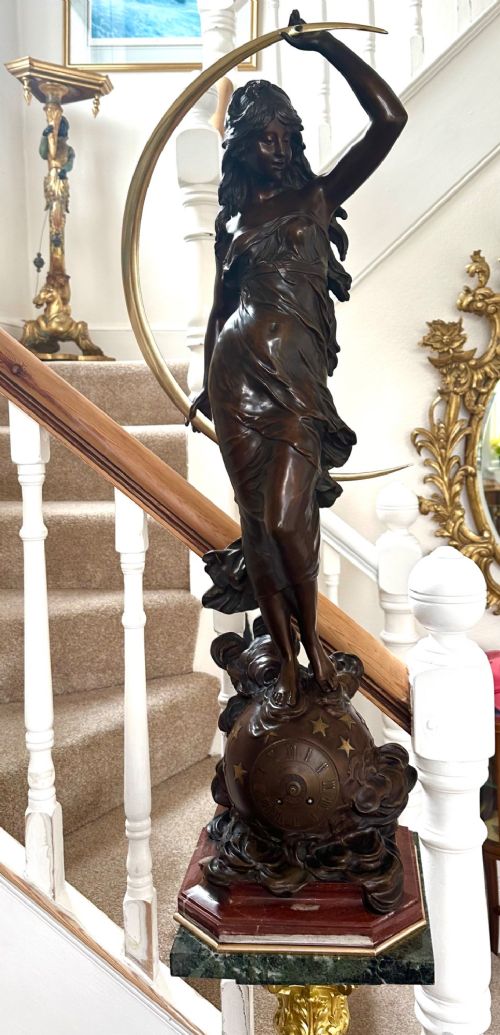
A bronze female statuette captures mythological figures, dancers and maidens in cast metal, bringing classical grace or modernist line to a room.

Bronze Female Statuette
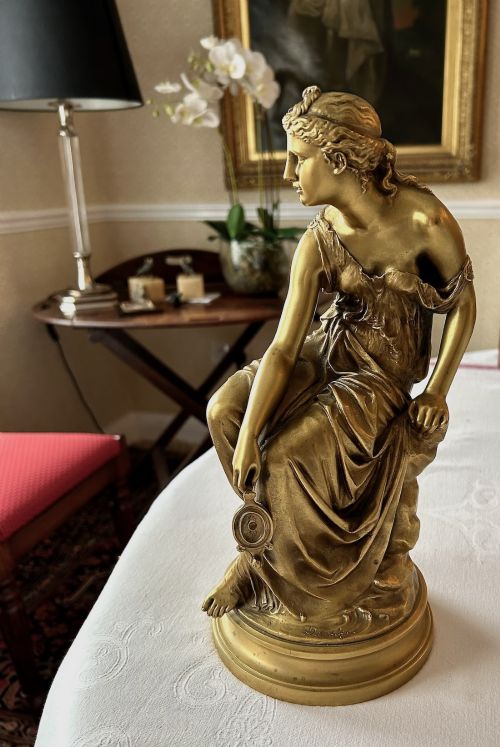
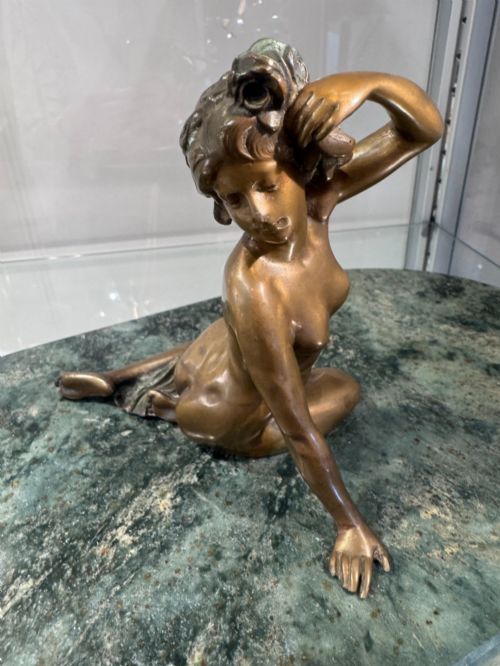
A bronze female statuette represents women through varied lenses, from nineteenth-century classical maidens and historical portraits to Art Nouveau nudes and Art Deco dancers. Collectors seek these pieces for their expressive postures and the distinct aesthetic of periods ranging from the Victorian era to the nineteen-thirties.
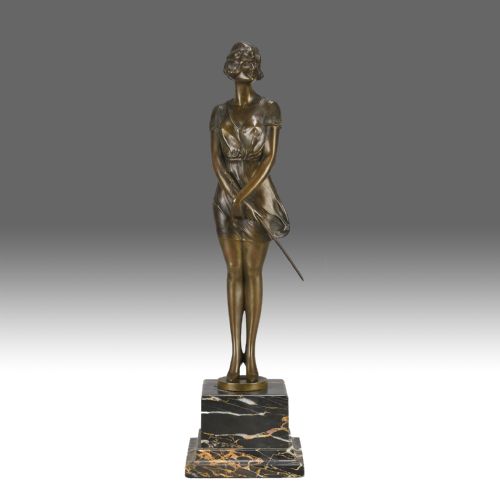
The most common examples on this page are French and Austrian works produced during the late nineteenth and early twentieth centuries. These figures often take the form of standing or seated women, dancers in motion, and mythological subjects mounted on stone bases.
The objects vary widely in scale and character, encompassing grand tour souvenirs, portrait busts, and stylised modernist figures. Each piece reflects the sculptural conventions of its decade, shifting from romantic classicism toward clean geometric lines.
Materials and Construction
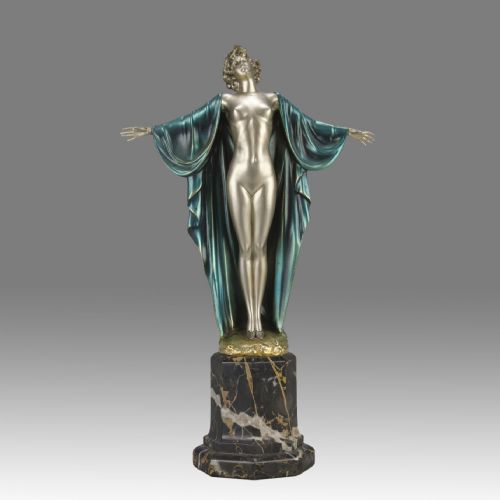
Foundries created these figures primarily using the lost-wax casting method or sand casting, capturing intricate details in molten metal before finishing the surface. Patination techniques, cold-painting, and gilding added colour and depth to the metallic surfaces.
Makers frequently mounted bronze figures onto integral or separate bases made from marble or onyx to provide stability and contrast. Combinations of silvered bronze, enamel, and carved stone appear across both Art Nouveau and Art Deco examples.
Dancers, frogs, and historical heroines share the metal stage, proving that Victorian and Art Deco sculptors took their subjects both seriously and playfully.
Assessing Quality and Execution
The quality of the secondary materials, such as heavy veined marble plinths or well-preserved cold-painted polychromy, indicates the original tier of manufacture. Signatures from recognised sculptors and foundry marks further anchor the standing of individual works.
Etienne-Henri Dumaige·Rudolf Küchler·Bruno Zach·Ferdinand Preiss·Josef Lorenzl·Jules Dalou·Georges Van Der Straeten·Auguste Moreau·Demetre Chiparus·Sylvain Kinsburger·Anders Zorn·Claire Jeanne Roberte Colinet·Emmanuel Villanis
The Bronze Female Statuette Glossary
- Patinated bronze
- Bronze treated with chemical solutions to produce a specific surface colour, ranging from deep brown to green. This treatment protects the metal and defines the sculptural contours.
- Cold-painted bronze
- A technique where paint is applied to a cold bronze surface rather than fired in a kiln. This method allows for vivid polychrome details on garments and skin.
- Lost-wax casting
- A process where a molten metal is poured into a mould created by melting away a wax model. It permits intricate undercut details and unique sculptural forms.
- Grand tour
- Nineteenth-century travels across continental Europe undertaken by affluent individuals who collected small bronzes as souvenirs. These pieces typically reproduce classical antiquities.
- Spelter
- A zinc alloy frequently used as a less expensive substitute for bronze in decorative figures. It is softer and lighter than bronze, often given a bronze-like finish.
Bronze Female Statuette: Frequently Asked Questions
What periods do these bronzes come from?
The pieces span the nineteenth century through the early decades of the twentieth century. This includes Victorian, Art Nouveau, and Art Deco eras.
Production methods and artistic styles shifted noticeably across these decades, moving from classical revivalism toward stylised modernist abstraction.
Are marble bases original to the figures?
Many figures were cast to fit specific stone plinths made from marble or onyx. These bases offered necessary weight and visual contrast.
Makers selected different stone types to complement the patination and style of the cast metal above.
How do I identify a cast signature?
Sculptors often had their names inscribed directly into the wax model before casting. Foundry stamps may also appear near the base edge.
These marks help connect individual statuettes to known artists and European production houses.