
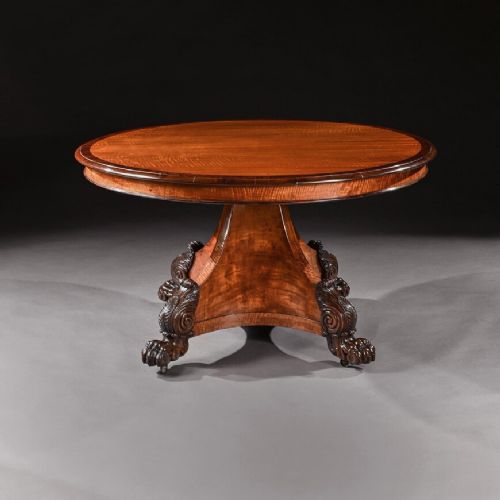


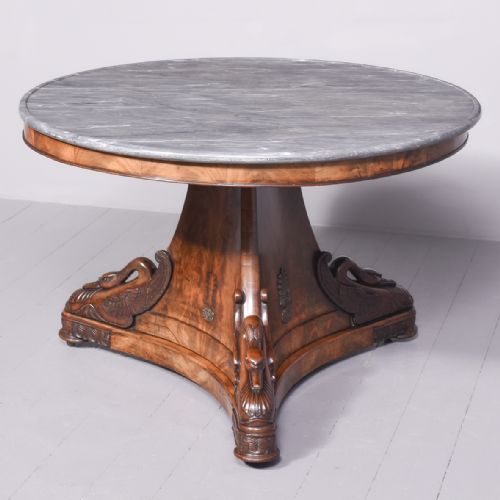
Circular Entry Table
A circular entry table commands an entrance hall, offering a striking focal point and a practical surface for daily use.
Circular Entry Table
A circular entry table provides a prominent standalone surface designed for hallways and vestibules. These pieces emerge from periods such as the Georgian, Regency, and Victorian eras, as well as the early twentieth century.
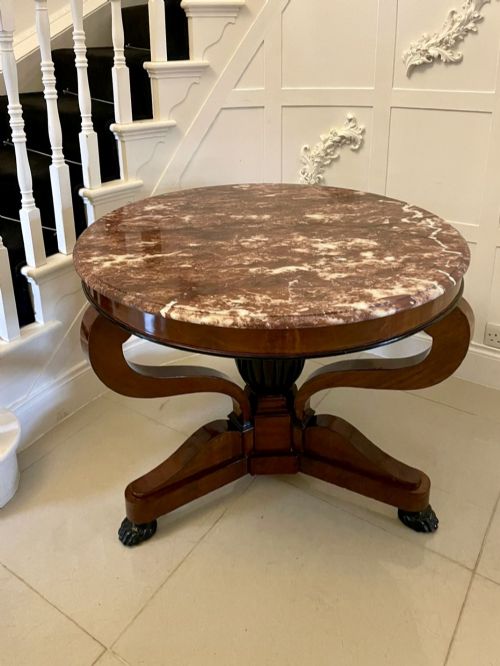
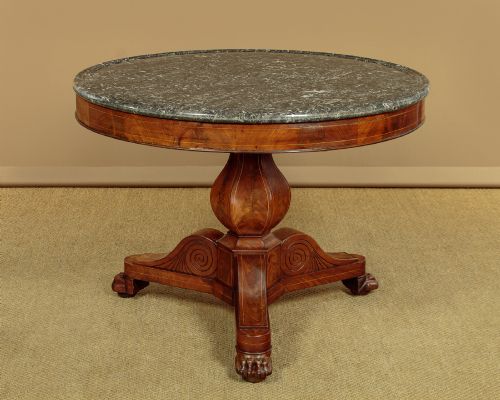
The pieces appearing on this page span diverse stylistic influences including French Empire, Neoclassical Revival, and Scandinavian Art Deco. Buyers meet forms ranging from traditional mahogany centre tables to inlaid gueridons and marble-topped specimens.
Origins stretch across England, France, Germany, Italy, and Sweden, reflecting broad European craftsmanship. Centre tables and console tables dominate the selection, functioning as grand statement pieces in domestic architecture.
How they were made
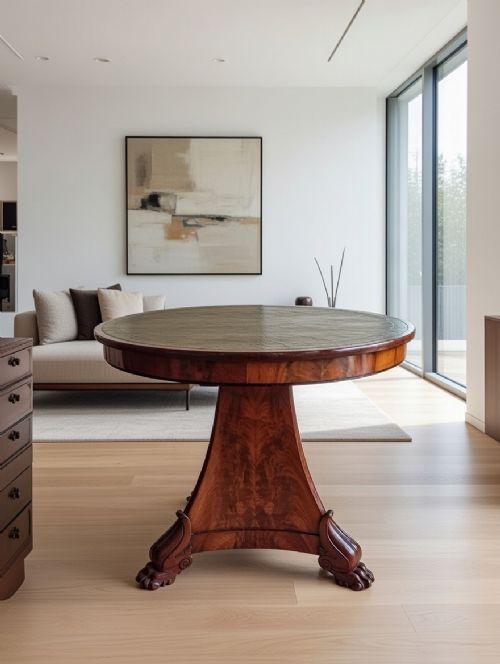
Cabinetmakers utilised dense timbers such as mahogany, flame mahogany, rosewood, satinwood, pollard oak, and birch. These woods provided stable foundations for intricate grain patterns and decorative veneers.
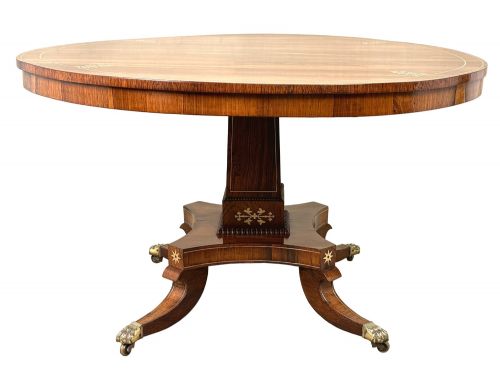
Surfaces frequently incorporate inset marble slabs, leather writing panels, or delicate brass inlay. Workshops employed traditional joining techniques alongside marquetry and painted wood finishes to achieve varied decorative schemes.
Some tables double as writing slopes, proving ancestors took correspondence right to the front door.
What varies in quality
The choice of primary timber and veneer selection dictates the visual impact of the piece. Figures like flame mahogany or figured birch display superior depth when expertly finished.
The integration of secondary materials such as marble tops, brass stringing, and precise inlay work separates standard joinery from exceptional craftsmanship. Structural stability and the retention of original surface patination further define the standing of each table.
Peters of Genoa
The Circular Entry Table Glossary
- Gueridon
- A small French round table, often supported by a central column or tripod base. These tables gained popularity during the seventeenth century and continued through the Victorian period.
- Marquetry
- The art of applying pieces of veneer to a structure to form decorative patterns and pictures. Craftsmen used contrasting timbers to create elaborate geometric or floral designs.
- Console table
- A table designed to be fixed against a wall, sometimes supported by front legs and secured to the wall at the back. These pieces often serve narrow hallways and entry spaces.
Circular Entry Table: Frequently Asked Questions
How are circular entry tables used?
These tables stand centrally in entrance halls or foyers to greet visitors upon arrival. They provide a convenient drop zone for correspondence, keys, or floral arrangements.
In larger spaces, a centre table anchors the room visually and allows circulation around all sides. Smaller variants or demi lune forms sit flush against walls to conserve floor space while maintaining surface utility.
Where should I place a circular table?
Position a circular table in the middle of a spacious hallway where it can be viewed from multiple angles. Ensure adequate clearance around the perimeter for comfortable movement.
Avoid obstructing doors or heavy traffic paths. Pairing the table with a central ceiling light or overhead chandelier enhances its role as a room anchor.
How do I identify Regency pieces?
Regency furniture typically displays classical restraint, clean architectural lines, and inspiration from ancient Greco-Roman design. Look for dark hardwoods such as mahogany and rosewood accompanied by brass inlay.
Proportions remain balanced and ornamental carving is often precise rather than excessive. Many examples from this era exhibit sabre legs or columnar pedestals.
What maintenance do wood tables require?
Keep wooden surfaces clean by dusting regularly with a soft, dry cloth. Protect the finish from direct sunlight and excessive moisture to prevent warping or fading.
Apply appropriate natural waxes periodically to nourish timber grains and maintain surface sheen. Avoid placing hot or wet items directly on antique wood or leather surfaces.