
Antique Marble Centre Table
An antique marble centre table brings substantial stone surfaces and steady architectural form to a principal room, holding floor space with authority.
What an antique marble centre table is
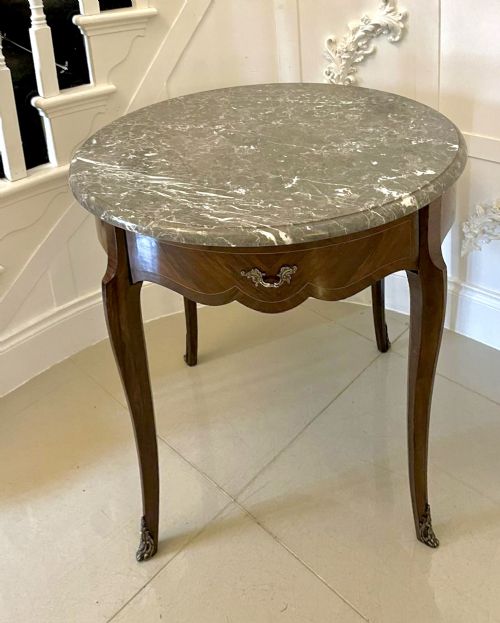
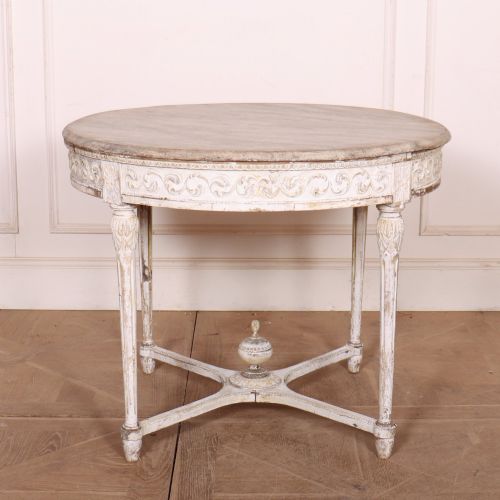
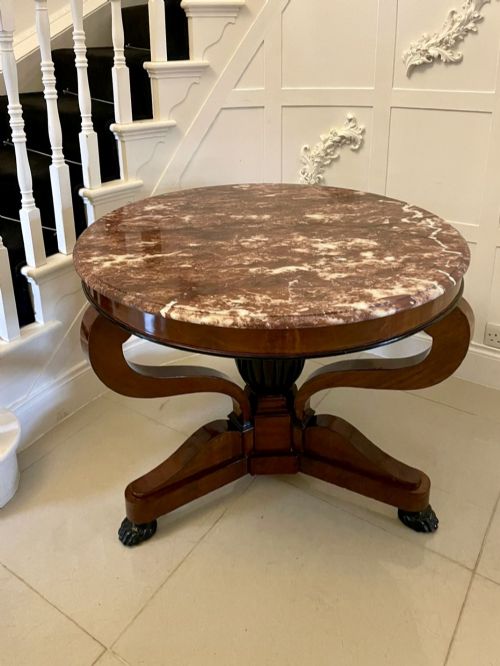
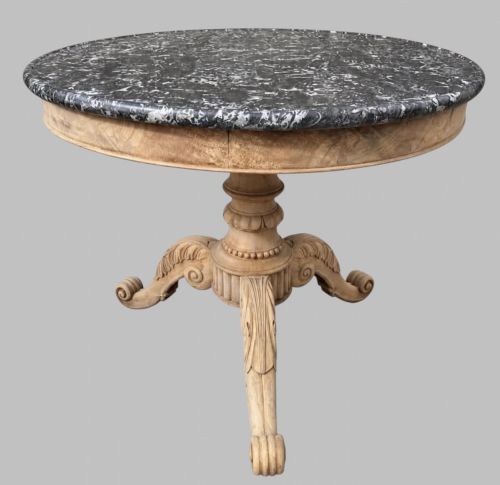
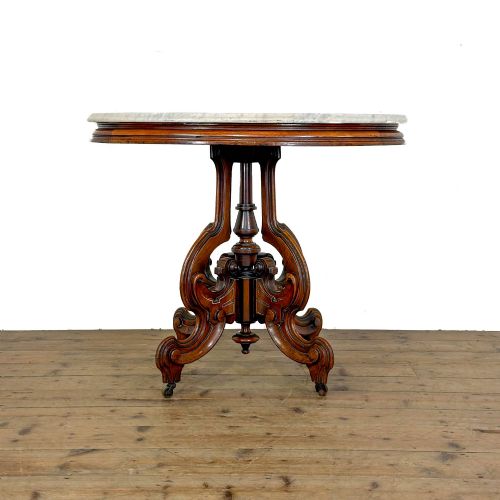
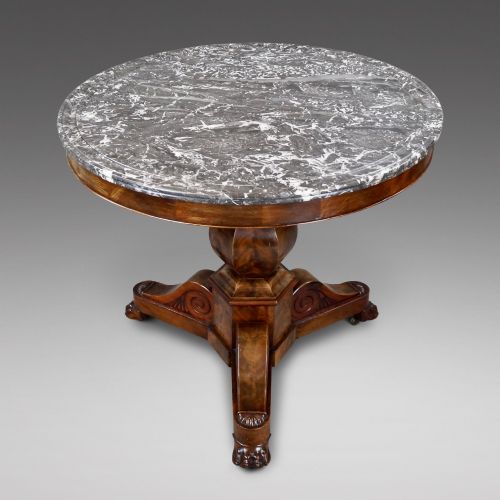
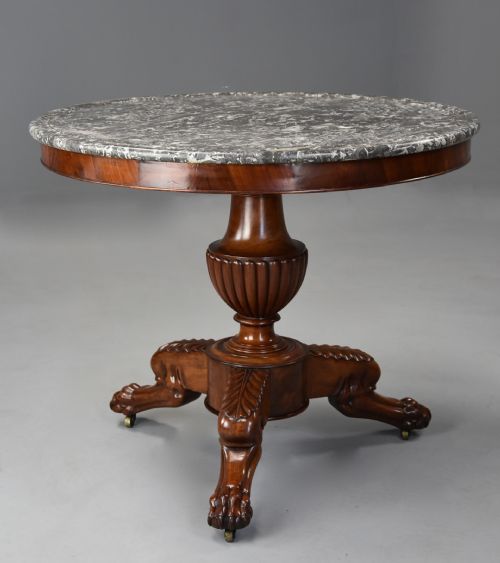
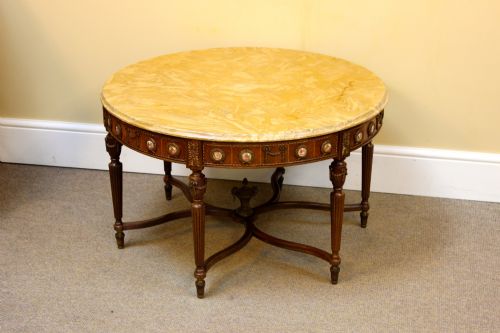
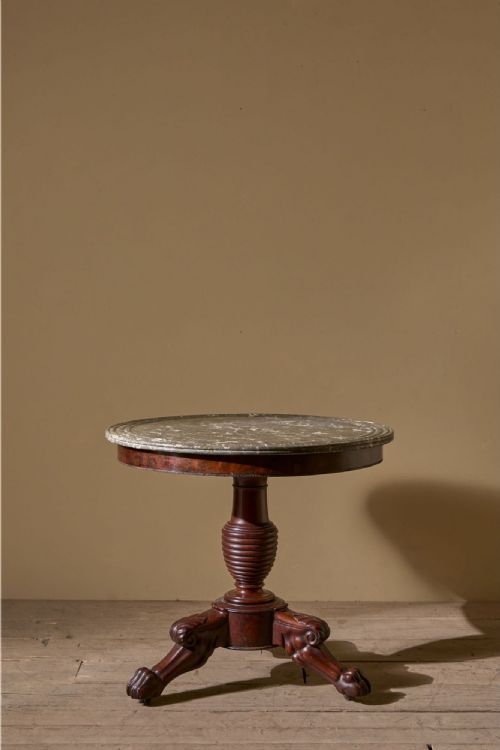
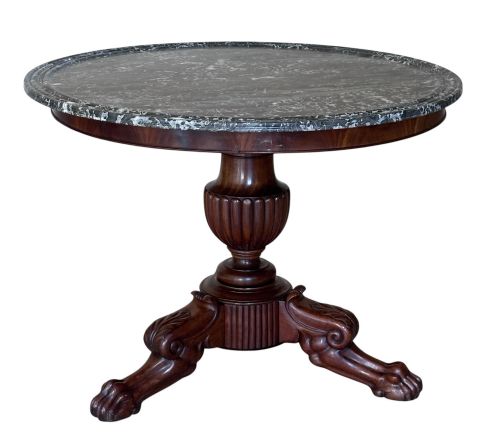
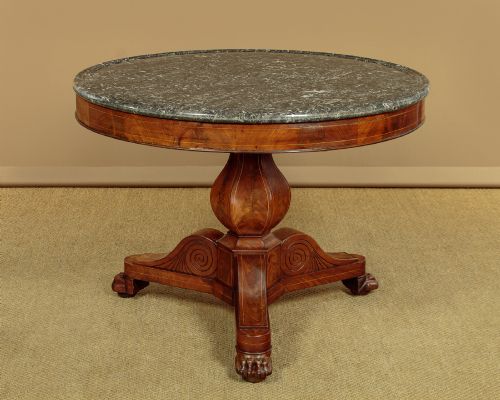
An antique marble centre table stands freestanding in the middle of a room, designed to be viewed from all sides rather than pushed against a wall. These surfaces appear in circular, oval, and large round formats resting on substantial timber or giltwood bases.
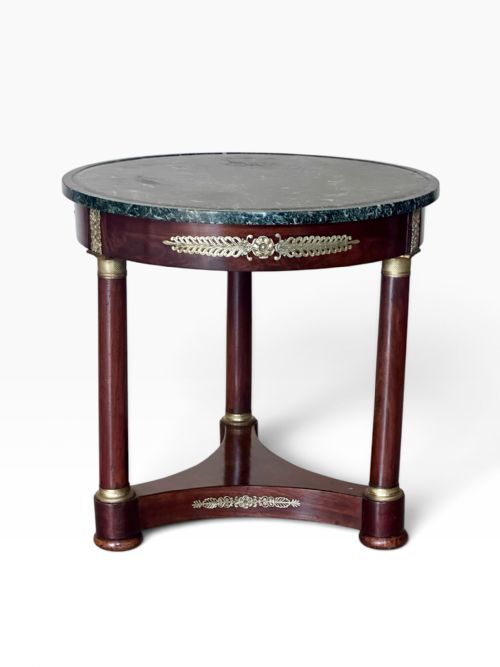
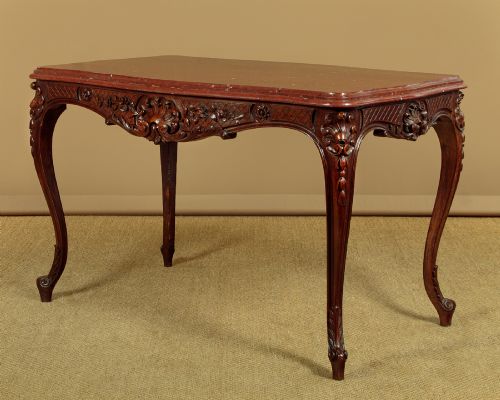
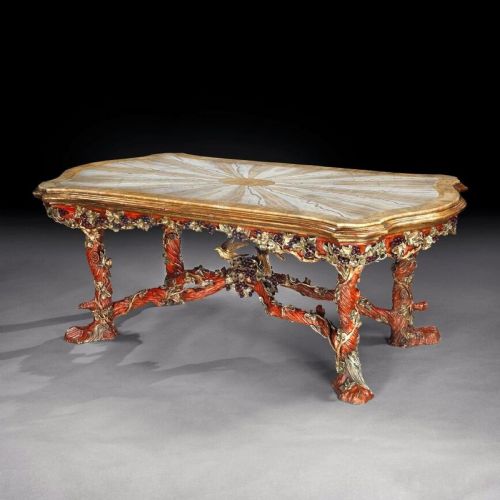
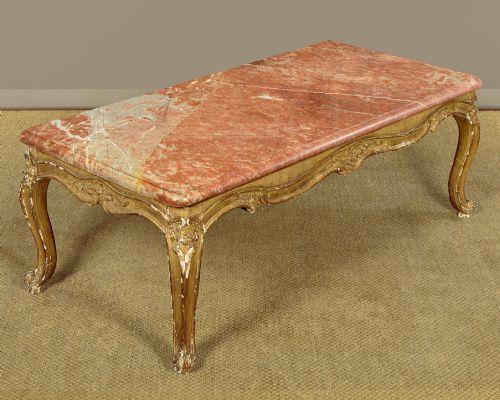
The materials span mahogany, walnut, kingwood, oak, and giltwood paired with white, purple, rouge, and specimen marble tops. Pieces originate from the 19th century, including specific dates like 1860, alongside French Empire, French Second Empire, Italian Neoclassical, and Victorian styles.
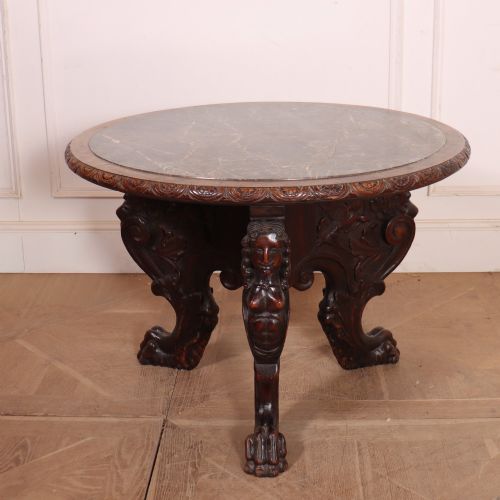
Italian and French workshops dominate the forms, yielding Gueridon tables, console tables, and large circular lamp tables. The category encompasses both sober architectural timber frames and carved bases incorporating eagle motifs or basket structures.
How they were made
Cabinetmakers constructed the heavy timber bases using solid mahogany, walnut, and kingwood, frequently incorporating fruitwood inlay, intricate marquetry, or giltwood finishes. Stone masons shaped the heavy marble slabs to fit the circular and oval frames precisely.
Specialised techniques enabled the creation of specimen marble tops, where multiple coloured mineral fragments were arranged in geometric or pictorial compositions. Structural stability remained paramount to support the immense downward weight of solid stone slabs.
Retail Price Guide 2026
Typical UK retail prices for marble centre table, calculated from the Sellingantiques database of over a million retail prices indexed since 2003. This retail price guide relies exclusively on Sellingantiques data; no external sources or auction records are used, so the figures do not describe the wider market.
The archive demonstrates that 19th-century makers paired heavy marble tops with walnut, mahogany, and intricate specimen stone surfaces.
What varies in quality
Quality rests upon the selection and integration of materials, separating standard production from exceptional French Empire or Victorian commissions. The choice of marble, from plain white to complex specimen arrangements or purple and rouge varieties, dictates the visual impact.
Carving execution and timber grain definition differentiate the workshops. Bold proportions, stamped makers' marks, and sophisticated inlay work elevate specific tables into significant examples of period craftsmanship.
JACOB·Gervais Durand
The Antique Marble Centre Table Glossary
- Guéridon
- A small circular table on a central pillar or tripod base. Originating in France during the 17th century, these forms experienced a revival during the 19th century.
- Specimen marble
- A decorative surface composed of numerous small pieces of different coloured marbles arranged in geometric patterns. These complex tops required advanced lapidary skill.
- Giltwood
- Timber that has been coated with a thin layer of gold leaf or powder. This finish appears frequently on French Empire and Victorian frames.
- French Empire
- A neoclassical design style spanning the late 18th and early 19th centuries, characterised by heavy architectural forms and classical motifs.
- Kingwood
- A dense, richly figured tropical timber utilised for cabinetmaking and decorative veneer during the 19th century.
Frequently Asked Questions
Where should a centre table go?
These tables are designed to stand completely free in the middle of a room, serving as a focal point beneath a central ceiling rose or chandelier.
Ensure there is adequate perimeter space to walk entirely around the piece without obstruction.
How heavy are stone tops?
Solid marble slabs possess considerable weight, which provides natural stability without requiring mechanical fastening to the floorboards.
Two people are typically required to lift and position the stone separate from the timber base during relocation.
Can I place lamps on them?
The sturdy stone surface handles lighting fixtures and decorative objects easily, which accounts for their historical classification as lamp tables.
The cool, hard plane resists heat and scratching from heavy bronze or ceramic bases.
How do I identify French Empire style?
Look for strong architectural geometry, rich mahogany timbers, and classical mounts that reflect early 19th-century design ideals.
These pieces often feature austere lines contrasted with polished stone and occasional gilt enrichment.