
Empire Mahogany Table
An empire mahogany table brings structural dignity and rich wood grain into a room, spanning circular gueridons, marble-topped consoles and writing desks.
Empire Mahogany Table
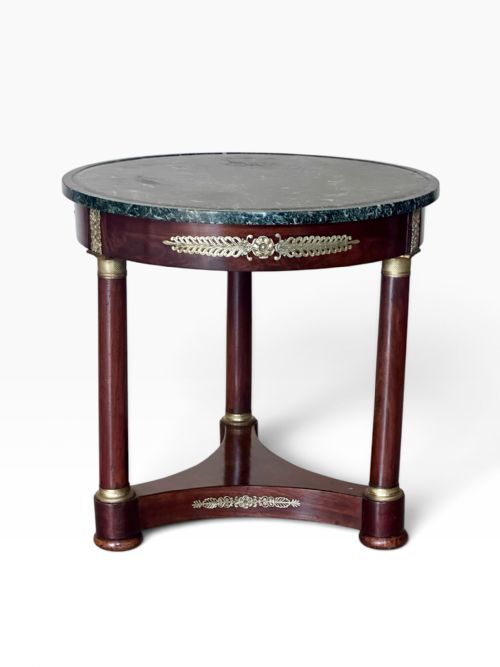
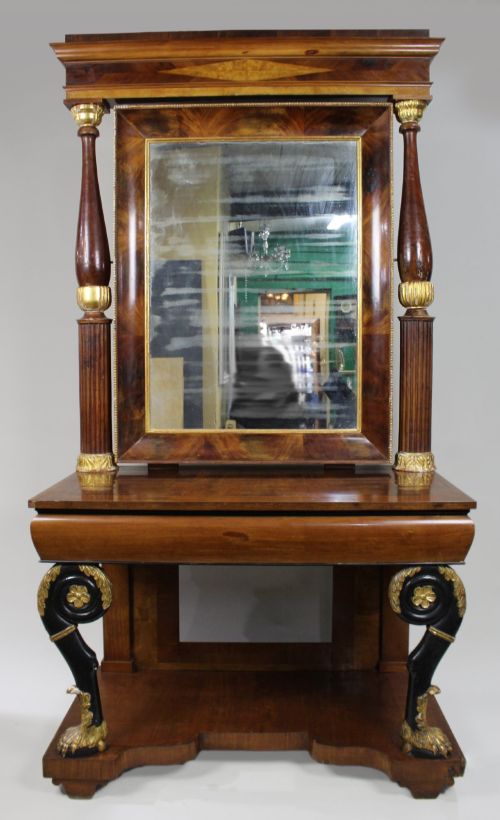
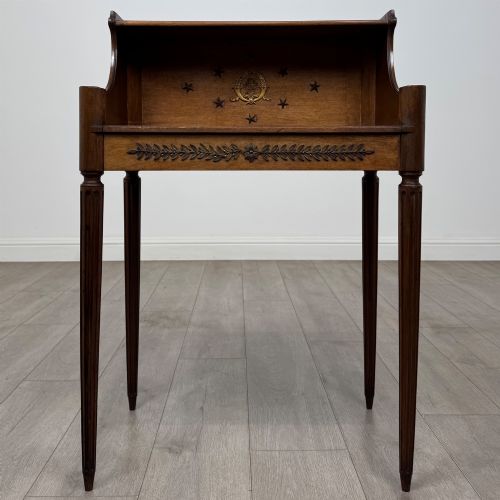
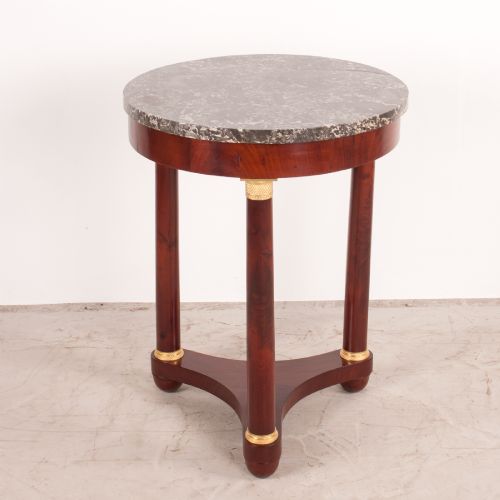
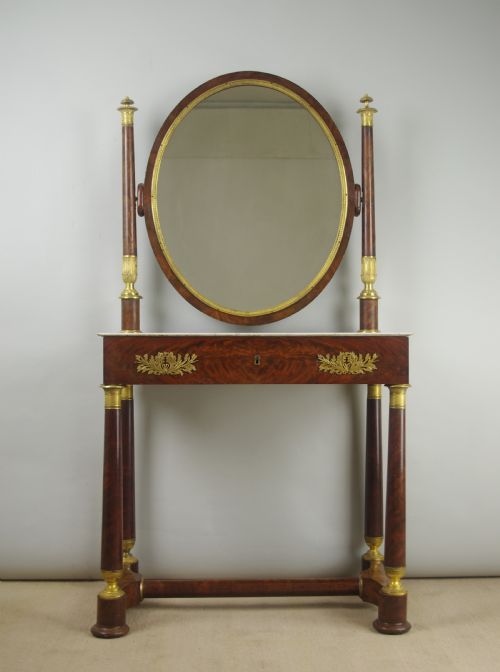
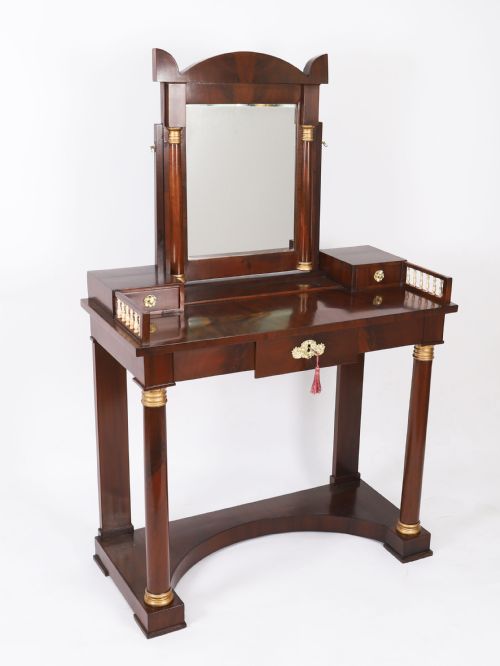
When searching for an empire mahogany table, buyers encounter a specific vocabulary of nineteenth-century forms originating largely from French workshops and subsequent revival periods. The selections span circular gueridon pedestal tables, rectangular console tables, writing desks, and dressing tables produced across the nineteenth and early twentieth centuries.
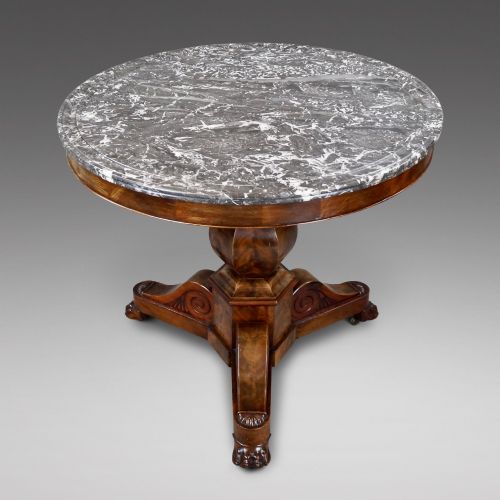
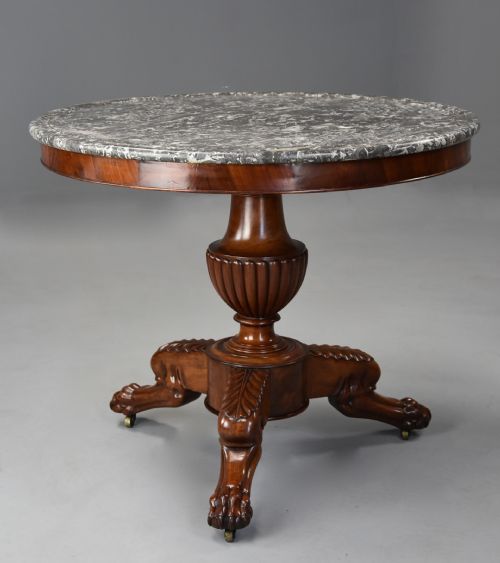
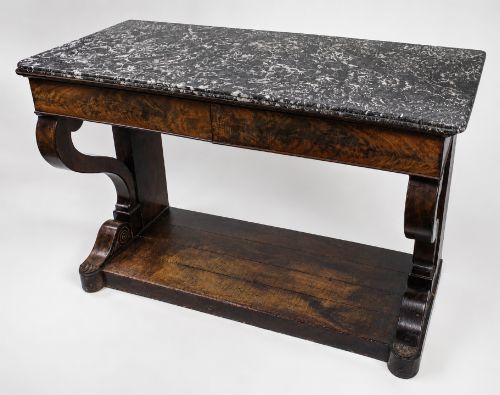
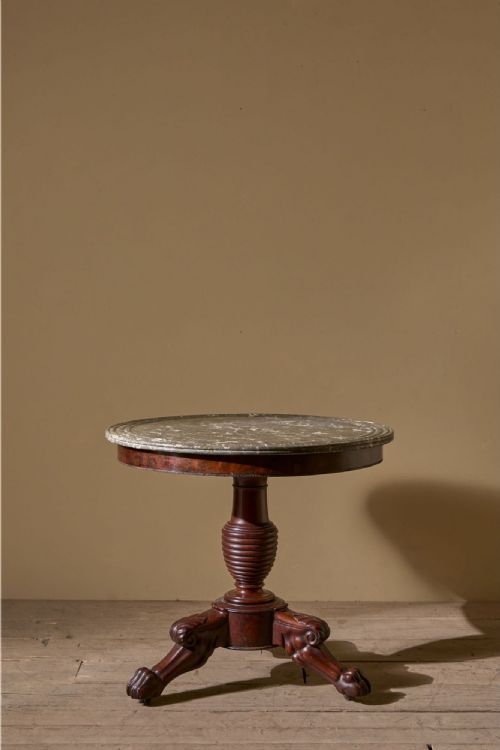
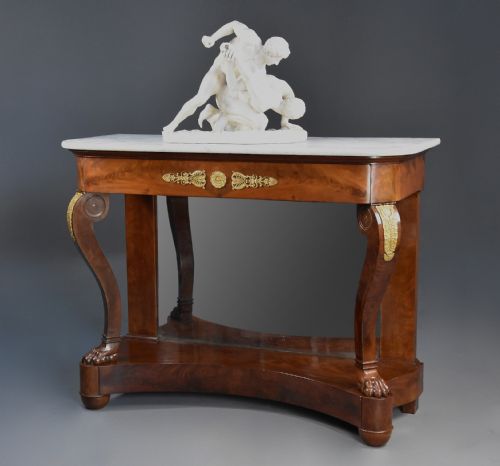
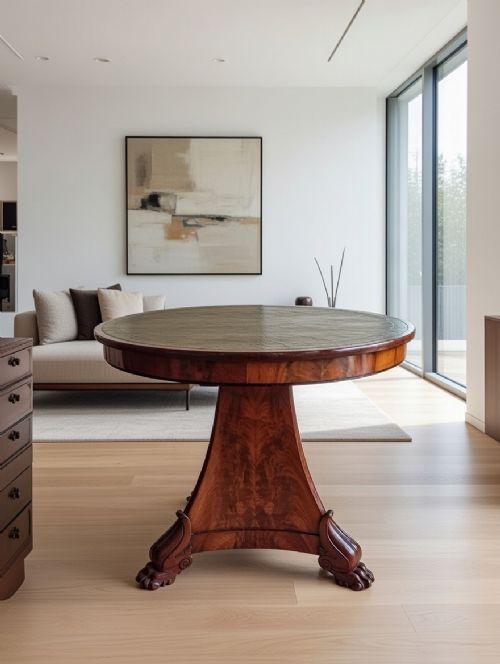
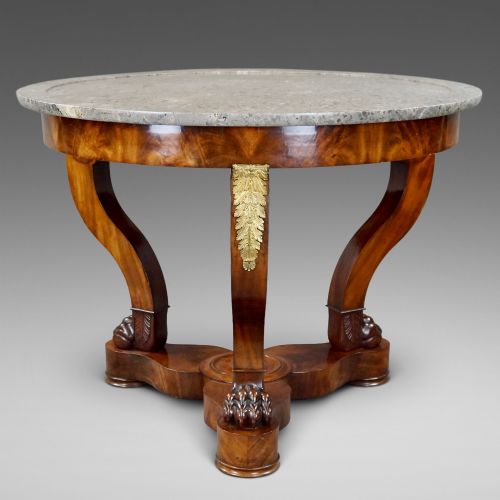
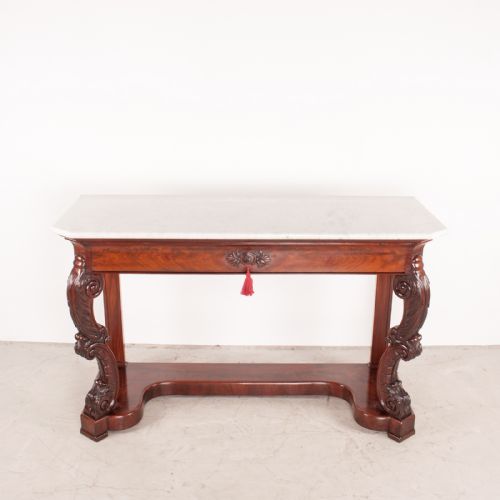
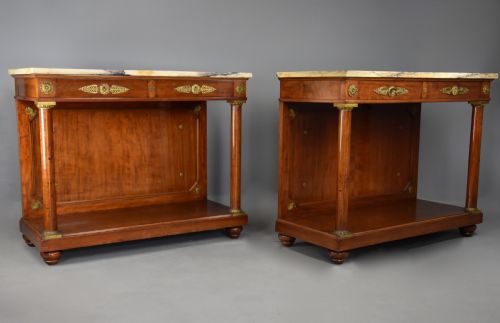
The circular gueridon table forms the most frequent encounter on this page, typically featuring a central pillar supported by a tripartite base and crowned with a heavy stone top. Console tables designed to stand against walls frequently appear alongside them, often retaining original veined marble surfaces and architectural proportions.
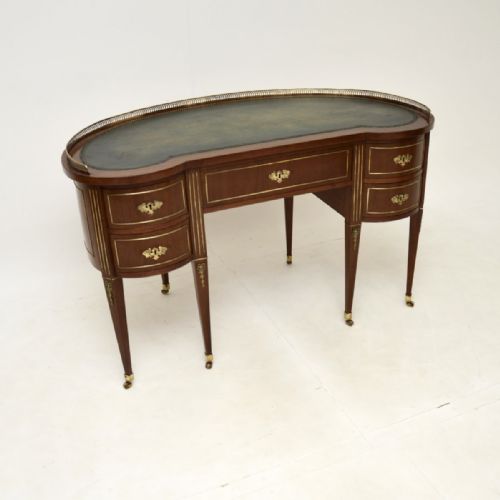
Origins stretch from early nineteenth-century French and Austrian interpretations through to later Edwardian and Empire Revival revivals built across Europe. Forms range from compact bedside cabinets and occasional tables to large display consoles and bureau plat writing desks.
Materials and Construction
Constructed primarily from solid mahogany and selected flame mahogany veneers, these pieces rely on dense tropical hardwoods applied over sturdy secondary framing to achieve deep chatoyancy and grain movement. Cabinetmakers selected figured veneers for tabletops and drawer fronts, contrasting the dark timber warmth against cooler structural elements.
Cast ormolu and gilt bronze mounts define the decorative vocabulary, pinned or screwed onto corners, aprons, and pedestals to accentuate structural lines. Veined white, grey, and red marble slabs fitted directly into recessed tabletop frames provide heavy, durable working surfaces.
Additional detailing incorporates applied brass stringing, parcel gilding, and carved wooden supports such as swans or pedestals. Joints utilise traditional cabinetmaking joinery, while specialist hardware secures heavy marble tops and hinged writing surfaces.
Carved wooden swans frequently support the pedestals of early gueridon tables, keeping watch over centuries of parlour tea.
Assessing Craftsmanship and Material Selection
The grade of an empire mahogany table depends heavily on the selection of timber veneers, where highly figured flame mahogany or plum pudding grain distinguishes finer examples from plain stock. Superior pieces display bookmatched grain patterns that flow symmetrically across large surface areas without disruption.
Castings of ormolu mounts indicate the underlying standard of the piece, with sharper chiselling, heavier weight, and crisper detail separating superior bronze work from simpler cast brass fittings. The integration of original marble tops, particularly those featuring unusual fossil or coloured veining, elevates the status of a console or gueridon.
Structural integrity and attribution mark the boundary between standard production and masterwork execution. Fine proportioning in the base supports, precision in joinery, and documented maker stamps or verified workshop attributions signify the highest tier of surviving examples.
Krieger Paris·Jacob·Jean-Joseph Chapuis
The Empire Mahogany Table Glossary
- Gueridon
- A small circular table supported by a single central pillar, frequently topped with marble and used as a centre or occasional table.
- Console Table
- A wall table fixed or designed to stand against a vertical surface, frequently fitted with a marble top and matching pier mirror.
- Ormolu
- Gilt bronze ornamentation applied to furniture mounts, cast and hand-chiseled to produce sharp decorative details.
- Bureau Plat
- A large rectangular writing desk featuring drawers within the frieze, historically used in central room placements.
- Flame Mahogany
- Timber cut from the fork of the mahogany tree to produce a distinctive, flickering flame-like grain pattern.
Empire Mahogany Table: Frequently Asked Questions
What is an empire mahogany table?
An empire mahogany table is a nineteenth-century or revival furnishing characterised by neoclassical proportions, dark tropical wood veneers, and classical mounts. Common forms include circular gueridons, wall-mounted console tables, and writing desks.
These pieces reflect the stylistic influences of French design periods, integrating heavy stone tops and cast metal decorations into domestic and formal interior settings.
How do I identify a gueridon table?
A gueridon is distinguished by its single central pillar resting on a tripod or platform base, supporting a circular tabletop. They are typically compact and designed to stand in the middle of a room or beside seating.
Many examples feature inset marble slabs surrounded by mahogany or flame mahogany borders, often accented with gilt bronze mounts along the pedestal.
Are marble tops original to these tables?
Original marble tops on console tables and gueridons were cut specifically to fit recessed wooden frames built into the table chassis during initial manufacture. They show consistent age wear and match the exact dimensions of the rebate.
Replacement stone tops generally lack historical edge profiling or display secondary seating gaps within the surrounding timber frame.
How do I care for antique mahogany?
Antique mahogany requires stable room humidity and protection from direct sunlight to prevent timber shrinkage and veneer lifting. Maintaining consistent indoor climates preserves the original French polish or wax finish.
Dust surfaces regularly with a dry cloth and avoid silicone-based polishes that can penetrate the grain and damage old finishes over time.