

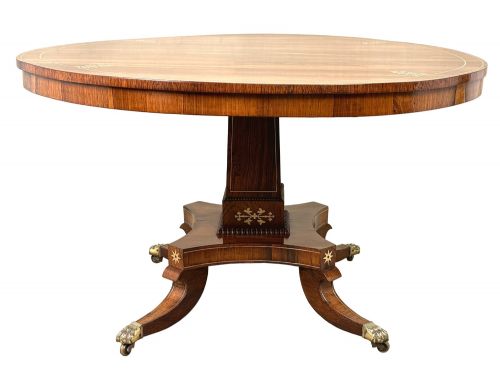


Georgian Rosewood Centre Table
A georgian rosewood centre table is a freestanding statement piece designed to anchor a room, bringing rich tropical timber and formal elegance to your interior.
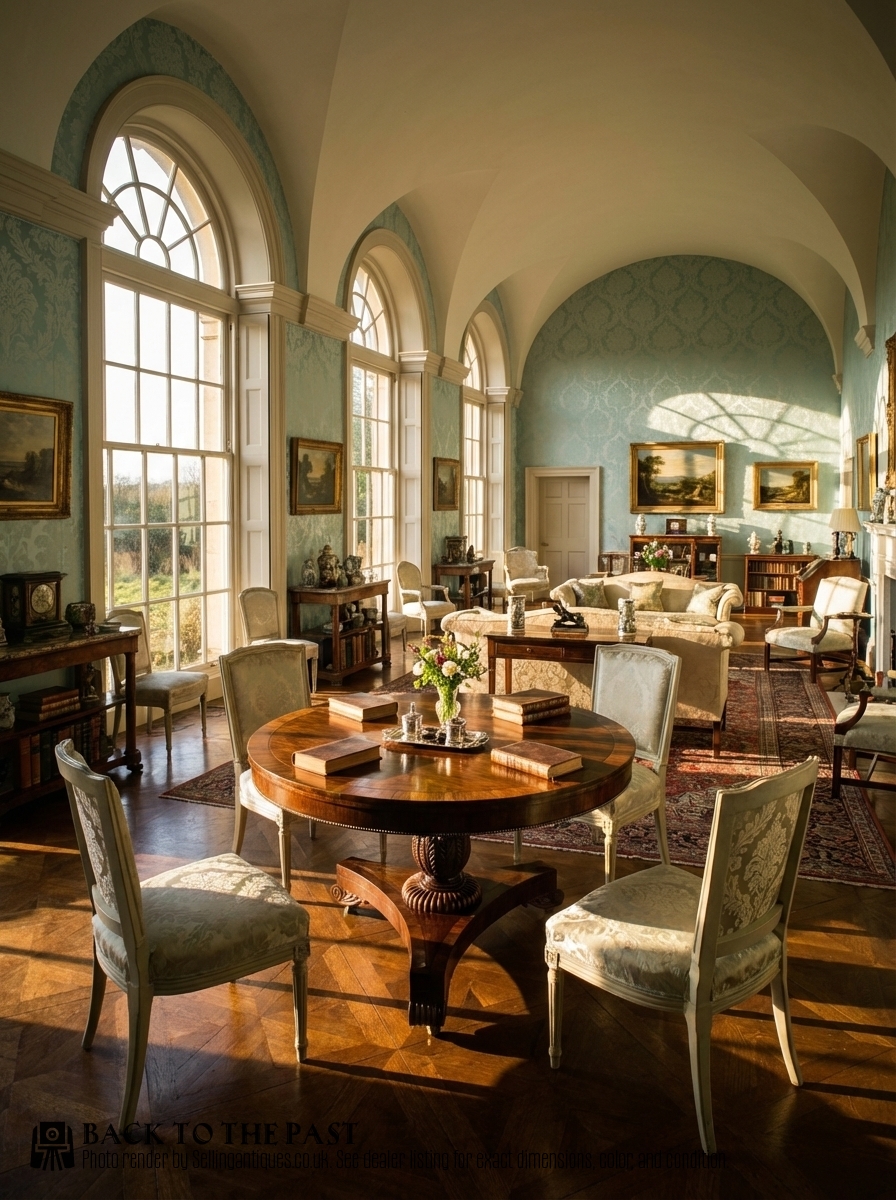
Georgian Rosewood Centre Table
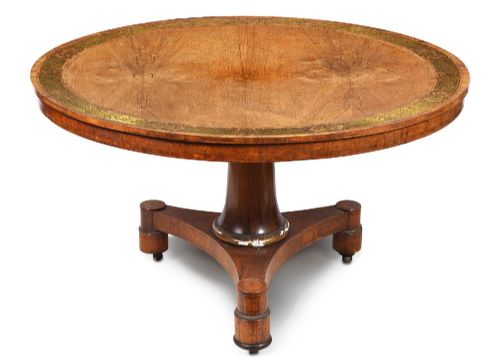
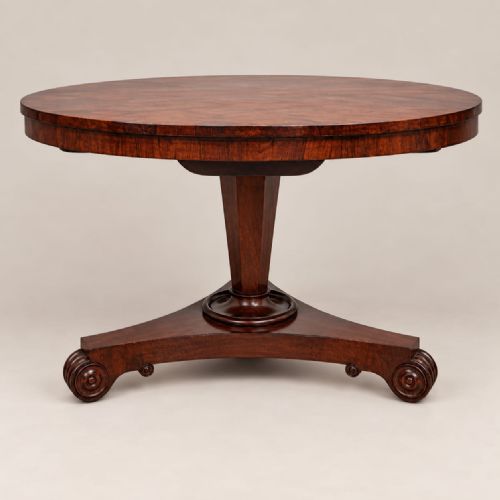
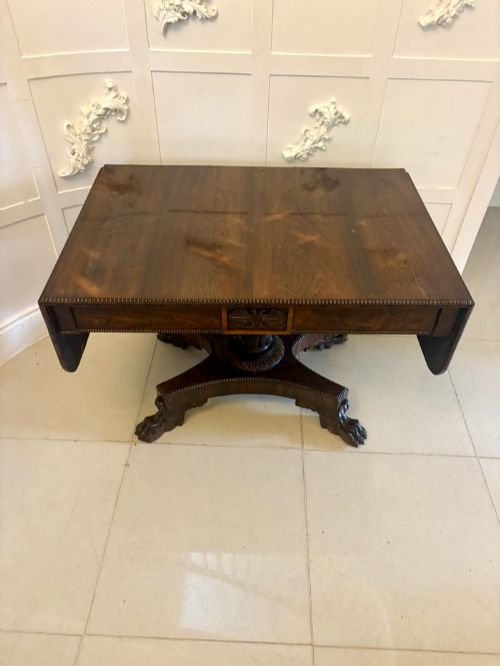
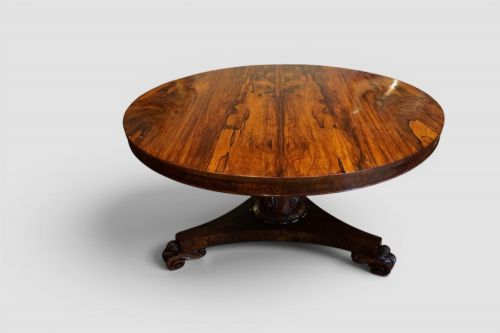
When you search for a georgian rosewood centre table, you encounter formal tables created to stand away from walls rather than sit against them. The selections span specific forms such as circular breakfast tables, library tables, sofa tables, and drum tables designed for principal rooms.
The periods represented stretch across the Georgian, Regency, William IV, and George IV eras into the nineteenth century. Most examples you meet on this page hail from the Regency and William IV periods, displaying the rich dark grains characteristic of the time.
Makers and designers of these periods utilised diverse stylistic influences, including Anglo-Indian details and parcel gilt highlights. You will find pieces varying from compact brass-inlaid circular tables to substantial pedestal library tables.
Evaluating the Craftsmanship
The standard of a georgian rosewood centre table depends on the selection of the veneer and the crispness of its surface carving or brass inlay. Superior examples display symmetrical grain matching across large table tops and precise hand-cut brass work rather than stamped substitutes.
Underpinnings dictate longevity and balance, particularly on pedestal and triform bases where heavy timber supports the weight. Pieces attributed to prominent workshops demonstrate superior joinery in the internal framing and drawer construction.
Tilt-top breakfast tables were cleverly designed to fold flat and hide away against the wall when breakfast was over.
Gillows of Lancaster·Ince & Mayhew
The Georgian Rosewood Centre Table Glossary
- Centre table
- A freestanding table finished on all sides so it can occupy the middle of a room rather than a wall. These pieces function independently of walls and often feature decorative pedestals or four-legged bases.
- Rosewood
- A dense, dark timber valued for its distinct grain patterns and deep colour variation. Cabinet makers prized it for high-status furniture throughout the nineteenth century.
- Triform base
- A three-sided pedestal support beneath a central column or pillar. This configuration provides sturdy weight distribution for circular breakfast and centre tables.
- Parcel gilt
- The technique of applying thin gold leaf to specific carved details or mouldings on a wooden surface. It highlights architectural motifs against the dark rosewood body.
- Goncalo alves
- An exotic dense timber with striking contrasting dark brown and golden stripes. Makers occasionally paired it with rosewood for decorative effect in table tops.
Georgian Rosewood Centre Table: Frequently Asked Questions
Where should a centre table go?
These tables are designed to stand in the middle of a room, allowing access from all sides. They traditionally anchor the layout of a principal reception room or library.
Because the timber and finish are detailed all the way around, they look complete from any angle rather than pressed against a wall.
How do I identify a Regency table?
Regency tables typically display classical architectural influences, crisp brass inlay, and dark rosewood veneers. Look for pedestal bases with carved feet and restrained brass mounts.
Proportions remain balanced and elegant, drawing inspiration from ancient Greek and Roman designs popular during the early nineteenth century.
Can I use a breakfast table for dining?
Circular breakfast tables function well for casual dining or as a centre table in a large hallway. Their tilt-top mechanism originally allowed servants to store them against walls when not in use.
Ensure the height and leg clearance suit your chairs if you intend to use one regularly for meals.
What is a library table used for?
Library tables provide a large, stable writing and reading surface with finished backs so they can sit centrally in a study. They frequently incorporate drawers for stationery and papers.
The sturdy pedestal or four-legged frames support heavy volumes and scholarly materials.