


Chippendale Secretaire Chest
A chippendale secretaire chest combines upper storage with a fitted writing drawer, offering a practical workspace disguised as a classic drawer chest.
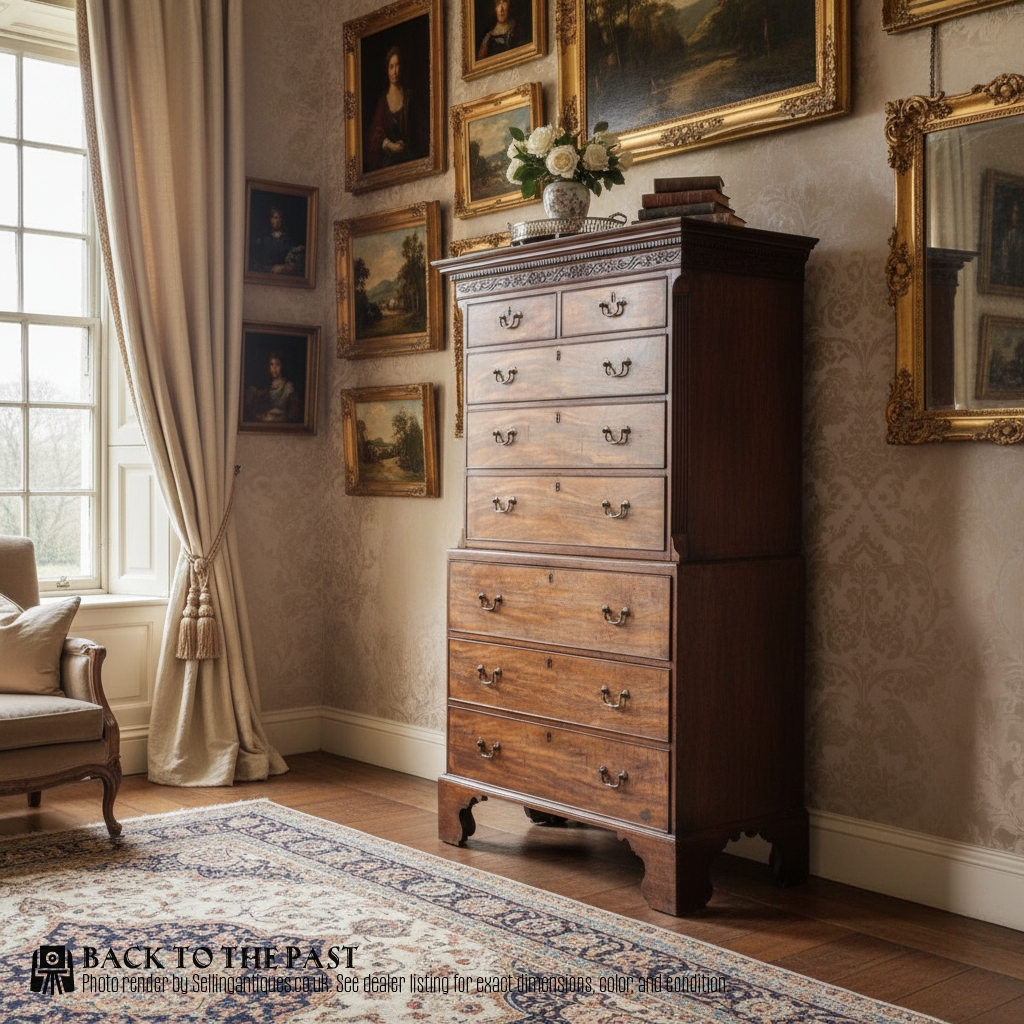
Chippendale Secretaire Chest
When you search for a chippendale secretaire chest, you encounter substantial case furniture from the eighteenth and nineteenth centuries, often taking the form of tallboys, chests on chests, or bookcases. These tall architectural pieces combine standard drawer storage with a drop-front writing drawer containing small compartments and pigeonholes.
The versions most frequently met on this page date from the eighteenth century, aligned with the Georgian and Chippendale styles. They combine impressive height with functional interior desks, reflecting the domestic requirements of their original period.
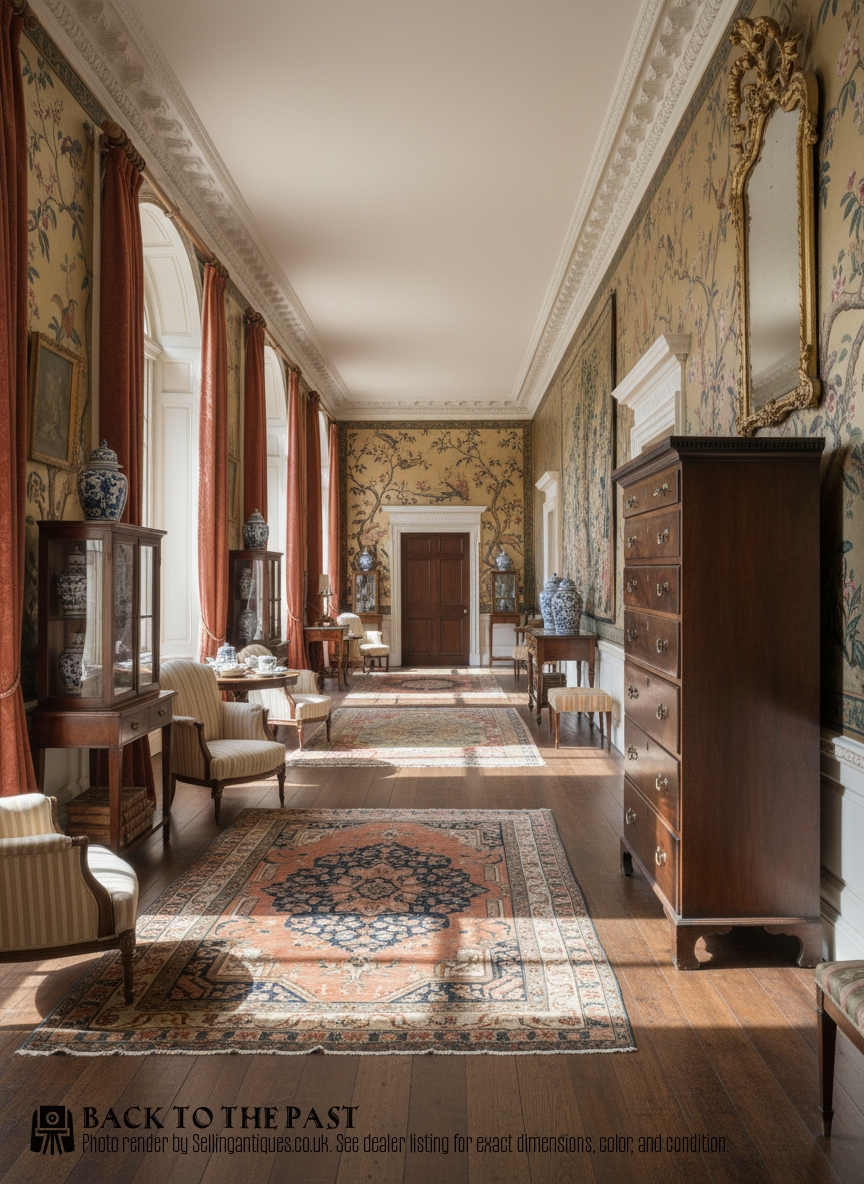
Materials and construction
These pieces rely primarily on mahogany and oak timber construction, often paired with secondary pine elements for internal drawer linings. Timber selection dictated both the visual weight and the structural stability of these tall case pieces.
Hardware details typically include brass handles and escutcheons, while finer examples incorporate leather writing surfaces inside the drop-front drawer. Construction methods prioritise rigid carcase framing to support the heavy stacked sections of chests on chests and tallboys.
Many secretaire drawers contain hidden secret compartments behind miniature pigeonholes, designed for storing private letters and small valuables away from prying eyes.
Judging the work
Quality separates through the crispness of carved wooden details and the harmonious proportions of the stacked sections. Master cabinetmakers achieved tighter drawer joints and more sophisticated internal layouts within the secretaire drawer.
The selection of timber grain and the preservation of original brass hardware heavily influence the visual integrity of a piece. Pieces retain higher standing when secondary woods and internal drawer configurations remain undisturbed by later alterations.
The Chippendale Secretaire Chest Glossary
- Secretaire
- A desk or cabinet containing a drawer with a drop-front that conceals writing surfaces and pigeonholes. This clever mechanism allows a tall chest of drawers to double as a writing desk.
- Tallboy
- A tall chest of drawers built in two stacked sections, often combining a chest on chest configuration. They maximise vertical storage capacity while maintaining a formal presence in a room.
- Chippendale
- A mid-eighteenth-century English furniture style associated with the designs of Thomas Chippendale. It is characterised by solid proportions, classical motifs, and skilled mahogany joinery.
- Escutcheon
- A flat plate of brass surrounding a keyhole to protect the surrounding wood from wear. They serve both a protective function and a decorative role on drawer fronts.
- Carcase
- The main structural body or frame of a piece of case furniture before drawers and doors are fitted. Its construction quality dictates the long-term stability of tall chests.
Chippendale Secretaire Chest: Frequently Asked Questions
What is a chippendale secretaire chest?
A chippendale secretaire chest is a tall storage furniture piece featuring a specialised drawer that folds down to reveal a writing desk. It merges the vertical capacity of a chest on chest with the practicality of a bureau.
Cabinetmakers built these pieces primarily during the eighteenth and nineteenth centuries using dense timbers like mahogany and oak. They served as dual-purpose furniture for writing letters and storing garments in formal rooms.
How do I use a secretaire drawer?
To use the secretaire drawer, you unlock the fall-front and lower it gently on horizontal brass supports or hinges. This reveals a fitted interior containing small drawers, central compartments, and often a leather writing insert.
When writing is finished, you simply lift the fall-front back into place and secure it with a key. This conceals correspondence and writing implements while keeping the exterior looking like a standard chest of drawers.
Where were these chests placed?
Original owners placed these tall pieces in private chambers, libraries, and formal reception rooms where both storage and writing facilities were required. Their imposing height made them natural focal points against large wall spaces.
In modern rooms, they function well in studies, hallways, or spacious bedrooms where vertical furniture fits comfortably. Their dual nature provides useful surface workspace without requiring a separate standalone desk.
How do I distinguish 18th century pieces?
Eighteenth-century examples display hand-cut dovetails, dense native mahogany timbers, and traditional secondary woods like oak or pine inside the drawer framing. The proportions follow Georgian design principles with restrained ornamentation.
Later nineteenth-century interpretations often exhibit subtle shifts in timber selection and mechanical fittings within the interior pigeonholes. Examining the construction of the internal drawer dividers helps reveal the period of manufacture.