



Mahogany Secretaire Tallboy
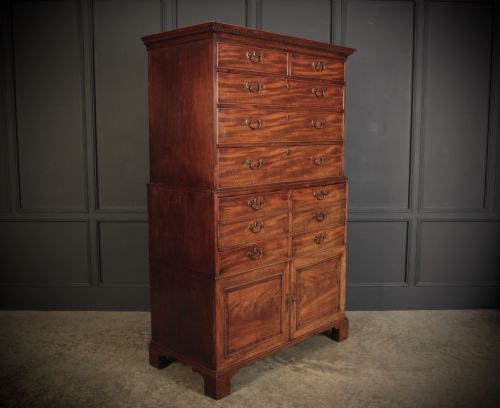
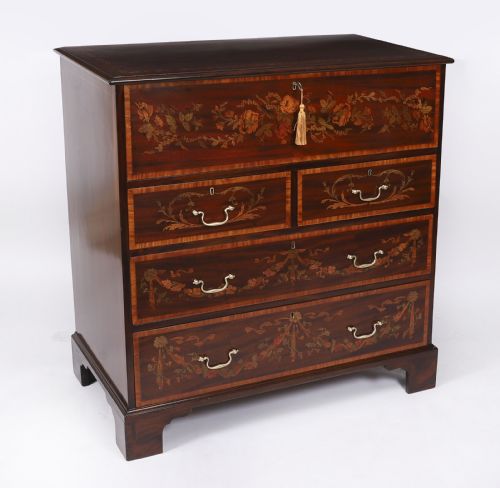
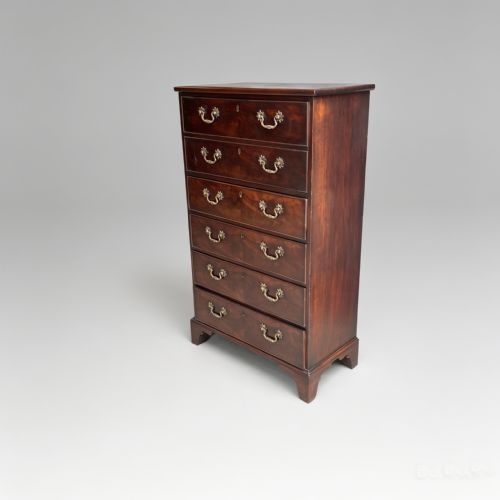
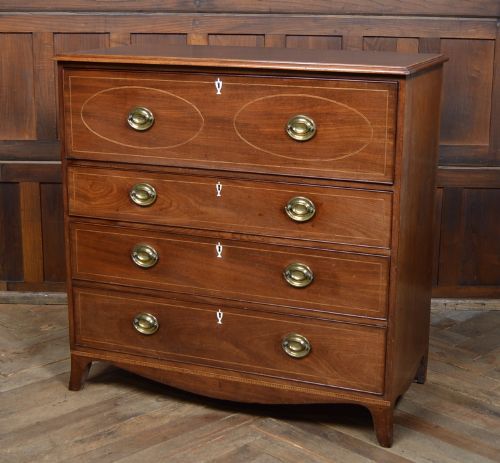
A mahogany secretaire tallboy combines towering vertical storage with a drop-down writing drawer, offering substantial utility and Georgian proportion.
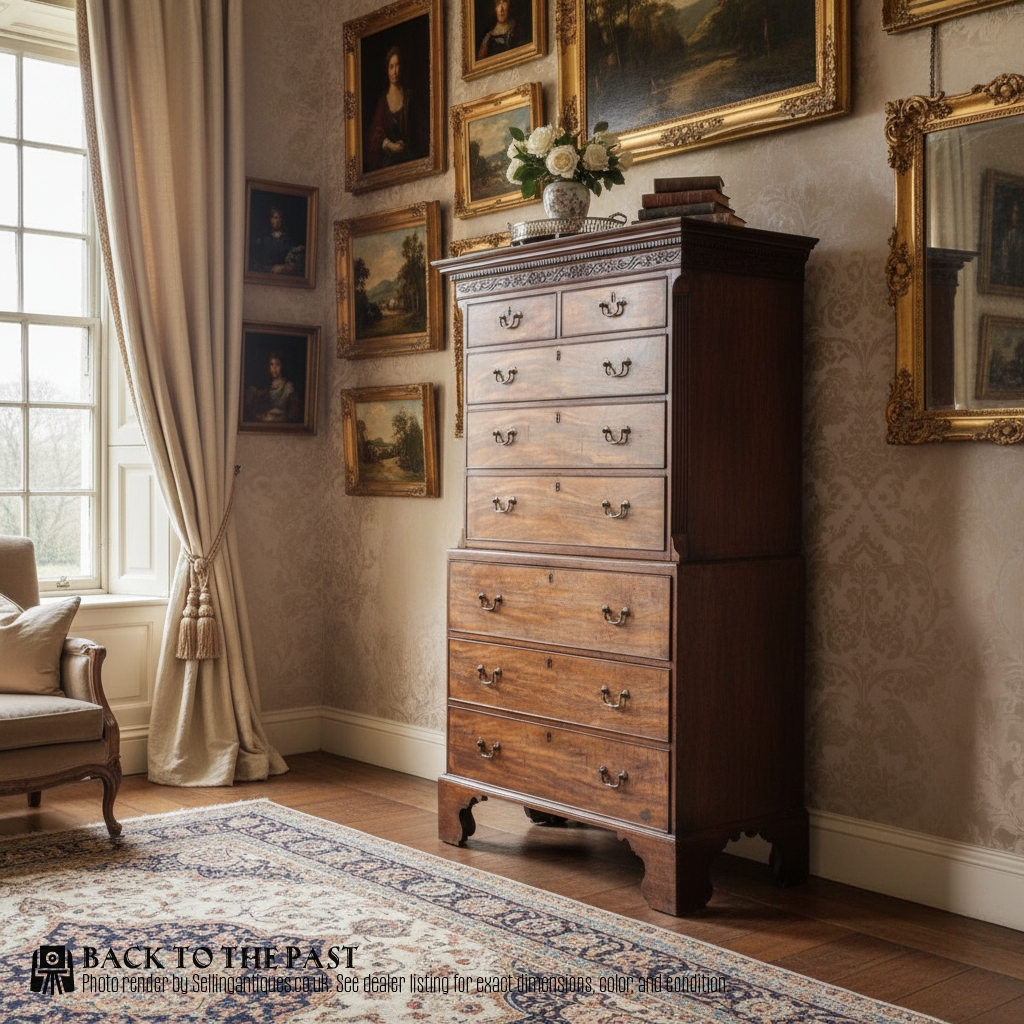
Mahogany Secretaire Tallboy
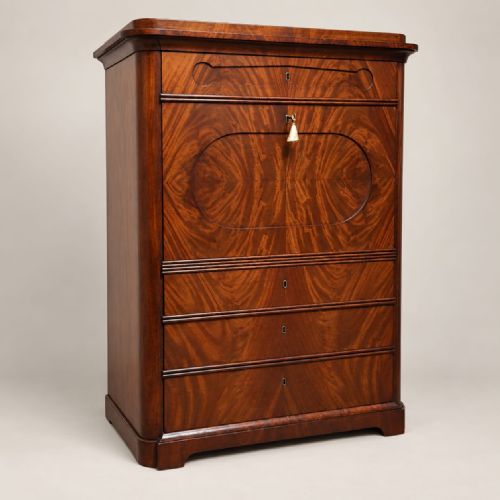
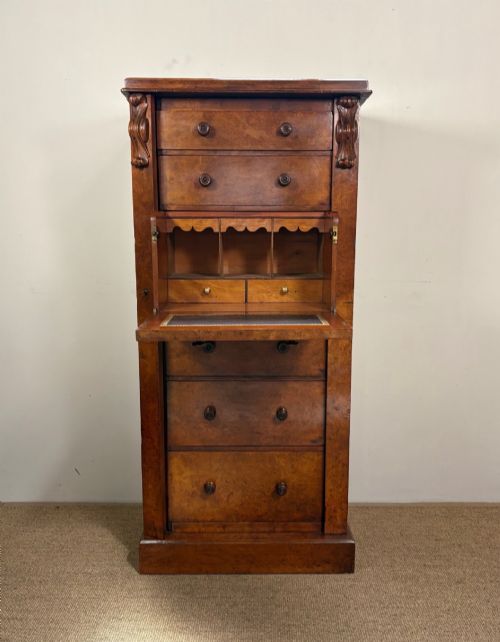
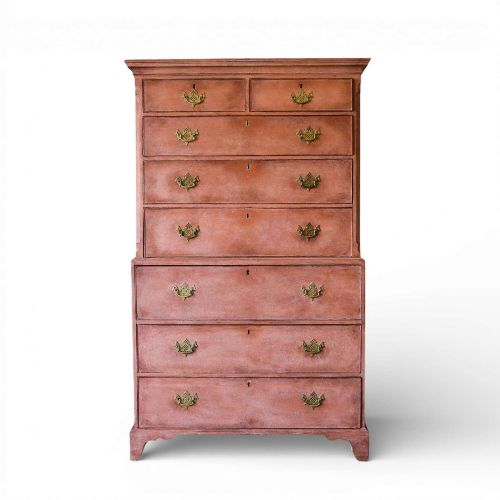
A mahogany secretaire tallboy is a commanding piece of case furniture that merges a traditional chest on chest or tall chest with a dedicated writing drawer. When you search for this phrase, you encounter vertically stacked drawers where one middle drawer pulls down to reveal a fitted writing surface, small compartments, and pigeonholes.
The pieces on this page span the 18th century, Georgian period, Regency era, and Victorian times. Most examples are constructed from solid timber with veneer surfaces, taking the form of tall chests, chests on chests, or secretaire bookcases originating from English, Irish, and continental workshops.
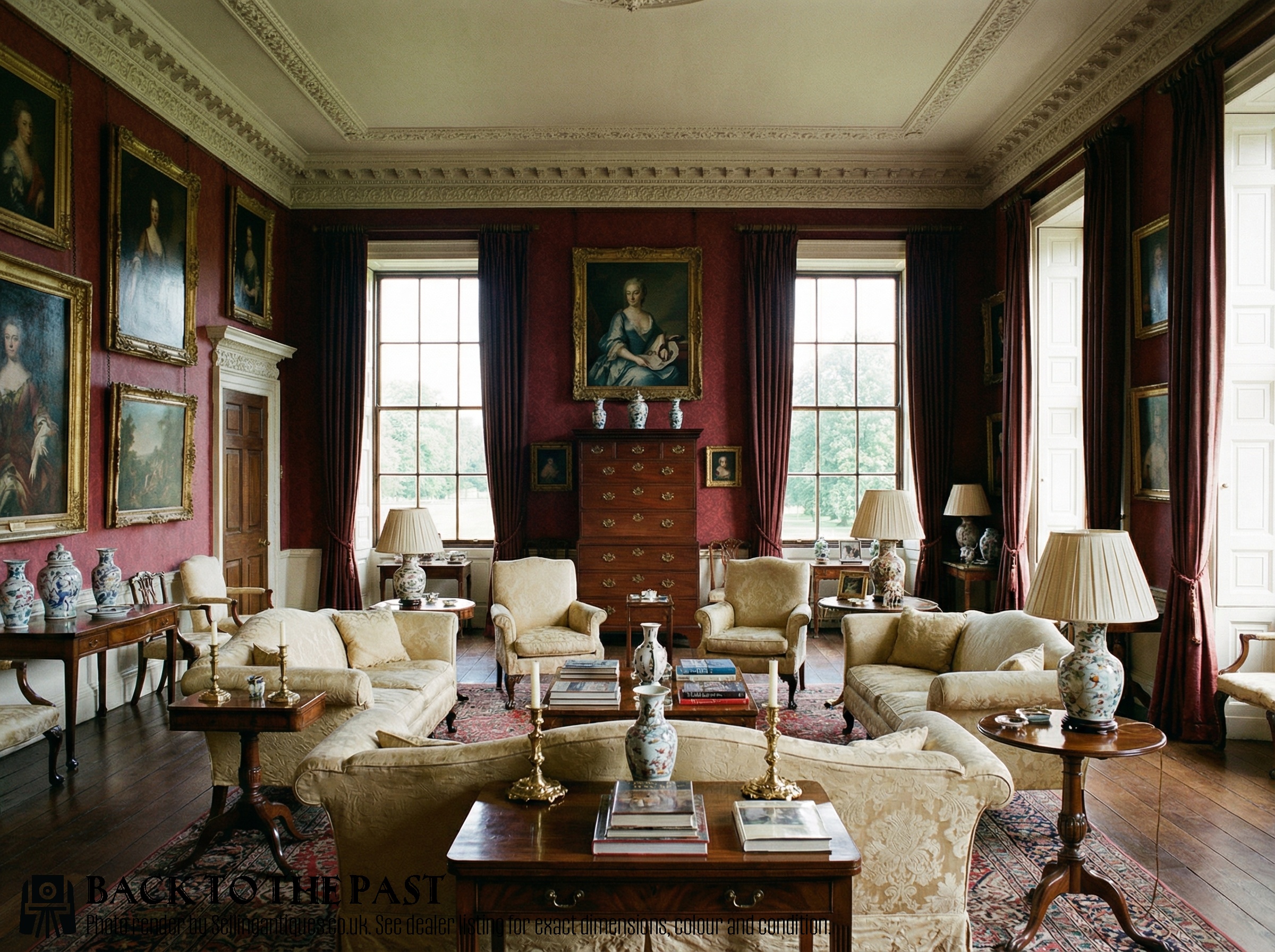
How They Were Made
Cabinet makers built these pieces using solid mahogany, oak for drawer linings, and walnut, complemented by flame mahogany veneer on the primary surfaces. Brass hardware, such as drop handles, escutcheons, and locking mechanisms, secures the drawers and doors.
Secondary timbers like oak appear inside the drawers, while specialised variants incorporate leather or baize writing inserts within the pull-down flap. Construction methods rely on traditional dovetail joints for the drawer carcasses and frame assemblies.
Mahogany Secretaire Tallboy Retail Price Guide 2026
Typical asking prices for mahogany secretaire tallboy among the pieces listed under this phrase on Sellingantiques today, from the lower quarter to the upper quarter. They describe what is for sale here now, not the wider market.
Listings feature 18th century, Georgian, Regency, and Victorian periods, constructed from mahogany, oak, walnut, and brass.
What Varies in Quality
The standard of a mahogany secretaire tallboy rests upon the selection of timber figure, particularly the depth and movement in the flame mahogany veneer. Superior examples display meticulous matching of wood grain across drawer fronts and cornices.
Internal joinery and the complexity of the fitted writing compartment also distinguish the work. Finely detailed pigeonholes, secret drawers, and robust oak linings indicate superior cabinet making compared to simpler utilitarian versions.
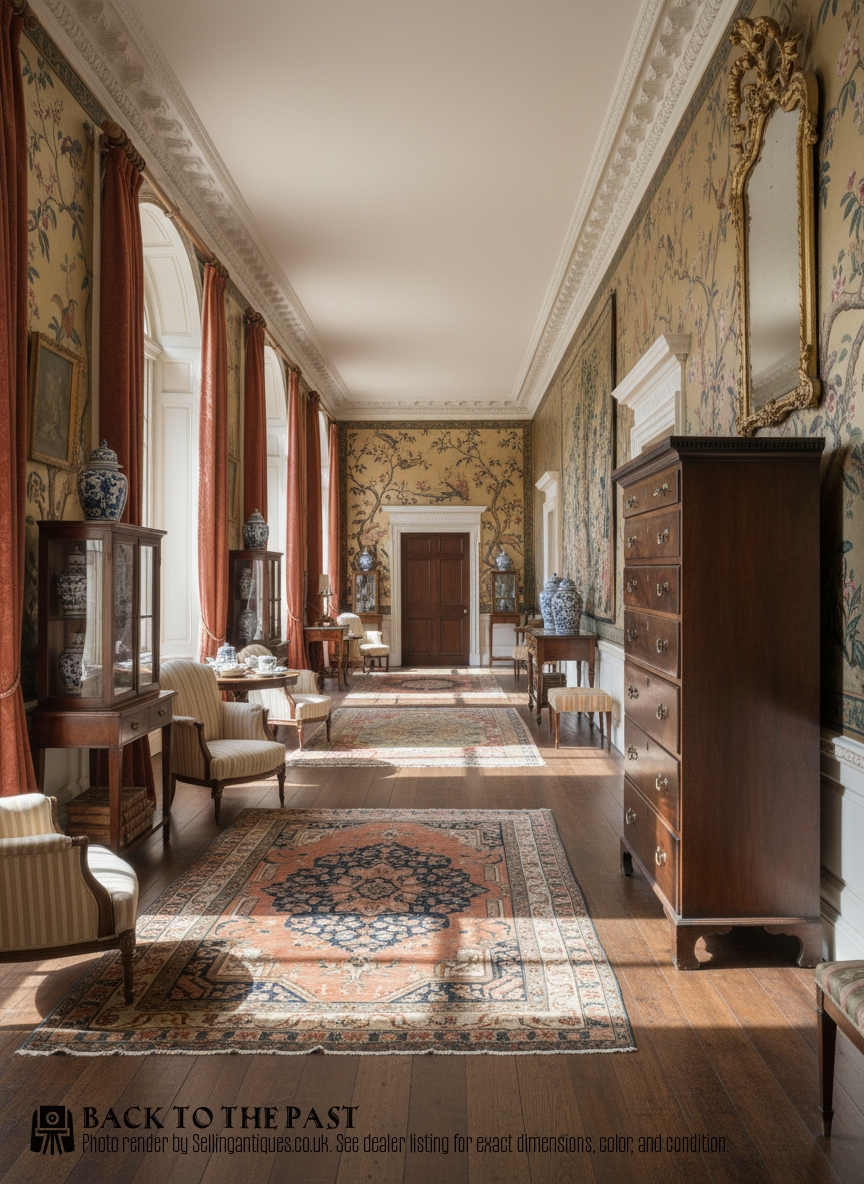
Gillows of Lancaster·Druce & Co.
The Mahogany Secretaire Tallboy Glossary
- Tallboy
- A tall chest of drawers, often built as one chest stacked upon a second larger chest. This form maximises vertical storage capacity while occupying a compact floor footprint.
- Secretaire
- A desk or drawer fitted with a drop-down front that reveals a writing surface and small interior compartments. It conceals writing materials when closed.
- Flame mahogany
- A decorative wood veneer cut from timber where the grain creates a flame-like or undulating pattern. It was widely utilised on principal display surfaces during the Georgian and Regency periods.
- Escutcheon
- A protective brass plate surrounding a keyhole. It prevents the surrounding wood from wearing down through repeated use of the key.
- Dovetail
- A joint formed by interlocking wedge-shaped fingers, secured with glue. This traditional technique fastens drawer corners and carcass frames together securely.
Mahogany Secretaire Tallboy: Frequently Asked Questions
What is a secretaire tallboy?
A secretaire tallboy is a tall chest of drawers featuring a specialised drawer that drops down to form a writing desk. It combines high-capacity vertical storage with a compact integrated workspace.
These pieces typically consist of two stacked sections or a tall single carcass, housing multiple deep drawers beneath or above the central writing compartment.
How do I use the writing drawer?
The writing drawer opens by unlocking the flap and lowering it forward, supported by brass hinges or side arms. This reveals an internal arrangement of small drawers, pigeonholes, and a baize or leather writing surface.
When writing is finished, documents and ink are stowed inside the compartments before the flap is lifted and locked shut, restoring the appearance of a standard chest.
How do I tell Georgian from Victorian pieces?
Georgian and George III pieces generally exhibit lighter proportions, finer cockbeading around drawers, and architectural cornices reflecting 18th-century design. Timber selection often emphasises rich figuring and subtle inlay work.
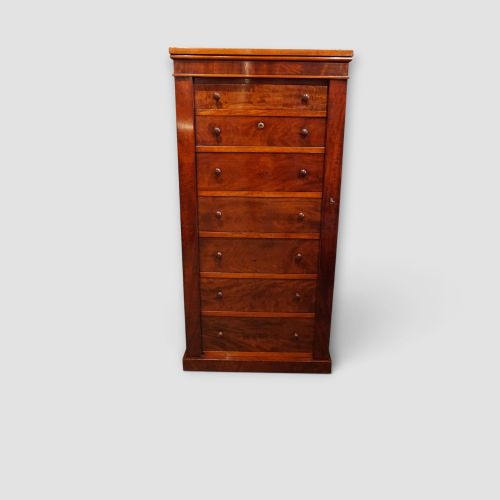
Victorian examples tend to be heavier in scale, sometimes utilising robust locking flap mechanisms like Wellington actions, or displaying military brass corners and recessed campaign handles.
Where were these placed in a home?
Historically, these tall storage units stood in bedrooms, dressing rooms, or private studies where space for a separate desk was limited. Their vertical design provided generous wardrobe and document storage without dominating the floor area.
Today, they function effectively in bedrooms, hallways, or living rooms as statement storage pieces that conceal modern paperwork behind period cabinetry.