
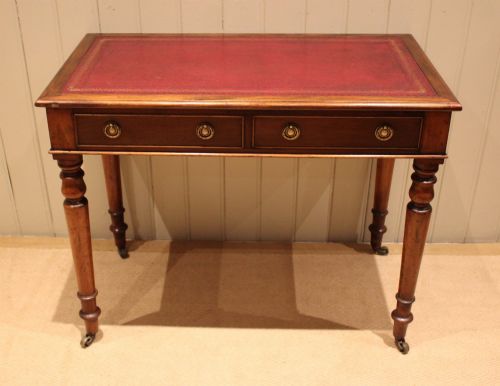
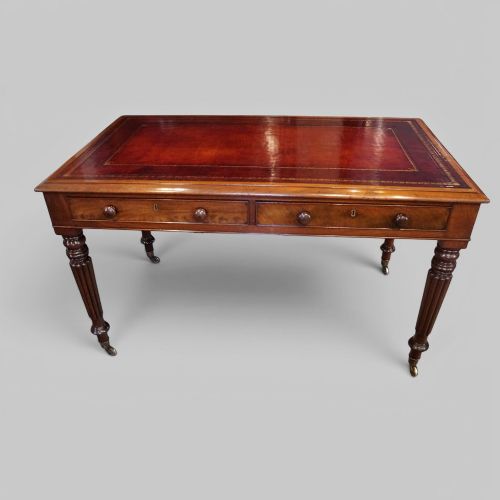
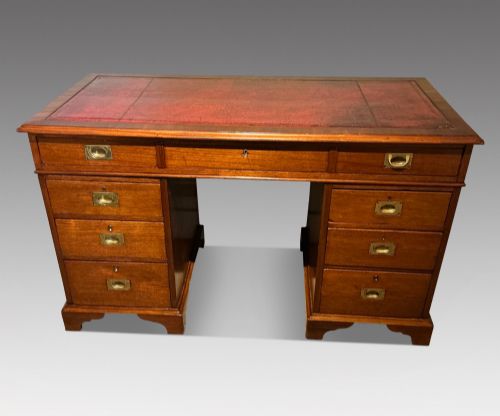
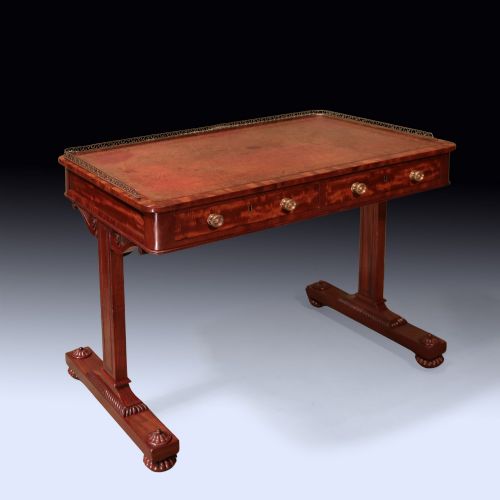





Red Mahogany Writing Desk
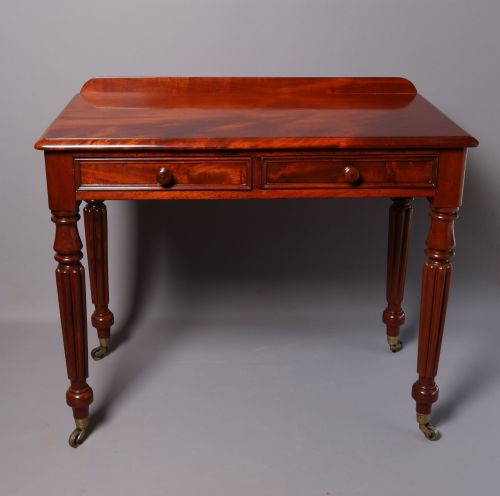
A red mahogany writing desk brings warmth and steady utility to a room, offering rich timber surfaces and classic proportions for daily correspondence.
Red Mahogany Writing Desk
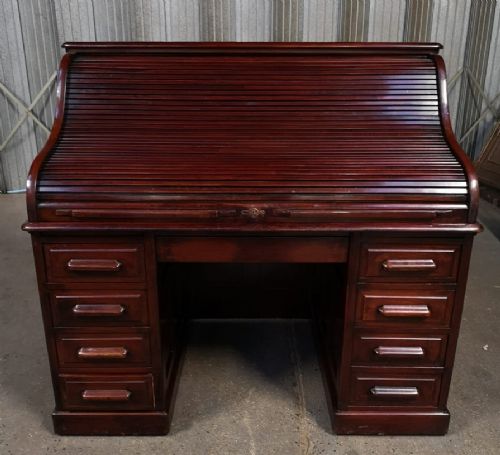
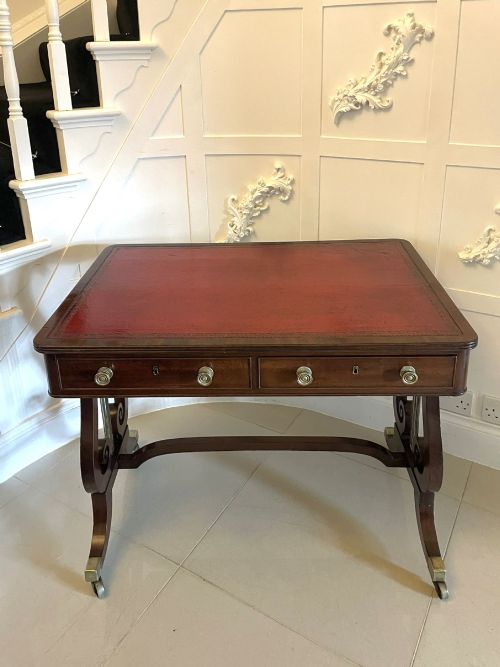
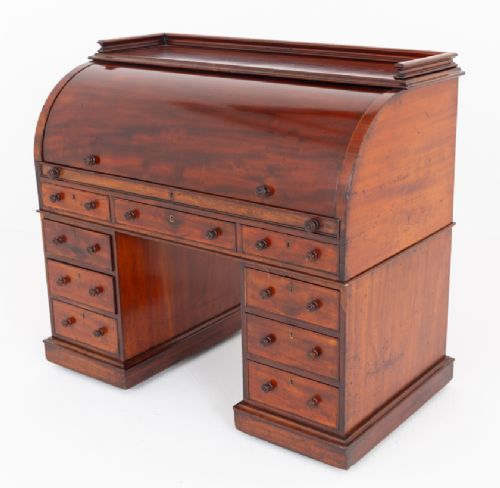
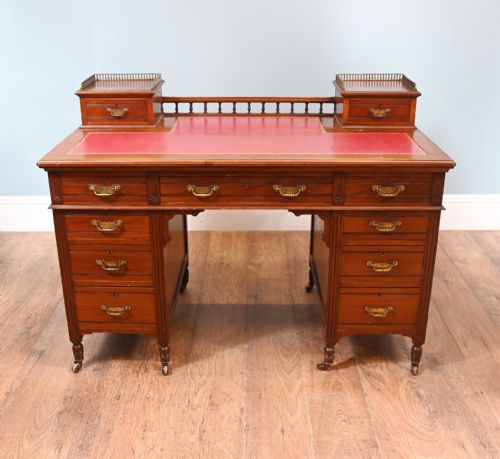
A red mahogany writing desk encompasses a variety of forms designed for study and correspondence, most commonly appearing as Victorian pedestal desks, writing tables, and compact Davenports. These pieces originate across the eighteenth, nineteenth, and early twentieth centuries, spanning Georgian, Regency, Victorian, and Edwardian periods.
Buyers encountering this search phrase frequently meet large partners desks, twin pedestal office desks, and lighter kidney-shaped tables inlaid with satinwood. The inventory includes freestanding library tables, roll-top cylinders, and secretaire chests alongside simpler single-drawer writing tables.
Construction relies heavily on solid timber and rich veneers, frequently paired with leather writing surfaces, brass hardware, and occasionally canvas linings. Pieces range from large French Empire cylinders to modest ladies writing desks intended for domestic corners.
How they were made
Cabinet makers utilised dense timbers, selecting figured mahogany and flame mahogany veneers to cover primary surfaces with deep grain patterns. Secondary woods provided structural support inside drawers and carcases, while brass handles, key escutcheons, and castors finished the functional elements.
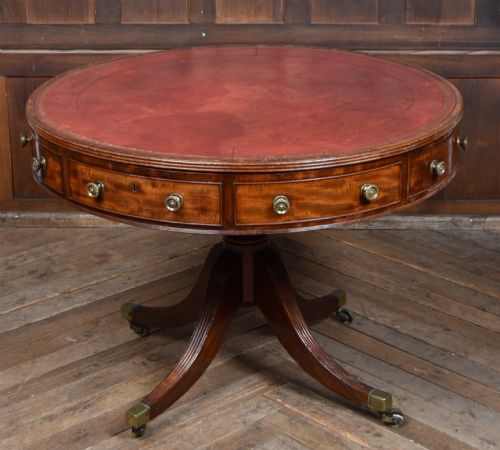
Writing surfaces were traditionally inset with leather or velvet, frequently bordered by gold tooling to frame the workspace. Inlaid details incorporated lighter contrasting timbers such as satinwood and marquetry motifs, particularly on Edwardian and late nineteenth-century examples.
Charles Dickens reportedly inspired a specific style of pedestal desk featuring ample drawers to house endless reams of manuscript pages.
What varies in quality
Quality rests in the selection of the timber grain, particularly the depth and movement found in flame mahogany veneers across drawer fronts and top panels. Superior examples display thoughtful timber matching and careful grain continuity across multiple drawers.
Construction methods also separate standard production from finer workshop output, evident in the precision of dovetail joints, the weight of cast brass fittings, and the integration of secondary woods. Maker attribution, such as pieces bearing stamps from Gillows or Jas Shoolbred, distinguishes specific workshop standards.
Gillows of Lancaster·Jas Shoolbred·Edwards and Roberts
The Red Mahogany Writing Desk Glossary
- Flame mahogany
- A veneer cut from timber where branches join the main trunk, producing a distinctive fire-like grain pattern. This highly decorative figuring often covers the primary drawer fronts of finer desks.
- Pedestal desk
- A heavy office or library desk supported by two banks of small drawers reaching down to the floor. The central opening provides legroom beneath a wide writing surface.
- Davenport
- A compact compact writing desk featuring a sloped, hinged writing surface above a set of side drawers. Early versions often incorporate a small stationery compartment on top.
- Partners desk
- A large double-sided writing table designed for two people to work opposite one another, featuring drawers and cupboards on both sides. These heavy pieces typically dominate the centre of a large study.
- Secretaire
- A cabinet or chest incorporating a pull-down drawer front that conceals a fitted writing interior with small pigeonholes and drawers. This form conceals writing materials when not in use.
- Marquetry
- The art of forming decorative patterns on wooden surfaces using thin veneers of different coloured woods. It appears frequently on Edwardian and late nineteenth-century pieces.
Red Mahogany Writing Desk: Frequently Asked Questions
What is a partners desk?
A partners desk is a large double-sided writing table built with drawers and cupboards on both faces. This design allowed two people to sit opposite each other and work independently.
These substantial tables typically occupied the middle of a library or large office. They require considerable floor space to be accessed properly from all sides.
How do I care for leather writing surfaces?
Leather writing surfaces benefit from gentle dusting with a dry cloth and occasional treatment with appropriate leather dressings to prevent cracking. Avoiding direct sunlight helps preserve the colour and gold tooling.
Many antique desks retain their original leather or replacement hide inserts. Using a blotter when writing prevents ink stains on vulnerable surfaces.
How do I date a mahogany desk?
Dating a desk involves examining construction techniques, hardware, and stylistic details such as leg shape and veneer selection. Georgian pieces often show hand-cut dovetails and simpler lines, while Victorian examples frequently feature heavier pedestals and roller mechanisms.
Maker stamps, locks, and secondary timbers provide further clues for narrowing down the decade of production. Stylistic revivals mean late nineteenth-century pieces can mimic earlier Georgian or Regency forms.
Where should I place a pedestal desk?
Pedestal desks work best positioned centrally in a room or against a wall with sufficient clearance for chairs and drawer access. Freestanding library models feature finished backs, making them suitable for placement in the middle of a study.
Ensuring stable temperature and humidity keeps the mahogany timber and veneer stable. Keeping the desk away from direct heat sources prevents wood shrinkage and warping.