



Georgian Secretaire Drawers
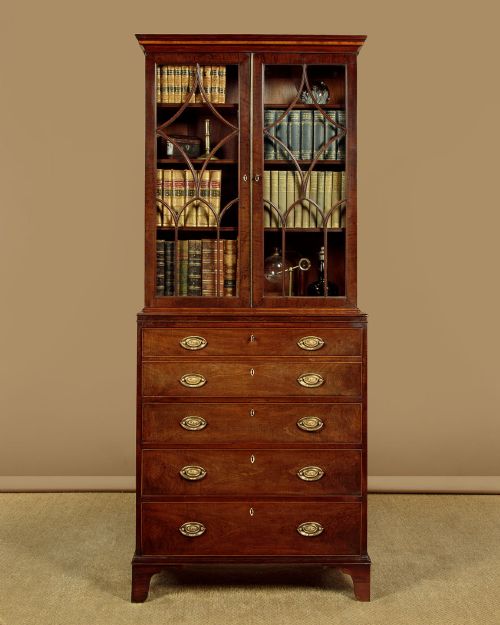
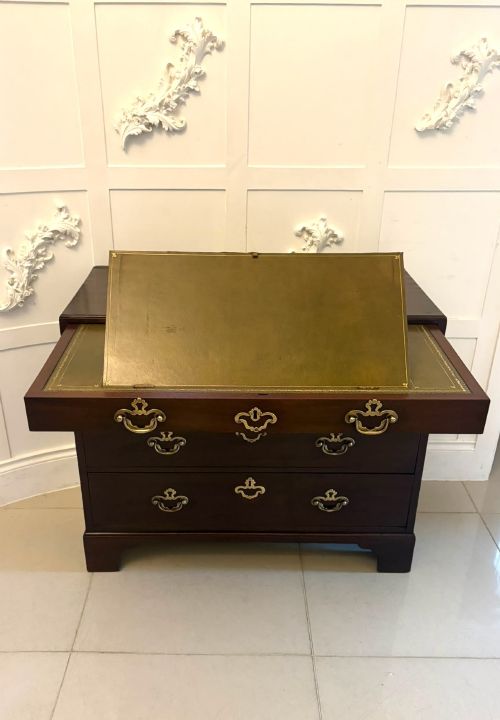
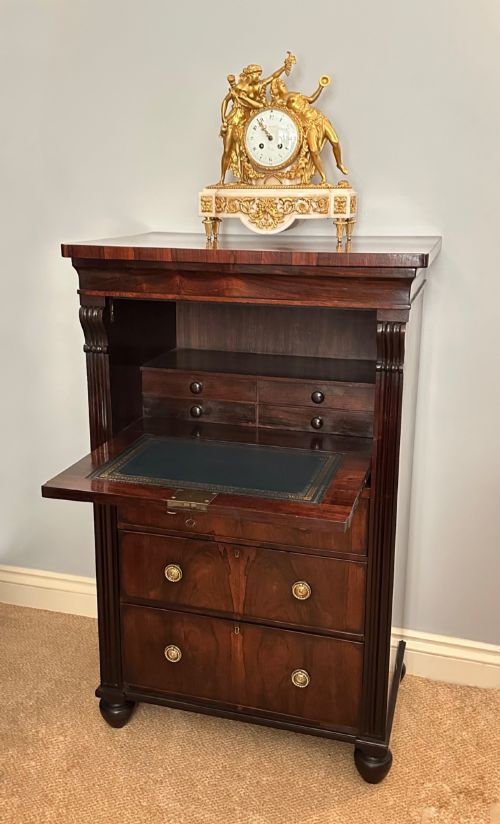
Georgian secretaire drawers combine the outward appearance of a standard chest with an integrated writing desk behind a drop-front drawer.
Georgian Secretaire Drawers
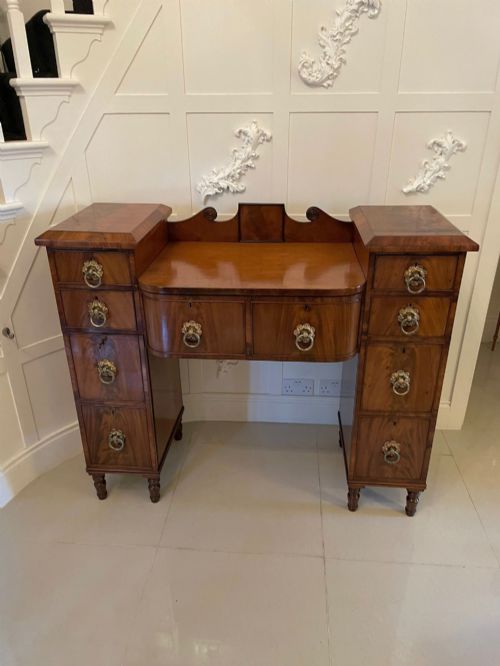
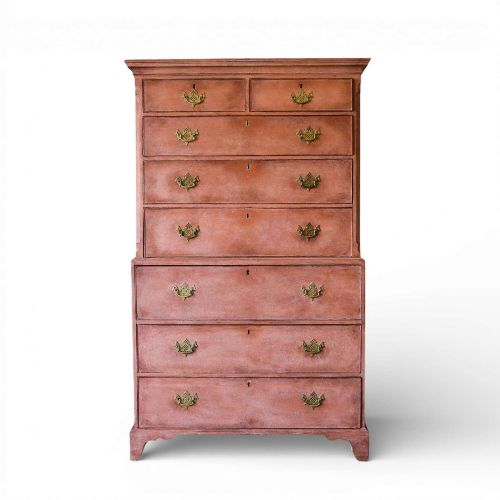
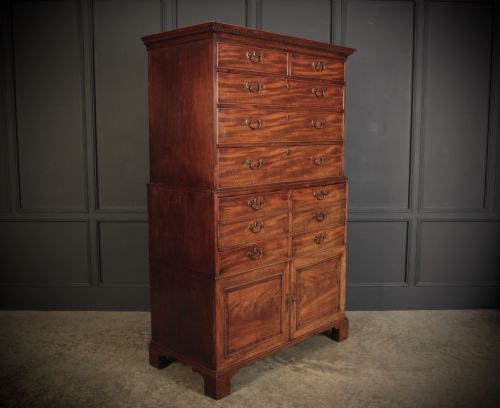
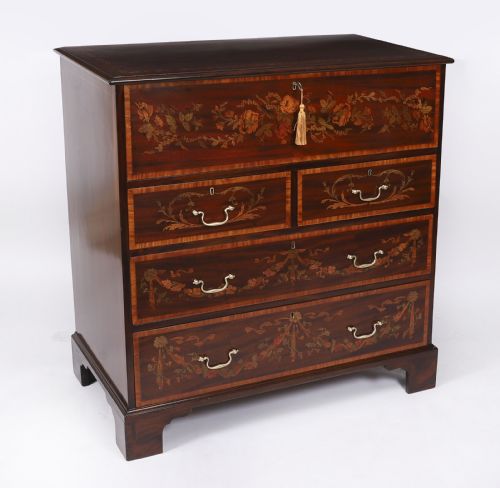
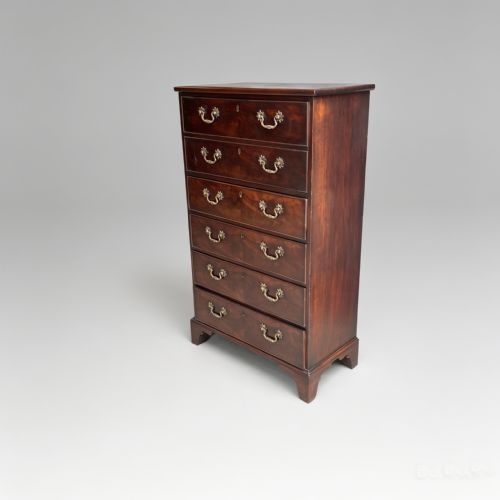
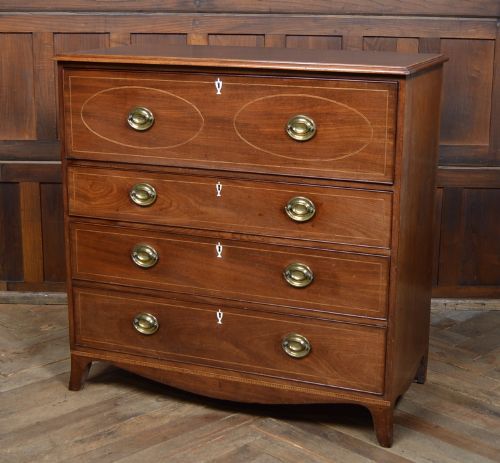
When searching for georgian secretaire drawers, a buyer encounters a diverse range of cabinetry originating from the 18th and 19th centuries, including tallboys, chests on chests, and standalone chests. These pieces serve both domestic storage and writing functions through a clever internal arrangement of small drawers and pigeonholes concealed by a hinged fall-front top drawer.
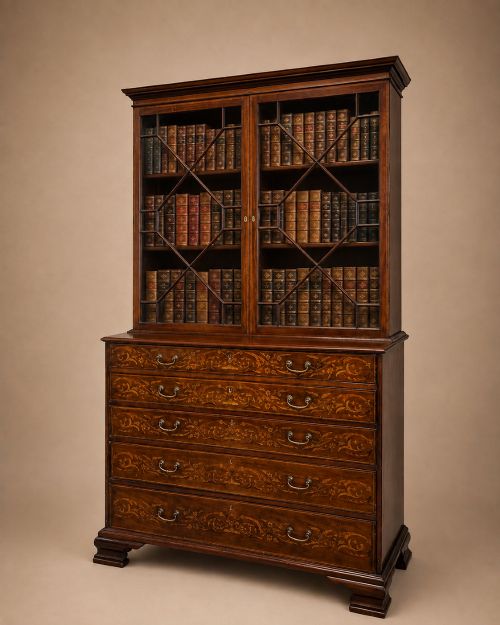
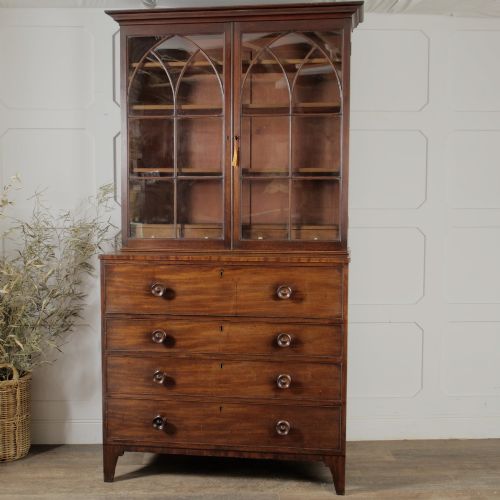
The version most commonly met on this page is the classic mahogany chest of drawers featuring a fitted writing compartment within the upper tier. Alongside standard chests, the selection frequently incorporates tall bookcases, press cupboards, and compact writing cabinets dating from the George II, George III, and Regency periods.
Materials and Construction Techniques
Cabinetmakers relied heavily on solid timber foundations of mahogany, oak, walnut, and elm, often applying figured mahogany, satinwood, or marquetry veneers to the principal exterior surfaces. Secondary woods such as pine appear within internal drawer construction, reflecting period workshop practices.
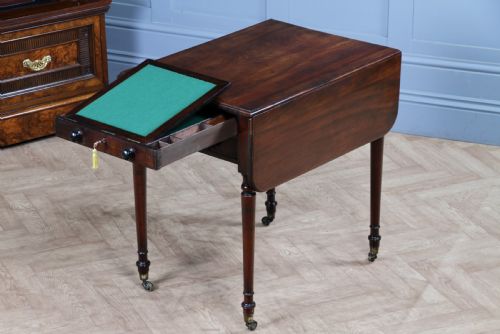
Writing compartments typically incorporate specialised inserts lined with baize or leather surfaces for writing. Brass hardware, including handles, escutcheons, and hinges, secures the drawers and fall-front mechanisms, while glass panels appear on upper bookcase doors.
Listings feature pieces utilising mahogany, oak, walnut, satinwood, elm, brass, glass, leather, and baize across Georgian, Regency, and Victorian periods.
Assessing Quality and Execution
The distinction between tiers of craftsmanship rests upon the selection of timber veneers and the precision of the internal pigeonhole arrangement. Pieces constructed with highly figured mahogany, intricate satinwood inlay, or burr walnut indicate higher workshop ambition and greater initial expense.
Structural integrity and the retention of original brass fittings, glass panels, and writing surface materials heavily influence the overall standard of a piece. The seamless operation of the drop-front mechanism and the precise dovetailing of internal drawers demonstrate superior carpentry.
The Georgian Secretaire Drawers Glossary
- Secretaire
- A desk or cabinet containing a concealed writing drawer with a drop-front mechanism. This ingenious form allowed individuals to write letters without occupying floor space with a dedicated table.
- Tallboy
- A tall chest of drawers consisting of one chest stacked directly on top of another. They maximise vertical storage capacity in period bedchambers.
- Chest on Chest
- A two-part storage unit where the upper section matches or slightly narrows relative to the lower base. Cabinetmakers frequently utilised this form to display superior veneer work.
- Escutcheon
- A protective plate surrounding a keyhole, usually fashioned from brass. These elements provide both a decorative accent and reinforcement for the timber around the lock.
- Marquetry
- Decorative veneer work forming pictorial or geometric patterns using various woods. Craftsmen applied these intricate designs to drawer fronts and top panels to signal luxury.
Georgian Secretaire Drawers: Frequently Asked Questions
How do I date a Georgian secretaire?
Dating relies on examining the cabinet timber, secondary woods, hardware styles, and structural joinery techniques. Earlier 18th-century pieces often utilise walnut or early mahogany with oak linings, while Regency and 19th-century examples show different brass handle designs and veneer selections.
Changes in foot styles, from bracket feet to plinth bases or splayed legs, also help assign pieces to specific reigns like George III or George IV.
Were these used in bedrooms?
Original domestic use often placed these dual-purpose items in private chambers or dressing rooms for personal correspondence and linen storage. The enclosed writing space kept private papers secure.
Over time, collectors adapted them for modern living rooms and studies where surface area and concealed storage remain practical.
How do I care for leather or baize surfaces?
Writing surfaces lined with leather or baize require gentle maintenance using dry cloths to remove dust and debris. Avoid applying liquid cleaners or polishes directly onto the fabric or leather inserts.
Keeping the furniture away from direct sunlight and maintaining stable room humidity protects both the internal writing surfaces and the exterior veneer.