


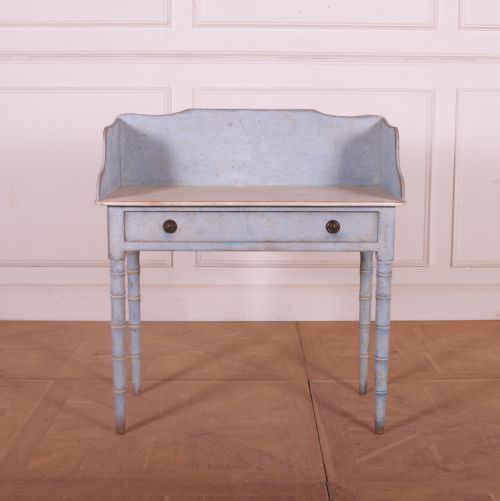


Georgian Gallery Back Table
These georgian gallery back table pieces combine practical surface space with raised upright backs, offering both utility and traditional elegance for the home.
Georgian Gallery Back Table
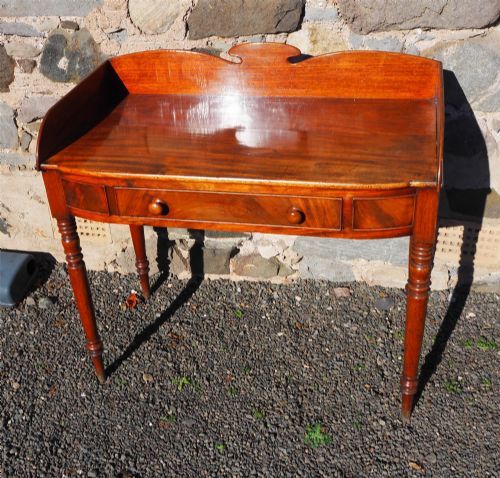
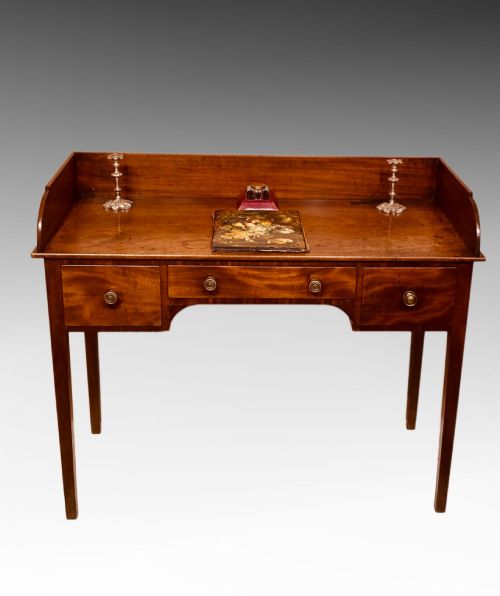
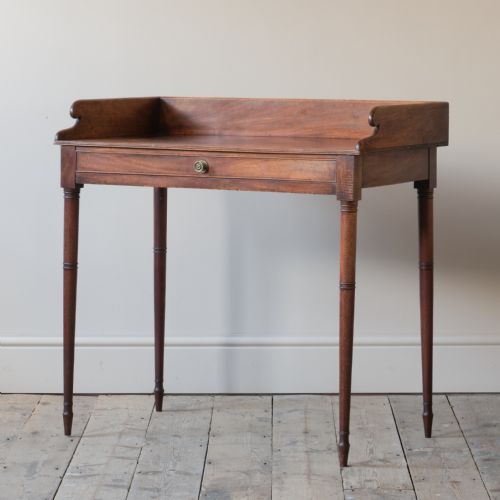
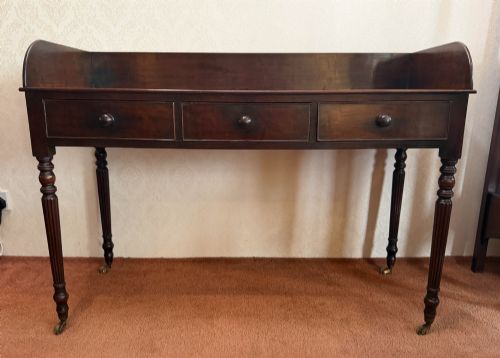
A georgian gallery back table encompasses various forms such as side tables, desks, dressing tables, washstands, and serving tables. Buyers searching this phrase encounter practical furniture pieces distinguished by an upstand back or gallery surround.
The pieces on this page span the Georgian, Regency, and Victorian eras, including specific periods like George III and William IV. Side tables and writing desks predominate, alongside specialised dressing tables and console tables.
Origins are grounded in English cabinet-making traditions, ranging from simple two-drawer side tables to elaborate Carlton House desks and console tables. Each piece serves a functional purpose whilst displaying the distinct stylistic traits of its period.
How they were made
Construction relies heavily on mahogany, alongside flame mahogany veneer, boxwood for inlay work, and secondary timbers like softwood. Makers shaped these sturdy materials into functional frames, drawers, and writing surfaces.
Detailing involves brass hardware, leather writing inserts, and painted wood accents, complemented by inlay techniques. Cabinet-makers utilised these elements to enhance both the structural integrity and the decorative appeal of each table.
Georgian Gallery Back Table Retail Price Guide 2026
Typical asking prices for georgian gallery back table among the pieces listed under this phrase on Sellingantiques today, from the lower quarter to the upper quarter. They describe what is for sale here now, not the wider market.
Listings span the 18th century, 19th century, Georgian, Regency, and Victorian periods, showcasing mahogany, brass, leather, and boxwood.
What varies in quality
Quality differences appear in the selection of timber, particularly where figured flame mahogany veneer is matched across drawer fronts and top surfaces. Superior examples display careful grain alignment and rich natural patina.
The refinement of the gallery surround and the precision of boxwood inlay distinguish higher-grade pieces from simpler utilitarian items. Finer execution in structural joinery and hardware contributes to the enduring appeal of the better tables.
George Hepplewhite
The Georgian Gallery Back Table Glossary
- Gallery back
- A raised upstand or low railing along the rear and sides of a table top, designed to prevent items from rolling off. This feature is characteristic of washstands, dressing tables, and writing desks.
- Flame mahogany
- A decorative veneer cut from wood where the branch meets the trunk, producing a distinctive fire-like pattern. Cabinet-makers used this figure to adorn prominent surfaces.
- Kneehole
- A recessed space beneath the centre of a desk or dressing table designed to accommodate the user's legs. Flanking banks of drawers usually frame this central opening.
- Inlay
- A technique where pieces of contrasting wood, such as boxwood, are inserted into recesses within the primary timber. This creates decorative borders and geometric patterns.
Georgian Gallery Back Table: Frequently Asked Questions
How do I identify a Georgian table?
Georgian tables generally exhibit proportions rooted in classical architecture, often utilising solid mahogany or quality veneers. Details like bracket feet, cockbeaded drawer edges, and understated brass pulls point toward this era.
Regional cabinet-making traditions also influence the construction, with simpler country interpretations existing alongside refined urban pieces.
Where were these tables used originally?
These tables served various domestic functions depending on their specific form, from dressing rooms to formal reception spaces. Writing tables and Carlton House desks equipped studies and libraries.
Washstands and dressing tables found their place in bedrooms, whilst serving and console tables stood in dining rooms or entrance halls.
How do I care for mahogany furniture?
Mahogany furniture requires stable environmental conditions away from direct sunlight and excessive heat sources. Using mild beeswax and a soft cloth helps maintain the timber's natural lustre.
Avoiding moisture and harsh chemical polishes preserves both the original finish and any delicate veneer work over time.