
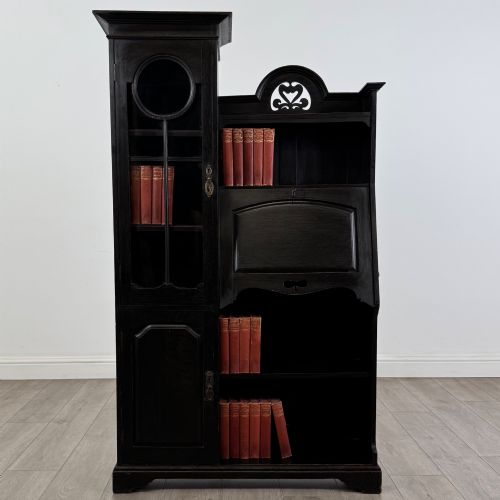
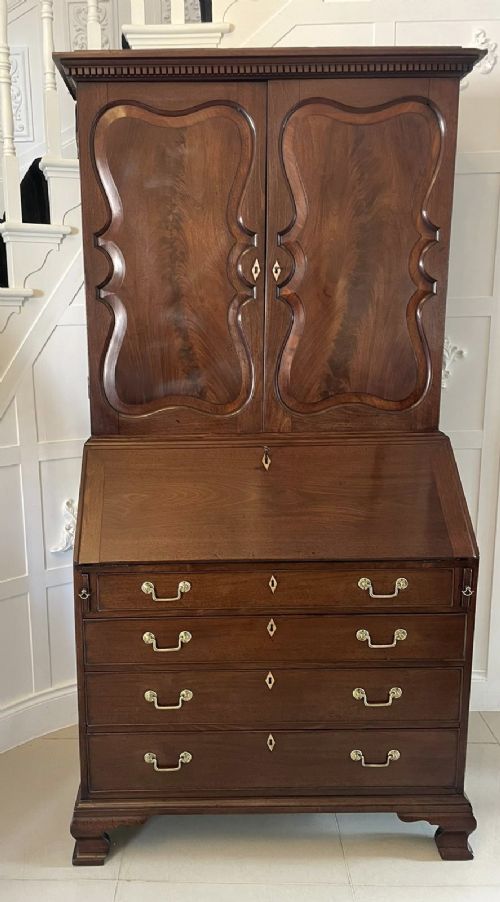
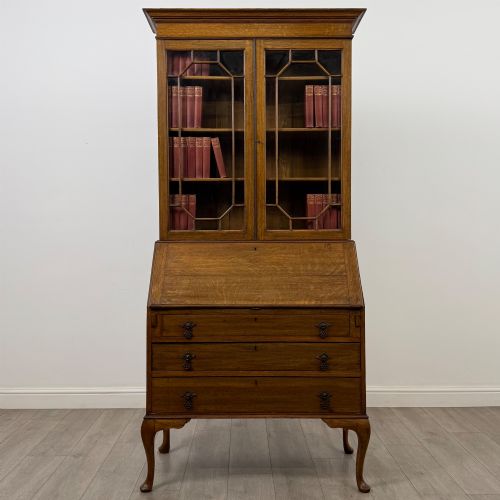
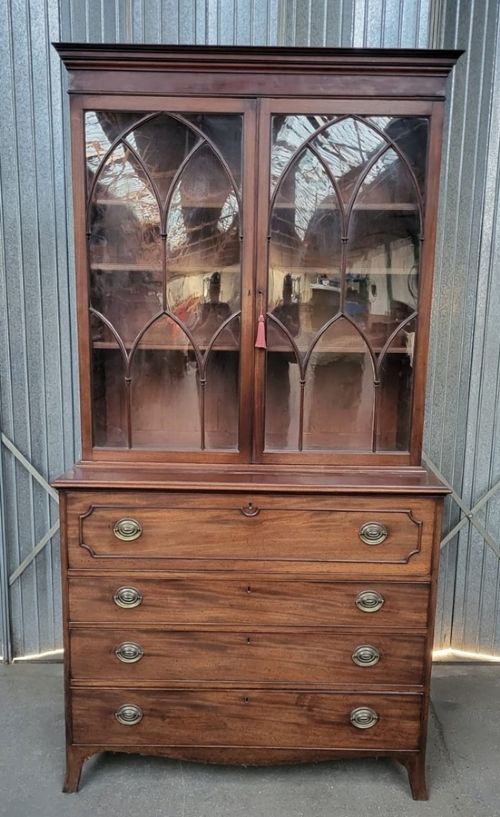


Antique Writing Bookcase
An antique writing bookcase combines a practical fall-front writing surface with enclosed upper shelving, offering a commanding piece of period furniture.
Antique Writing Bookcase
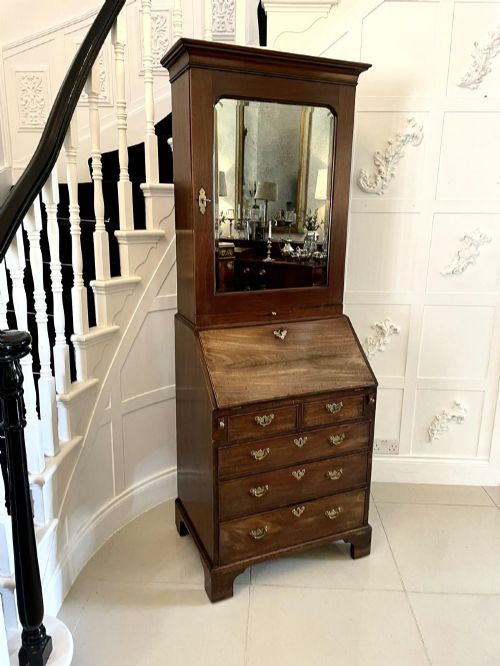
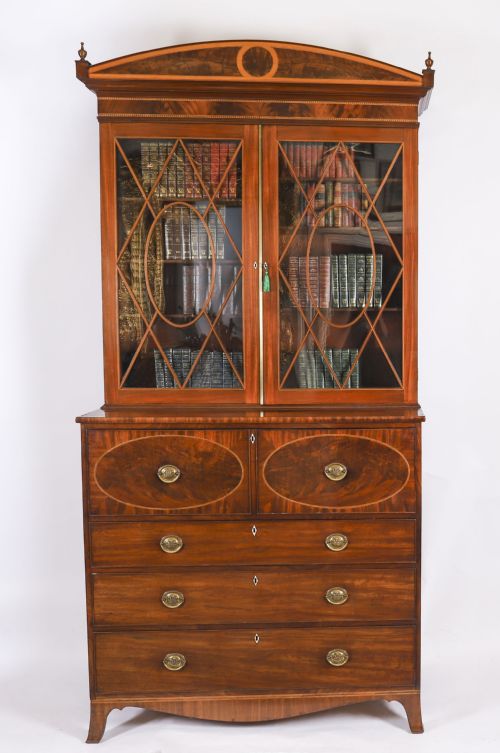
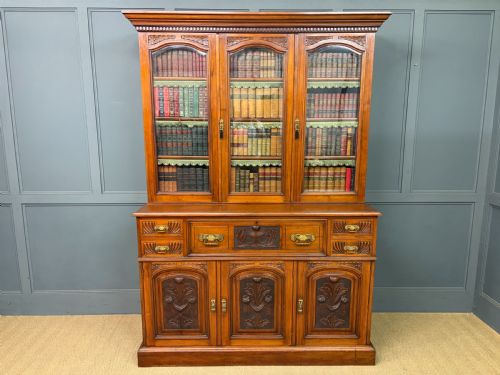
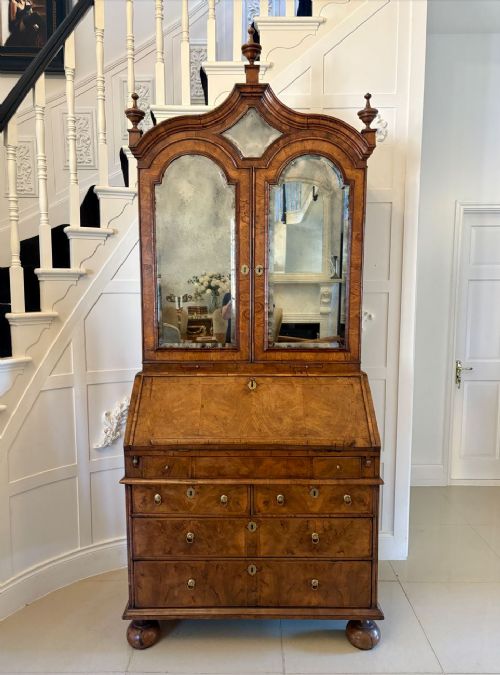
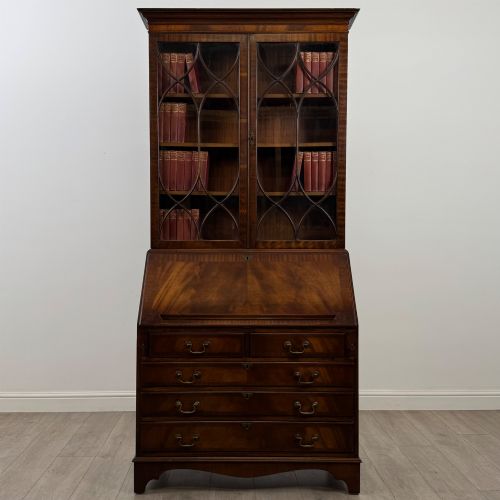
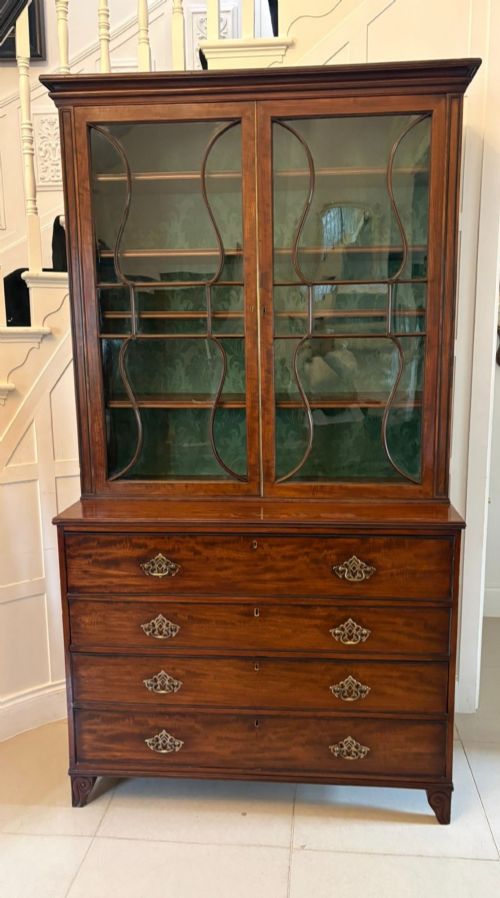
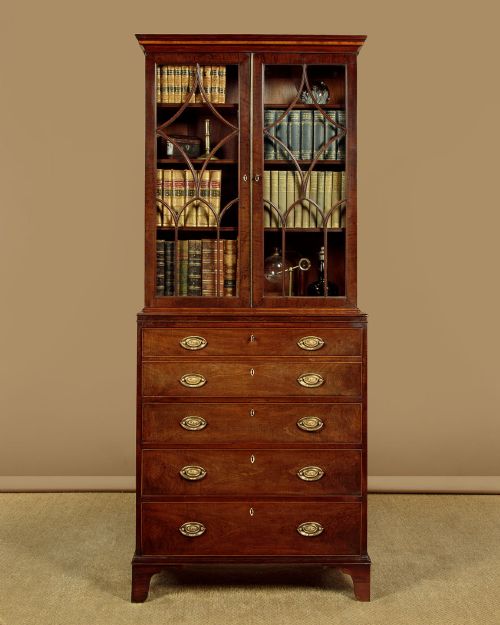
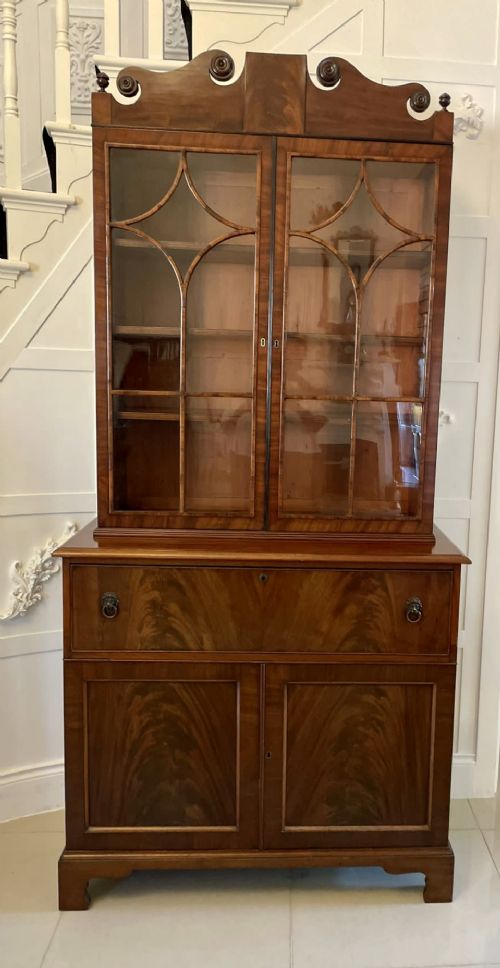
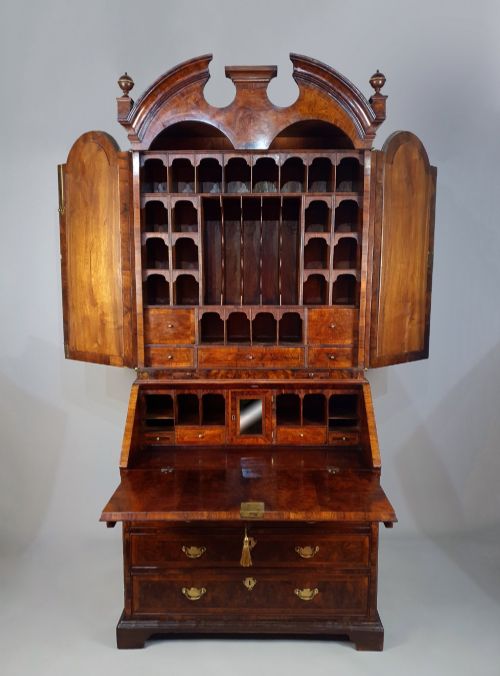
An antique writing bookcase comprises a lower bureau section featuring a sloping fall or a pull-out secretaire drawer, paired with a glazed or panelled upper bookcase. These pieces span from the seventeenth century through to the Edwardian era and the 1920s, reflecting changing domestic requirements for storage and study.
The version most commonly met on this page is the mahogany or walnut Georgian or nineteenth-century bureau bookcase, alongside Edwardian and later oak variations. They range from small dwarf cabinets to tall, three-section pieces fitted with internal pigeonholes and small drawers.
How they were made
Cabinetmakers constructed these pieces primarily using solid timbers and fine veneers of mahogany, oak, and walnut, often accentuating the grain with flame mahogany, burr walnut, or satinwood crossbanding. Brass handles, escutcheons, and hinges secure the doors and fall-fronts, whilst glass panes are held within timber astragal glazing bars in the upper sections.
Construction techniques involve dovetail joints for drawers and panelled framework for the main carcase to accommodate seasonal timber movement. Interiors of the bureau sections feature stepped arrangements of pigeonholes, secret compartments, and small drawers surrounding a central cupboard door.
Early models include candle slides to help eighteenth-century writers see their ink in the dark.
What varies in quality
The selection of timber grain and the precision of the cabinetwork define the upper tier of these pieces. Figured mahogany, burr walnut, and intricate featherbanding demand high skill from the maker, whereas plainer oak or later ebonised versions offer a more utilitarian finish.
Proportion and interior complexity separate standard pieces from exceptional ones. Fully fitted stepped interiors with secret drawers and original glazing indicate superior workshops, whilst adapted or heavily restored examples sit lower in the scale.
George Oakley·Gillows
The Antique Writing Bookcase Glossary
- Bureau
- A desk with a sloping hinged lid that covers a fitted interior of pigeonholes and small drawers. It forms the lower portion of many writing bookcases.
- Secretaire
- A drawer containing a fitted writing surface and internal compartments, designed to look like a standard drawer from the outside. It pulls forward to provide a desk without a sloping front.
- Astragal glazing
- Timber bars that divide the glass panes of a bookcase door into geometric patterns. These became lighter and more refined from the Georgian period onwards.
- Featherbanding
- A decorative inlay technique using small bands of veneer laid in a herringbone pattern around the edges of drawer fronts or panels. It is often found on walnut furniture from the Queen Anne and George I periods.
- Candle slide
- A pull-out wooden board positioned beneath the upper doors to hold candlesticks for illumination while writing at the bureau desk. They are characteristic of early eighteenth-century examples.
Antique Writing Bookcase: Frequently Asked Questions
How were antique writing bookcases used originally?
These pieces served as multi-functional furniture for writing letters, managing household accounts, and storing a gentleman or lady's library behind glass doors. The upper glazed section kept valuable leather-bound volumes clean and visible, whilst the lower desk provided a private space for correspondence.
Candle slides were often pulled out to illuminate the writing surface during evening hours, and internal secret compartments safely housed documents or currency.
How do I date an antique writing bookcase?
Dating relies on observing timber choices, construction methods, and stylistic details such as bracket feet, cornice mouldings, and glazing bar patterns. Walnut and featherbanding typically point to the late seventeenth or early eighteenth century, whilst flame mahogany and finer brasses often indicate the Georgian and Regency periods.
Edwardian and later twentieth-century versions frequently utilise lighter oak or simpler mahogany construction, reflecting the prevailing tastes and machinery of those decades.
How do I care for wood on an antique writing bookcase?
Maintenance requires keeping the timber away from direct heat sources and strong sunlight, which can dry out old veneers and cause cracking or fading. Regular application of a traditional wax polish helps nourish the grain and protects the polished surface without building up synthetic residue.