
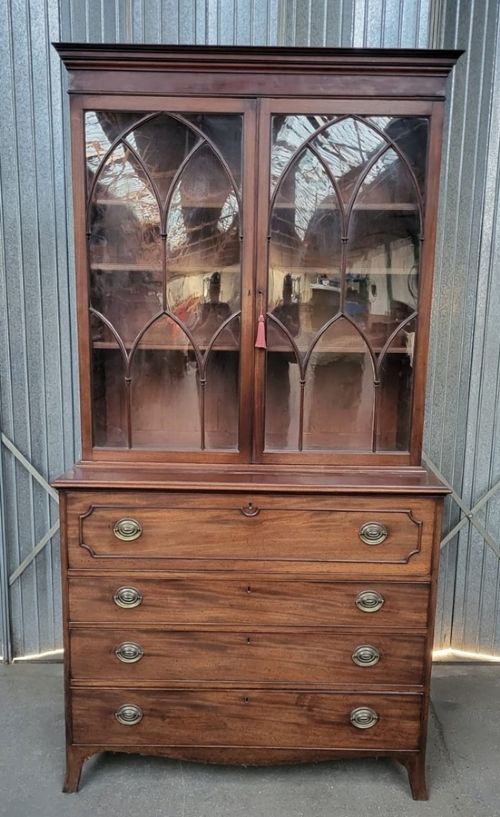
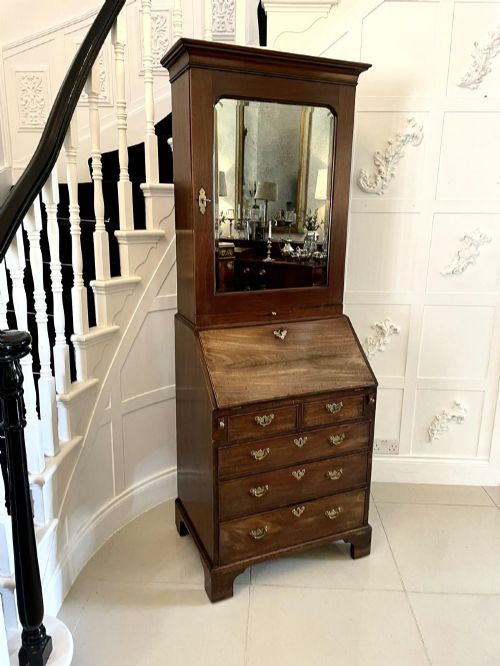


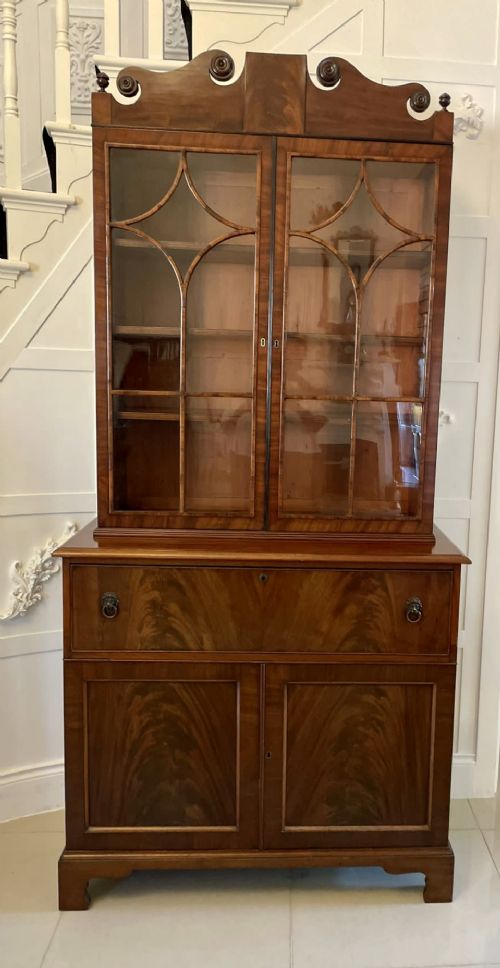
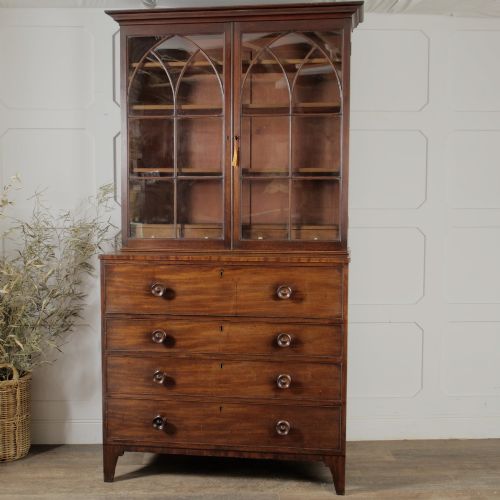
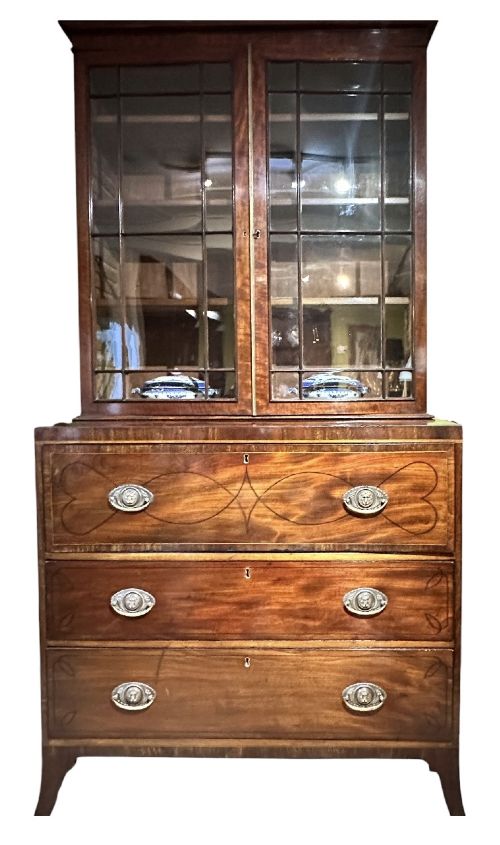
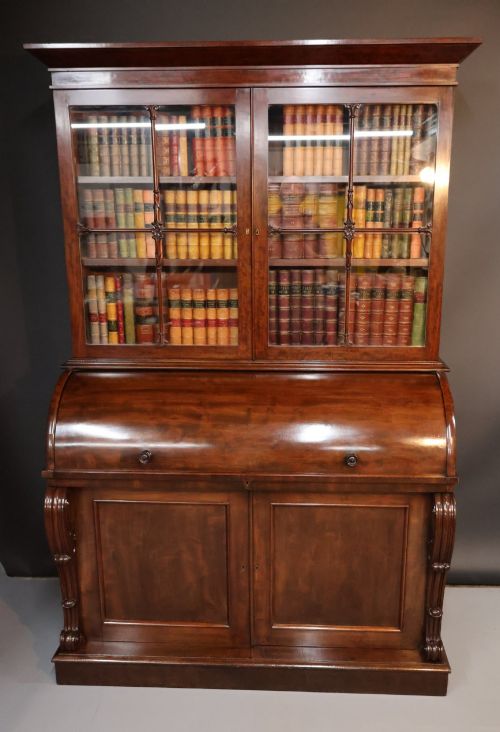
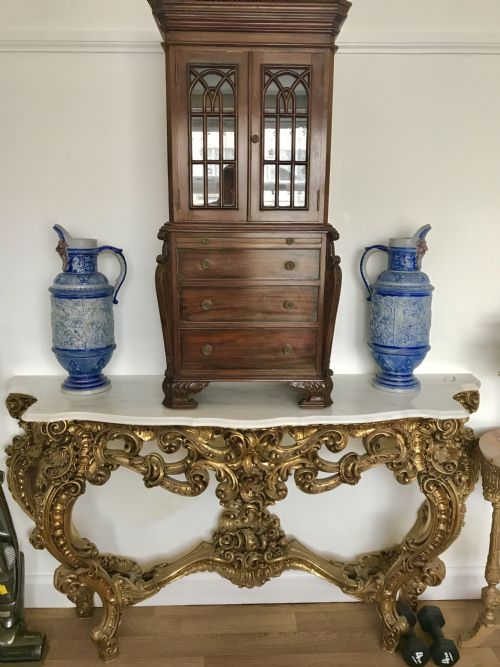


Brown Wood Bureau Bookcase
A brown wood bureau bookcase combines a fitted writing slope with enclosed shelving, offering a practical workspace and display unit for serious collectors and readers.
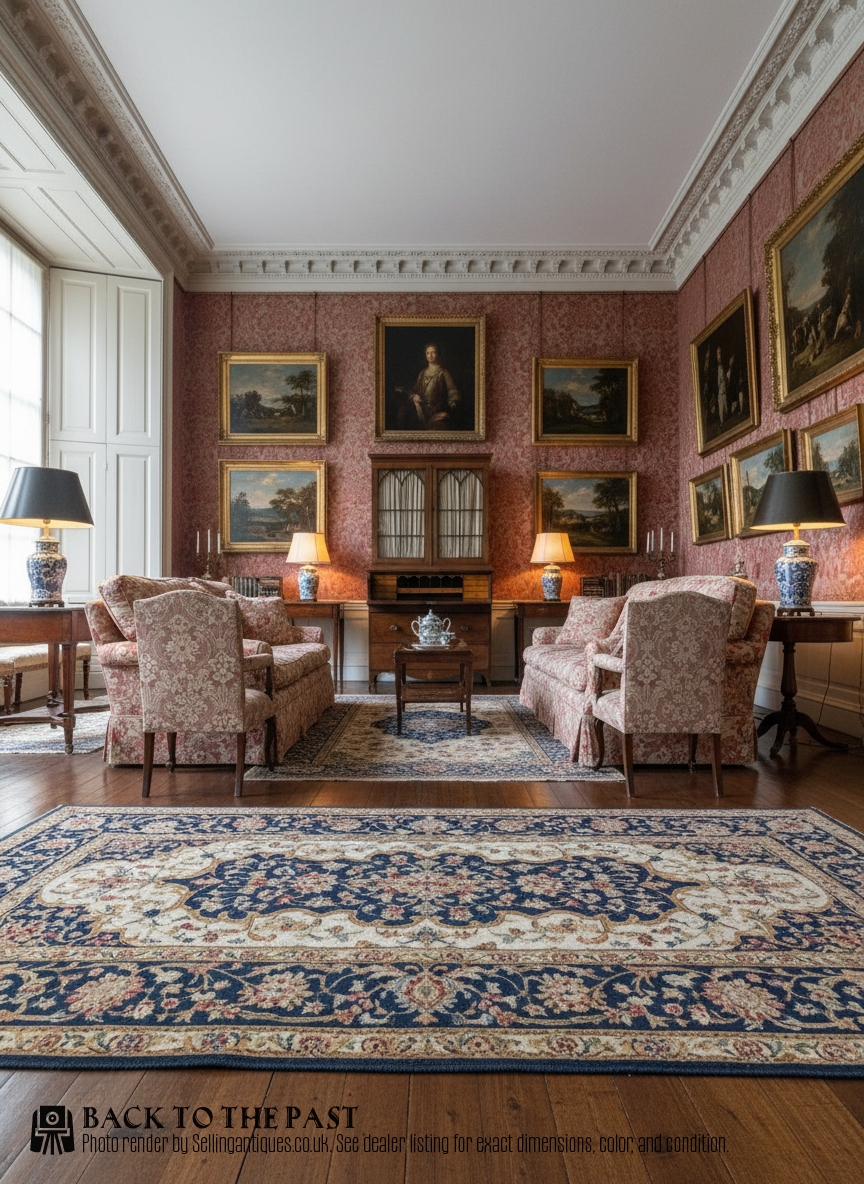
Brown Wood Bureau Bookcase
A brown wood bureau bookcase serves as a multifaceted item of furniture, uniting a lower writing desk with an upper glazed or panelled cabinet for books. These pieces accommodate domestic organisation by concealing a fitted interior of small drawers and pigeonholes behind a sloping flap or pull-out secretaire drawer.
The versions most commonly encountered on this page span the eighteenth and nineteenth centuries, reflecting Georgian, Regency, and Edwardian periods. Mahogany and walnut dominate these forms, alongside occasional examples in yew wood and oak.
Makers and cabinetmakers constructed these double-height pieces to anchor principal rooms, ranging from architectural George II designs to lighter Edwardian interpretations. Miniature and apprentice samples also appear, demonstrating the same functional complexity on a smaller scale.
Materials and construction methods
Makers utilised dense timbers such as mahogany, walnut, and oak for structural integrity and richly grained decorative surfaces. Veneers and crossbanding were applied to carcases using traditional animal glues, creating geometric patterns on drawer fronts and fall-front writing flaps.
Glass doors in the upper section typically feature wooden astragals, framing individual panes of hand-blown or cylinder glass. Brass hardware, including drop handles, escutcheons, and bracket feet or plinth bases, completes the assembly of upper and lower carcases.
Object variations include miniature apprentice furniture samples, tambour writing tables, and breakfront library bookcases alongside standard bureau forms.
Distinguishing finer examples
Judgements of quality rest upon the selection of timber veneers and the crispness of cabinetwork detail. Finer examples display continuous grain matching across drawer fronts and intricate secret compartments within the fitted interior.
Structural integrity, original brassware, and the survival of unblemished glass panes elevate an item. The presence of hand-cut dovetailing in the drawer construction and refined proportions indicate the hand of a skilled workshop.
The Brown Wood Bureau Bookcase Glossary
- Secretaire drawer
- A top drawer fitted with a drop-front that conceals a writing surface and small pigeonholes. This mimics the function of a traditional sloping bureau desk while maintaining the clean exterior lines of a chest or cabinet.
- Astragal
- A moulding profile used to divide panes of glass within the upper bookcase doors. These wooden bars form geometric or Gothic arch patterns that define the period style of the glazing.
- French polish
- A shellac finish applied in multiple thin layers using a rubber pad lubricated with oil. This technique produces a high-gloss surface that emphasises the warm tones and figuration of mahogany and walnut.
- Tambour
- A sliding shutter constructed from narrow strips of wood glued to a canvas or leather backing. It allows access to enclosed desk compartments through a curved track.
- Dovetail
- A traditional interlocking joint used in drawer construction, secured without metal fasteners. Hand-cut variations indicate earlier manufacturing periods before machine-made uniformity.
Brown Wood Bureau Bookcase: Frequently Asked Questions
How do I use a bureau bookcase?
Lower the fall-front flap or pull out the secretaire drawer to reveal the integrated writing surface and stationery compartments. The upper cabinet provides shelved storage for books or display items behind glazed doors.
Organise daily correspondence within the internal pigeonholes and keep reference volumes close at hand on the upper shelves. Ensure the support brackets are engaged before placing any writing pressure on a drop-front flap.
Where should I place it?
Position the piece against an interior wall away from direct sunlight and heat sources to protect the polished wood surfaces and timber veneers. Adequate floor space is required to allow the drop-front to open fully without obstruction.
Allow sufficient clearance in front of the lower section for a chair or stool when using the writing desk. Keep ambient room humidity stable to prevent the timber from expanding or contracting.
How do I identify the period?
Examine the timber species, construction joints, and decorative motifs such as bracket feet, cornice designs, and brass hardware. Georgian examples often feature figured mahogany and cockbeaded drawer edges, whilst Edwardian pieces may show lighter satinwood inlay.
Inspect the backboards and interior drawer linings for hand-cut dovetails and tool marks indicative of earlier manufacturing methods. Comparing the glazing bar patterns against known stylistic timelines helps confirm the date of the upper cabinet.