

Burr Walnut Desk Drawers
Burr walnut desk drawers bring rich swirling grain and functional writing compartments into a room, offering both character and storage.
Burr Walnut Desk Drawers
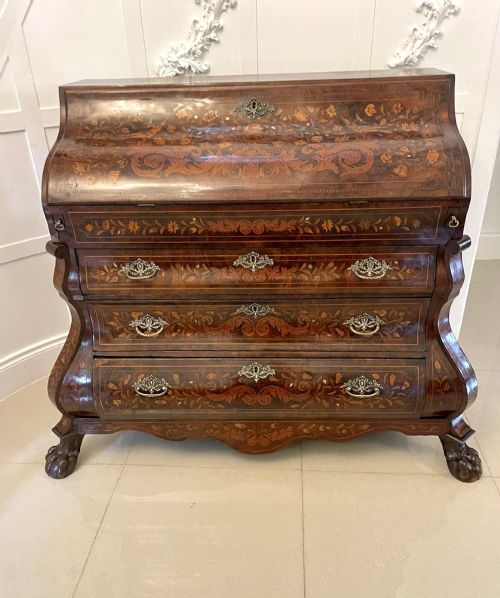
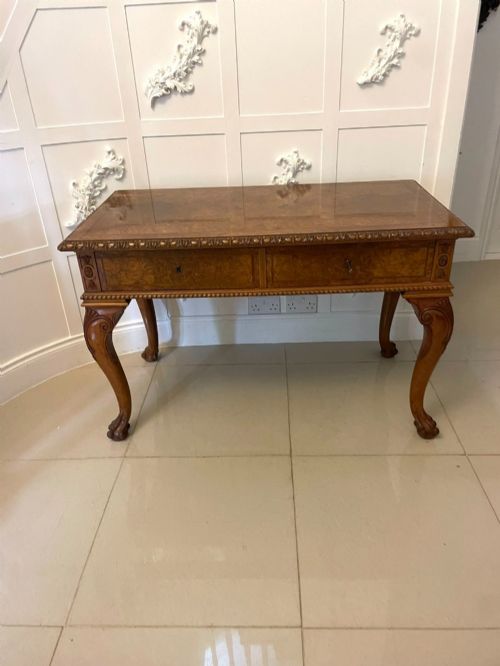
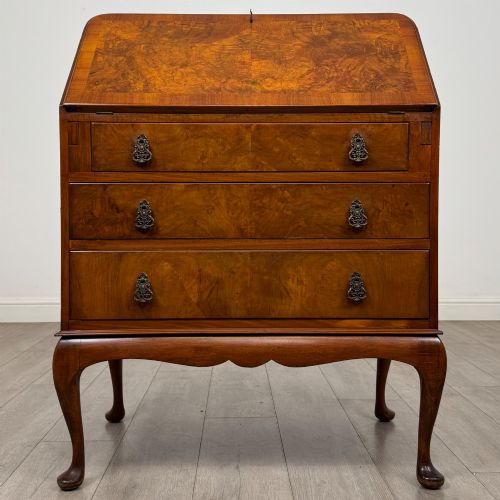
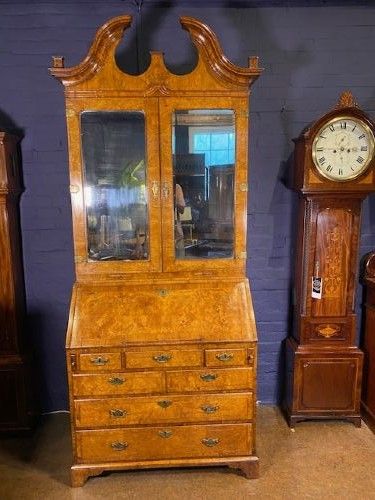
When searching for burr walnut desk drawers, buyers encounter a variety of writing furniture built to house correspondence and papers. These pieces span several distinct eras, from the 18th century through the Victorian period and into the early 20th century.
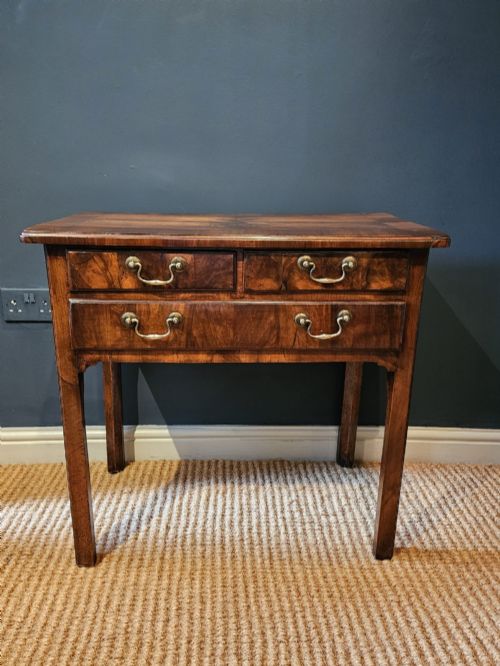
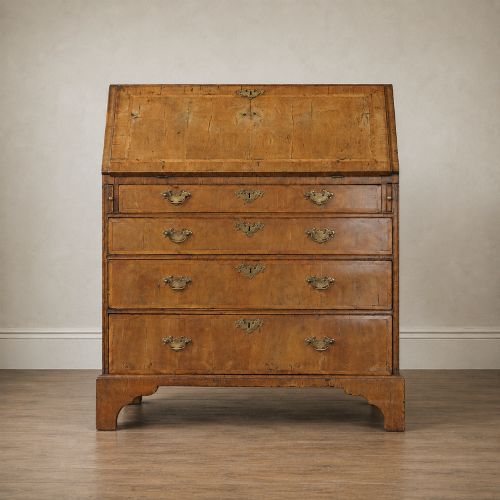
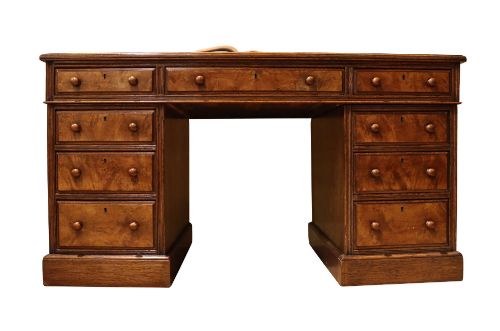
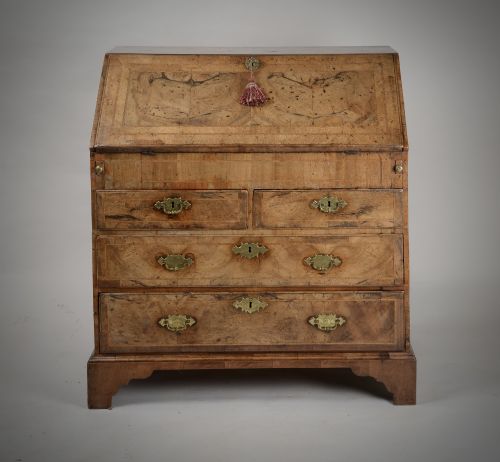
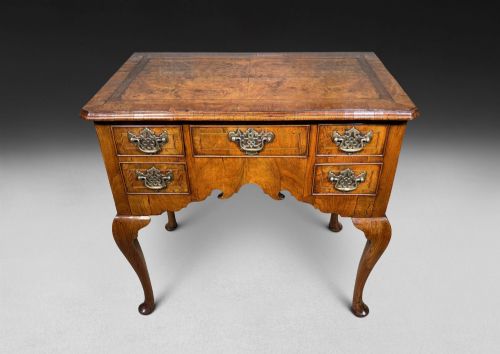
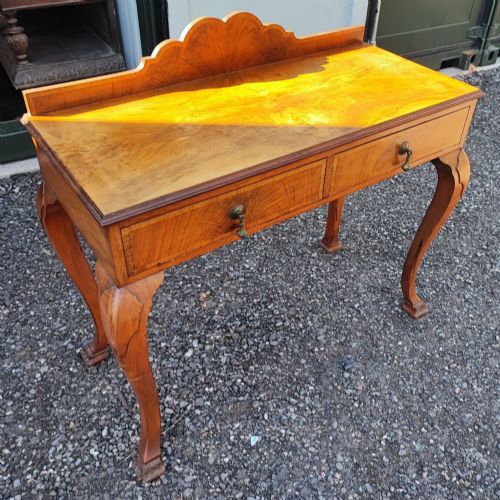
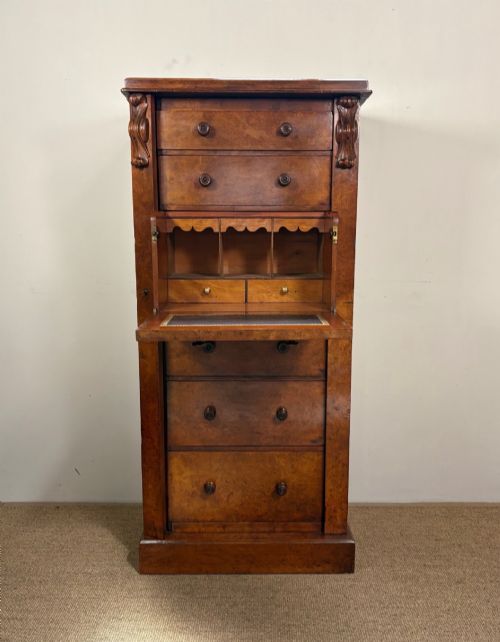
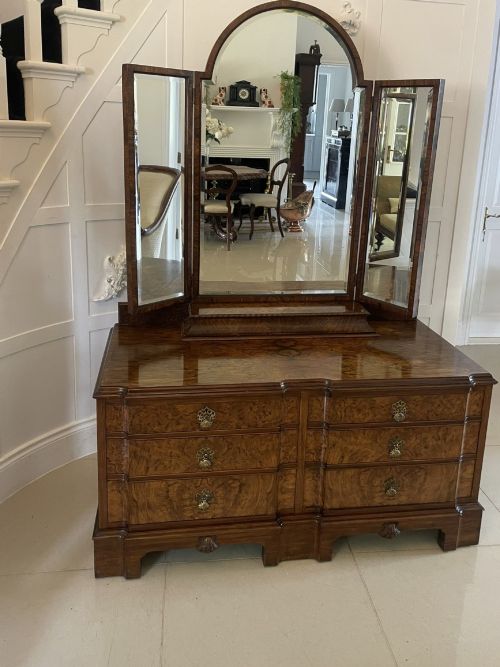
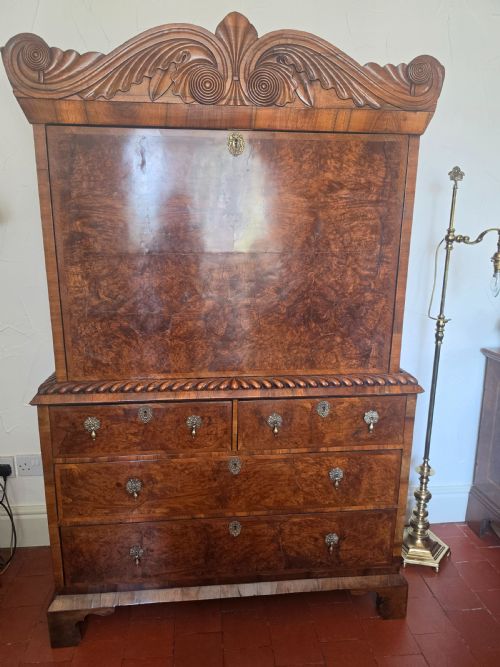
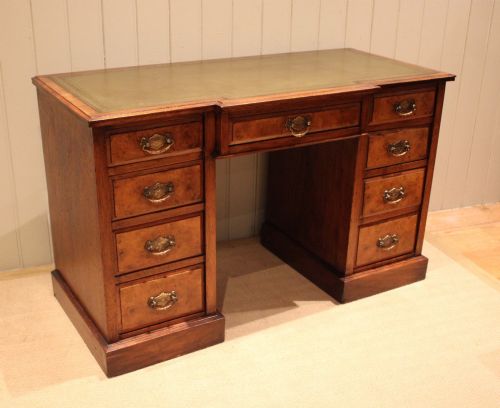
The primary forms appearing in this selection include bureaus, pedestal desks, writing tables, lowboys, and kneehole desks. Many combine generous drawer space with fitted writing surfaces, often incorporating leather inserts or fall fronts.
Originating in periods such as the Georgian, Queen Anne, and Edwardian eras, these pieces showcase the enduring appeal of figured timber combined with practical compartment layouts.
How They Were Made
Cabinet makers utilised burr walnut veneer applied over secondary timbers like oak, selecting sections with complex knot formations to achieve rich patterns across drawer fronts and desk surfaces. Brass handles, escutcheons, and occasional floral marquetry inlay complemented the dense grain.
Structural elements relied on traditional joinery, housing drawers within solid frames and supporting larger pedestals or desks on tapered legs, bracket feet, or baluster supports. Leather writing inserts were frequently tooled and set directly into the timber framework.
What Varies in Quality
The distinction between tiers of quality rests heavily on the selection and matching of the walnut veneer. Superior examples display symmetrical, unbroken patterns of burr grain across multiple drawer fronts, whereas simpler pieces show more irregular or plain timber matching.
Construction depth also dictates standing, with finer items retaining original brass hardware, stable secondary woods, and meticulously fitted interior pigeonholes rather than later replacements.
Gillow and Co·Shoolbred and Co
The Burr Walnut Desk Drawers Glossary
- Burr Walnut
- A timber harvested from the abnormal growth or burl of a walnut tree, prized by cabinet makers for its intricate, swirling grain patterns. It is typically sliced into thin veneers for decorative surfaces.
- Bureau
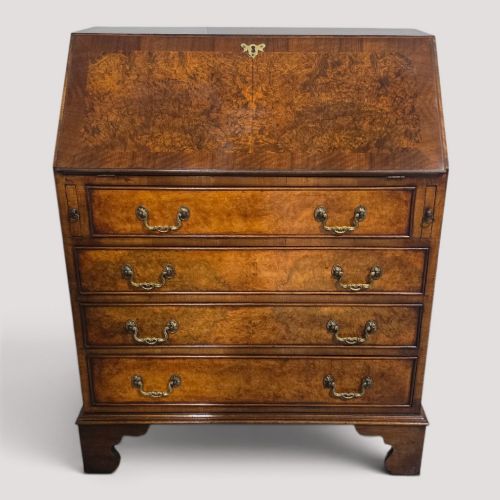
- A sloping desk that opens to reveal internal compartments and pigeonholes, often positioned above a set of functional drawers. This form became popular during the late 17th and 18th centuries.
- Lowboy
- A small side table featuring one or more rows of drawers, commonly supported on slender cabriole legs. These versatile pieces frequently double as dressing tables or writing desks.
- Kneehole Desk
- A compact desk featuring a central recessed space for the user's legs, flanked by pedestals of smaller drawers. This configuration allows for substantial storage without excessive width.
- Marquetry
- The art of applying decorative veneer pieces of various woods to a structure to form intricate floral or geometric patterns. It often embellishes the primary fall fronts of finer bureaus.
Burr Walnut Desk Drawers: Frequently Asked Questions
What is a burr walnut bureau?
A burr walnut bureau is a writing cabinet featuring a sloping flap that folds down to create a writing surface. Inside, it conceals a series of small drawers and pigeonholes for correspondence.
Beneath this writing section, standard drawers provide additional storage, all encased in decorative burr walnut veneer.
How do I care for walnut veneer?
Walnut furniture requires protection from direct sunlight and excessive heat to prevent the veneer from drying or fading. Maintaining stable room humidity preserves the wood and underlying glue.
Dust gently with a dry, soft cloth and avoid chemical polishes that can damage the antique finish.
Were these desks used for writing?
These pieces served as the primary stations for household administration, letter writing, and managing accounts before modern office furniture existed. The integration of drawers kept ink, paper, and ledgers close at hand.
Many incorporate leather writing tops designed to provide a smooth surface for quill or pen work.
How do I distinguish Georgian from Edwardian pieces?
Georgian pieces date from the 18th century and tend to exhibit heavier structural framing, hand-cut dovetails, and specific cabinet proportions reflective of the period. Their timber patination develops a deep, rich tone over centuries.
Edwardian items, built around the early 20th century during revival periods, often utilise lighter internal construction methods while copying earlier Queen Anne or Georgian stylistic motifs.