


Chinese Gouache Painting
These Chinese gouache painting examples capture export markets with vibrant pigments applied delicately to fragile natural supports.
Chinese Gouache Painting
A Chinese gouache painting brings together traditional brushwork and foreign trade demand from the eighteenth and nineteenth centuries. These works record figural scenes, flora, and shipping subjects intended primarily for Western buyers.
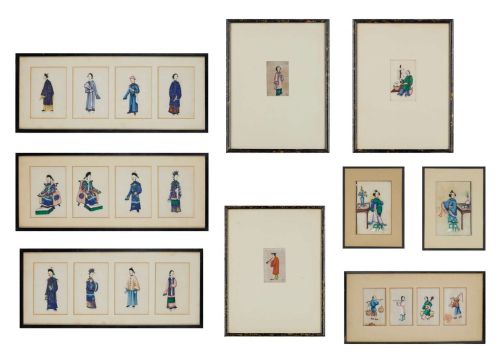
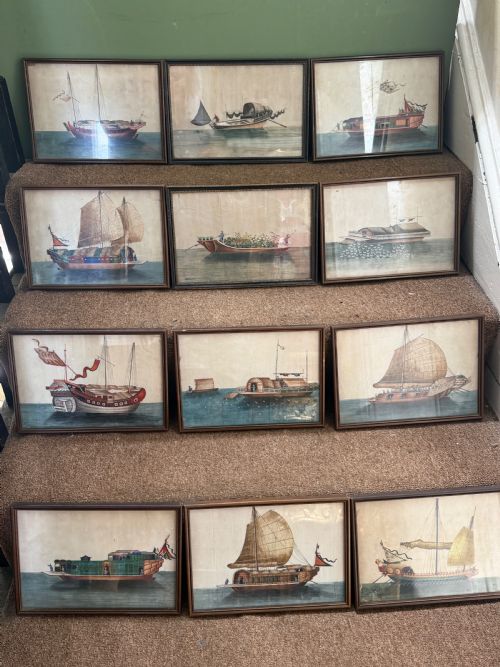
Most pieces seen here belong to the nineteenth century and the Qing dynasty. Collectors encounter individual framed works alongside sets depicting junks, floral studies, and portraits.
Surviving formats range from wall art on silk and standard paper to delicate leaves of pith paper. The nineteenth century yields the highest concentration of surviving figural and maritime series.
Materials and technique
Artisans applied dense gouache and watercolour pigments directly onto prepared surfaces of pith paper, silk, or standard paper. Pith paper, often called rice paper, provides a characteristic velvety texture that absorbs vibrant colour deeply.
Framed works frequently utilise wooden surrounds to protect the fragile organic supports. Pigments rely on mineral and organic sources to achieve the saturated tones characteristic of Qing dynasty export art.
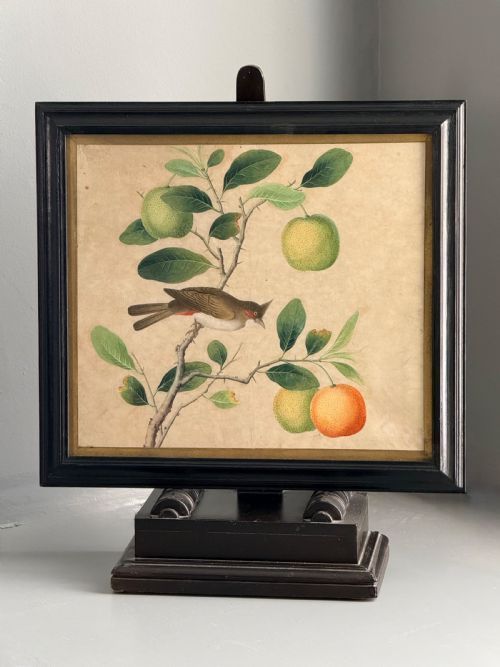
The documented subject matter ranges from maritime ship series and floral studies to figural portraits.
Distinctions in quality
Detail and brush control separate ordinary commercial export output from finer workshop productions. Superior figural and floral studies display precise facial expressions and disciplined line work.
The physical preservation of the support dictates overall standard. Intact pith paper without heavy cracking or pigment flaking preserves the visual impact intended by the original maker.
The Chinese Gouache Painting Glossary
- Gouache
- An opaque water-based medium utilising pigment mixed with water and a binding agent such as gum. It creates matte surfaces with high colour saturation.
- Pith paper
- A delicate organic material sliced from the spongy interior of the Tetrapanax papyrifer plant. Nineteenth-century artists used it extensively for export painting despite its fragility.
- Qing Dynasty
- The final imperial dynasty of China, ruling from sixteen forty-four to nineteen twelve. Export art flourished during the later decades of this period.
- Chinese Export
- Goods produced in China specifically for Western markets during the Qing dynasty. These items blend traditional Chinese techniques with European aesthetic demands.
- Junk
- A traditional Chinese sailing vessel with battened sails. These ships frequently appear as subjects in nineteenth-century maritime sets.
Chinese Gouache Painting: Frequently Asked Questions
What is pith paper?
Pith paper is a fragile organic support created from the pith of the rice-paper plant rather than pressed rice grains. It possesses a unique cellular texture that absorbs watercolour and gouache to produce a luminous velvet effect.
Artists in nineteenth-century workshops utilised this material extensively for export paintings because it made transport lightweight and displayed pigments vividly.
How were these paintings used?
These works served primarily as souvenirs and decorative items for Western merchants and travellers visiting or trading with China. They documented local trades, flora, fauna, and shipping.
Owners typically framed sets to display on parlour walls or stored them in leather-bound albums to show guests during social gatherings.
How do I date them?
Dating relies upon stylistic markers associated with the Qing dynasty and nineteenth-century export conventions. Subject matter involving specific types of junks or Western trading vessels also helps establish timelines.
The choice of support material provides further clues, as pith paper paintings concentrate heavily in the nineteenth century.
How should I display them?
Display requires careful framing behind protective glass with UV-filtering properties to prevent the delicate gouache pigments from fading. Acid-free mounts prevent the fragile pith paper from buckling.
Keep these works away from direct sunlight and areas prone to high humidity, as moisture damages both silk and pith supports.