




Chinese Export Pith Watercolor
These Chinese export pith watercolor works capture vibrant scenes on delicate botanical sheets, prized by collectors for their luminous colour and fragile historic detail.
Chinese Export Pith Watercolor
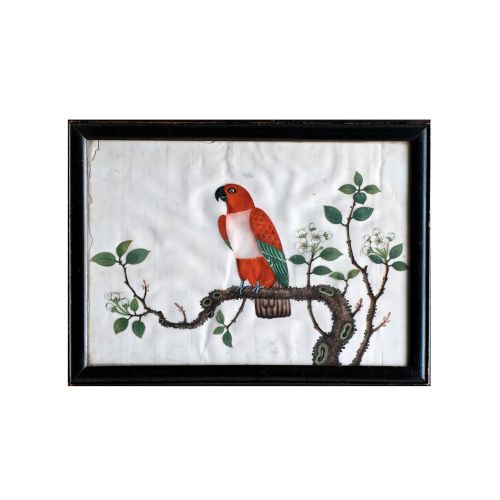
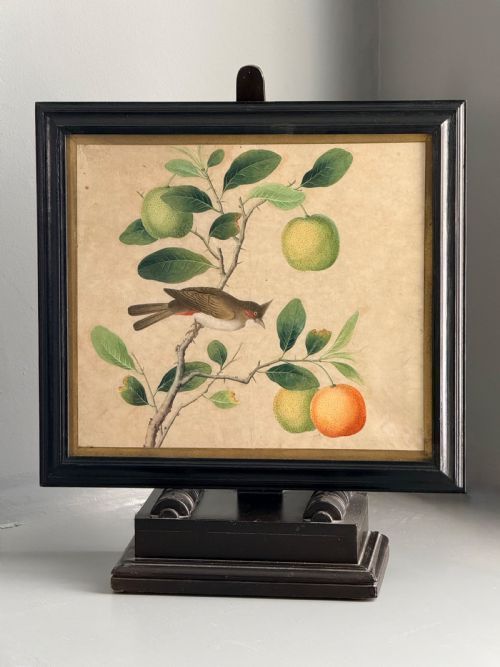
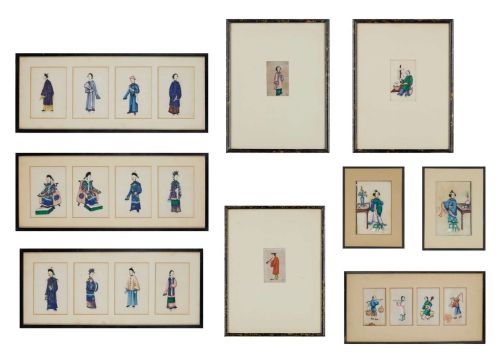
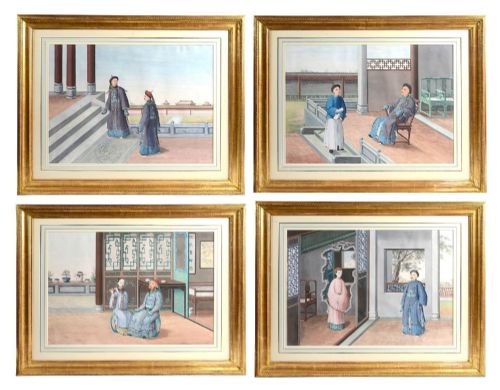
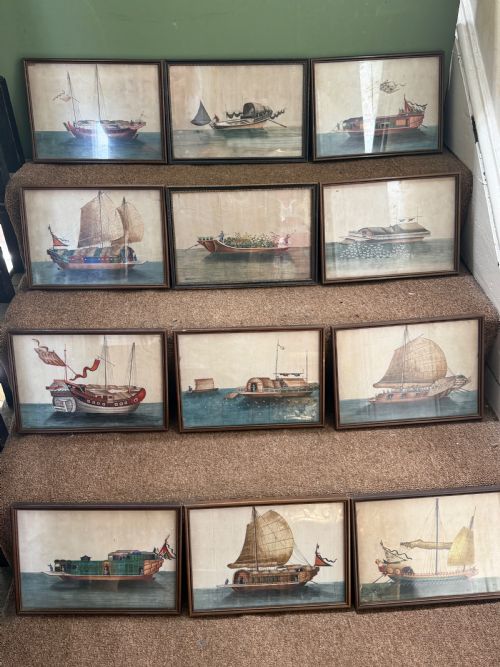
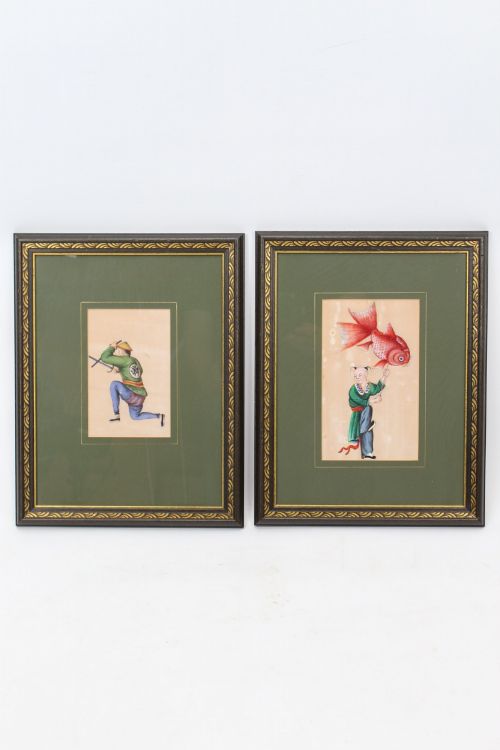
When you search for chinese export pith watercolor, you examine delicate works created primarily during the nineteenth century and the Qing dynasty for foreign markets. The pieces on this page span single botanical studies of butterflies and insects to framed sets depicting ships, junks, and figural scenes.
Most examples you will encounter date from the nineteenth century, including sets of twelve or twenty-one paintings housed in ebonised wood frames or under glass. Subjects range from vivid parrots and meticulous insects to bustling maritime views characteristic of Canton production.
The format varies from individual framed artworks to sets of four or twelve watercolours. Makers produced these specifically for export, combining traditional Chinese painting techniques with Western compositional demands.
Materials and Technique
Artisans painted these works using gouache and watercolour directly onto pith paper, often referred historically as rice paper. This porous, spongy material sliced from the pith of the Tetrapanax papyrifer plant yields a distinctive velvety surface that absorbs pigments deeply.
Finished watercolours were frequently mounted on paper or set behind glass within wooden frames, sometimes ebonised to complement the vibrant pigments. The interplay between the translucent pith substrate and opaque gouache creates the characteristic luminous depth found in Qing Dynasty export art.
Chinese Export Pith Watercolor Retail Price Guide 2026
Typical asking prices for chinese export pith watercolor among the pieces listed under this phrase on Sellingantiques today, from the lower quarter to the upper quarter. They describe what is for sale here now, not the wider market.
Listings feature works spanning the eighteenth century through the Edwardian period, executed in gouache and watercolour on pith paper.
Assessing Quality and Execution
Quality in these paintings rests upon the fineness of the brushwork and the preservation of the fragile pith paper. Superior examples display meticulous detail in subjects like butterflies, insects, and feathers without cracking or heavy flaking to the gouache.
Completeness of a set and the integrity of the original framing, whether wood or ebonised wood with glass, heavily influence the standing of a piece. Well-preserved nineteenth-century specimens maintain their rich colour saturation despite the inherent fragility of the botanical medium.
The Chinese Export Pith Watercolor Glossary
- Pith paper
- A delicate, spongy material sliced from the pith of the Tetrapanax papyrifer plant, commonly misidentified as rice paper. It provides a unique absorbent surface that gives gouache paints a velvety appearance.
- Gouache
- An opaque watercolour paint made from pigments bound in water-soluble gum. It is the primary medium used to build the rich, vibrant surfaces on Chinese export paintings.
- Chinese Export
- Art objects produced in China specifically for Western buyers and foreign markets from the eighteenth through the early twentieth centuries. These pieces often blend traditional Eastern techniques with Western tastes.
- Qing Dynasty
- The final imperial dynasty of China, ruling from the mid-seventeenth to the early twentieth century. Many export paintings originate from the latter part of this era.
- Ebonised wood
- Timber treated with a finish to simulate ebony wood, frequently used for framing nineteenth-century works. This dark border contrasts sharply with the colourful pigments on pith.
Chinese Export Pith Watercolor: Frequently Asked Questions
What is pith paper made from?
Pith paper is sliced from the spongy internal cellular tissue of the Tetrapanax papyrifer shrub rather than from rice stalks. Artists utilised this delicate botanical medium because it absorbs water-based pigments in a way that gives the colours a luminous glow.
Over the centuries, this substrate earned the mistaken moniker of rice paper among Western traders. The material remains highly fragile and requires protection behind glass to prevent crumbling.
How should I display pith paintings?
These works demand careful framing behind glass to shield the fragile pith surface from air movement and physical touch. Keeping them out of direct sunlight prevents the gouache and watercolour pigments from fading.
Stable indoor humidity levels help preserve the botanical paper without causing it to warp or dry out excessively. Professional framing with acid-free mounts ensures the pieces remain secure over time.
Why are they called export art?
Chinese export art designates items manufactured in China expressly for trade with European and American markets. Workshops tailored their subjects, such as junks, portraits, and local flora, to satisfy foreign curiosity.
These productions bridged Eastern craftsmanship and Western decorative preferences during the eighteenth and nineteenth centuries. The resulting paintings document how Chinese artists interpreted the demands of international buyers.
How do I date these watercolours?
Dating relies on stylistic clues, framing materials, and historical records associated with Canton trade ports. Nineteenth-century examples often feature standardised sets of botanical or maritime subjects mounted on paper sheets.
Earlier eighteenth-century pieces display distinct compositional traits and pigment handlings compared to late nineteenth-century or Edwardian productions. Examining the backing materials and any remaining collector notes also assists in establishing a timeline.