



19th Century Export Watercolour
These 19th century export watercolour works capture trade routes and botanical studies, made for foreign markets.
19th Century Export Watercolour
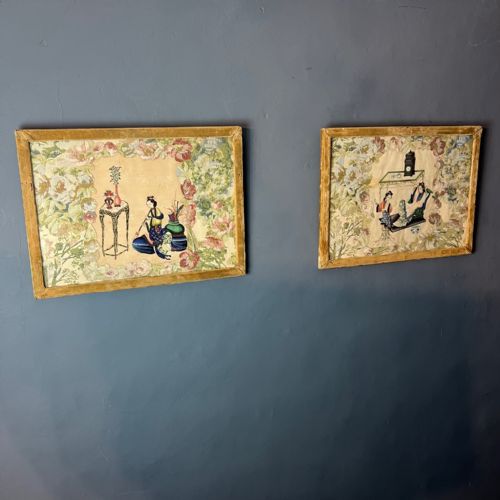
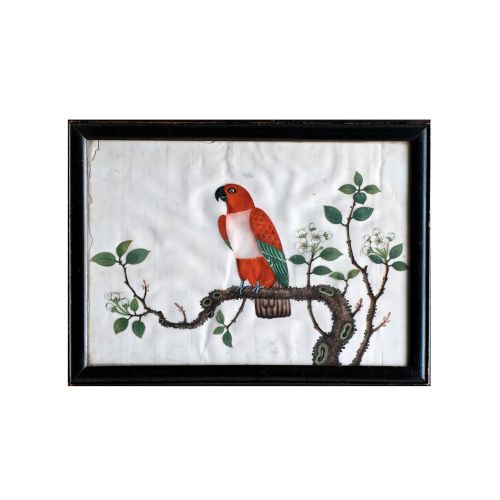
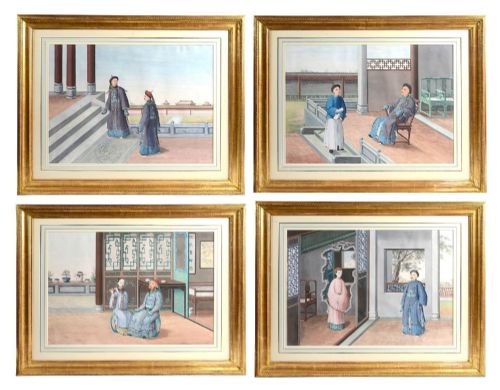
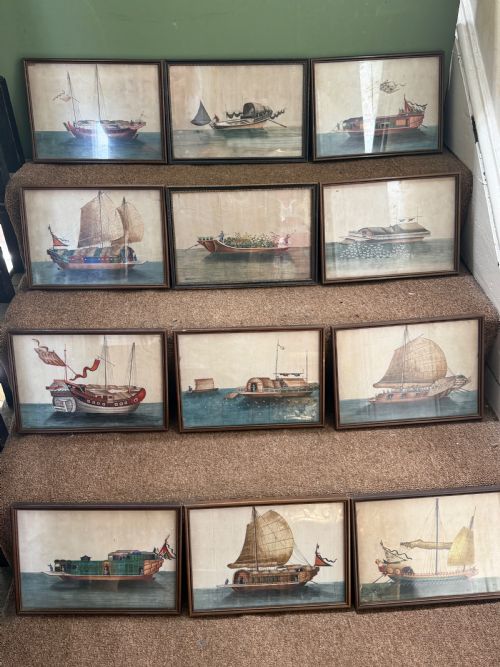
When you search for 19th century export watercolour, you encounter delicate works produced along the China coast primarily for Western traders, travellers and merchants during the Qing Dynasty and Regency periods. These compositions range from solitary studies of parrots and butterflies to grouped sequences depicting junks, ships and figural scenes.
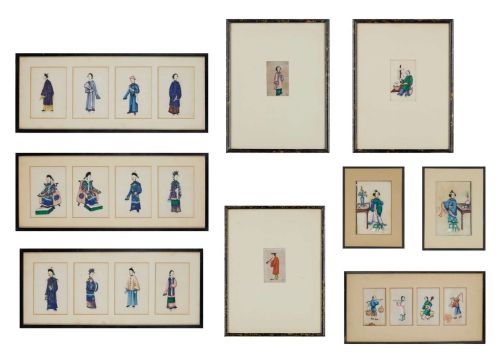
The format most frequently met on this page is the pith paper painting, often known historically as rice paper, framed behind glass in wood or gilt wood surrounds. Sets featuring multiple panels depicting junks or trades are common, alongside individual depictions of insects and botanical subjects.
How they were made
Artisans applied watercolour and gouache directly onto thin sheets of pith paper, a spongy cellular material sliced from the pith of the Tetrapanax papyrifer plant. This delicate medium absorbed pigments readily, producing vibrant colours with a characteristic velvety depth.
Finished paintings were commonly mounted into frames of wood or gilt wood, frequently protected beneath glass to preserve the fragile paper ground from moisture and physical disruption.
19th Century Export Watercolour Retail Price Guide 2026
Typical asking prices for 19th century export watercolour among the pieces listed under this phrase on Sellingantiques today, from the lower quarter to the upper quarter. They describe what is for sale here now, not the wider market.
Current listings feature materials including glass, wood, gouache, pith paper, paper, watercolour and gilt wood across nineteenth-century and Regency periods.
What varies in quality
Execution and precision separate standard workshop output from finer examples, evident in the botanical accuracy of insects and the careful delineation of ship rigging on junks. Pigment preservation also plays a significant role, as superior works retain their original brilliance without fading.
The integrity of the pith paper support influences desirability, since undamaged sheets without major tearing or heavy foxing represent better preservation. Complete sets showing uniform scale and consistent detail hold greater coherence than scattered individual sheets.
The 19th Century Export Watercolour Glossary
- Pith paper
- A delicate material sliced from the pith of the Tetrapanax papyrifer plant, commonly misidentified as rice paper. It forms the smooth, slightly absorbent base for Qing Dynasty export watercolours.
- Gouache
- An opaque watercolour medium used by Chinese export artists to achieve saturated blocks of colour and fine highlights. It is frequently combined with transparent watercolour on pith paintings.
- Chinese Export
- Art objects manufactured in China specifically for Western export markets during the Qing Dynasty. These works often blend traditional domestic subjects with Western compositional preferences.
- Regency
- A British historical period spanning the early decades of the nineteenth century. Pieces attributed to this era reflect the stylistic tastes prevalent during the Regency and Georgian transitions.
19th Century Export Watercolour: Frequently Asked Questions
What is pith paper?
Pith paper is a natural spongy substance sliced from the pith of a specific plant native to southern China. Artists painted directly onto these delicate sheets using watercolour and gouache.
Often called rice paper in the nineteenth century, it possesses a unique velvety texture that absorbs pigments deeply. This substrate requires protection beneath glass to prevent damage.
How were these paintings used?
Western traders and travellers purchased these watercolours in China as souvenirs, albums or decorative items to take home. They documented local flora, fauna, shipping and daily life for foreign audiences.
Many were assembled into sets depicting trades, insects or junks and subsequently framed for display in European and American interiors.
How do I care for pith paintings?
These works demand careful environmental control because pith paper is exceptionally fragile and sensitive to humidity. Framing them behind glass protects the delicate surface from moisture and direct touch.
Keep them away from direct sunlight to prevent the watercolour and gouache pigments from fading over time.
What subjects appear most often?
Botanical and entomological subjects like butterflies, insects and parrots frequently appear in these nineteenth-century export works. Maritime scenes, including junks and other trading ships, also form a major part of the surviving material.
Figural groups illustrating local occupations and customs represent another common category produced for the export market.