


Black Framed Chinese Art
Black framed Chinese art brings together delicate silk, pith paper, and reverse-painted glass within simple dark surrounds that let the imagery command the room.
Black Framed Chinese Art
Black framed Chinese art encompasses wall art, paintings, framed artwork, textile art, wall plaques, and wall mirrors created across the eighteenth, nineteenth, and twentieth centuries. These pieces reflect traditions such as Chinese export, Qing dynasty workmanship, traditional Chinese motifs, Chinoiserie, and Chinese Qing style.
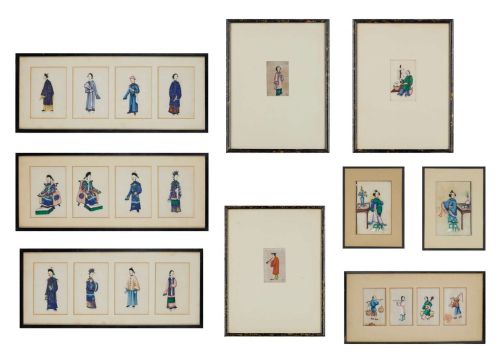
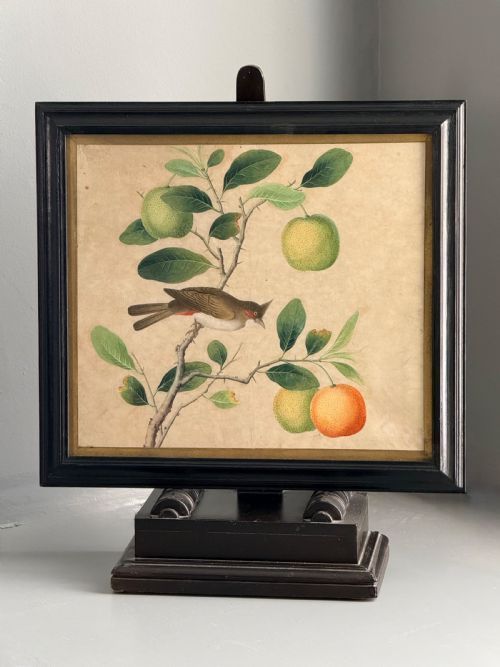
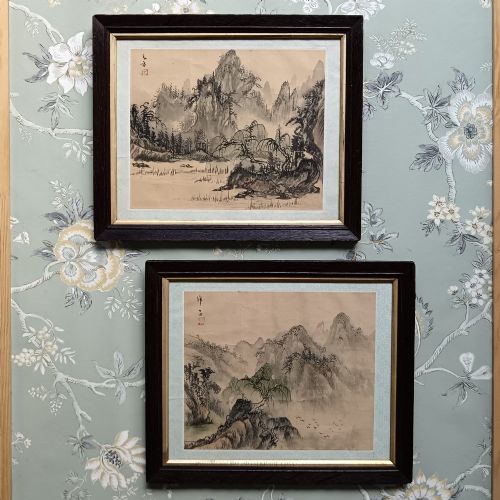
The selections available here range from groups of nineteenth-century figural pith paintings and eighteenth-century gouache works to signed silk paintings, embroidered panels, and lacquered panels with mother-of-pearl and abalone inlay. Buyers also encounter reverse paintings on glass, watercolours, rank badges, and brass rubbings housed in original or complementary dark frames.
How they were made
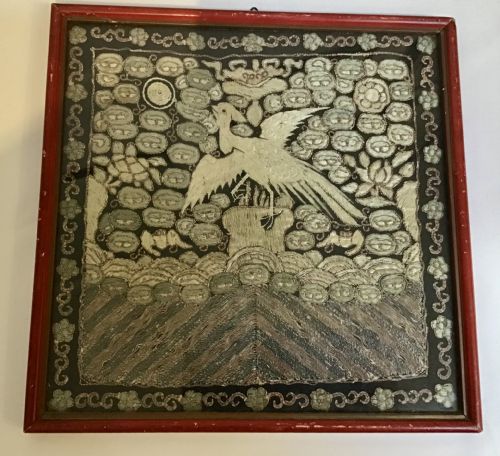
Artisans employed traditional organic media including ink, paint, and gouache applied directly to delicate surfaces like pith paper and woven silk. Textiles involve intricate needlework, seen particularly in rank badges and embroidered panels that utilise fine threads and detailed stitching.
Rigid supports include prepared wood and glass utilised for reverse paintings and mirrors, where artists painted directly onto the rear surface to achieve a glossy finish. Lacquered panels incorporate layers of protective finish combined with inlaid mother-of-pearl, abalone, and foilage details.
Nineteenth-century artists painted bustling port scenes on pith paper specifically to amuse homesick sailors bound for Britain.
What varies in quality
The distinction between standard and superior examples lies in the finesse of the brushwork, the tightness of the silk weave, and the precision of the inlay work. Finer paintings demonstrate greater anatomical control in figures and sharper botanical detail in bird and branch motifs.
Preservation of the fragile primary materials - such as uncreased pith paper, unfaded silk, and intact lacquer without major losses - dictates the standing of a piece. The presence of original framing adds historical integrity to works spanning the eighteenth to the twentieth centuries.
The Black Framed Chinese Art Glossary
- Pith paper
- A delicate, spongy material cut from the pith of the Tetrapanax papyrifer plant, commonly used in nineteenth-century Chinese export painting. It absorbs watercolours and gouache with a distinctive velvety depth.
- Reverse painting on glass
- A technique where the artist paints directly onto the back of a glass sheet, viewing the finished image from the unpainted front. This method produces a bright, reflective surface.
- Rank badge
- A square embroidered textile depicting specific birds or animals, worn by civil and military officials during the Qing dynasty to denote their precise hierarchy. They demonstrate exceptional needlework skill.
- Shan Shui
- A traditional style of Chinese painting that depicts natural landscapes, typically featuring mountains and water using ink and brush. The genre focuses on capturing the rhythm of nature.
- Coromandel work
- A form of Chinese incised lacquerware where designs are carved into a dark ground and filled with colours or gold leaf. The style heavily influenced eighteenth-century export pieces.
Black Framed Chinese Art: Frequently Asked Questions
How do I care for pith paper paintings?
Pith paper is exceptionally fragile and sensitive to humidity changes and direct sunlight. Keep these works behind protective glass in stable environmental conditions away from direct heat sources.
Avoid touching the surface directly, as the material bruises easily and lacks the structural resilience of standard paper or canvas.
What is a silk rank badge?
A rank badge is an embroidered textile square that officials wore on their robes during the Qing dynasty. Each animal or bird motif identified the precise military or civil rank of the wearer.
These pieces showcase meticulous needlework and remain prized examples of historical Chinese textile art.
How do reverse glass paintings differ?
Reverse paintings on glass require the artist to paint the composition backward, applying foreground details first and background elements last. Viewing the work through the glass pane creates a luminous, glossy finish.
This technique gained popularity in export markets during the eighteenth and nineteenth centuries.
What is Shan Shui art?
Shan Shui translates to mountain-water and represents a traditional Chinese painting style focused on natural scenery. These works use brush and ink to evoke the spirit of landscapes rather than exact topographical accuracy.
They emphasise harmony between humanity and the natural world.