



Framed Chinese Painting
A framed chinese painting brings centuries of meticulous brushwork and delicate pigments directly to the wall in traditional wood and glass housings.
Framed Chinese Painting
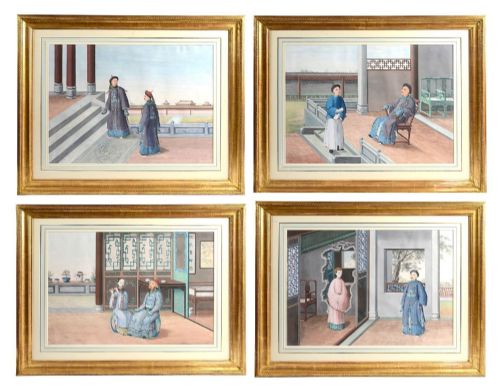
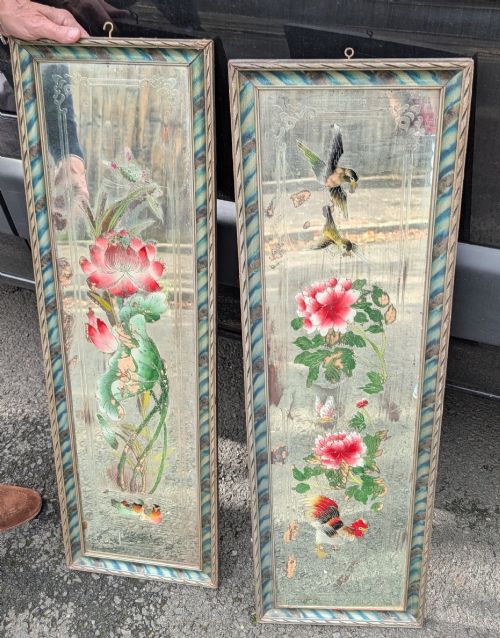
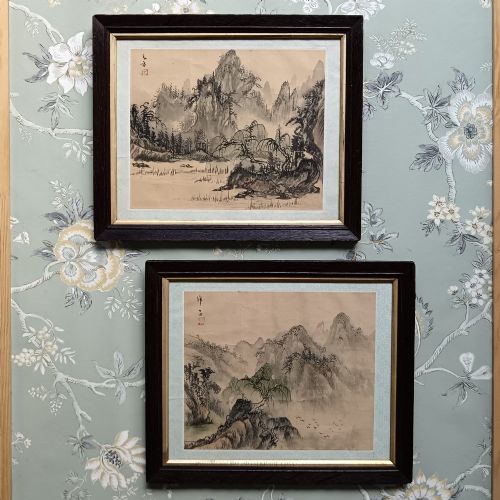
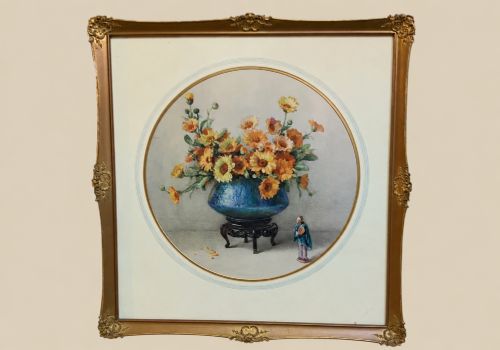
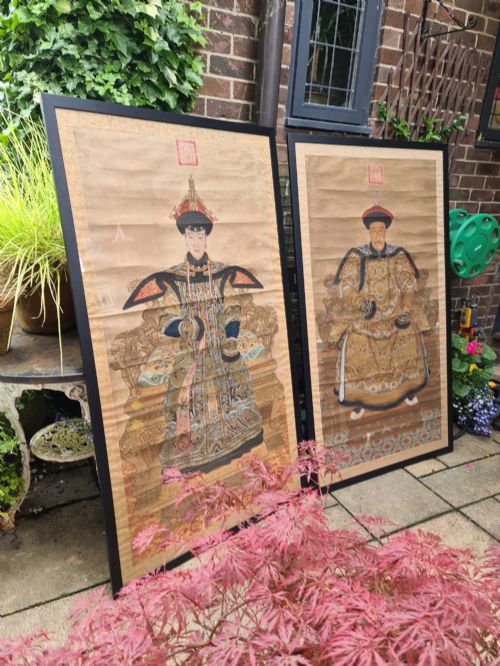
A framed chinese painting gathers diverse historical forms ranging from delicate watercolour studies to substantial ancestral scrolls and reverse glass panels. Buyers often encounter nineteenth century Export works alongside later twentieth century silk paintings and porcelain plaques.
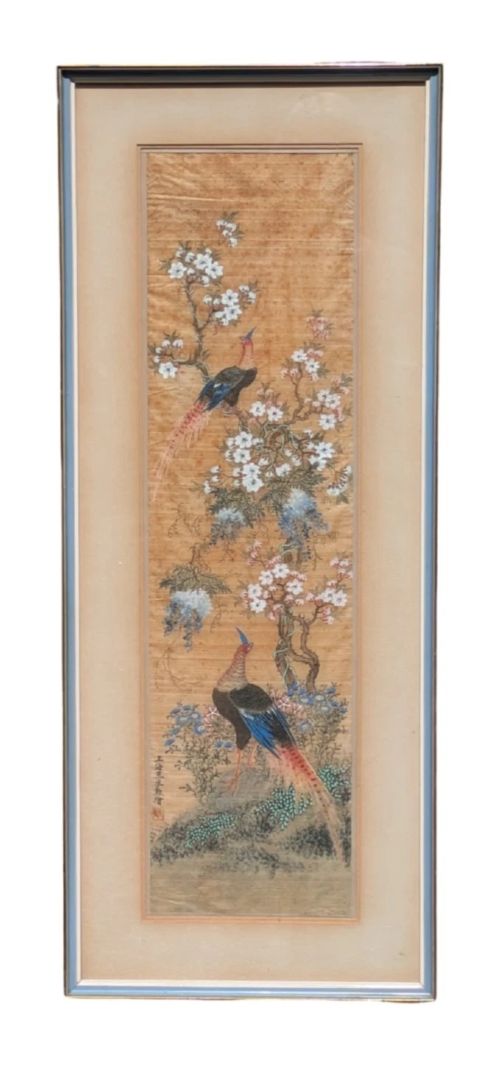
The selection encompasses wall art executed on varied supports, including pith paper, silk, and canvas housed within original or later frames. These pieces bridge traditional Asian aesthetics with Western decorative contexts through styles such as Chinoiserie and China Trade.
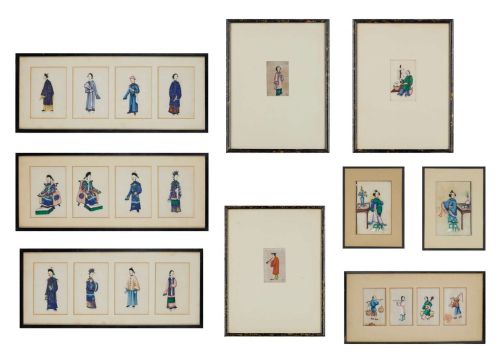
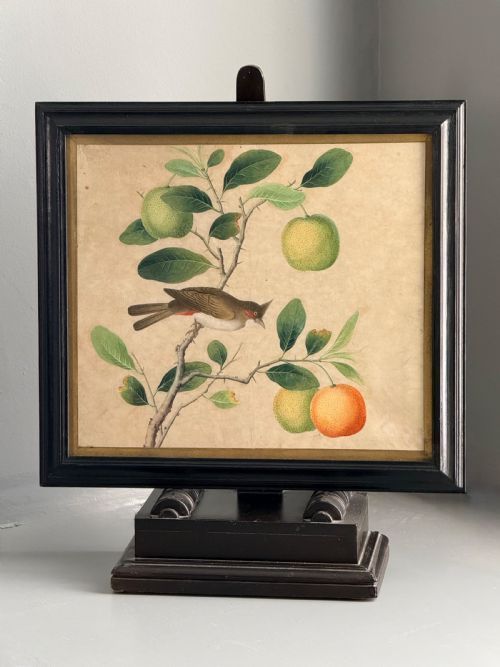
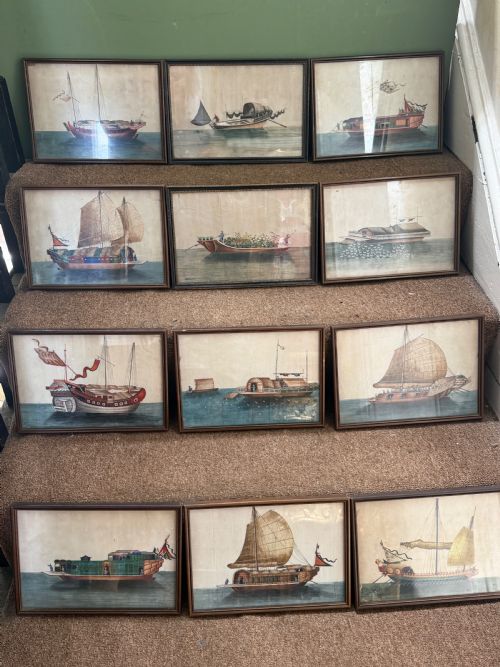
Subjects span figural portraits, marine scenes of junks on the Pearl River, and meticulous studies of flora and fauna. Pieces appear individually or in decorative sets of twelve, preserving historical artistic output from distinct periods.
Materials and Technique
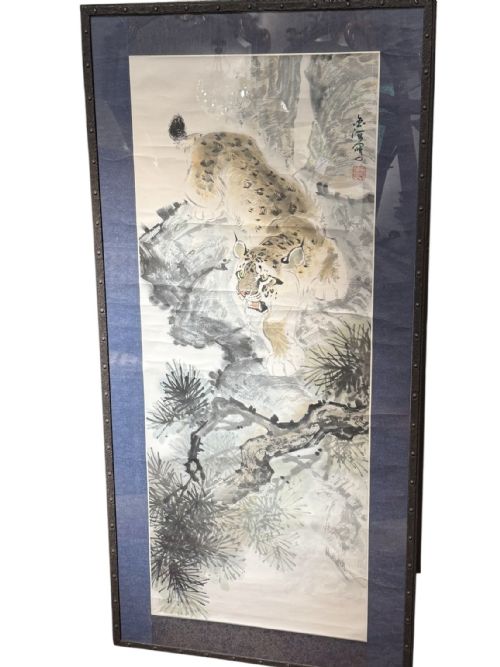
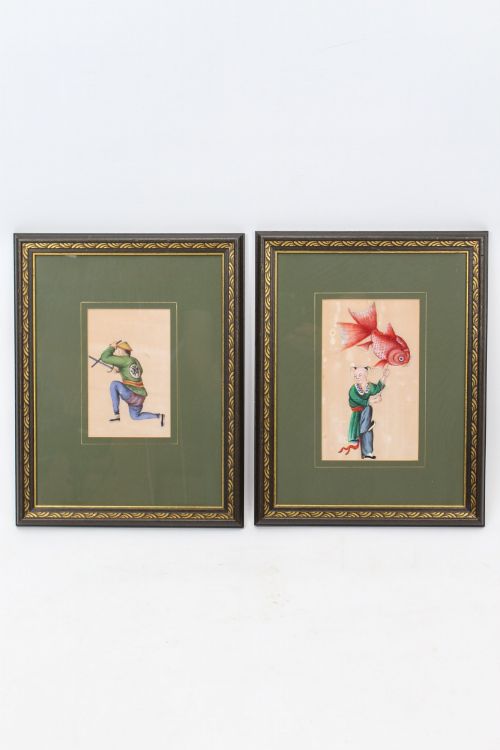
Artists executed works using ink and pigment upon delicate grounds such as silk, paper, and pith, commonly known as rice paper. Pith paper absorbs vibrant gouache and watercolour deftly, producing rich tones seen in botanical and figural subjects.
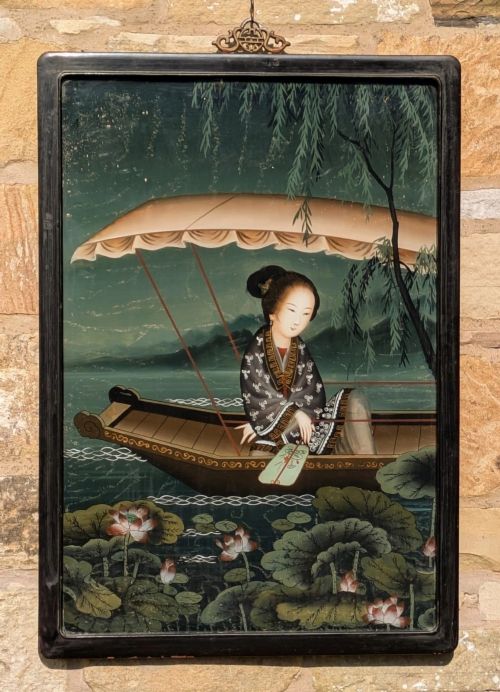
Reverse painting on glass utilises meticulous brushwork applied directly to the rear of a glass plate so the finished image appears correctly oriented from the front. Artisans frequently paired these panels with polished wood frames and protective glass glazing.
Textiles and porcelain serve as alternative media, with hand painted porcelain panels and woven silk scrolls providing durable surfaces for detailed imperial and domestic imagery.
Several Victorian paintings capture bustling nineteenth century junks navigating the busy waters of the Pearl River.
Quality and Execution
The sophistication of the brushwork and the vibrancy of the remaining pigment determine the visual impact of each piece. Finer examples display precise control in facial expressions and botanical detail, whereas lesser works show coarser execution.
The integrity of the mounting and the preservation of the delicate ground material differentiate standard examples from exceptional survivals. Original frames that retain their historical character add significant context to the artwork within.
Ah Hee Studio
The Framed Chinese Painting Glossary
- Pith paper
- A delicate material formed from the spongy interior of Tetrapanax papyrifer stems, frequently used for nineteenth century Export watercolours. It possesses a velvety texture that accepts gouache brilliantly.
- Reverse glass painting
- An artistic technique where the image is painted directly onto the back of a glass panel to be viewed from the front. This method imparts a glossy finish to the colours.
- Shan Shui
- Traditional Chinese landscape painting style featuring mountains, rivers, and waterfalls. These compositions often evoke a contemplative mood through minimal ink application.
- Chinese Export
- Art created in China specifically for Western markets, blending Eastern motifs with European framing tastes. This category includes trade paintings and maritime subjects.
- Ancestor portrait
- Formal depictions of family forebears created for veneration and domestic display. They typically feature stiff, frontal postures in official robes.
Framed Chinese Painting: Frequently Asked Questions
What is pith paper?
Pith paper is a fragile organic material sliced from the pith plant, commonly used in the nineteenth century for vibrant watercolours.
It yields a velvety surface that absorbs pigments deeply, creating luminous illustrations of figures and insects.
How do I care for silk paintings?
Silk paintings require protection from direct sunlight and high humidity to prevent the fabric and pigments from degrading.
Keeping them behind glass in stable indoor environments preserves the delicate textile fibres.
What is China Trade art?
China Trade art encompasses items produced in treaty ports primarily for Western merchants and travellers during the nineteenth century.
These works often record local shipping, harbour views, and domestic customs for foreign buyers.
Are reverse glass paintings fragile?
Reverse glass paintings are structurally sound when properly framed, but the pigment layer on the back remains vulnerable to moisture.
Handling requires care to prevent the glass pane from shifting within its rebate.