



Large Chinese Artwork
Large Chinese artwork brings substantial presence to a room, spanning wall hangings, framed scrolls, and carved sculptures.
Large Chinese Artwork
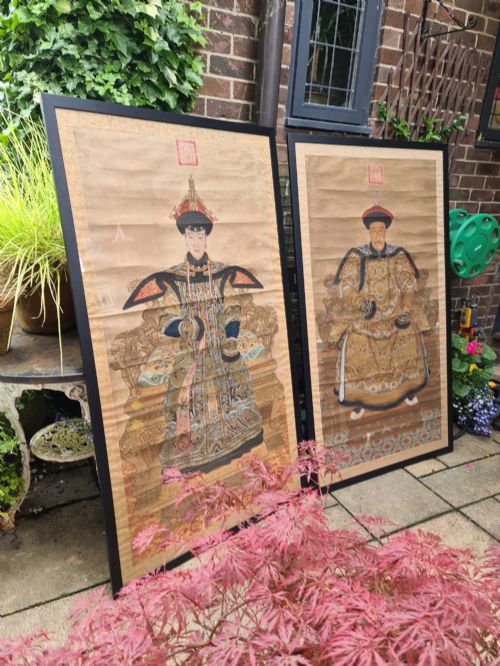
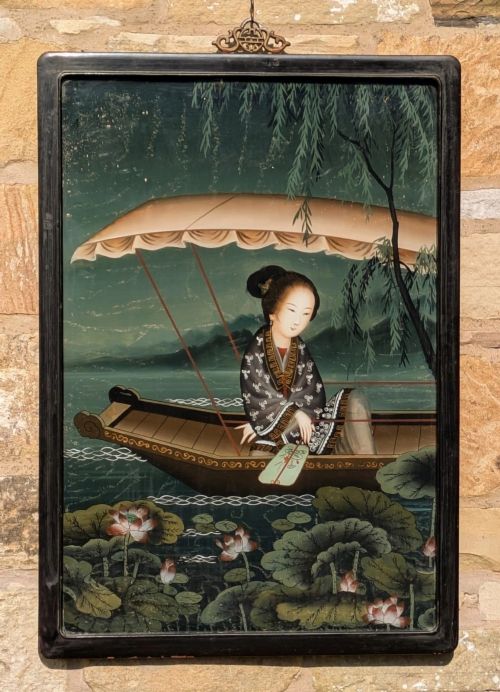
Large Chinese artwork encompasses a diverse range of wall art, framed pieces, and substantial sculptures found within these collections. When searching for large Chinese artwork, buyers encounter various forms including painted scrolls, reverse paintings on glass, and textile portraits.
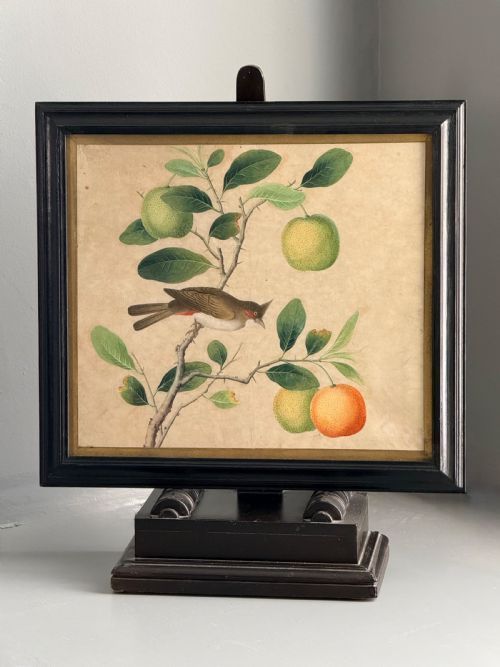
The objects date from the eighteenth century through to the mid-twentieth century, capturing multiple stylistic traditions. Pieces vary from ancestral scrolls and gouache paintings on pith paper to carved soapstone and jade mountain landscape sculptures.
Originating across different periods, these works demonstrate traditional craftsmanship through diverse mediums such as silk, paper, wood, and brass. Each piece offers a distinct visual narrative reflecting its specific historical period and artistic style.
Materials and techniques
Creation methods involve meticulous hand painting on delicate surfaces like pith paper, silk, and glass, often combined with ink and gouache. Skilled artisans utilised traditional pigments to capture fine details in portraits, landscapes, and wall hangings.
Sculptural works demonstrate advanced carving techniques applied to hard materials such as jade, soapstone, coral, and hardwood stands. The construction frequently incorporates multiple elements, uniting carved stone figures with fitted wooden bases.
A mischievous troop of soapstone monkeys occupies one carved group.
Distinctions in quality
Quality rests upon the precision of the brushwork and the refinement of the carving across materials like jade, soapstone, and coral. Superior examples exhibit exceptional detail in facial expressions, landscape depth, and compositional balance.
The integrity of the primary medium, whether intact reverse glass, well-preserved pith paper, or unblemished stone, dictates the standing of a piece. Original mountings, scrolls, and fitted hardwood stands further elevate the overall execution.
The Large Chinese Artwork Glossary
- Gouache
- An opaque water-based pigment used extensively in historical paintings on pith paper and silk. It provides rich colour saturation and dense coverage.
- Pith paper
- A delicate material formed from the pith of the Tetrapanax papyrifer plant, utilised historically for intricate botanical and figural painting. It possesses a velvety texture that accepts water-based pigments exceptionally well.
- Reverse painting on glass
- A technique where artists apply pigment directly to the back of a glass panel, viewed from the front to create a glossy finish. This method requires painting in reverse order, starting with foreground details.
- Ancestral scroll
- A traditional hanging portrait depicting family forebears, typically executed on silk or paper for ceremonial display. These scrolls record lineage and status through formal attire and seating.
- Soapstone
- A talc-schist mineral prized for its softness and suitability for intricate sculptural carvings. It displays varied natural hues and a smooth feel.
Large Chinese Artwork: Frequently Asked Questions
How do I hang heavy framed wall art safely?
Heavy framed pieces and wall hangings require secure fixings anchored directly into wall studs or masonry to support the combined weight of the frame and glass.
Professional picture hangers or weight-rated mirror plates distribute the load evenly, preventing strain on the original hanging cords or wooden frames.
Where should I display large sculptures?
Substantial stone carvings and jade mountain landscape sculptures require stable surfaces such as heavy sideboards, dedicated display tables, or reinforced pedestals.
Placement should avoid direct sunlight and fluctuating heat sources to protect natural materials like soapstone, coral, and fitted hardwood stands from environmental stress.
How do I care for delicate silk and paper works?
Framed silk portraits and pith paper paintings need protection from direct sunlight, high humidity, and rapid temperature changes to prevent fading and material degradation.
Displaying them in stable interior environments with UV-filtering glass helps preserve the integrity of the original pigments and organic textiles.
How do I distinguish between different artistic periods?
Period identification relies on observing stylistic conventions, framing techniques, material usage, and execution methods associated with specific centuries or dynasties.
Comparing brushwork characteristics, signature styles like Chinoiserie or Qing Dynasty aesthetics, and the nature of the backing materials clarifies the era of origin.