



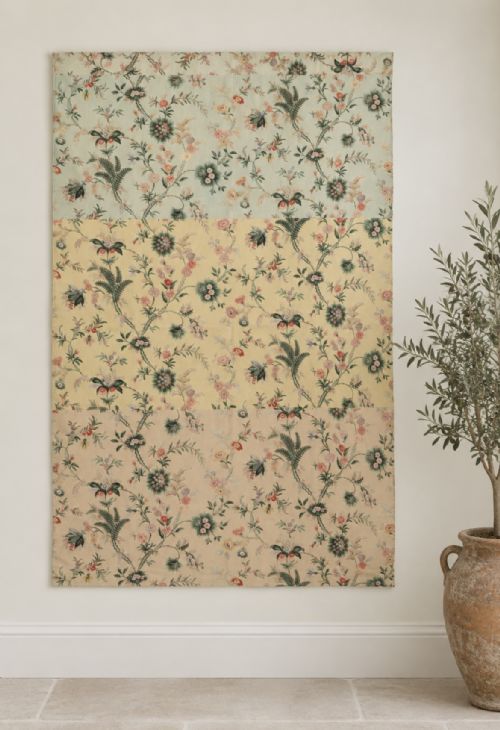
Yellow Silk Wall Art
Yellow silk wall art brings luminous texture and rich global history into modern rooms through centuries of textile traditions.
Yellow Silk Wall Art
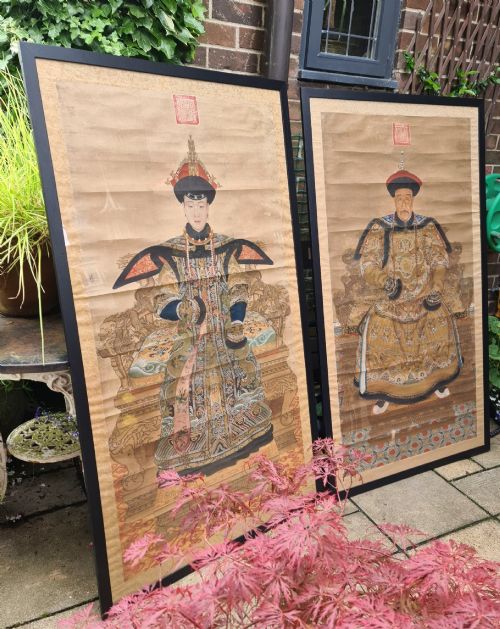
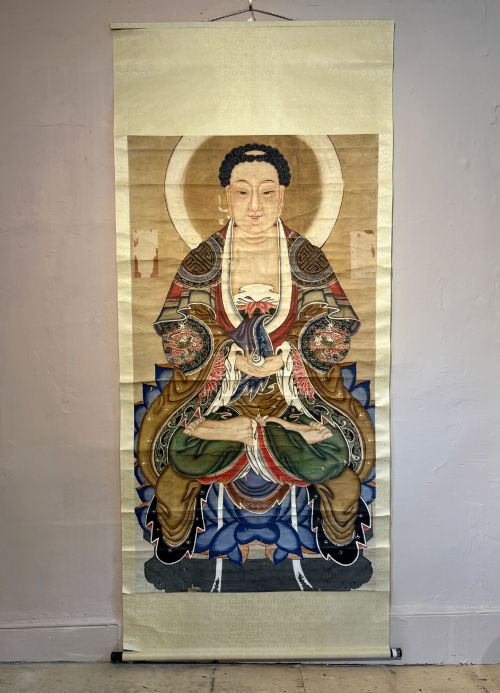
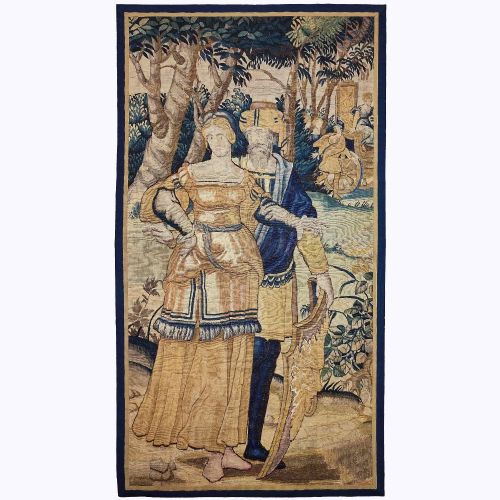
Yellow silk wall art encompasses an eclectic mix of textiles, hanging scrolls, and framed panels originating from diverse global traditions. Pieces range from nineteenth-century Chinese ancestral portraits and Buddhist hanging scrolls to Central Asian ikat fabric panels and Flemish tapestry fragments.
Buyers are most likely to encounter nineteenth-century Asian works and Uzbek embroideries on this page, reflecting distinct cultural techniques. These items serve as striking focal points in contemporary interiors, bringing warmth and historical depth to blank walls.
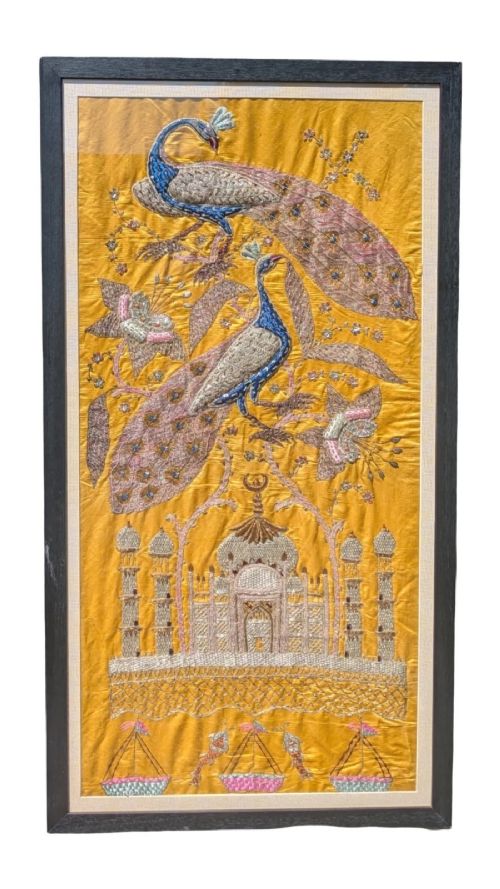
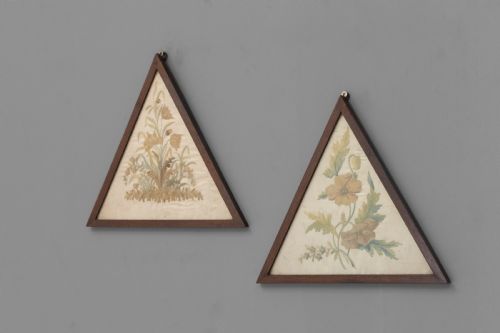
The category bridges fine art and textile craft, uniting embroidered Indian peacock scenes, English fabric panels, and Bokhara coat fragments repurposed for display. Each surviving object demonstrates the enduring appeal of vibrant yellow textiles across different centuries and decorative styles.
Materials and construction methods
The primary ground materials rely heavily on silk, cotton, and paper, frequently reinforced with wood backing or glass framing for structural support. Artisans utilised natural pigments, ink, and metallic thread to build intricate surface details and shimmering accents.
Construction techniques span delicate silk embroidery, traditional ikat resist-dyeing, and heavy tapestry weaving across multiple centuries. Workshops in regions from Qing China to Central Asia combined these durable textiles with protective framing or panel mounts to preserve the delicate fibres.
Yellow Silk Wall Art Retail Price Guide 2026
Typical asking prices for yellow silk wall art among the pieces listed under this phrase on Sellingantiques today, from the lower quarter to the upper quarter. They describe what is for sale here now, not the wider market.
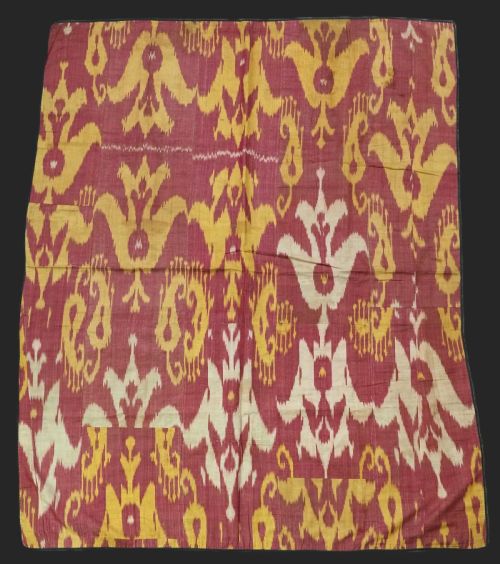
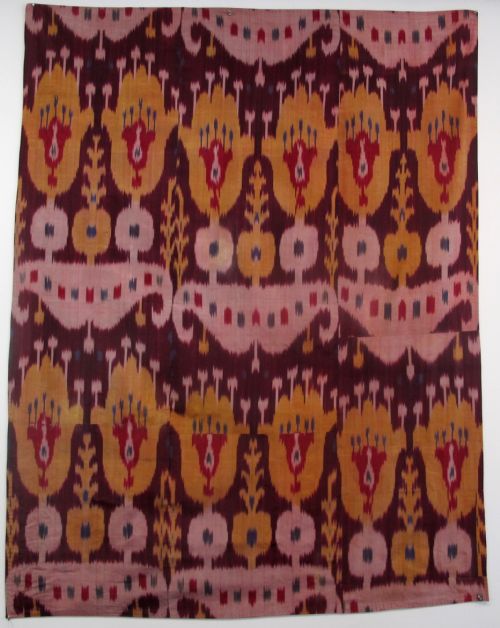
Gentlemen in nineteenth-century Bukhara once stepped out in radiant silk ikat coats that now find a second life as striking wall art.
Evaluating craftsmanship and condition
Quality separates through the density of the embroidery, the clarity of the pigment application, and the complexity of the woven motifs. Finer pieces demonstrate precise needlework, sophisticated dye saturation, and expert preservation of fragile silk and metallic threads.
The integrity of the underlying fabric and the authenticity of regional mounting dictate the standing of each textile. Superior examples retain vibrant coloration and stable structural framing, whereas lesser pieces show significant fibre degradation or loss of original threadwork.
The Yellow Silk Wall Art Glossary
- Ikat
- A dyeing technique where yarns are pattern-dyed before weaving, creating characteristic blurred edges along the design motifs. This method requires immense skill from weavers in regions such as Bukhara and Tashkent.
- Suzani
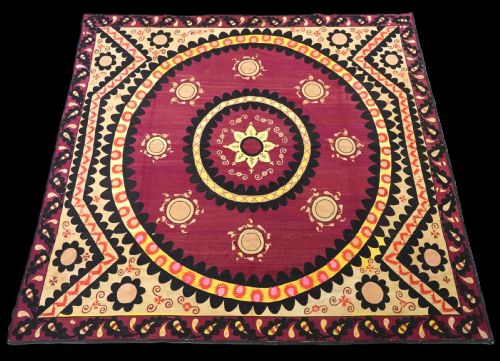
- A type of embroidered and decorative tribal textile made in Tajikistan, Uzbekistan, and other Central Asian nations. These large panels often feature floral and celestial designs worked in vibrant silk threads on cotton or silk grounds.
- Ancestor Portrait
- A formal Chinese painting or textile created to honour deceased family members for ritual veneration. These works frequently depict figures in elaborate robes against neutral or patterned backgrounds.
- Tapestry Panel
- A piece of heavy hand-woven textile featuring pictorial designs, often originating from European weaving traditions. Such panels were historically used to insulate stone walls and display narrative scenes.
- Hanging Scroll
- A traditional East Asian format for displaying artwork vertically on a wall, mounted on flexible backing materials with roller ends. Silk and paper paintings are the most common mediums found in this format.
Yellow Silk Wall Art: Frequently Asked Questions
How do I hang heavy textile art?
Most textile panels and framed scrolls require secure wall anchors and appropriate weight-bearing brackets suited to plaster or drywall. Professional framing with conservation-grade glass helps protect delicate silk and metallic threads from dust and environmental damage.
Ensure pieces are positioned away from direct sunlight to prevent the fading of natural dyes and yellow silk grounds over time. Regularly check the hanging hardware to maintain stable support for heavier wooden frames and ancestral scrolls.
What periods do these pieces come from?
The available selection spans from the sixteenth-century Flemish Renaissance through various nineteenth-century traditions and into the early twentieth century. Each era brings distinct regional aesthetics, from Qing Dynasty portraits to Uzbek ikat panels.
Dates are determined by stylistic markers, materials, and documented regional production methods rather than precise factory records. Understanding the historical context helps collectors appreciate the evolution of textile arts across different continents.
How do I clean antique silk wall art?
Cleaning antique textiles requires extreme caution, and invasive washing should generally be avoided to prevent fibre damage. Surface dust can be gently removed using a soft brush or low-suction vacuum through a protective mesh screen.
For deep cleaning or conservation, consult a professional textile restorer rather than attempting chemical treatments at home. Preserving the original integrity of the silk and embroidery takes priority over removing minor age-related patina.
Where were these textiles originally made?
The pieces originate from diverse global centres including China, India, Central Asia, Flanders, and England. Each region developed specialised textile techniques, such as the elaborate embroidery of Tashkent suzanis or the fine scroll painting of the Qing Dynasty.
Geographic origins are identifiable through specific material combinations, motif repertoires, and traditional construction methods unique to local workshops. This geographical variety allows collectors to curate displays reflecting distinct cultural art histories.