


Chinese Flower Table
A Chinese flower table brings natural timber and cool stone together to elevate a ceramic vessel in a room.
Chinese Flower Table
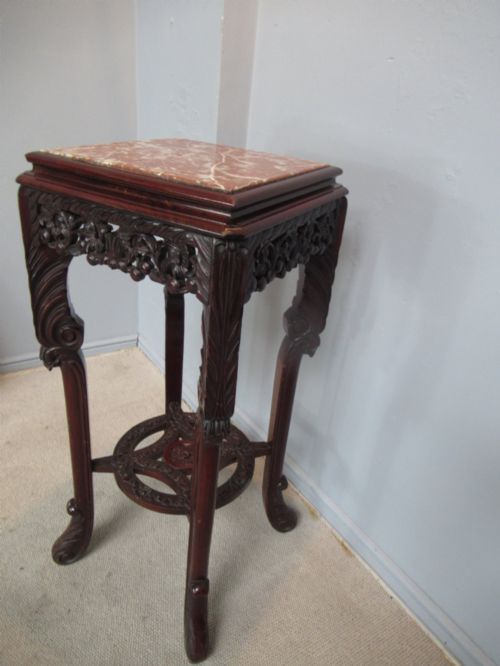
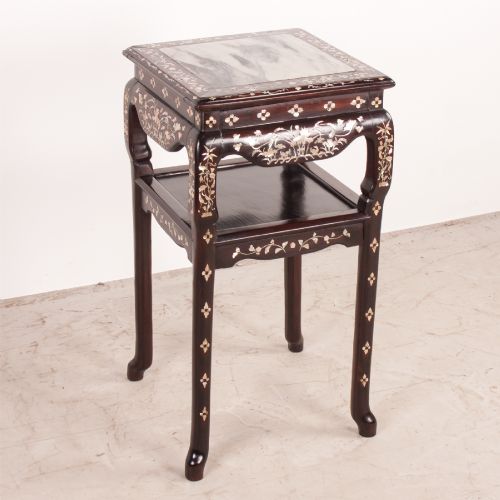
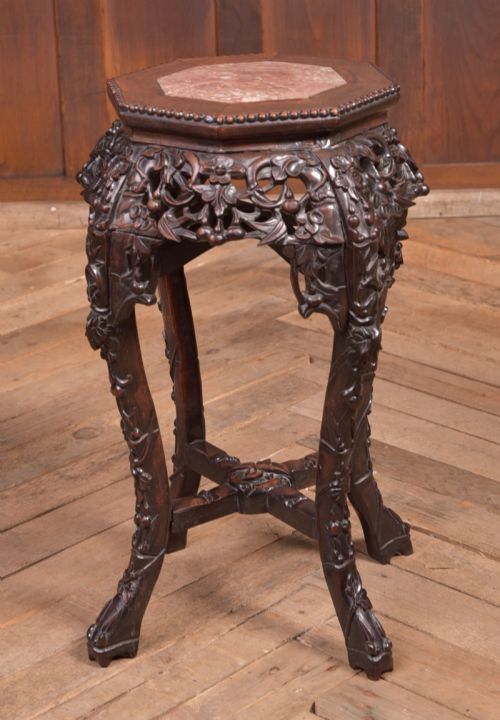
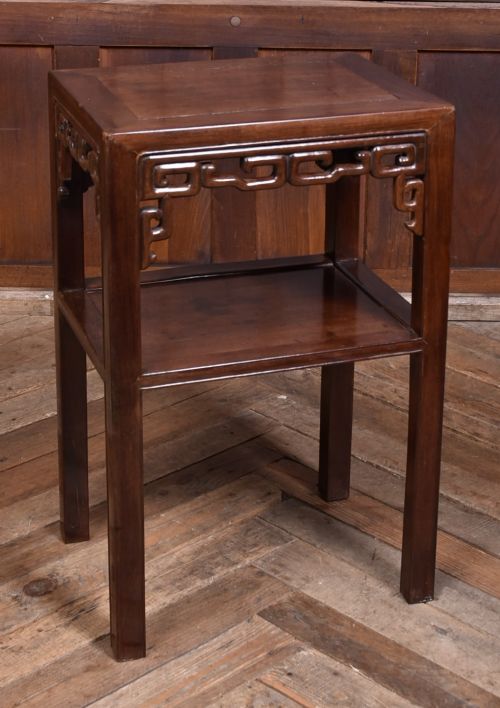
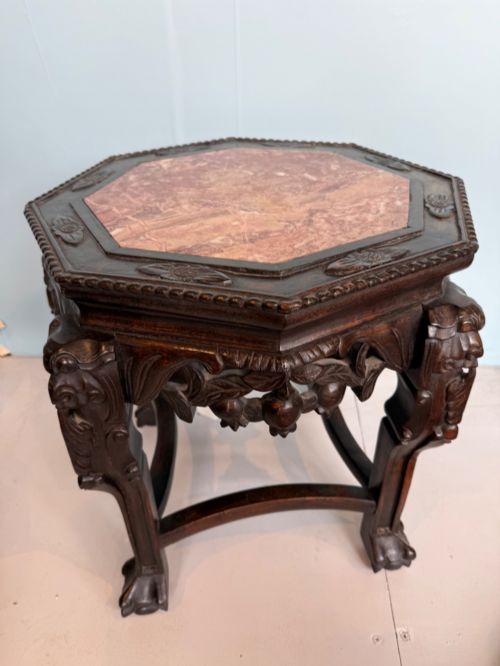
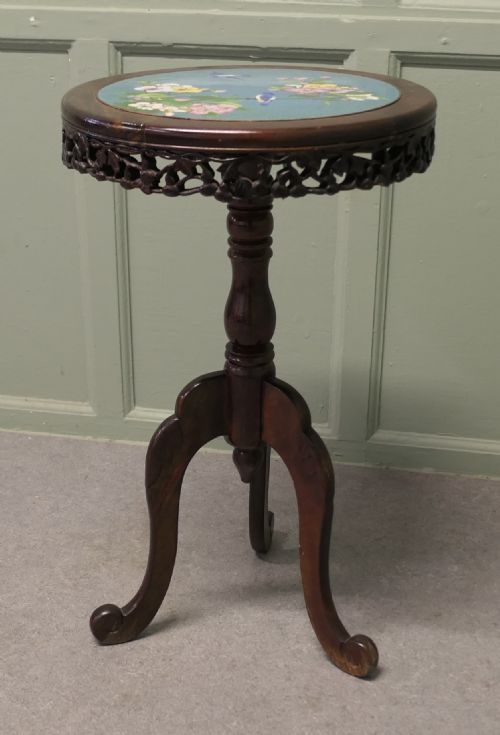
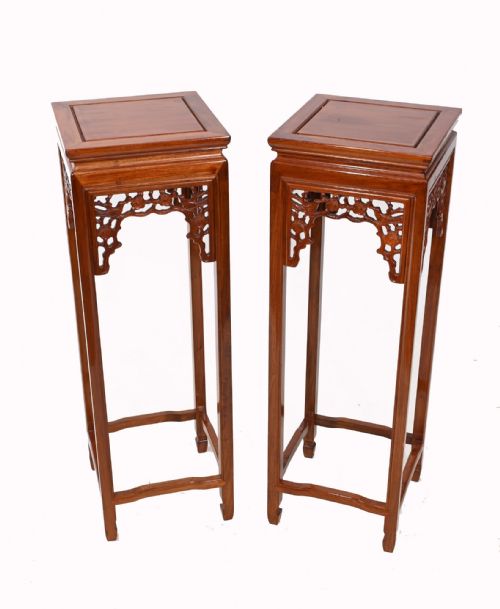
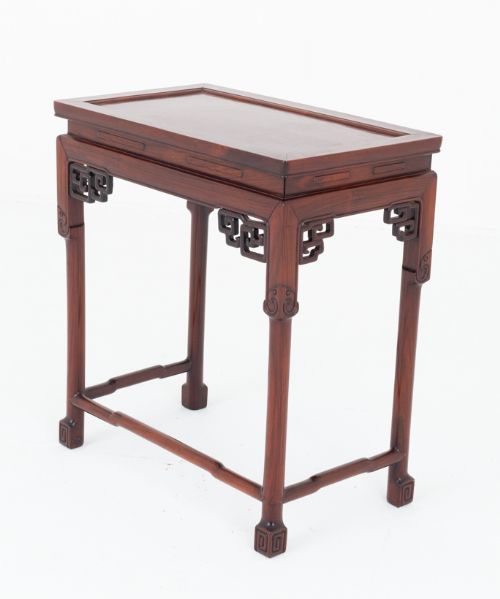
A Chinese flower table functions primarily as a plant stand, jardiniere stand, or low occasional surface for displaying decorative items within a room. These pieces appear in forms such as tall pedestals, square coffee table stands, and two-tier urn holders originating from the nineteenth and early twentieth centuries.
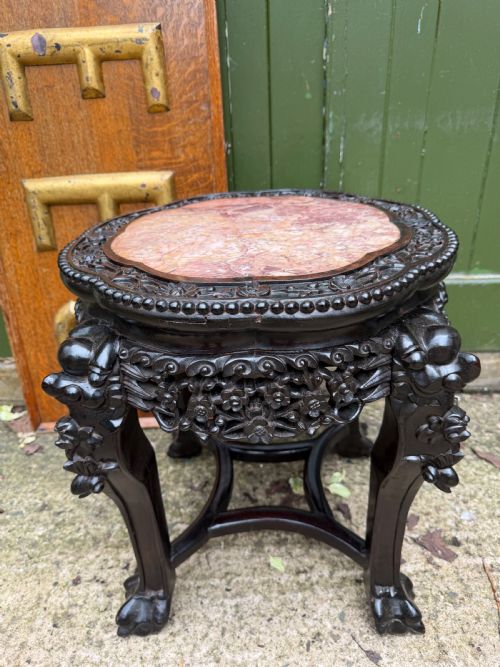
The objects derive their aesthetic from Qing Dynasty traditions and Chinese export designs, incorporating shaped tops, pierced aprons, and sturdy pillar supports. Buyers encounter low pot stands alongside tall pedestals designed specifically to elevate heavy ceramic planters.
Originating largely from the late nineteenth century through to the Edwardian era, these furnishings suit traditional interiors and modern spaces alike as lamp tables, side tables, and vase supports.
Materials and construction
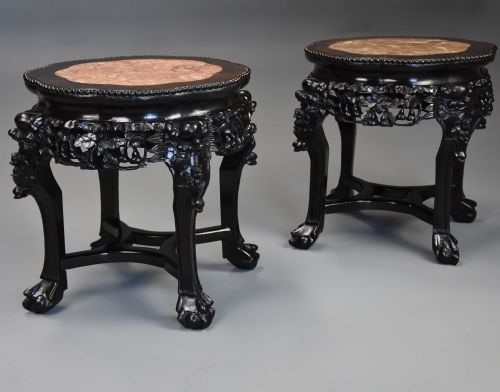
Cabinetmakers constructed these tables from dense tropical timbers including rosewood, padouk, hongmu, and huali, joined with traditional woodworking techniques that accommodated heavy loads. Artisans often set variegated rouge or grey marble panels directly into the timber tops to provide a cool, durable surface for damp flower pots.
Carving and inlay work required considerable manual skill, utilising brass, mother-of-pearl, and specialised hand chisels to render flora, fauna, and geometric motifs across the wooden frames. Lacquer and paint were occasionally applied to finished surfaces for added visual depth and protection.
Certain stands feature stone panels specifically chosen because their swirling natural grain patterns resemble distant mountain mists.
Variations in quality
Quality rests upon the density of the chosen timber, the depth and crispness of the hand carving, and the stability of the frame joints. Superior examples display deeply undercut floral reliefs, tight joinery, and well-fitted marble inserts without excessive filler.
The Chinese Flower Table Glossary
- Hongmu
- A dense, dark tropical hardwood favored by Chinese furniture makers for its strength and rich grain. It translates literally as red wood and develops a deep patina over time.
- Jardiniere
- A large ornamental pot or container for plants or flowers. These vessels sat atop specialised stands designed to protect interior flooring from moisture.
- Padouk
- A heavy, durable timber ranging in colour from vibrant red to deep brown. It provides a stable structural base for carved oriental furnishings.
- Chinoiserie
- European decorative style reflecting Chinese artistic motifs and techniques. It appeared on furniture and decorative objects during the nineteenth and early twentieth centuries.
- Cloisonné
- Enamelling technique where thin metal wires form compartments on a surface to hold coloured glass paste. It adorns select tabletop surfaces and decorative panels.
Chinese Flower Table: Frequently Asked Questions
How were these tables used?
These pieces served principally to elevate heavy ceramic planters, bronze urns, and decorative vases above floor level to showcase them effectively.
Over time, owners also utilised them as lamp tables, wine tables, and occasional side surfaces in domestic interiors.
What wood types should I expect?
The listings consist primarily of dense oriental hardwoods such as rosewood, hongmu, padouk, and general hard wood.
Many examples incorporate inset marble panels at the centre of the top surface to support damp flower containers safely.
How do I date these tables?
Most surviving examples originate from the nineteenth century, the Victorian period, and the early decades of the twentieth century.
Stylistic markers include Qing Dynasty carved motifs, traditional joinery methods, and the specific density of the timber used.
Can I use them as side tables?
The sturdy construction and flat timber or marble tops make these stands suitable for holding small lamps, books, and cups.
Their compact footprints allow them to fit easily beside chairs and sofas in contemporary living spaces.