



Chinese Export Punch Bowl
A Chinese export punch bowl brings robust scale and vibrant enamels to a room, serving as a historic focal point.
Chinese Export Punch Bowl
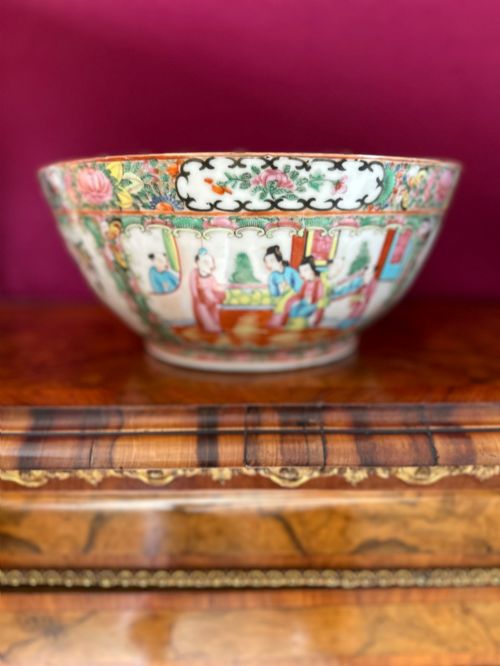
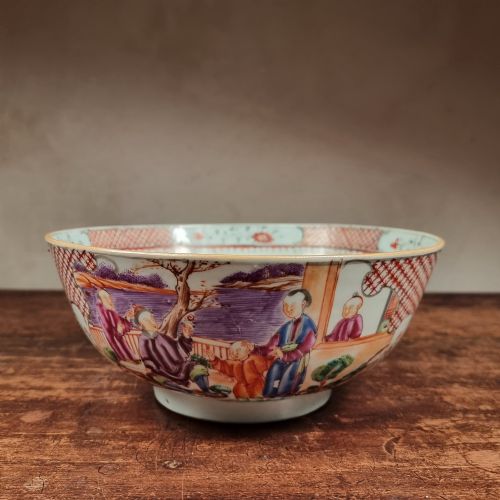
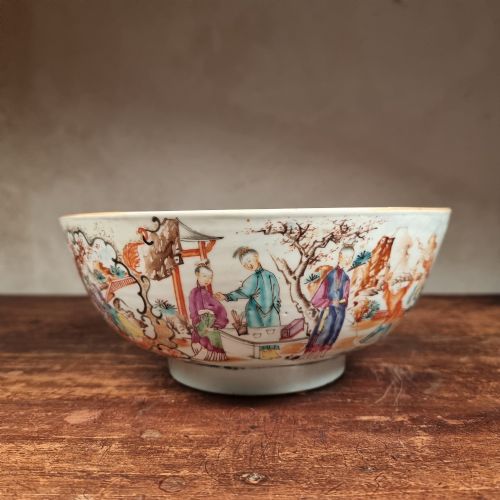
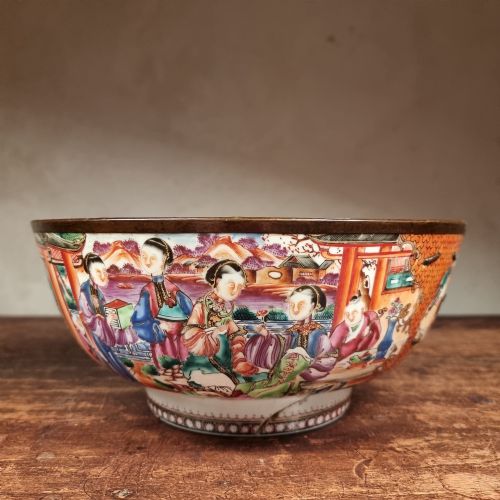
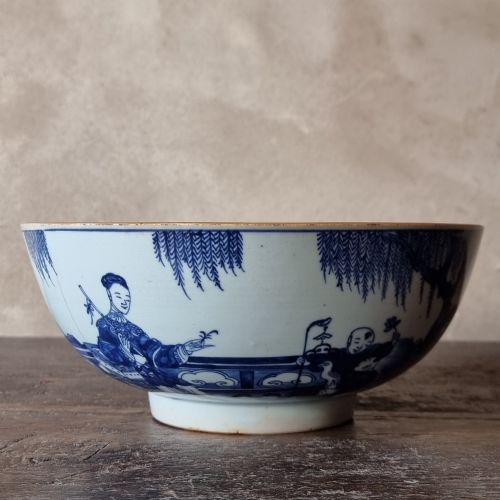
A chinese export punch bowl is a large vessel created in the Far East for Western markets during preceding centuries. The forms seen here range from simple decorative bowls to substantial punch bowls and centrepiece bowls made for grand tables.
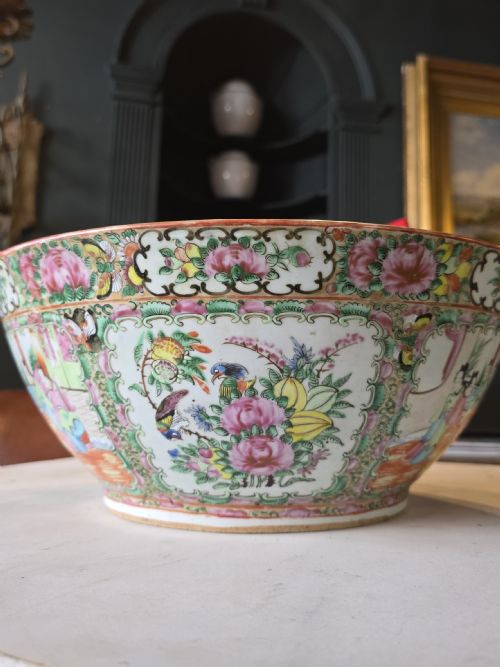
Most examples encountered on this page date from the eighteenth and nineteenth centuries, spanning periods such as the Qing Dynasty and the Victorian era. Buyers frequently find Cantonese Famille Rose and Rose Medallion patterns alongside earlier Kangxi and Mandarin designs.
These vessels functioned primarily for communal dining and large gatherings, where hosts served mixed beverages. Today, they remain versatile objects for display on large tables, sideboards, or dedicated stands.
What varies in quality
The sophistication of the hand-painted brushwork distinguishes superior bowls from standard production pieces. Finer specimens display crisp detail in complex figural scenes, butterflies, and floral borders.
Scale and ambition also dictate the tier of a piece, with exceptionally large diameters and complex palettes demanding greater technical skill from the kiln workers and decorators. The presence of documented European decoration or specialist metal mounts adds another layer of distinction.
Listings feature porcelain, enamel, gold leaf, and cobalt glaze across periods from the sixteenth century to the mid-twentieth century.
The Chinese Export Punch Bowl Glossary
- Famille Rose
- A major palette of Chinese ceramic glazes introduced in the eighteenth century, dominated by opaque pink enamel. This colourway allowed for subtle gradations in shading on flowers and garments.
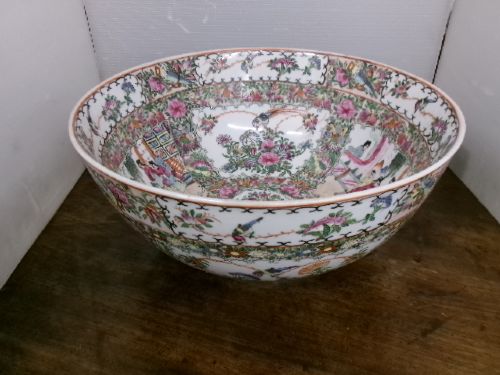
- Rose Medallion
- A distinctive pattern featuring panels of alternating birds, flowers, and figures arranged around a central medallion. It became a defining export style during the nineteenth century.
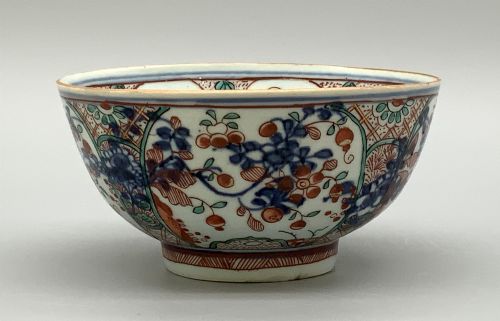
- Imari
- A style of ceramic decoration employing underglaze blue and overglaze iron red and gold, inspired by Japanese wares but largely produced in China for export. The palette is bright and contrasting.
- Ormolu
- Gilded bronze used for mounts, feet, and decorative handles applied to porcelain bowls in Europe. It transforms a ceramic vessel into an opulent furniture piece.
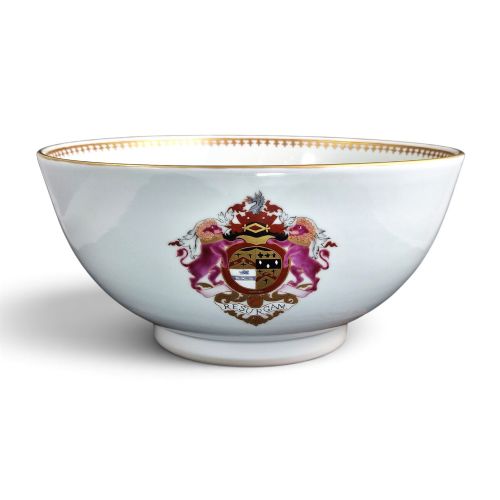
- Armorial
- Ceramic decoration featuring a specific family crest or coat of arms commissioned by European or American buyers. These bespoke commissions represent specialised export production.
Chinese Export Punch Bowl: Frequently Asked Questions
What is a Chinese export punch bowl?
A large ceramic vessel made in China for European and American markets, primarily intended for mixing and serving punch during large social gatherings.
Over time, these bowls transitioned from active dining service to decorative centrepieces valued for their scale and hand-painted artistry.
How old are these bowls?
The pieces span several centuries, with examples ranging from early Ming pieces to eighteenth-century Kangxi and Qianlong items, as well as nineteenth-century Cantonese and Victorian productions.
Dates are determined by stylistic markers, potting techniques, and the specific palette of the enamels used.
How do I style a punch bowl?
These large vessels sit well on substantial dining tables, mahogany sideboards, or dedicated stands where their patterned interiors remain visible.
Because of their generous scale, they require ample surrounding space to function as a room's focal point.
What is Rose Medallion?
Rose Medallion is a recognisable nineteenth-century export style characterised by segmented panels filled with figures, birds, and flowers surrounding a central motif.
This vibrant aesthetic utilises the Famille Rose palette to create a dense, colourful surface.