





Rose Medallion Punch Bowl
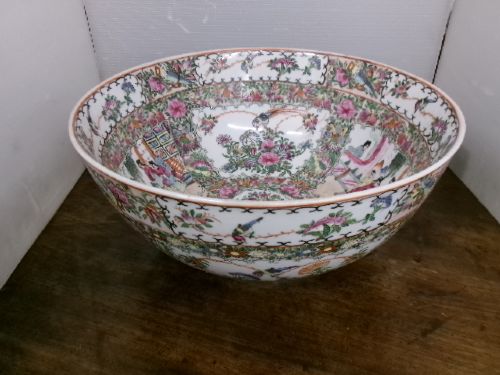
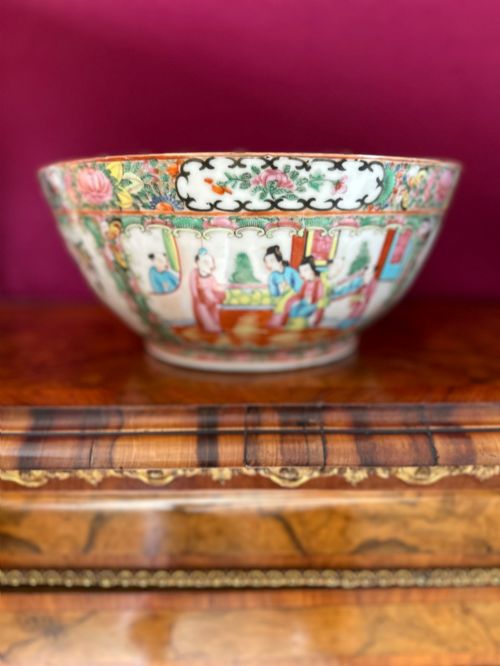
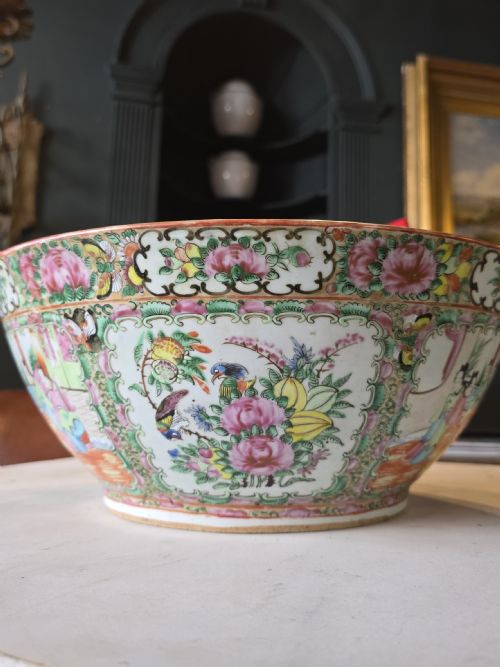
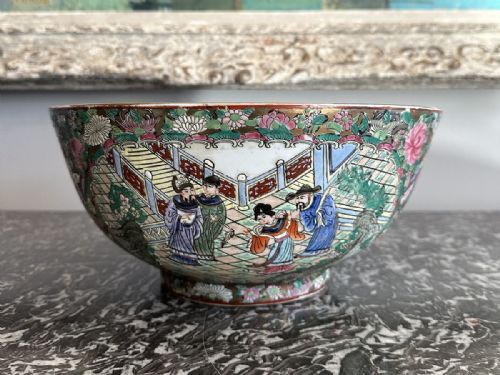
A rose medallion punch bowl brings brilliant enamelling and large scale to a table, offering the colourful figures and panels characteristic of Canton export ware.
Rose Medallion Punch Bowl
A rose medallion punch bowl is a large ceramic vessel designed for serving drinks, typically featuring segmented panels filled with figures, birds, and flowers. Buyers searching for a rose medallion punch bowl encounter pieces ranging from the eighteenth century to the mid-twentieth century, with nineteenth-century examples appearing most frequently.
The forms span decorative bowls, centrepiece bowls, and traditional punch bowls, sometimes accompanied by hardwood stands or gilt bronze mounts. These items originate from China as export porcelain, embodying Qing dynasty styles and Cantonese famille rose aesthetics.
Most examples measure between fifteen and twenty inches in diameter, commanding visual space in a room. The decoration combines meticulous hand-painted details with repeating motifs, setting this category apart from other export ceramics.
Materials and construction
Makers utilised fine porcelain as the base material, applying overglaze enamel in vibrant palettes of pinks, greens, and golds. Gilding and gold leaf highlights accentuate the borders and panel divisions, adding richness to the surface.
Some nineteenth-century variants incorporate gilt bronze or ormolu mounts, securing the porcelain within decorative metal frames. Additionally, certain items include fitted hardwood stands designed to elevate the bowl.
Rose Medallion Punch Bowl Retail Price Guide 2026
Typical asking prices for rose medallion punch bowl among the pieces listed under this phrase on Sellingantiques today, from the lower quarter to the upper quarter. They describe what is for sale here now, not the wider market.
Materials recorded across the inventory include hard-paste porcelain, overglaze enamel, gold leaf, gilt bronze, and hardwood.
Assessing quality and execution
Quality rests in the crispness of the hand-painted figures and the precision of the panel borders. Superior pieces display finely delineated facial expressions and complex botanical details within the enamels.
The weight and resonance of the porcelain body, alongside the richness of the gilding, distinguish finer items from simpler production pieces. Secondary mounts in gilt bronze or the inclusion of a carved hardwood stand add further dimension to the piece.
The Rose Medallion Punch Bowl Glossary
- Rose medallion
- A style of Chinese export porcelain decorated with segmented panels depicting figures, birds, and flowers, bordered by gilt and intricate floral motifs. This pattern dominates nineteenth-century Cantonese production.
- Famille rose
- A palette of opaque overglaze enamels introduced in the Qing dynasty, distinguished by its dominant pink or rose colour. It allowed painters to achieve subtle tonal gradations.
- Overglaze enamel
- Pigments applied on top of the fired and glazed porcelain, then fixed with a lower temperature firing. This technique provides the bright, raised surface texture characteristic of these bowls.
- Ormolu
- Gilt bronze mounts applied to the exterior of ceramic vessels, particularly popular in nineteenth-century European adaptations of Asian export wares. It serves both a structural and decorative function.
- Chinese export
- Porcelain manufactured in China specifically for Western markets, adapting traditional local forms and patterns to European tastes. These pieces often blended Eastern manufacturing with Western decorative preferences.
Rose Medallion Punch Bowl: Frequently Asked Questions
What is a rose medallion punch bowl used for?
Originally, these large vessels served punch at social gatherings in large households. Today, they function primarily as decorative centrepieces or statement items on dining tables and sideboards.
Because of their grand scale and intricate painted panels, collectors display them empty to showcase the artistry of the interior and exterior decoration.
How old are most rose medallion punch bowls?
The majority of pieces encountered date from the nineteenth century, spanning the Victorian era and the late Qing dynasty. Earlier examples from the eighteenth century and later ones from the early twentieth century also appear.
Evaluating the style of the hand-painted figures, the tone of the enamels, and the characteristics of the porcelain body helps determine the specific period.
Are these bowls made of porcelain?
Yes, the foundation of every piece is hard-paste porcelain created in China for export. Artisans then applied colourful overglaze enamels and gilding by hand.
Some variants also incorporate secondary materials such as gilt bronze mounts or custom-carved hardwood stands.