
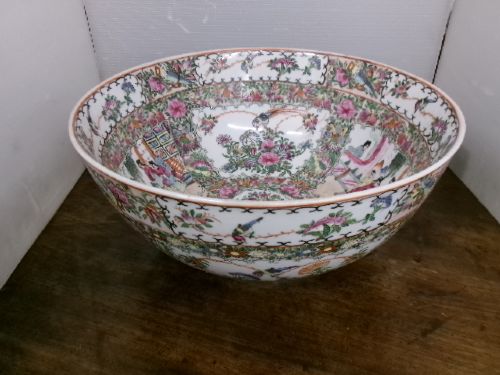
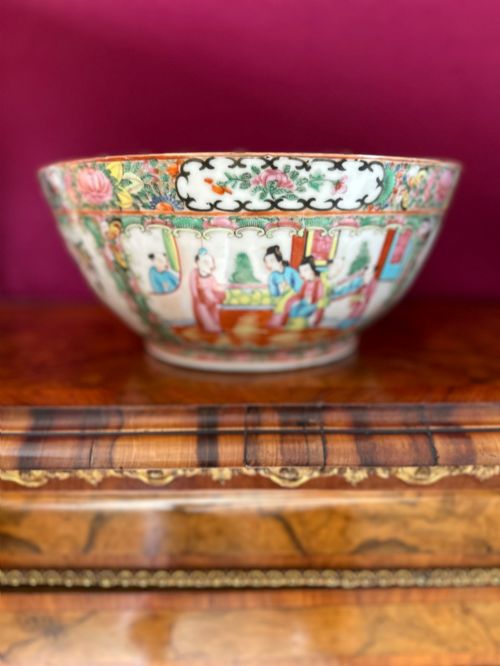
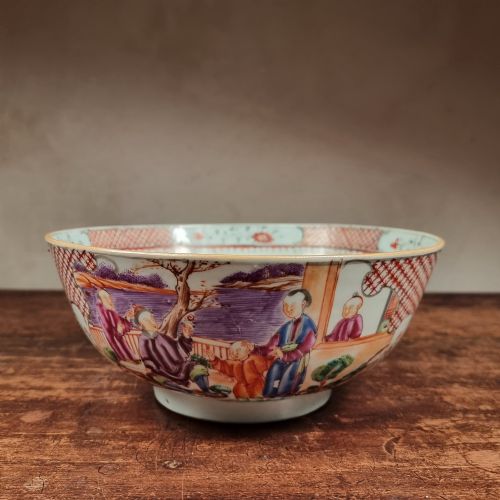
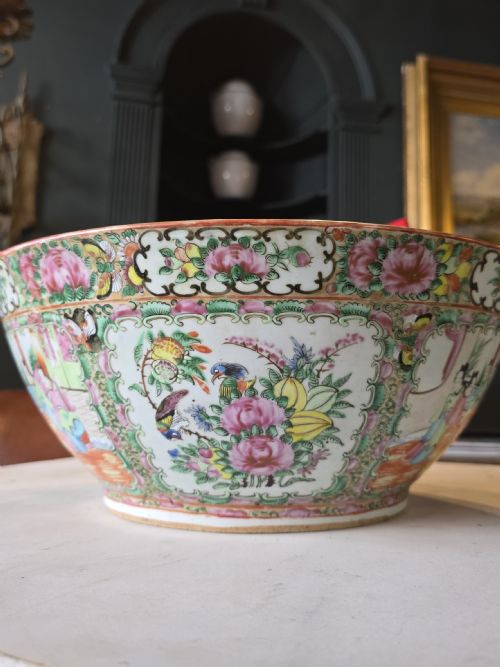


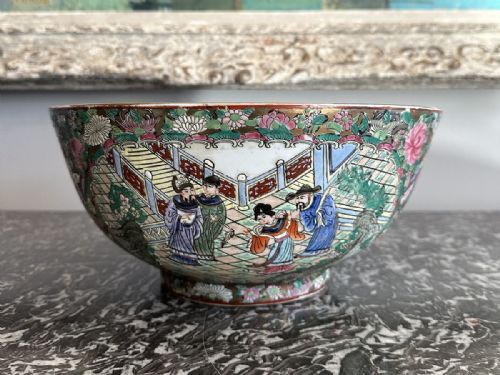


Canton Enamel Punch Bowl
A canton enamel punch bowl brings vibrant Cantonese famille rose palettes and intricate Chinese export decoration straight to the table.
Canton Enamel Punch Bowl
When you search for a canton enamel punch bowl, you are looking at large decorative vessels made for export during the nineteenth century and earlier. These substantial bowls typically measure between fifteen and twenty inches in diameter, offering deep circular basins designed for communal drinking or grand display. The listings here span the Victorian era up to the mid-twentieth century, showing robust forms intended to hold generous quantities of liquid.
You are most likely to encounter Cantonese Famille Rose and Rose Medallion styles on this page, which dominate the available inventory. These pieces originate from China as part of the lucrative export trade destined for Western markets. Their generous proportions and bright pictorial surfaces make them unmistakable centrepieces in any traditional room setting.
How a canton enamel punch bowl was made
Makers shaped these vessels from white porcelain before applying heavy overglaze enamel decoration by hand. Artisans built up the intricate pictorial scenes using distinct pink, green, and blue pigments that sit proud of the smooth ceramic surface.
Gilding and gold leaf frequently accent the rims and internal panels, applied as a final layer to catch the light. This combination of hand-painting and gold enrichment required multiple firings in the kiln to secure the vibrant colours permanently.
The listings on this site span the eighteenth century through to the mid-twentieth century, predominantly featuring porcelain finished with overglaze enamel and gold leaf.
What varies in quality
The sophistication of the hand-painted figural scenes and botanical motifs separates standard production wares from superior examples. Master painters filled the surface with detailed mandarin panels and precise butterfly designs rather than repeating simple geometric borders.
The weight and scale of the porcelain body also dictate the standing of the piece. Heavier, larger bowls with intact, unrubbed gilding represent the higher end of the range found in surviving export pottery.
The Canton Enamel Punch Bowl Glossary
- Famille Rose
- A major palette of Chinese ceramic glazes introduced in the eighteenth century, distinguished by its dominant opaque pink enamel. It allowed artists to render subtle gradations of tone in floral and human subjects.
- Rose Medallion
- A specific style of Chinese export porcelain featuring partitioned panels of birds, flowers, and figures arranged around a central medallion. This decorative scheme became immensely popular during the nineteenth century.
- Overglaze enamel
- Coloured glass paste painted onto a previously fired and glazed ceramic body before undergoing a secondary low-temperature firing. This technique produces bright, raised surface details that sit above the clear glaze.
- Chinese Export
- Ceramics manufactured in China specifically for trade and consumption in European and American markets. These objects often combined traditional Eastern shapes and techniques with Western tastes.
- Qing Dynasty
- The last imperial dynasty of China, ruling from the mid-seventeenth to the early twentieth century. Most export punch bowls originate from the later decades of this historical period.
Canton Enamel Punch Bowl: Frequently Asked Questions
What is a canton enamel punch bowl used for?
These large vessels were historically employed for mixing and serving alcoholic punch at large social gatherings. Today, collectors primarily use them as striking decorative floor bowls or central table displays.
Their deep proportions and wide mouths allow them to stand alone as focal points in a dining room or hallway without needing additional contents.
How do I date a canton enamel punch bowl?
Dating relies on examining the painting style, the thickness of the porcelain body, and the specific palette used in the enamel decoration. Nineteenth-century examples often feature dense Rose Medallion panels and heavier porcelain construction.
Earlier pieces from the eighteenth century typically show finer, more restrained brushwork, while twentieth-century reproductions display flatter enamel application and brighter modern pigments.
How do I clean a canton enamel punch bowl?
Dust the surface regularly with a soft, dry brush to prevent dirt from settling into the intricate enamel crevices. Avoid using harsh chemical cleaners or abrasive sponges that might wear away the delicate gold leaf and overglaze pigments.
Wash the bowl only when necessary using lukewarm water and mild soap, drying it immediately with a lint-free cloth.
Where should I display a canton enamel punch bowl?
Place the bowl on a sturdy sideboard, dining table, or low cabinet where its wide diameter can be appreciated from above. Ensure it sits away from high-traffic walkways to prevent accidental knocks against the heavy porcelain body.
Keeping the piece out of direct sunlight helps protect the vibrant pink and green enamels from fading over time.