



Antique Chinese Punch Bowl
An antique chinese punch bowl brings grand scale and vivid hand-painted colour to a table, shaped for communal hospitality across centuries.
Antique Chinese Punch Bowl
An antique chinese punch bowl is a large vessel designed for mixing and serving communal drinks, appearing frequently in robust proportions across these listings. These pieces span centuries of export and domestic production, showing deep roots in trade and ceramic artistry.
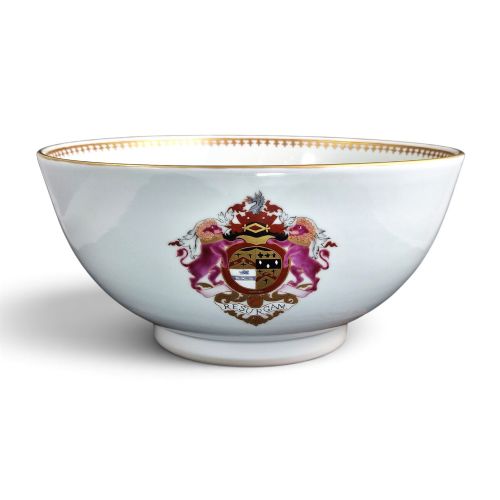
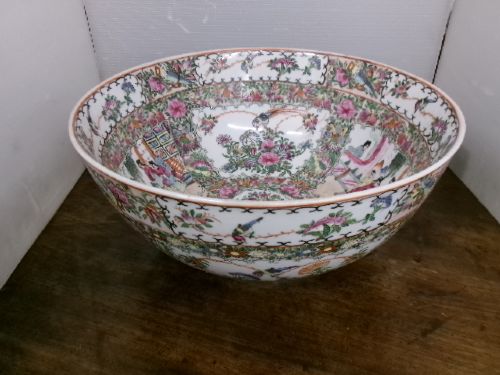
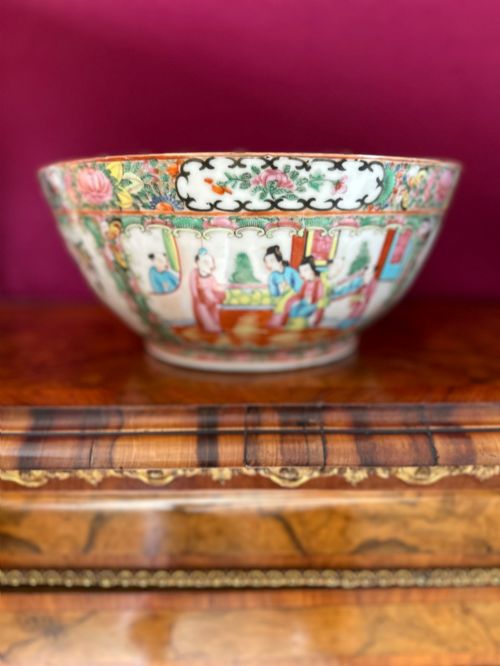
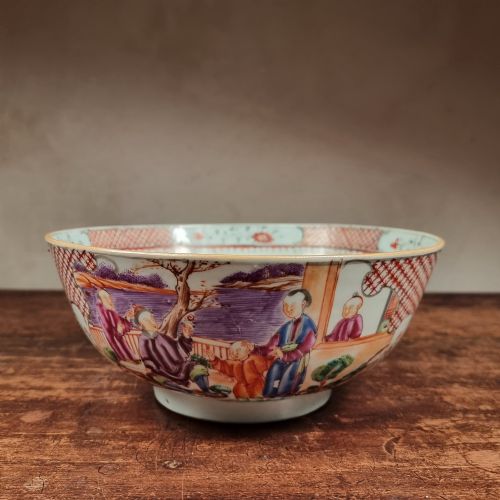
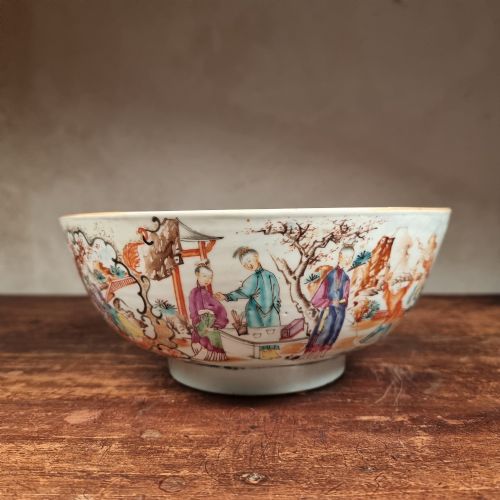
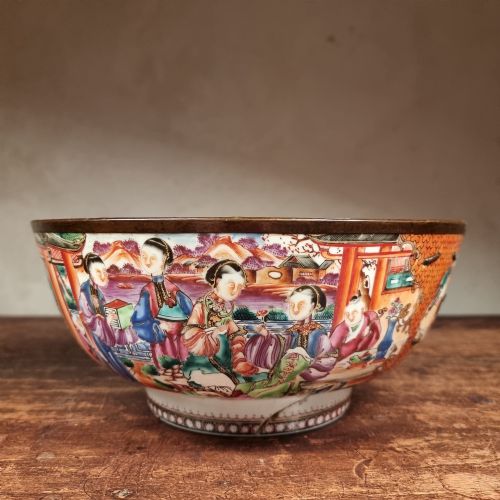
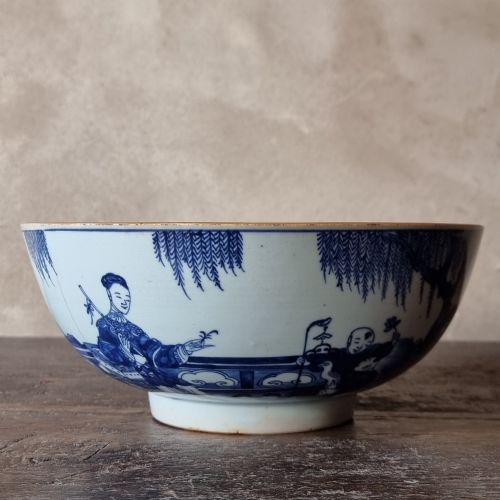
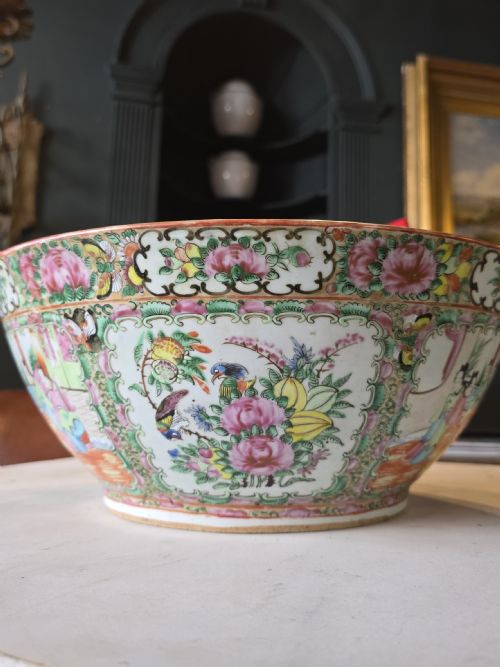
The versions most likely to be met on this page include nineteenth-century Cantonese Famille Rose examples, eighteenth-century export pieces, and grand Rose Medallion bowls. They arrive in forms ranging from simple cobalt-decorated porcelain to heavily gilded and ormolu-mounted centrepieces.
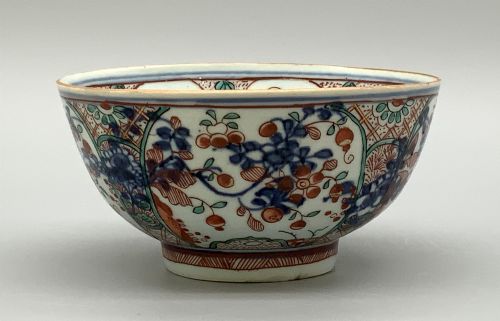
Buyers encounter everything from deep blue and white scholar basins to vibrant polychrome armorial services. Each object carries the specific decorative vocabulary of its period, whether Qing Dynasty export ware or European-decorated porcelain.
How these bowls were made
Makers shaped these vessels from fine ceramic paste and porcelain, firing them at high temperatures to achieve a hard, resonant body. Cobalt glaze was often applied beneath the clear coat for deep blue motifs before the second firing.
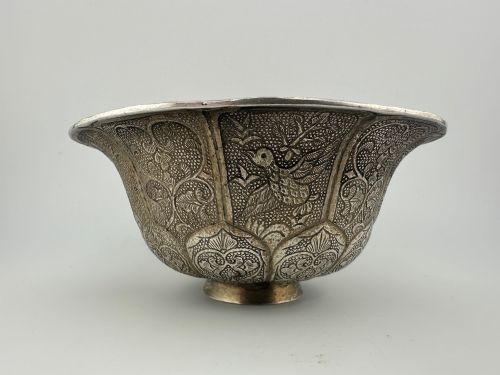
Overglaze enamel, gold leaf, and gilding were added by hand in precise layers, creating the intricate patterns seen on Famille Rose and Canton surfaces. Some pieces received supplementary mounts in ormolu or white metal to elevate their status in Western interiors.
Antique Chinese Punch Bowl Retail Price Guide 2026
Typical asking prices for chinese punch bowl among the pieces listed under this phrase on Sellingantiques today, from the lower quarter to the upper quarter. They describe what is for sale here now, not the wider market.
Listings feature periods spanning from the Ming Dynasty through the eighteenth and nineteenth centuries into the Edwardian era.
What varies in quality
The distinction between standard domestic production and top-tier export items lies in the precision of the hand-painted brushwork and the clarity of the porcelain body. Finer bowls display disciplined detail in complex figural scenes, whereas simpler pieces rely on repeating geometric borders.
The richness and preservation of the overglaze enamel and gilding dictate the visual impact of a survivor. Pieces that retain their original brilliant palette without heavy rubbing command greater appreciation from collectors.
James Giles decorated·Samson Of Paris
The Antique Chinese Punch Bowl Glossary
- Famille Rose
- A major palette of Chinese ceramic glazes introduced in the Qing dynasty, dominated by opaque pink or rose enamel derived from colloidal gold. It allowed artists to paint subtle gradations of tone on porcelain.
- Canton
- A style of Chinese export porcelain decorated in vibrant polychrome enamels, typically featuring panels of figures alternating with birds, butterflies, and flowers. Much of this work was painted in workshops near the port city for Western markets.
- Armorial
- Bearing a coat of arms or heraldic insignia, hand-painted to special commission for European or American families. These bespoke export services represent high-status commissions of the eighteenth century.
- Kangxi
- Relating to the reign period of the Kangxi Emperor, associated with fine blue and white porcelain and early enamel developments. Pieces from this era show exceptional potting and cobalt intensity.
- Orpiment
- A term sometimes linked to historic pigment use, though here the physical metal mounts or ormolu settings often frame the porcelain. These bronze mounts were added by European craftsmen to enhance utility and display.
Antique Chinese Punch Bowl: Frequently Asked Questions
What were antique chinese punch bowls used for?
These large vessels were historically used for mixing and serving communal punches during grand banquets and social gatherings. Guests would ladle the drink directly from the centre of the table.
Over time, many of these bowls transitioned into decorative centrepieces or basin displays. Their generous scale made them ideal for holding fruit, flowers, or simply standing as statement objects in fine rooms.
How do I date an antique chinese punch bowl?
Dating relies on examining the ceramic body, the style of the hand-painted motifs, and the palette of the enamels used. Eighteenth-century pieces often display different potting characteristics and iron-foot rims compared to nineteenth-century Canton wares.
Examining the provenance, reign marks where present, and secondary mounts helps narrow down the era. Comparing the piece against documented export styles provides further historical context.
How do I live with a large punch bowl?
Place the bowl on a sturdy dining table, sideboard, or dedicated stand where its substantial diameter can be safely appreciated. Because many historical pieces measure upwards of forty centimetres across, they require a stable surface away from busy edges.
Cleaning should be done strictly by hand with warm water and mild soap, avoiding harsh abrasives that might damage delicate overglaze enamels or gold leaf. If used to hold floral arrangements, a protective liner preserves the interior glaze.
What is the difference between Canton and Rose Medallion?
Canton porcelain broadly encompasses hand-painted export wares featuring panels of figures combined with birds, foliage, and insects. The decoration fills the surface with dense, colourful narrative scenes.
Rose Medallion is a specific subset of Canton ware defined by segmented panels arranged around a central medallion, typically alternating figures and floral motifs. Both styles share the characteristic bright pink famille rose palette.
Are eighteenth-century bowls different from nineteenth-century ones?
Eighteenth-century bowls generally exhibit finer, lighter porcelain bodies and more restrained, elegant compositions. The cobalt blue and early enamel work reflects Kangxi and Qianlong aesthetic standards.
Nineteenth-century pieces, particularly from the Victorian era and later, tend to feature denser, heavier decoration with brighter, more saturated enamel colours. Canton and Rose Medallion styles dominate these later decades with exuberant floral borders.