





Rose Medallion Porcelain Bowl
These rose medallion porcelain bowl examples bring vibrant Cantonese craftsmanship into a room, offering rich painted detail and historical depth.
Rose Medallion Porcelain Bowl
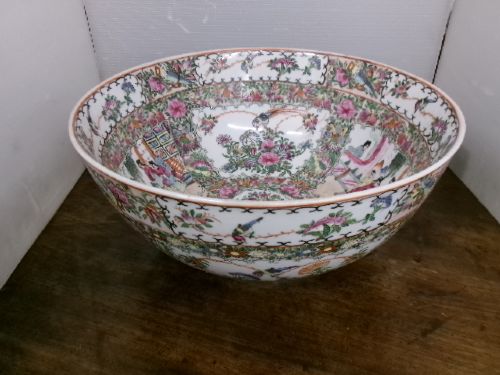
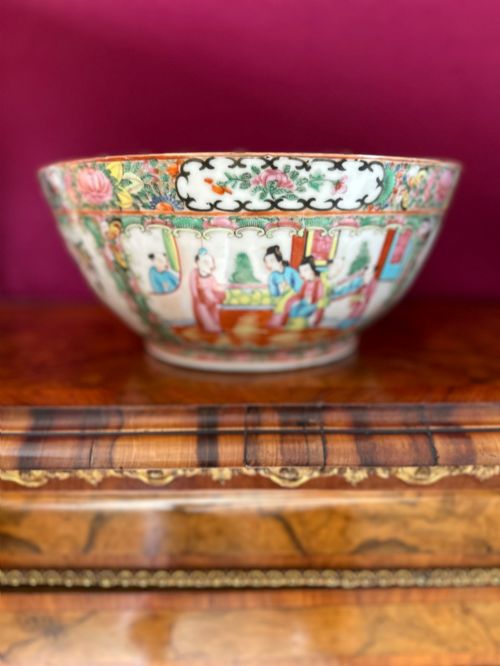
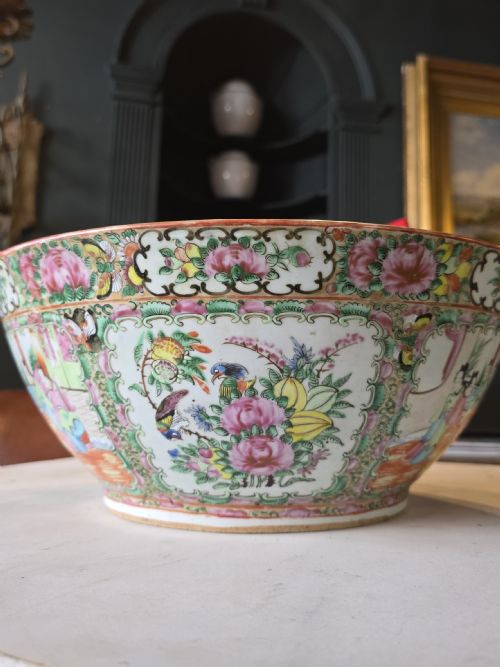
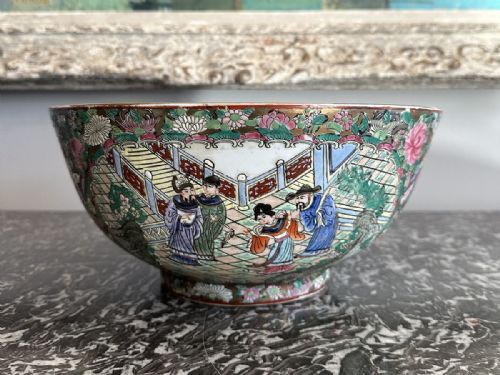
A rose medallion porcelain bowl presents a distinctive style of Chinese export ware, featuring panels filled with figures, birds, and flowers rendered in bright enamels. These pieces function as striking decorative bowls or centrepiece bowls, often resting on hardwood stands or fitted with gilt bronze mounts.
The pieces listed here span the nineteenth century and the twentieth century, including large punch bowls and decorative bowls from the Qing dynasty period. Buyers encounter various scales, from fifteen inches up to twenty inches in diameter, dominated by Cantonese famille rose and Chinese export aesthetics.
Materials and construction
These vessels utilise hard-paste porcelain painted with overglaze enamel and gold leaf accents. Artisans applied detailed hand-painted pigments over the fired ceramic body, incorporating gilding to highlight the intricate panel borders and motifs.
Mounting techniques include ormolu and gilt bronze frames added to nineteenth-century examples, alongside carved hardwood stands designed to support large centrepiece bowls and punch bowls.
Several bowls require a full twenty inches of table space just to catch their breath.
Assessing quality and execution
Quality rests upon the precision of the hand-painted enamels and the crispness of the figure work within the medallions. Finer pieces display dense, controlled pigments and substantial porcelain weight without heavy distortion.
The presence of secondary elements, such as original hardwood stands or quality ormolu mounts, elevates an example. Scale and proportion also matter, particularly with large punch bowls where maintaining circular form during firing proves more challenging.
The Rose Medallion Porcelain Bowl Glossary
- Overglaze Enamel
- Pigments applied to the surface of already fired and glazed porcelain before undergoing a second, lower-temperature firing. This technique allows for bright, varied colours.
- Ormolu
- Gilt bronze mounts applied to the rims or bases of decorative vessels, particularly popular during the nineteenth century. It frames the porcelain with cast metallic detail.
- Punch Bowl
- A large vessel originally utilised for mixing and serving alcoholic punch during gatherings. These wide bowls often feature deep basins and substantial diameters.
Rose Medallion Porcelain Bowl: Frequently Asked Questions
How were these large bowls originally used?
These vessels served practical dining functions as punch bowls during large gatherings, holding communal beverages for guests.
Over time, many transitioned into purely decorative centrepiece bowls displayed on tables and sideboards for visual impact.
What is the difference between Canton and Famille Rose?
Canton refers specifically to the export port and production centre in China where these wares were decorated for Western markets. Famille rose denotes the specific pink-dominant enamel palette utilised in the painting process.
Most rose medallion pieces combine both elements, employing the rose palette within distinct panelled layouts characteristic of Cantonese export workshops.
How do I display a large porcelain bowl safely?
Large vessels require stable, flat surfaces capable of supporting their substantial porcelain weight and wide diameter. Utilising a fitted hardwood stand helps distribute the weight evenly while elevating the piece.
Placement should avoid high-traffic edges where accidental knocks might occur, keeping the bowl secure and visible.
How do I date a nineteenth-century export bowl?
Dating relies on examining the characteristics of the porcelain body, the vibrancy and mix of the overglaze enamels, and the style of the hand-painted figures. Nineteenth-century examples often exhibit heavier potting and distinct panel arrangements compared to later twentieth-century reproductions.
Secondary additions like ormolu mounts or period hardwood stands also provide helpful chronological context.