
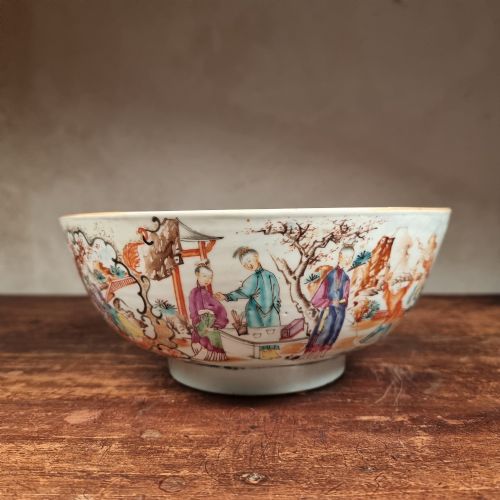
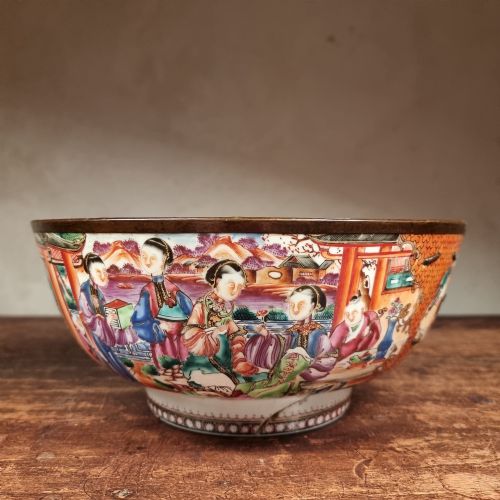

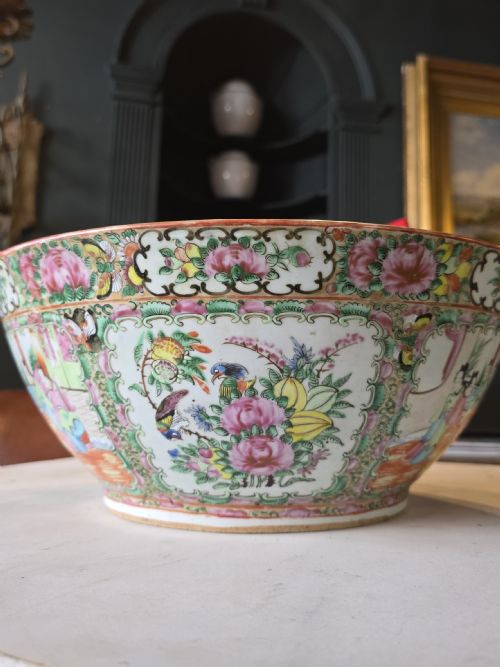


Polychrome Porcelain Punch Bowl
A polychrome porcelain punch bowl brings exuberant colour and grand scale to a room, drawing the eye instantly.
Polychrome Porcelain Punch Bowl
A polychrome porcelain punch bowl is a wide vessel intended for serving drinks at gatherings, though they often function purely as decorative centrepieces today. When you search for this phrase, you encounter large serving vessels made across several centuries.
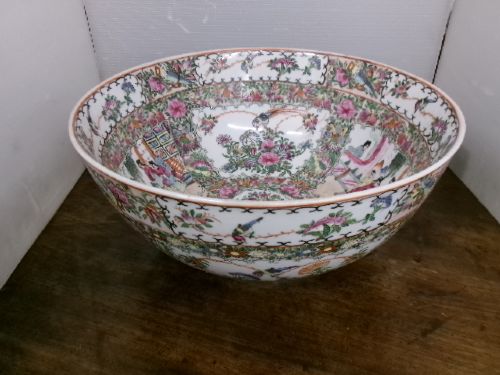
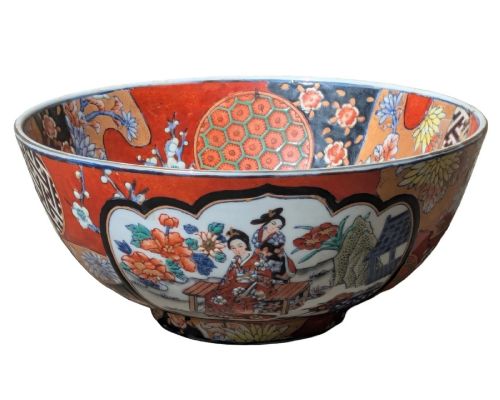
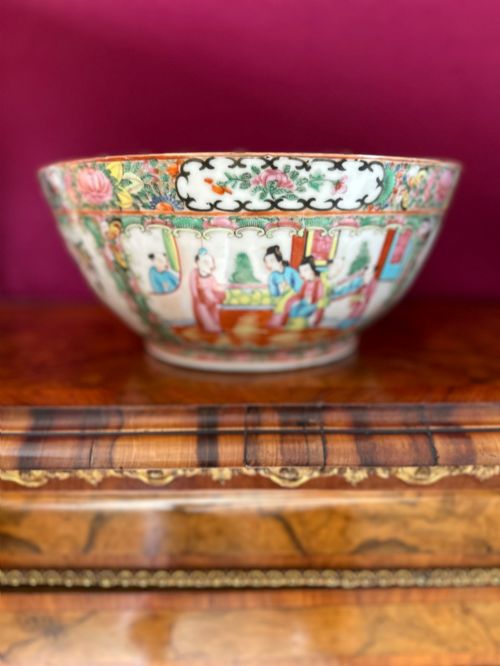
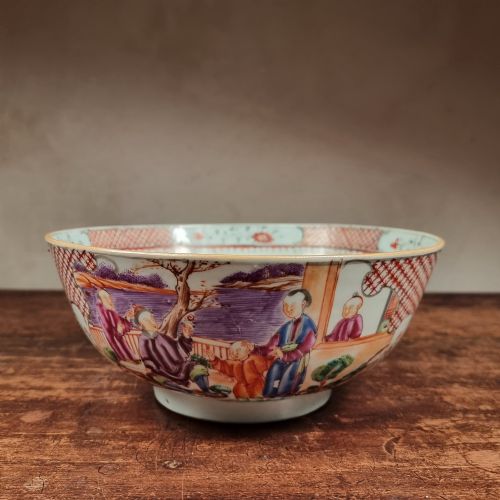
The pieces on this page lean heavily towards East Asian traditions, particularly Chinese export wares and Japanese Satsuma or Imari pieces. You will frequently meet Cantonese Famille Rose and Rose Medallion designs alongside European interpretations.
Most examples date from the nineteenth century, though eighteenth-century specimens and early twentieth-century interpretations also appear. They span generous diameters, often measuring fifteen inches across or more to hold substantial volume.
How they were made
Potters shaped high-fired ceramic bodies to form deep, rounded bowls capable of holding liquid. Artisans then applied intricate hand-painted designs using rich overglaze enamels in vibrant palettes.
Many specimens incorporate gilt highlights, gold leaf, or delicate ormolu mounts to frame the painted scenes. Japanese examples utilise dense millefleur patterns or traditional Imari cobalt and iron-red schemes.
Listings span Japanese Satsuma and Imari wares alongside Chinese Canton and European export porcelain.
What varies in quality
Quality rests primarily in the discipline of the brushwork and the density of the hand-painted enamel decoration. Superior bowls display crisp figurative scenes or floral panels rendered with exceptional precision.
The weight and purity of the porcelain body also distinguish finer examples from standard production pieces. Intricate additions like pierced galleries or custom wooden and ormolu stands elevate the overall distinction of the bowl.
Chamberlain Worcester·Ryuzan
The Polychrome Porcelain Punch Bowl Glossary
- Famille Rose
- A palette of opaque pink and rose enamels introduced in Chinese porcelain during the Qing dynasty. This coloration dominates many nineteenth-century export bowls.
- Imari
- A style of Japanese export porcelain featuring deep underglaze blue combined with iron red and gilt highlights. These pieces display bold geometric and floral compartments.
- Rose Medallion
- A distinct style of Chinese Canton decoration divided into alternating panels of figures and birds or flowers. Each panel is meticulously framed within busy borders.
- Overglaze Enamel
- Coloured glass decoration applied over a fired and glazed porcelain surface before undergoing a second, lower-temperature firing. This technique allows for brilliant hues.
- Orpiment
- A term sometimes associated with vibrant yellow pigments, though gilding and gold leaf are the primary metallic enhancements found on these bowls.
Polychrome Porcelain Punch Bowl: Frequently Asked Questions
What were punch bowls used for?
These large vessels were historically filled with mixed drinks containing spirits, citrus, water, and spice for communal gatherings. Guests would ladle the liquid directly from the centre of the table.
Over time, many of these bowls transitioned into purely decorative objects, displayed on sideboards, tables, or specialised stands.
How do I date a Chinese export bowl?
Dating relies on examining the painting style, the tone of the enamels, and the characteristics of the porcelain body. Nineteenth-century pieces often feature dense Rose Medallion panels, while eighteenth-century examples display different palette depths.
Matching the stylistic traits of motifs like Famille Rose helps narrow the production era alongside any recorded provenance.
Are Japanese and Chinese bowls different?
Japanese Satsuma and Imari styles utilise distinct motifs compared to Chinese Canton export wares. Satsuma pieces often feature intricate gilt and earth-toned figures, while Imari relies on cobalt blue and iron red.
Chinese export pieces frequently showcase narrative courtyard scenes framed by butterflies and flowers within Famille Rose enamels.
Where should I display a large bowl?
Their substantial diameter requires a sturdy surface such as a dining table, heavy sideboard, or dedicated pedestal stand. Placing them centrally allows the painted interior and exterior scenes to remain fully visible.
Some collectors use fitted wooden or ormolu mounts to elevate the bowl and protect the curved base.