


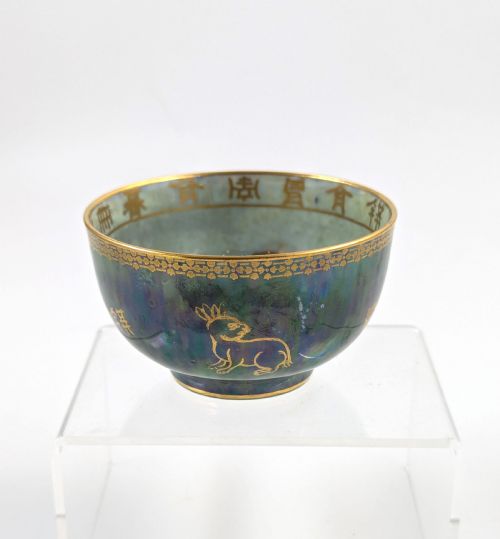


Gilded Chinese Porcelain Bowl
A gilded chinese porcelain bowl brings rich metallic highlights to traditional ceramic forms, offering both decorative presence and historic interest.
Gilded Chinese Porcelain Bowl
When you search for a gilded chinese porcelain bowl, you encounter a distinct gathering of ceramic vessels ornamented with metallic leaf or paint. The pieces on this page span from the eighteenth century into the twentieth century, bringing together export wares, Qing dynasty creations, and later European interpretations.
You are most likely to meet decorative bowls, punch bowls, and related dishes originating from Chinese kilns or produced in Western workshops under Asian influence. The assortment includes armorial styles, Canton porcelain, and lustre glazes that combine traditional motifs with bright metallic finishes.
Examples range from imperial marks of the nineteenth century to early twentieth-century creations by notable makers. Each object demonstrates how artisans applied gold alongside enamel decoration to create contrasting surface textures.
How they were made
Makers shaped these items from fine porcelain and bone china before applying intricate surface decoration. Artisans utilised overglaze enamel and lustre glaze techniques to build up colour beneath or around the metallic elements.
Gold leaf and applied gilding provide the characteristic metallic sheen seen across the selection. Firing processes bonded these precious metals and pigments to the ceramic body, creating durable decorative surfaces.
Coiling dragons and painted pheasants peer out from the glaze.
What varies in quality
The standard of a gilded chinese porcelain bowl rests on the precision of the hand-painted enamel work and the integrity of the metallic application. Finer pieces display crisp brushwork and well-preserved gilding that retains its original brilliance.
The depth of the porcelain body and the complexity of the design distinguish exceptional items from simpler decorative wares. Pieces bearing specific period marks or attributed to established workshops often exhibit superior artistry in their motifs.
Daisy Makeig-Jones Wedgwood·Samson Of Paris
The Gilded Chinese Porcelain Bowl Glossary
- Gilding
- The application of gold leaf or powdered gold to the surface of porcelain. This technique creates reflective metallic highlights that accent the underlying ceramic design.
- Overglaze enamel
- Pigments painted onto the fired and glazed porcelain surface before undergoing a subsequent lower-temperature firing. This method allows for a rich palette of colours alongside metallic additions.
- Lustre glaze
- A type of ceramic finish that produces an iridescent or metallic sheen through the interaction of metallic oxides during firing. It is particularly characteristic of certain early twentieth-century decorative wares.
- Qing Dynasty
- The final imperial dynasty of China, lasting from sixteen forty-four to nineteen twelve. Many decorative bowls and dishes originate from this extended period of ceramic production.
- Canton porcelain
- Wares decorated in Canton featuring colourful enamels and gilt highlights. These items were largely produced for export markets during the eighteenth and nineteenth centuries.
Gilded Chinese Porcelain Bowl: Frequently Asked Questions
How do I date a gilded bowl?
Dating relies on examining the characteristics of the porcelain body, the style of the enamel painting, and any reign marks or maker stamps present on the base. Comparing the decorative motifs to established periods helps narrow down the decade of production.
Changes in manufacturing techniques and glaze formulas also provide clues to whether a piece belongs to the eighteenth century or later revival periods.
Are these bowls safe for food?
Most antique bowls featuring delicate overglaze enamels and applied gilding are intended for decorative display rather than daily culinary use. Contact with acidic foods and regular washing can wear away the metallic surface over time.
Preserving the condition of the piece involves keeping it as a visual centrepiece rather than putting it to practical service in the kitchen.
How should I clean gilded porcelain?
Cleaning requires a soft, dry cloth to remove dust without disturbing the fragile metallic leaf. Avoid abrasive cleaners, harsh scrubbing, and prolonged soaking in water.
If washing is necessary, use lukewarm water with a mild, neutral soap and dry the surface immediately with a soft towel.
What is export porcelain?
Export porcelain refers to ceramics manufactured in China specifically for trade and sale to Western markets. These items frequently combined traditional Asian forms with motifs requested by European and American buyers.
Over time, European factories also produced their own interpretations of these imported styles, leading to crossover designs.