





Famille Rose Medallion Bowl
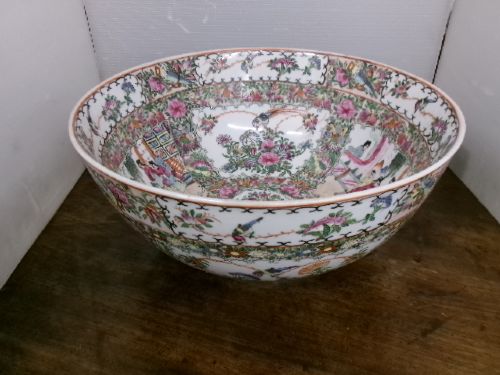
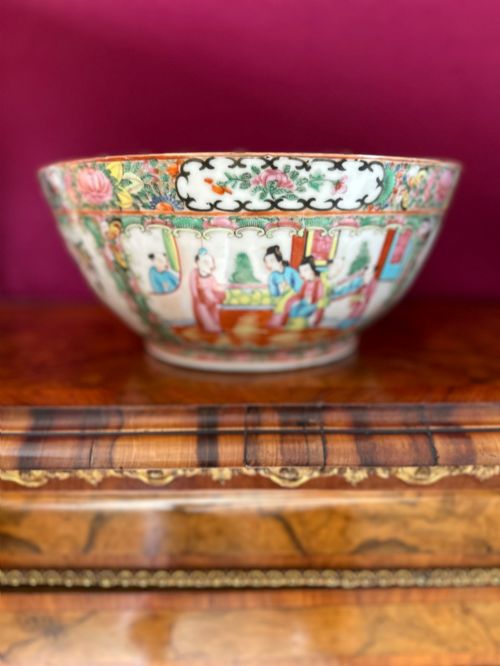
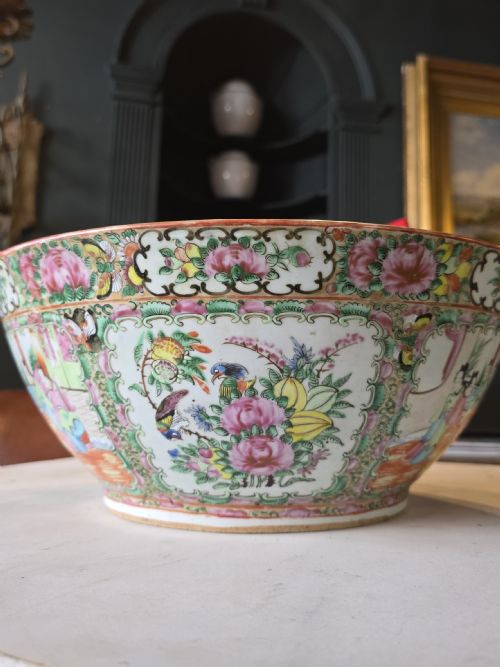
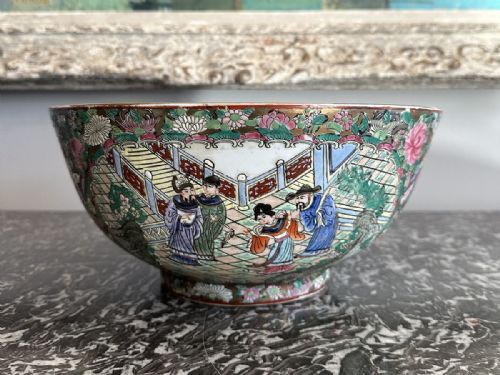
A famille rose medallion bowl is a richly decorated Chinese export vessel built for display and service, combining brilliant enamel panels with intricate gilt detail.
Famille Rose Medallion Bowl
A famille rose medallion bowl brings vibrant panelled decoration into any interior, taking form as large punch bowls, centrepieces, and decorative basins. When you search for a famille rose medallion bowl, you encounter substantial porcelain vessels originating from Chinese export workshops during the Qing dynasty and the nineteenth century. These pieces combine elaborate figurative scenes with botanical motifs, creating a dense surface pattern that defines the style.
The nineteenth century yields the highest concentration of examples on this page, alongside specific pieces dating from the eighteenth century up to the mid-twentieth century. Forms range from standard decorative bowls to massive punch bowls measuring up to twenty inches across. Many examples arrive accompanied by hardwood stands or mounted in gilt bronze, showing how these objects adapted for Western display.
Cantonese workshops dominate the origins recorded in the evidence, producing export porcelain specifically tailored for international trade. These bowls serve as both functional serving vessels and striking decorative centrepieces. The combination of panels depicting figures and flowers creates the distinctive medallion layout recognised by collectors today.
Judging quality and execution
Quality in a famille rose medallion bowl rests on the crispness of the hand-painted brushwork within each enamel panel. Finer examples display precise facial expressions on figures and cleanly delineated botanical elements without blurring or bleeding into the surrounding glaze. The density and precision of the gilt work also distinguish superior pieces from simpler commercial output.
Scale and proportion separate standard decorative bowls from exceptional punch bowls and large basins. The weight of the porcelain body, the depth of the overglaze colours, and the presence of original hardwood stands or period ormolu mounts elevate certain pieces above others. Preservation of the enamel and minimal wear to the gilding indicate careful handling over the centuries.
Listings feature porcelain vessels spanning the eighteenth, nineteenth, and twentieth centuries, predominantly originating from Cantonese export workshops.
The Famille Rose Medallion Bowl Glossary
- Famille rose
- A palette of opaque overglaze enamels introduced in Chinese porcelain decoration during the Qing dynasty, distinguished by its prominent use of pink and rose hues. This palette allows for delicate shading and complex pictorial scenes.
- Medallion
- A distinct circular or geometric panel enclosing painted figures, birds, or flowers set against a patterned background. These panels form the characteristic grid design on export porcelain.
- Overglaze enamel
- Pigments applied to the surface of already-fired and glazed porcelain before undergoing a secondary, lower-temperature firing. This technique produces raised, colourful designs that sit above the clear glaze.
- Ormolu
- Gilt bronze mounts applied to the rims, bases, or handles of ceramic vessels. This practice was common in European decorative arts during the nineteenth century.
- Chinese export porcelain
- Ceramics manufactured in China specifically for export to European and American markets from the seventeenth through the nineteenth centuries. The designs frequently blend traditional Chinese motifs with Western tastes.
Famille Rose Medallion Bowl: Frequently Asked Questions
What is a famille rose medallion bowl?
A famille rose medallion bowl is a hand-painted Chinese export porcelain vessel featuring distinct panels of figures and flowers set within gilded borders.
These pieces were produced primarily in the nineteenth century for international markets, functioning as punch bowls, centrepieces, and decorative basins.
How do I date a medallion bowl?
Dating relies on examining the characteristics of the porcelain body, the intensity of the overglaze enamels, and stylistic details in the painted panels. Nineteenth-century pieces often feature dense Cantonese ornamentation and heavier porcelain bodies.
Earlier examples from the eighteenth century display finer potting and more restrained enamel compositions, while twentieth-century pieces show different baseline manufacturing traits.
Were these bowls used for food?
Large punch bowls and basins were originally designed for serving beverages and food at formal gatherings in both China and the West. Over time, many transitioned into purely decorative objects due to their artistic value and fragility.
Today, they are typically displayed as centrepieces on tables or sideboards rather than utilised for dining.
Why do some bowls have stands?
Many large nineteenth-century bowls are accompanied by carved hardwood stands or metal mounts added to support the heavy porcelain vessel. These stands elevate the bowl for display and protect furniture surfaces from the unglazed foot rings.
European mounts in gilt bronze also reflect the nineteenth-century fashion for integrating Asian porcelain into Western interiors.