
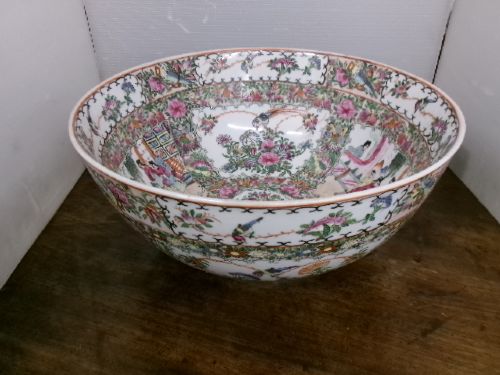
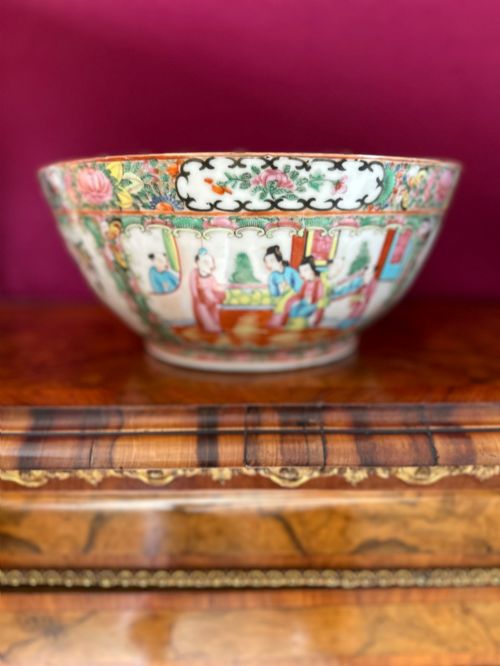
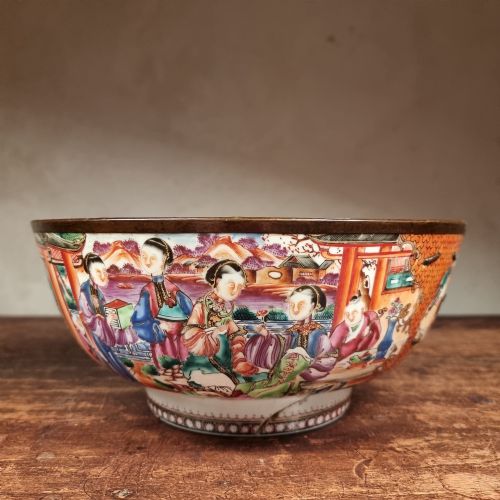

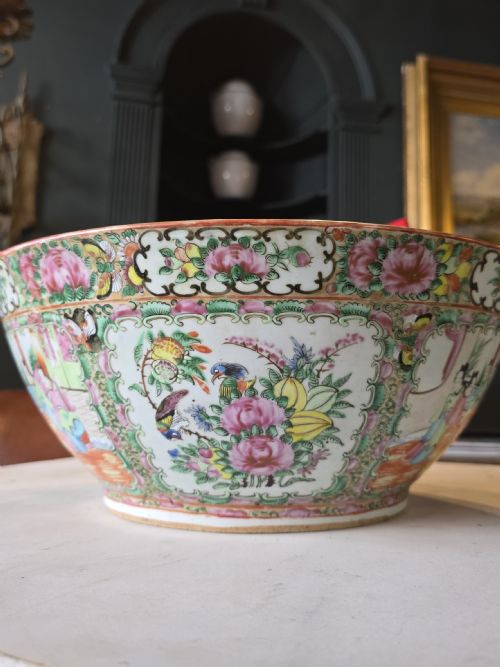


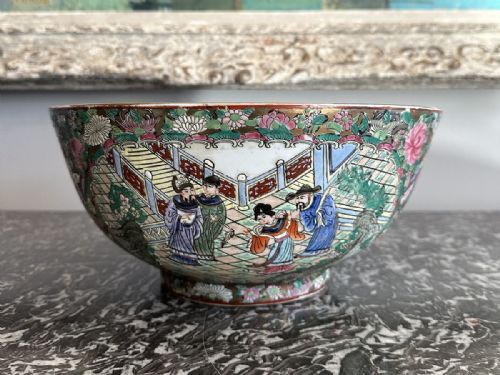

Famille Rose Centrepiece Bowl
These famille rose centrepiece bowl pieces are bright hand-painted vessels of Chinese porcelain, prized for their vibrant enamels and large scale.
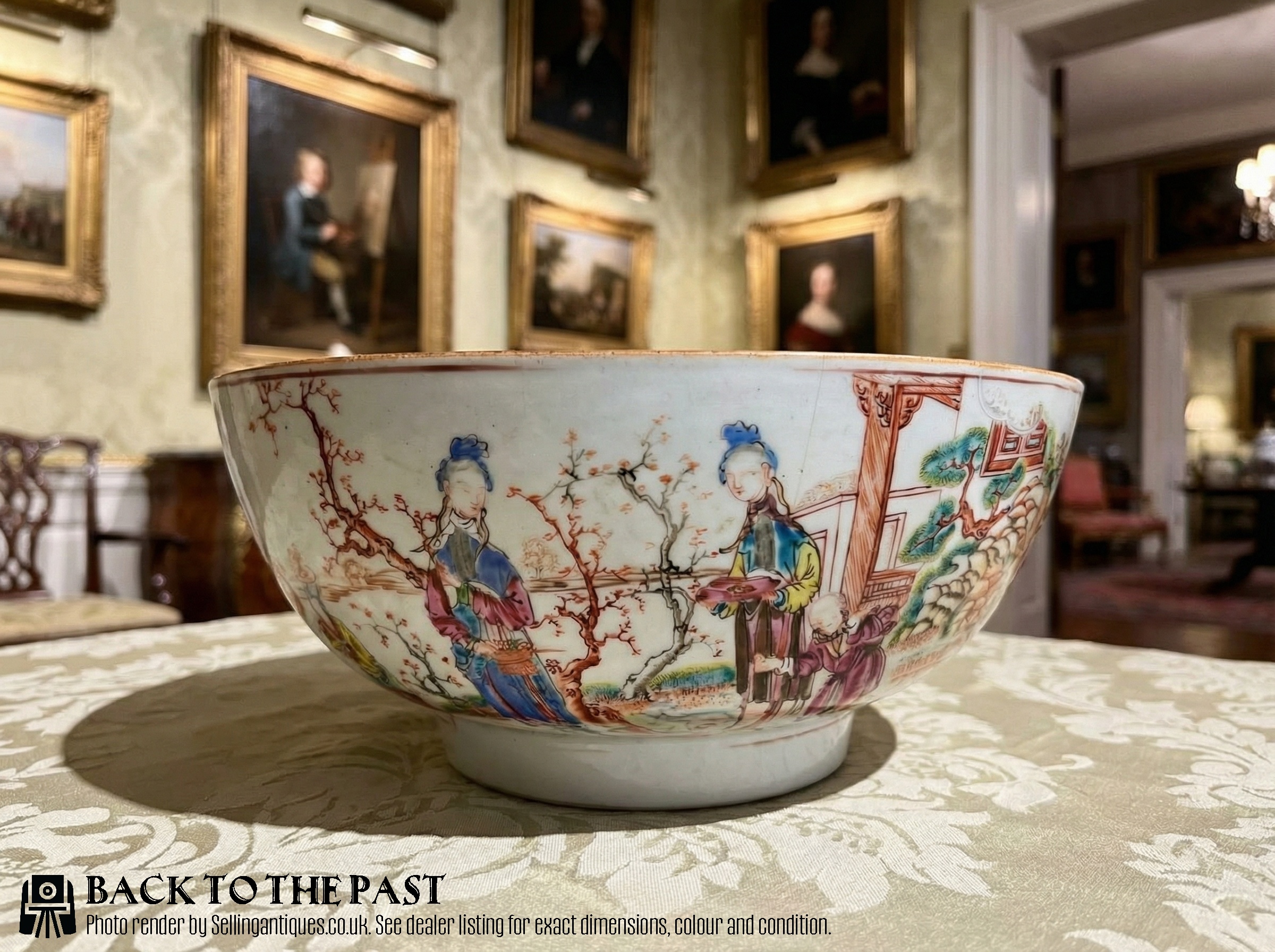
Famille Rose Centrepiece Bowl
When you search for a famille rose centrepiece bowl, you find large decorative and punch bowls originating from China during the Qing dynasty and later periods. The version most commonly met on this page is the hand-painted Cantonese bowl, often featuring rich overglaze enamel decoration.
The objects span from the eighteenth century through the nineteenth century and into nineteen-forty. They appear in forms such as large centrepieces, punch bowls, and decorative vessels.
Many examples arrive mounted in gilt bronze or brass, reflecting European taste for Chinese export porcelain. They range from simple hand-painted floral motifs to complex figural scenes in the Mandarin style.
How they were made
Makers shaped these pieces from white porcelain, applying intricate overglaze enamels by hand. Artisans utilised palettes dominated by pinks and greens alongside cobalt blue motifs.
Gilding and gold leaf often highlight the rims and figural details of the vessels. Some nineteenth-century examples incorporate cast brass and gilt bronze mounts fitted in Europe.
Export styles include Chinese export, Qing dynasty, Chinoiserie, and Cantonese famille rose.
What varies in quality
The finesse of the hand-painting dictates the standard of each vessel, separating dense narrative scenes from simpler floral arrangements. Crisp execution in the enamelling and the vibrancy of the gilding set the finer pieces apart.
Scale and proportion influence desirability, particularly among large punch bowls and ormolu-mounted centrepieces. The presence of well-cast metal mounts adds distinction to nineteenth-century export examples.
The Famille Rose Centrepiece Bowl Glossary
- Famille rose
- A palette of opaque overglaze enamels dominated by pink, introduced to Chinese porcelain during the Qing dynasty. The name derives from the French term for the pink enamel.
- Cantonese
- Pertaining to porcelain decorated in Canton specifically for the export market. These wares typically feature crowded figural panels and abundant floral borders.
- Punch bowl
- A large vessel originally designed for mixing and serving alcoholic punch at social gatherings. They frequently measure over twelve inches across to accommodate large volumes.
- Mandarin palette
- A style of Chinese export porcelain decoration focusing on official figures in interior or garden settings. The scenes are enclosed within colourful enamel borders.
- Gilt bronze
- Copper alloy cast and coated with a layer of gold, frequently utilised for nineteenth-century decorative mounts. It enhances the display presence of export bowls in Western interiors.
Famille Rose Centrepiece Bowl: Frequently Asked Questions
What is a famille rose centrepiece bowl?
It is a large hand-painted Chinese porcelain vessel decorated with opaque overglaze enamels. These pieces were made for export and often served as dramatic table centrepieces.
They display various motifs ranging from birds and flowers to complex narrative scenes filled with figures. Their substantial scale marks them out from standard domestic tableware.
How old are these Chinese bowls?
The examples on this page primarily date from the eighteenth and nineteenth centuries, with some pieces extending into the twentieth century. Dating relies on stylistic shifts in the enamel colours and the nature of the porcelain body.
Nineteenth-century pieces often show denser decoration and occasionally feature European metal mounts. Eighteenth-century examples tend to exhibit finer potting and more restrained palettes.
How were punch bowls used originally?
Punch bowls held large quantities of mixed liquor served during communal gatherings and banquets. Guests would ladle the drink directly from the centre of the table.
Their generous proportions made them focal points of dining rooms. Today, they function primarily as decorative centrepieces on sideboards or tables.
How do you care for porcelain with gilt mounts?
Dust these pieces gently with a dry, soft brush to protect the delicate overglaze enamels and gilding. Avoid using liquid cleaners or chemical agents which can damage the painted surfaces.
Keep them away from direct sunlight to preserve the intensity of the pink and green enamels. Metal mounts require only occasional light dusting without abrasive polishing pastes.