



Chinese Carved Flower Stand
A Chinese carved flower stand brings structural poise to interiors through dense timber and polished stone.
Chinese Carved Flower Stand
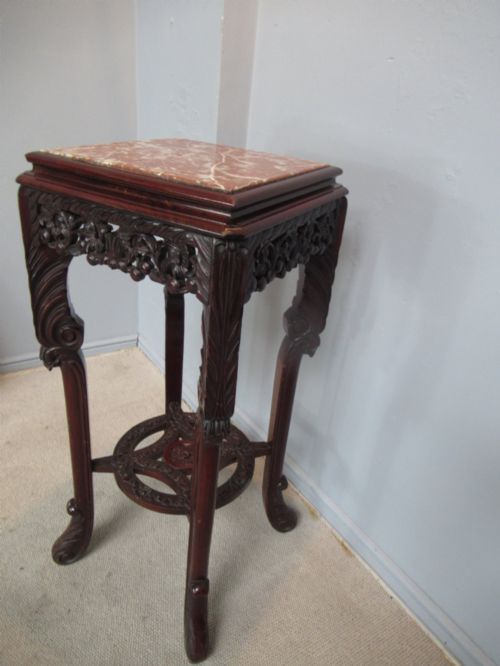
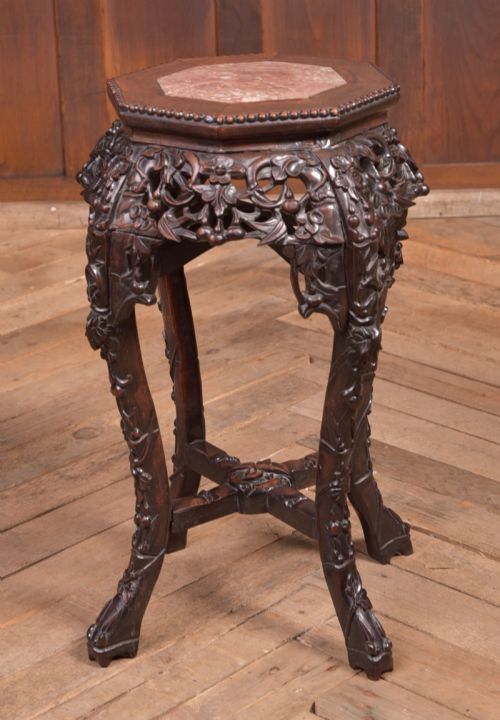
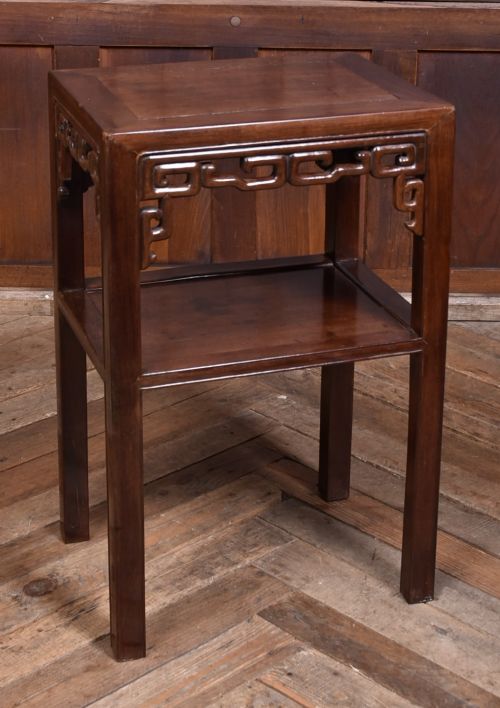
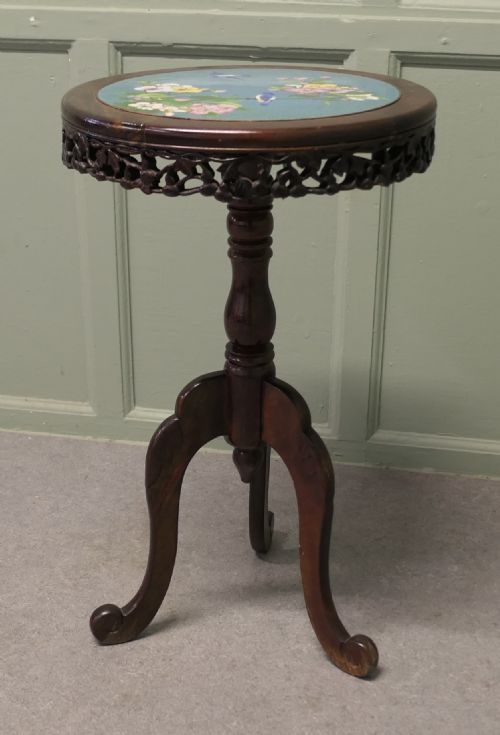
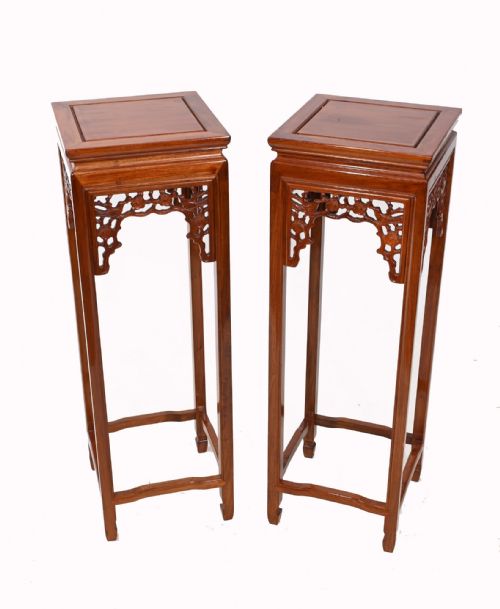
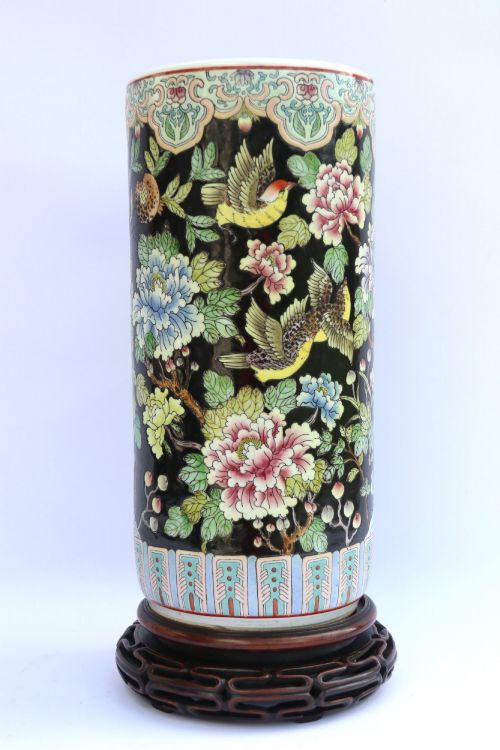
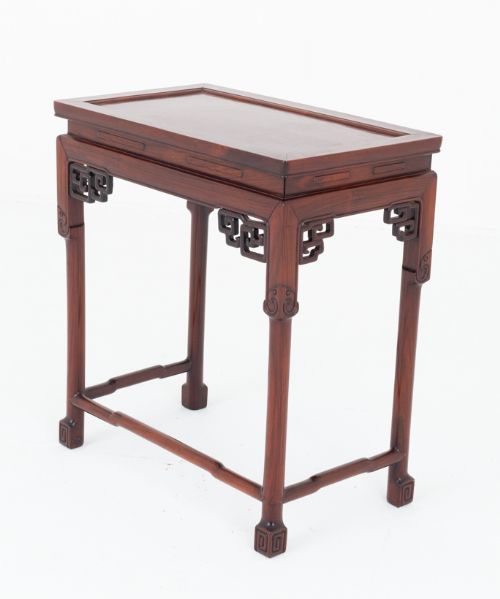
A Chinese carved flower stand serves as a sturdy pedestal for plants, urns and vases, taking the form of plant stands, jardiniere stands, occasional tables and torchères. These pieces date predominantly from the nineteenth century, including Victorian periods, through to the early twentieth century.
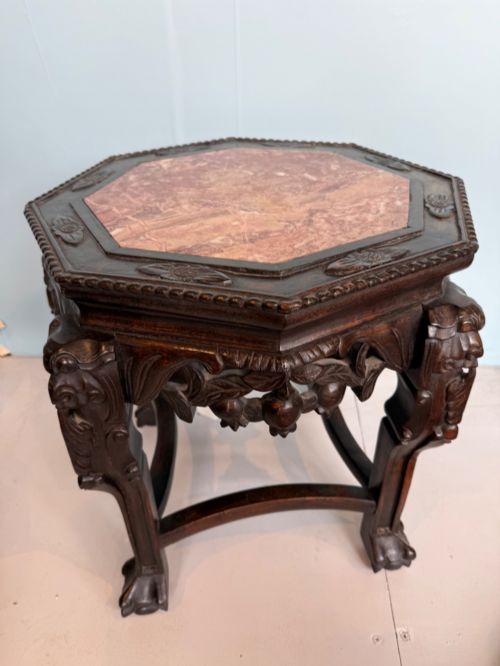
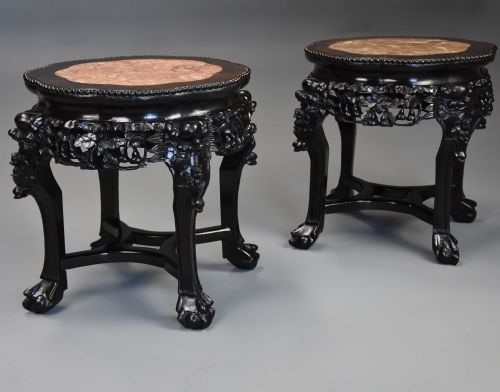
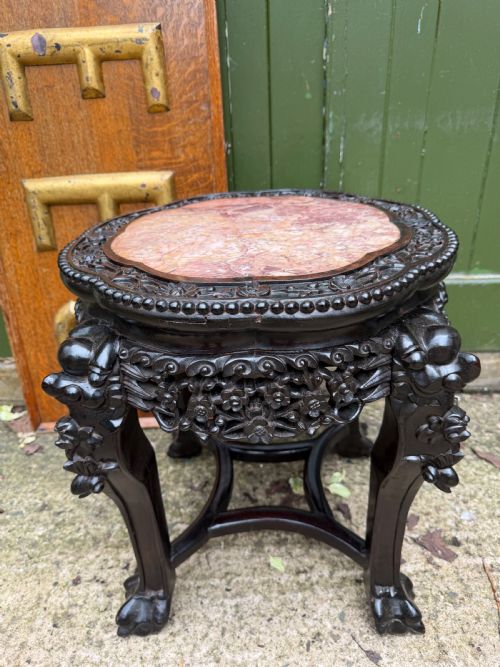
The most common version met on this page is a low or tall hardwood stand featuring an inset marble top, designed in traditional Chinese or Qing Dynasty styles. They appear in circular, square and shaped configurations, often standing on curved or cabriole legs.
Materials and construction
Maker workshops utilised dense Asian timbers such as hongmu, padouk, rosewood and huali, valued for their natural weight and dark grain. These woods were carved with deep relief motifs representing flowers, foliage and traditional scenes.
Many tables incorporate inset slabs of variegated rouge marble or decorative mother-of-pearl inlay within the wooden frame. Lacquered finishes and painted surfaces also appear alongside exposed polished timber.
Distinctions in manufacture
Depth and precision in the hand-carved floral ornament separate standard utility tables from superior examples. Crisp undercutting in the wood and tight joinery indicate skilled cabinet work.
The choice and figuring of the inset marble or the complexity of mother-of-pearl inlay dictate the grade of the piece. Heavier timbers like hongmu and padouk generally denote higher-tier production.
The Chinese Carved Flower Stand Glossary
- Hongmu
- A dense tropical hardwood used in traditional Chinese furniture construction. It translates literally as red wood and possesses a dark, heavy grain.
- Jardiniere
- A large ornamental pot or container for plants and flowers. Stands built specifically to support these vessels are termed jardiniere stands.
- Torchère
- A tall ornamental stand or candlestick originally designed to carry a torch. In Asian export pieces, it refers to an elevated plant or vase pedestal.
- Padouk
- A heavy, durable reddish timber utilised in Chinese cabinet making. It polishes to a smooth finish and accepts intricate carving.
- Chinoiserie
- European imitation or interpretation of Chinese artistic traditions and motifs. Pieces of this style blend Western furniture forms with oriental decorative schemes.
Chinese Carved Flower Stand: Frequently Asked Questions
How were Chinese flower stands used?
These pieces functioned primarily to elevate heavy ceramic jardiniere bowls, decorative vases and indoor plants above floor level. Their solid construction provided stable support in reception rooms and hallways.
Over time, owners also utilised them as occasional side tables, lamp tables or wine tables within domestic interiors.
What woods are commonly found?
Asian hardwoods dominate the selection, including dense varieties such as hongmu, rosewood, huali and padouk. These timbers were selected for their structural strength and deep colouration.
Some examples also feature general exotic wood or amboyna construction, occasionally enhanced with lacquer work.
Are marble tops original?
Inset marble slabs form an integral part of many nineteenth-century Chinese stands, specifically designed to withstand moisture from plant pots. Variegated rouge and grey marble inserts were fitted directly into the wooden frame.
These stone surfaces cool the top and provide a durable, heat-resistant platform for heavy decorative objects.
How do I date a Chinese plant stand?
Dating relies on timber characteristics, construction methods and stylistic markers associated with the nineteenth century and the Qing Dynasty. Pieces often correlate with Victorian import periods.
Hand-cut joinery, the density of the hardwood and traditional motifs help narrow the period of manufacture between eighteen-seventy and nineteen-thirty.