
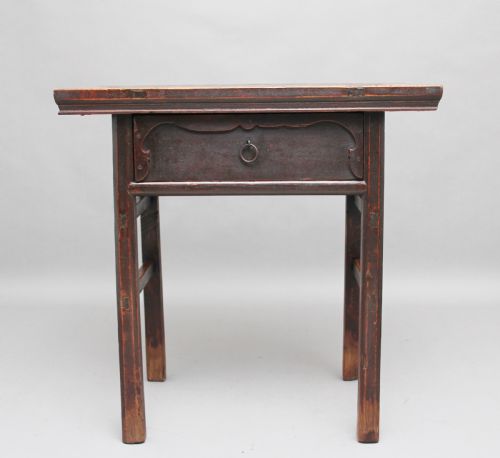


Chinese Altar Side Table
A chinese altar side table brings architectural dignity and rich timber grain to a room, offering a functional surface rooted in centuries of tradition.
Chinese Altar Side Table
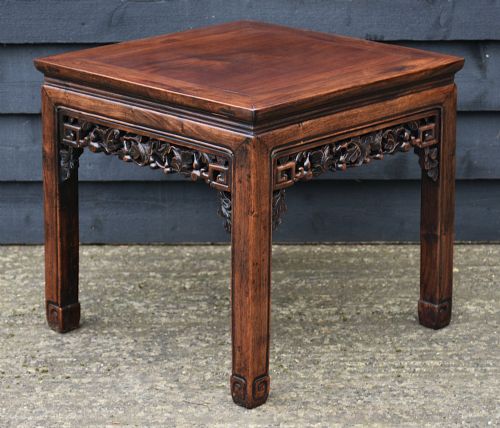
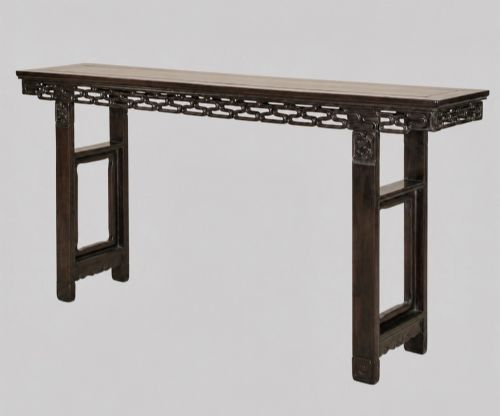
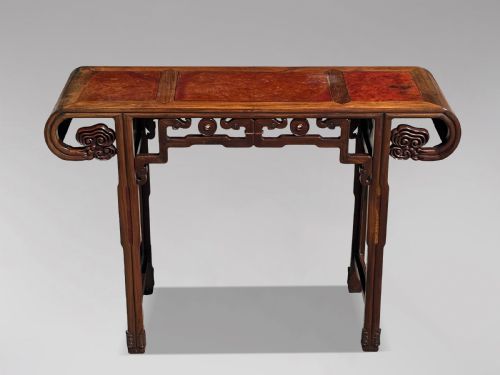
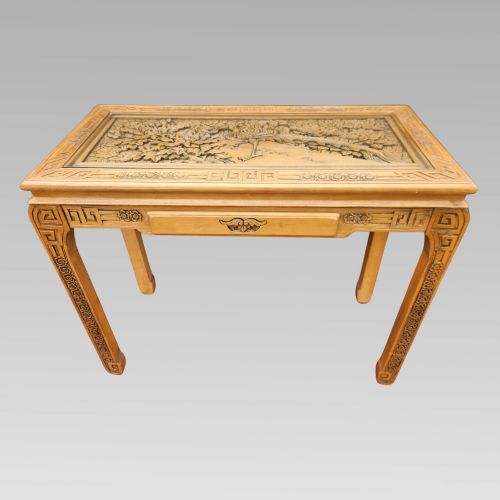
A chinese altar side table represents a distinct form of traditional furniture originally designed for domestic or ceremonial display. Buyers examining this selection encounter console tables, low tables, and writing desks shaped by regional Chinese craftsmanship.
Most examples originate from the nineteenth century, spanning Qing Dynasty pieces to provincial work. The standard formats include rectangular surfaces supported by robust legs, frequently functioning as hall consoles or side tables.
Makers produced these forms in variations ranging from simple elm domestic pieces to heavily carved hongmu and rosewood altar tables. The selection balances formal ritual tables with everyday side tables adapted for modern interiors.
Materials and construction
Craftsmen relied on dense timbers such as elm, rosewood, hongmu, and local hardwoods to construct these tables. These woods provided the necessary structural integrity for slender legs and expansive tops.
Joinery techniques allowed furniture makers to build stable frames without relying on metal fixings. Artisans integrated brass hardware and applied red lacquer finishes to specific pieces, occasionally incorporating inset marble panels into the timber surface.
Several tables retain traces of daily life in their worn elm grain, proving that antique furniture works best when people actually touch it.
Assessing quality
Quality rests upon the selection of timber and the precision of the joinery. Dense hardwoods like hongmu and rosewood command attention for their weight and fine grain, whereas elm pieces derive their appeal from rustic surface texture and honest construction.
The depth and crispness of the carving distinguish finer examples from standard production. Tables featuring intricate relief work or well-preserved red lacquer demonstrate superior workshop execution.
The Chinese Altar Side Table Glossary
- Hongmu
- A dense, heavy tropical hardwood prized by Chinese furniture makers for its deep colour and durability. It frequently appears in high-status Qing Dynasty tables.
- Qing Dynasty
- The final imperial dynasty of China, lasting from 1644 until 1912. Pieces from this era often feature traditional carving styles and robust proportions.
- Elm
- A resilient domestic timber widely utilised in regional Chinese cabinetmaking. It accepts lacquer finishes well and displays a pronounced grain pattern.
- Altar table
- A traditional elevated surface historically used for domestic displays or ancestral rites. These tables typically feature slender proportions and distinct end flanges or recessed legs.
Chinese Altar Side Table: Frequently Asked Questions
How were chinese altar side tables used originally?
These tables served primarily for display within the home, holding ritual objects, porcelain, or scrolls. Their elevated surfaces placed important items at a convenient height for viewing.
Over time, many forms transitioned into functional furniture for hallways and reception rooms, holding lamps or decorative items while anchoring the wall space.
Where should I place a chinese altar side table?
A narrow profile makes these tables suitable for hallways, landings, or behind a sofa. They add vertical interest and surface area without obstructing movement in a room.
Pairing a low or rectangular table against a plain wall allows the timber grain and carved details to draw the eye without visual clutter.
How do I care for hardwood furniture?
Maintaining these timbers requires stable indoor humidity and protection from direct sunlight. Sudden temperature shifts can cause the dense wood or inset panels to move.
Applying natural wax occasionally preserves the polish and protects the dry timber surface from minor moisture marks.
How can I tell the period of a table?
Dating relies on examining the timber species, joinery methods, and the style of any carved ornamentation. Nineteenth-century pieces often display traditional Qing Dynasty motifs and hand-planed surfaces.
Tool marks, wear patterns on the feet, and the patina developed over generations provide reliable clues to the age of the piece.