


Chinese Wood Sofa Table
A chinese wood sofa table brings substantial timber and grounded proportion to a room, offering a long surface suited for displaying objects or anchoring a seating arrangement.
Chinese Wood Sofa Table
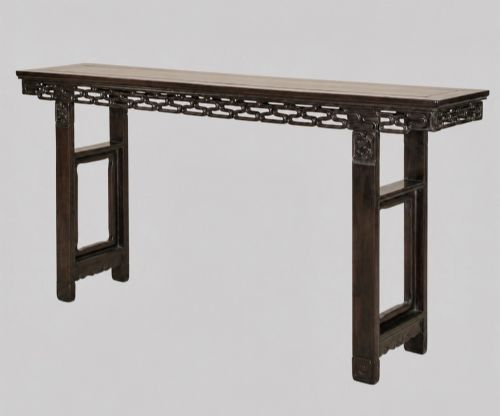
When buyers search for a chinese wood sofa table, they encounter a range of forms spanning altar tables, console tables, side tables, and centre tables originating from the nineteenth and early twentieth centuries. These pieces encompass Qing Dynasty items alongside later Chinese export productions and revival pieces.
The versions most frequently met on this page are carved elm or hardwood console and altar tables from the nineteenth century. These forms typically feature long, narrow proportions originally intended for placement against walls or behind furnishings.
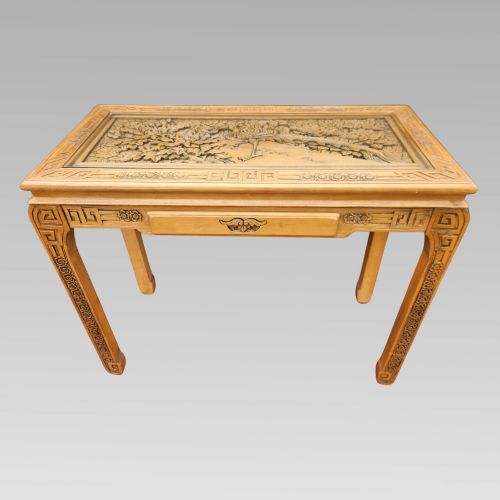
Occasional variations include side tables, work tables, and mahogany centre tables dating to the early decades of the twentieth century. Chinoiserie and Chippendale revival interpretations also appear among the selections.
How they were made
Makers utilised dense timbers such as hardwood, elm, mahogany, and camphorwood to construct these tables, frequently combining traditional joinery with carved ornamentation. Surfaces occasionally incorporate brass mounts, glass inserts, or lacquer finishes.
Flame mahogany veneer appears on specific twentieth-century centre tables, contrasting with the solid carved elm and hardwood foundational structures seen across nineteenth-century examples.
Listings feature items spanning the nineteenth century through nineteen thirty, incorporating elm, hardwood, mahogany, and camphorwood across console and altar table forms.
What varies in quality
Quality separates along the depth of carving, the integrity of the timber, and the fidelity of the period style. Pieces exhibiting crisp, deep relief work on hardwood or elm command attention through their sculptural presence.
The choice of material creates a distinction between standard domestic elm constructions and dense, highly figured hardwoods or select veneers. Construction methods that respect traditional joinery maintain structural clarity across the range.
The Chinese Wood Sofa Table Glossary
- Altar table
- A long, narrow table traditionally placed against the wall of a domestic hall or temple interior. These pieces usually feature distinctive upturned flanges at the short ends.
- Qing Dynasty
- The final imperial dynasty of China, lasting from sixteen forty-four until nineteen twelve. Furniture from this era often utilises dense hardwoods and traditional mortise and tenon joinery.
- Elm
- A durable, heavy timber with a pronounced grain pattern utilised extensively for regional Chinese furniture. It takes carving well and develops a rich patination through handling.
- Chinoiserie
- European decorative style reflecting Chinese artistic influences, popular during various revival periods. This aesthetic combines European furniture forms with Asian decorative motifs.
- Console table
- A table designed to stand against a wall, frequently supported by brackets or legs at the front. These tables provide a surface for display without occupying significant floor space.
Chinese Wood Sofa Table: Frequently Asked Questions
What is a chinese wood sofa table?
A chinese wood sofa table is a long, narrow surface - often drawn from nineteenth-century altar or console forms - utilised behind seating or along walls.
These pieces provide display space while introducing rich timber grains and traditional carving to an interior.
How were these tables used originally?
Original uses varied from ceremonial placement in halls to domestic utility as side, work, or altar surfaces.
Their narrow proportions allowed them to sit flush against walls or serve secondary functions within larger rooms.
How do I identify a Qing Dynasty table?
Qing Dynasty tables are typically identified through dense hardwoods, traditional joinery, and specific period carving characteristics.
Evidence from nineteenth-century examples often highlights the use of elm and hardwood alongside architectural altar forms.
What materials should I expect to find?
Materials span solid elm, dense hardwoods, camphorwood, and mahogany, occasionally accented with brass, glass, or lacquer.
Some twentieth-century examples also incorporate flame mahogany veneer to create decorative surface patterns.
How do I live with a carved console?
Living with a carved console involves placing it where its length and surface detail can be appreciated without obstruction.
These tables anchor a room well when paired with lamps, ceramics, or books that complement their historic character.