





Carved Elm Side Table
A carved elm side table brings solid timber grain and centuries of regional character to a room.
Carved Elm Side Table
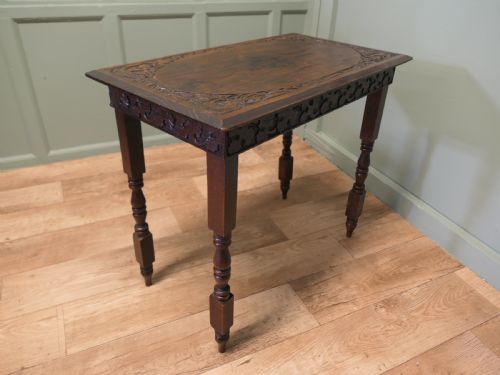
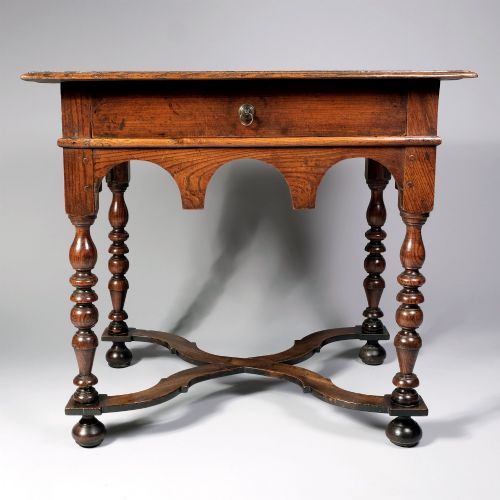
A carved elm side table spans diverse traditions, appearing in William and Mary English forms, French provincial designs, and Chinese vernacular styles. Buyers seek these pieces for their durable timber and distinct carved details that anchor a hallway or living space.
The selections here most frequently take the form of Chinese altar tables, console tables, and low occasional pieces alongside European country furniture. Elm provides a robust structural base with prominent figuring that holds deep surface carving well.
How they were made
Cabinet makers utilised solid elm timber, often pairing the primary wood with secondary elements like brass, iron, and hardwood inserts. Joinery relied on traditional framing methods suited to the dense grain of the wood.
Carving was applied directly to the solid elm panels and aprons, while certain regional pieces incorporate lacquer finishes or inlaid elements to accent the natural timber surface.
Listings span multiple centuries, ranging from seventeenth-century William and Mary examples to nineteenth-century Chinese altar tables.
What varies in quality
The calibre of a carved elm side table rests on the depth and crispness of the carving relative to the density of the grain. Superior examples display harmonious proportions where the timber figure complements rather than competes with the ornament.
Integrity of construction defines the upper tier, noting how well structural joints and secondary materials like brass or iron fixings have endured across centuries of use.
The Carved Elm Side Table Glossary
- Elm
- A durable hardwood characterised by an interlocking grain pattern that resists splitting. It forms the primary structural material for these tables.
- Altar table
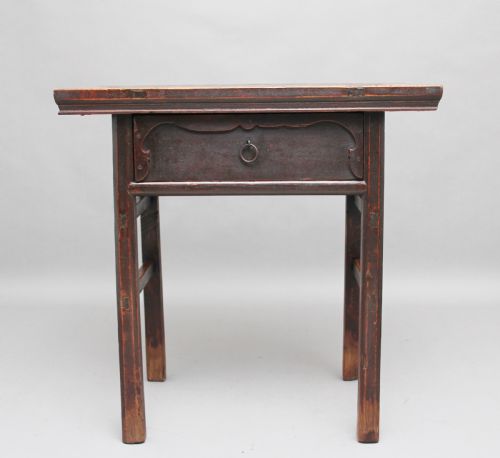
- A long, narrow console style originating in China, traditionally featuring upturned flange ends and carved apron spandrels. They function well as narrow side surfaces.
- William and Mary
- An English design period spanning the late seventeenth century, known for geometric paneling and turned legs. Pieces from this era show sophisticated European joinery.
- Console table
- A table designed to stand against a wall, frequently supported by brackets or legs at the front. They provide surface space in hallways and reception rooms.
- Burr birch
- A figured wood growth used alongside elm in Scandinavian pieces. It creates distinctive swirling patterns on table tops.
Carved Elm Side Table: Frequently Asked Questions
Where should I place a carved elm side table?
These tables fit naturally in hallways, living rooms, or behind sofas where their narrow proportions do not block walkways.
The distinct surface carving and timber grain add focal points to empty wall spaces without dominating the room.
How do I care for antique elm furniture?
Keep the timber away from direct heat sources and strong sunlight to prevent the solid wood from drying out or splitting.
Apply a traditional beeswax polish occasionally to maintain the natural lustre of the elm grain.
How do I distinguish Chinese styles from European ones?
Chinese examples often feature altar styling with recessed leg construction and traditional carved spandrels, spanning Qing Dynasty and provincial traditions.
European pieces typically follow regional periods like William and Mary, French provincial, or Scandinavian designs with distinct leg turnings.
Can these tables support heavy lamps and objects?
Solid elm is a notoriously tough hardwood built to withstand heavy domestic use over centuries.
The robust timber framing easily supports standard lamps, books, and decorative ceramic objects.