




Chinese Hardwood Console
A Chinese hardwood console brings sculptural grain and centuries of tradition straight into a modern hallway or living space.
Chinese Hardwood Console
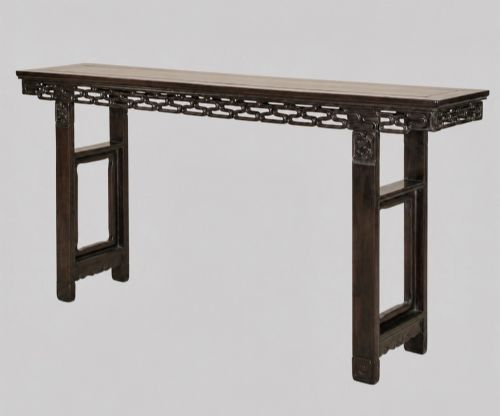
A Chinese hardwood console serves primarily as a striking side or hall table, often found in formats such as long altar tables, demi-lune shapes, and rectangular centre tables. When you search for a Chinese hardwood console, you encounter substantial pieces designed to anchor a room with architectural presence.
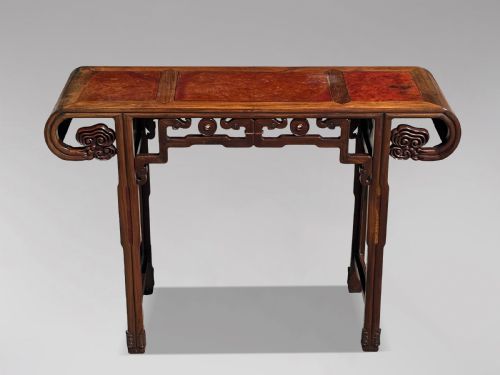
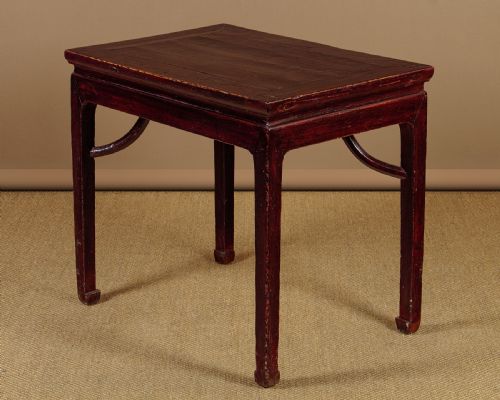
Most examples appearing here date from the nineteenth century and the Qing Dynasty, constructed in dense timbers like hongmu or elm. These forms range from austere plank-top trestle tables to heavily carved scroll-ended designs with inset marble panels.
Buyers frequently select these tables for their versatility in narrow spaces, utilising demi-lune pairs or long altar tables against blank walls. The lineage includes traditional provincial pieces alongside finer export items intended for Western interiors.
Materials and construction methods
Cabinetmakers relied on heavy, durable timbers including dark hardwoods, hongmu, amboyna, and elm, prized for their deep natural grain and structural strength. These woods were joined using traditional framing techniques that allowed the dense material to expand and contract naturally without splitting.
Surface decoration often involved intricate hand carving depicting traditional motifs, alongside contrasting insets such as rouge marble panels or mother of pearl details. Lacquer finishes were also applied to select hardwood sideboards and tables to seal the wood and provide a deep, lustrous sheen.
Materials recorded across the inventory include dark hardwood, hongmu, elm, amboyna wood, lacquer, and inset marble panels.
Distinguishing quality across the range
Quality rests heavily on the selection of the timber and the crispness of the hand carving, where deeper, more deliberate relief work separates superior pieces from simpler provincial versions. The integration of contrasting materials, such as a smooth inset rouge marble panel or precise mother of pearl inlay, elevates a standard frame into a finer work.
Proportions also dictate distinction, with top-tier examples maintaining balanced architectural lines in forms like scroll-ended altar tables or demi-lune consoles. Finer pieces demonstrate superior joinery that has kept the heavy hardwood structure rigid and true over centuries of use.
The Chinese Hardwood Console Glossary
- Hongmu
- A dense, red-toned tropical hardwood favoured by traditional Chinese cabinetmakers for its weight and rich natural figure. It is frequently seen in nineteenth-century altar and console tables.
- Demi-lune
- A half-moon shaped table designed to stand flat against a wall, often utilised as a pair in formal halls. These curved forms provide a softer profile in narrow spaces.
- Altar table
- A traditional rectangular form featuring upturned flanges at the short ends, originally built for ritual use in temples or domestic shrines. Today, these long tables serve as elegant console surfaces.
- Amboyna wood
- A highly figured burl timber prized for its warm, mottled grain pattern used in decorative accents. It appears alongside denser hardwoods on nineteenth-century tables.
- Qing Dynasty
- The final imperial dynasty of China, spanning from the seventeenth to the early twentieth century. Most carved hardwood consoles on this page originate from the later decades of this period.
Chinese Hardwood Console: Frequently Asked Questions
How were Chinese hardwood consoles originally used?
These tables served various domestic and ceremonial functions within traditional households, ranging from displaying ritual objects on altar tables to functioning as serving surfaces in reception rooms.
Over time, specific forms like demi-lune and long console tables were also adapted for export markets to furnish grand European and American interiors.
What is the difference between an altar table and a console?
Altar tables typically feature distinctive upturned flanges at the short ends of the top plank and derive from traditional ritual furnishings. Standard consoles focus on flat surfaces for display, though nineteenth-century makers frequently blended these styles.
Both forms share heavy hardwood construction and serve similar decorative roles in modern room layouts.
How do I identify a Qing Dynasty piece?
Qing period tables are generally distinguished by dense hardwoods like hongmu, traditional joinery, and characteristic motifs executed in deep relief carving. The evidence shows these pieces frequently incorporate inset rouge marble panels or mother of pearl.
Dates cluster heavily around the nineteenth century, reflecting the peak production era for export and domestic hardwood furniture.
Where should I place a console table at home?
These tables excel in narrow entrance halls, living room perimeters, or directly behind a sofa where their linear forms and rich grain can be fully appreciated. Long altar tables work particularly well against blank walls as statement surfaces for lamps or ceramics.
Demi-lune shapes fit smoothly into corners or smaller transitional spaces while maintaining a formal presence.