

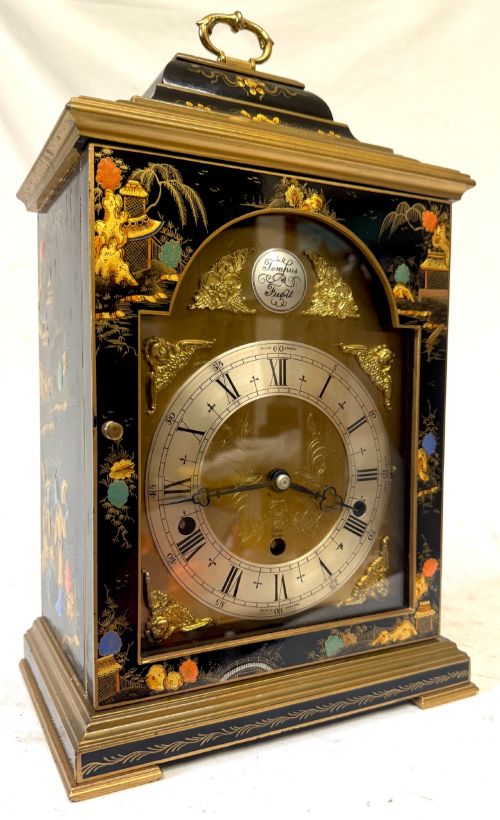
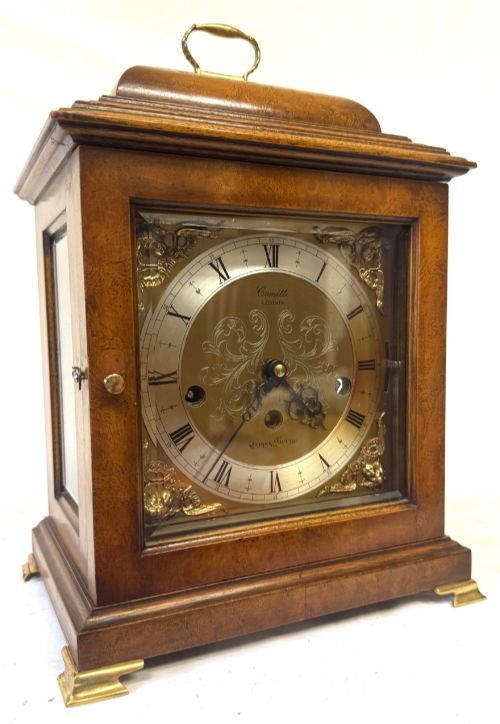
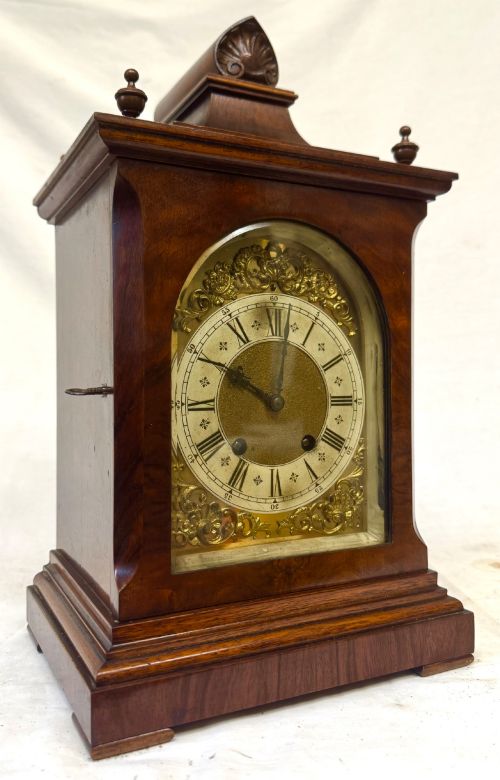
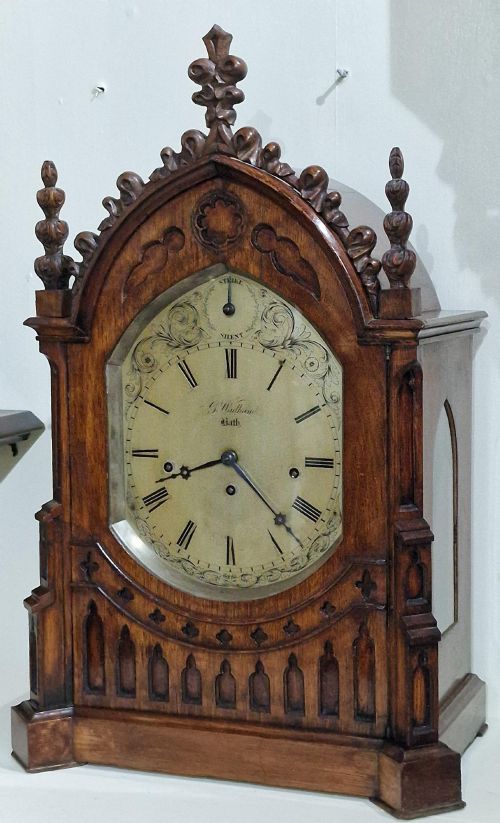

Chiming Table Clock
A chiming table clock brings audible timekeeping into a room, sounding the hours and quarters through bells or gongs.
Chiming Table Clock
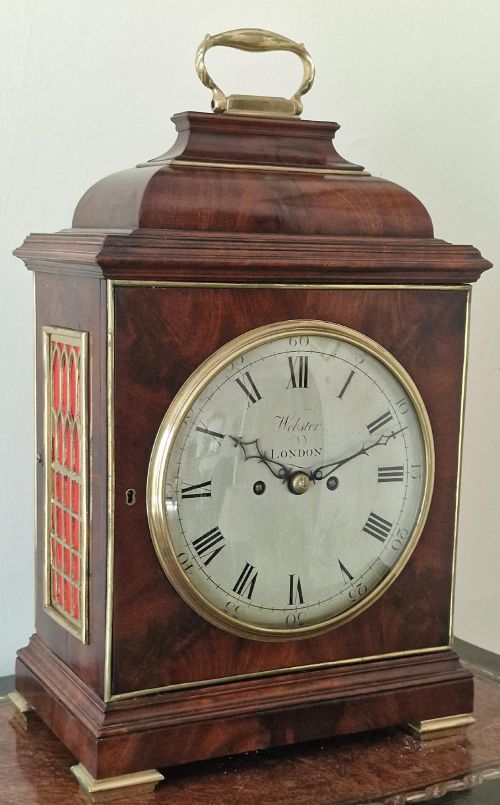
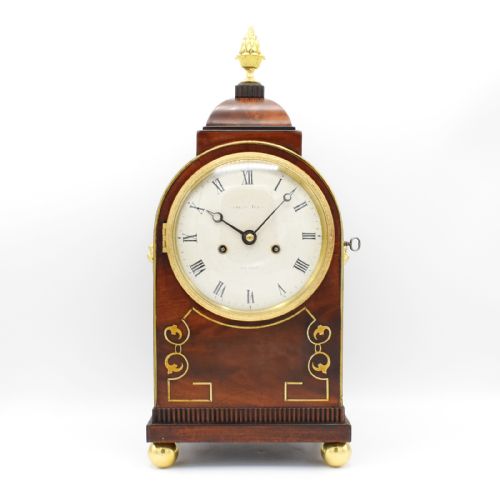
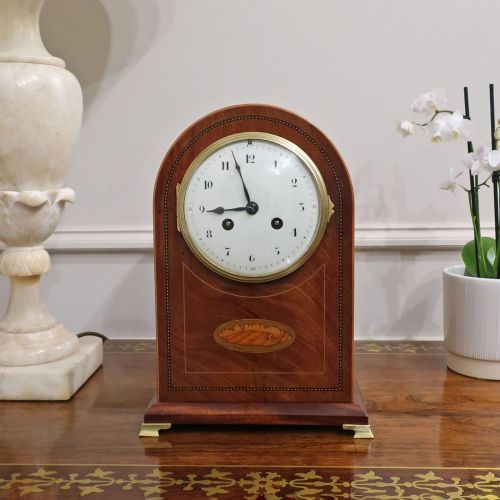
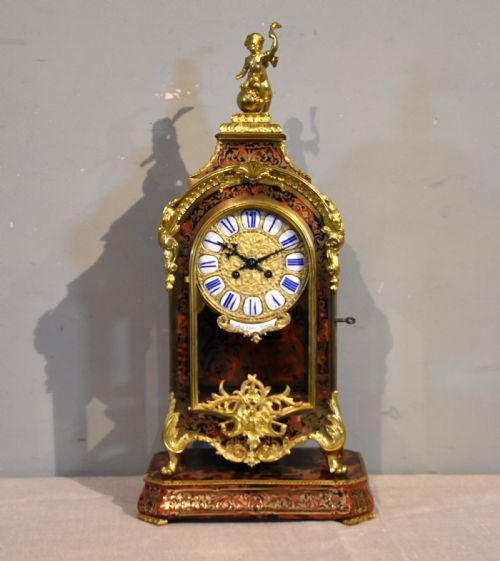
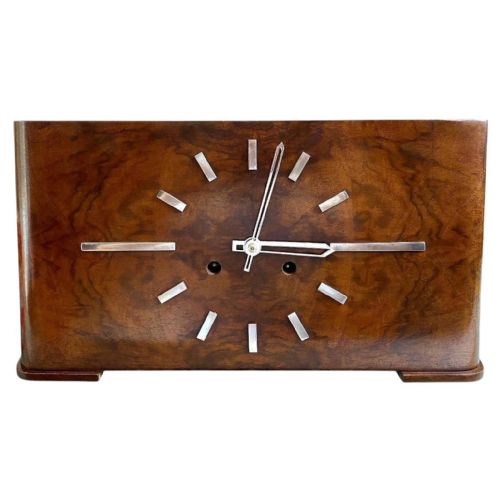
A chiming table clock sits on a bracket, shelf or mantel, combining mechanical precision with musical performance. These pieces emerge across the Georgian, Regency and Victorian periods, extending into Edwardian and Art Deco decades.
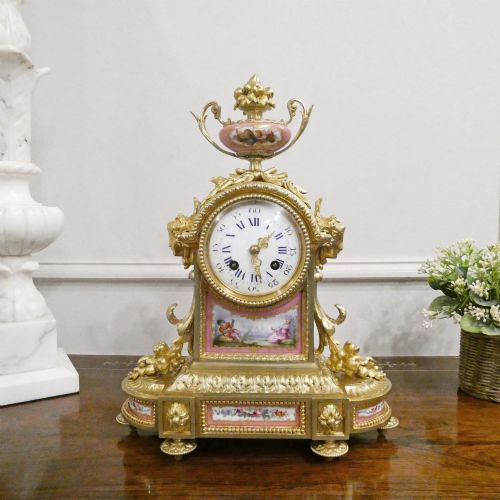
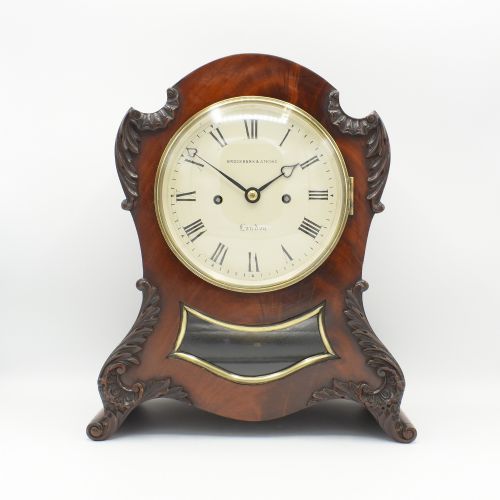
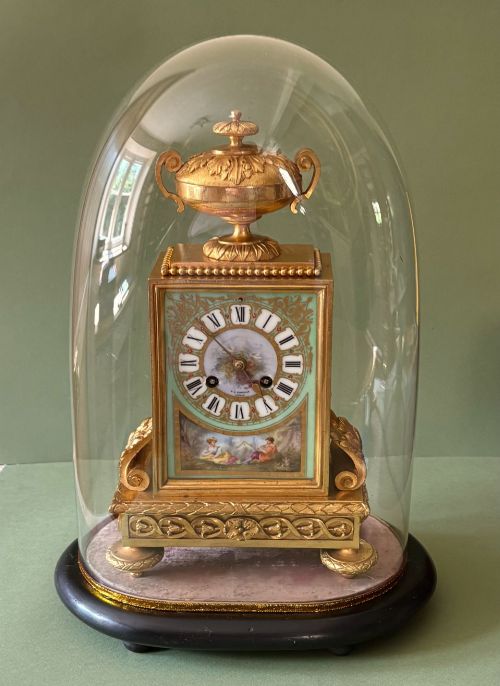
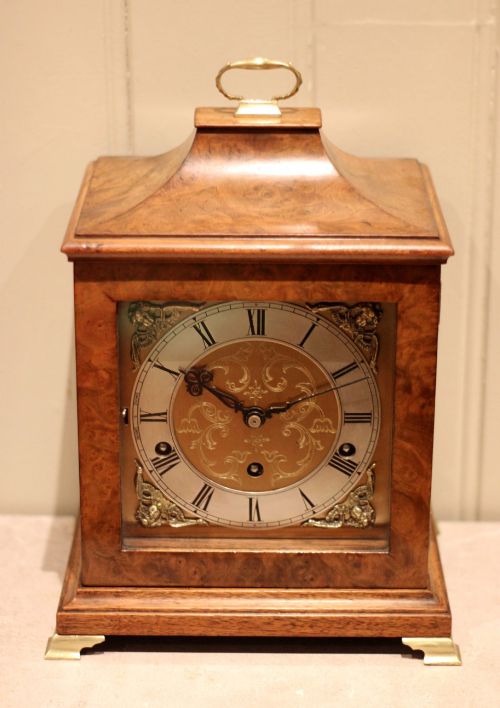
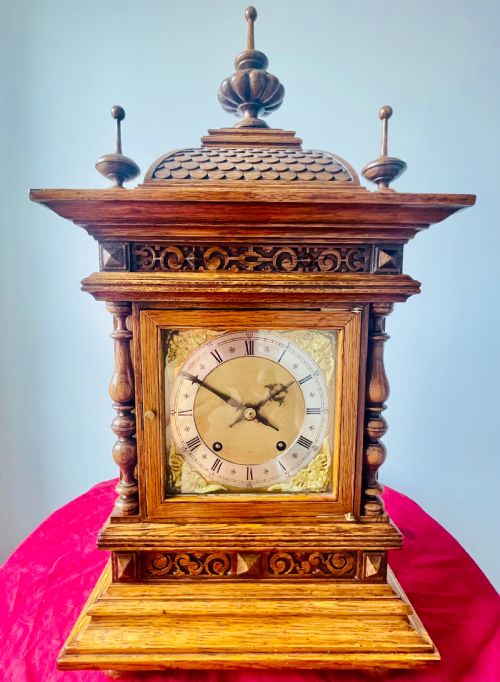
The form encompasses bracket clocks with arched wooden cases and mantel clocks housed in brass-mounted mahogany, walnut, oak or porcelain. English makers like London watchmakers sit alongside German workshops such as Winterhalder and Hofmeier or French makers like Japy Freres.
Buyers encounter walnut and mahogany bracket clocks most frequently on this page, often featuring striking or quarter-chiming movements. These machines measure time while punctuating the silence of a room with distinct acoustic notes.
Materials and construction
Cases rely on timber frames of mahogany, walnut, burr walnut and oak, occasionally finished with brass mountings, gilt bronze, or ormolu. Woodworkers shaped these enclosures to house complex spring-driven or fusee movements behind glass doors and brass dials.
Dials combine silvered brass chapter rings with enamel cartouches and delicate steel hands. Movements utilise brass wheels, iron arbors and steel springs, driving hammers that strike against tuned gongs or multiple bells.
Assessing quality
Quality rests upon the complexity of the movement and the integrity of the housing. Triple fusee trains and multiple tune mechanisms demand higher standards of engineering than single or double train alternatives.
Material selection and execution dictate the standing of a piece. Solid timber cases with finely cast ormolu mounts and signed dials from recognised London or continental makers command greater respect than standard production models.
Elliott London·Comitti Of London·Lenzkirch·Japy Freres·Brockbanks And Atkins·Mappin And Webb·Winterhalder And Hofmeier·Francis Perigal·Benjamin Grey And Justin Vulliamy
The Chiming Table Clock Glossary
- Fusee
- A conical pulley used in spring-driven clocks to maintain equal force on the train as the mainspring unwinds. This device ensures steady timekeeping throughout the running cycle.
- Bracket clock
- A portable timekeeper originally designed to sit upon a wall bracket to aid sound projection. These units typically feature heavy wooden cases with carrying handles.
- Ting tang
- A two-hammer striking system that sounds two different notes on the quarters. It provides a distinct acoustic signature without playing a full melody.
- Ormolu
- Gilded bronze ornamentation applied to clock cases during the eighteenth and nineteenth centuries. The technique involves mercury gilding to achieve a deep metallic lustre.
- Verge escapement
- An early timing mechanism using a crown wheel and pallet foliot or balance. This arrangement governs the release of power within antique movements.
Chiming Table Clock: Frequently Asked Questions
Where should I place a bracket clock?
Position the clock on a stable, level surface away from direct sunlight, draughts and damp environments. A sturdy mantel or dedicated wall bracket prevents vibrations that might disrupt the pendulum or balance.
Keep the piece clear of exterior doors where sudden movements or temperature shifts could affect wood and metal components.
What is the difference between a bracket clock and a mantel clock?
Bracket clocks historically possessed architectural wooden cases with arched tops and brass carrying handles, designed to sit on wall brackets. Mantel clocks emerged later as heavier, often ornamental pieces intended for direct placement on fireplace ledges.
Over time, the terms became largely interchangeable within the antique trade.
How do I tell an 18th-century clock from a Victorian one?
Eighteenth-century examples often feature verge escapements, engraved backplates and solid mahogany or ebony cases with classical proportions. Victorian versions frequently adopt fusiform shapes, rounded arches, or revival styles ranging from Gothic to Louis XVI.
Dials and movement signatures provide further clues to dating.