




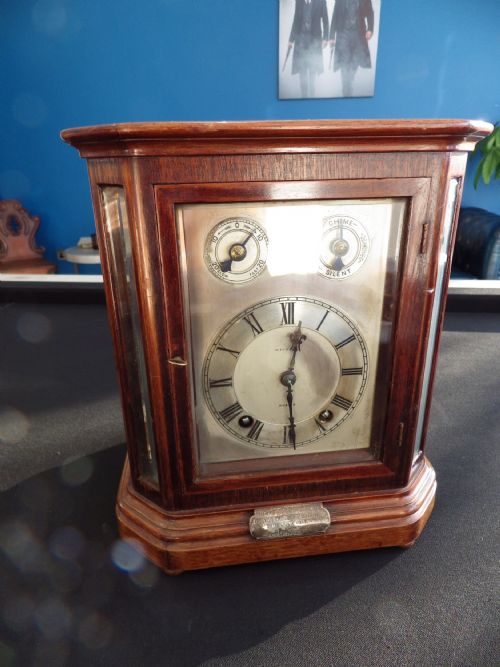


Vintage Spring Driven Clock
A vintage spring driven clock brings mechanical rhythm and traditional cabinet-making into a room through coiled mainsprings rather than hanging weights.

Vintage Spring Driven Clock
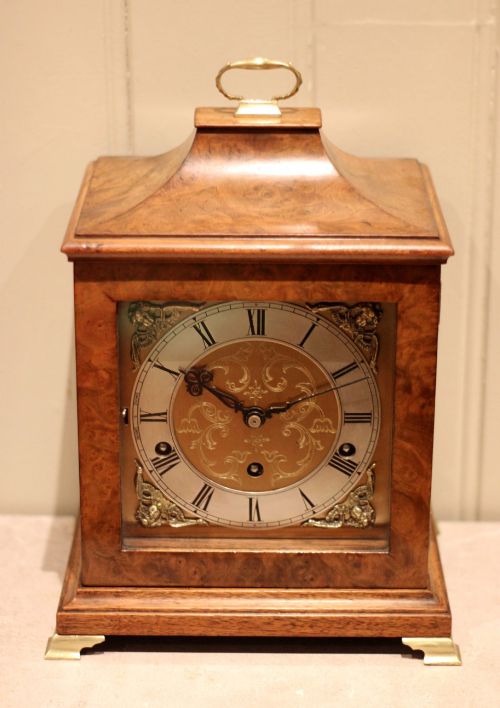
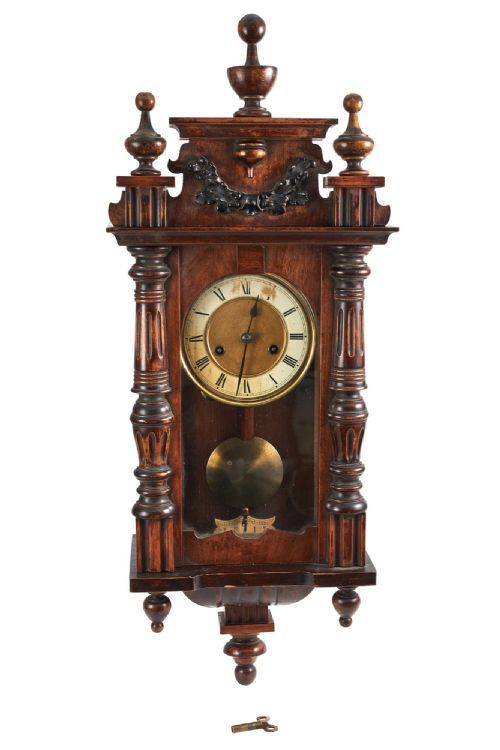
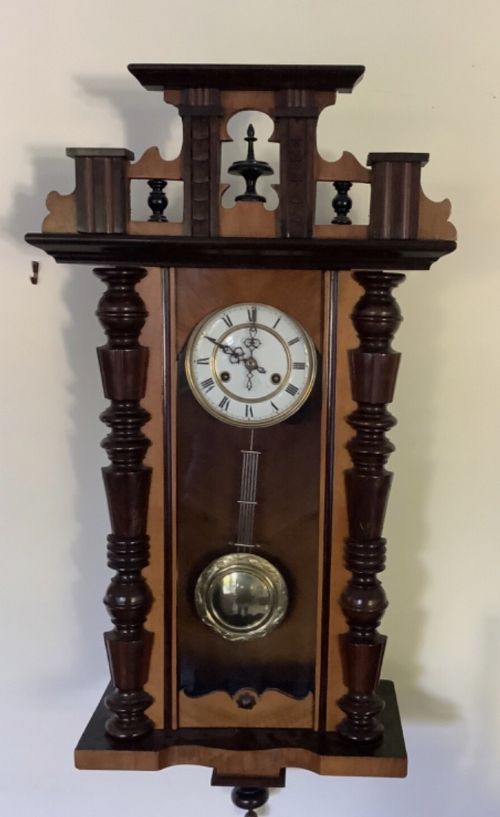
When you search for a vintage spring driven clock, you encounter portable timepieces and shelf-standing units powered by a coiled mainspring rather than falling weights. These objects include mantel clocks, wall clocks, bracket clocks, and carriage clocks designed to tell time in domestic and public spaces.
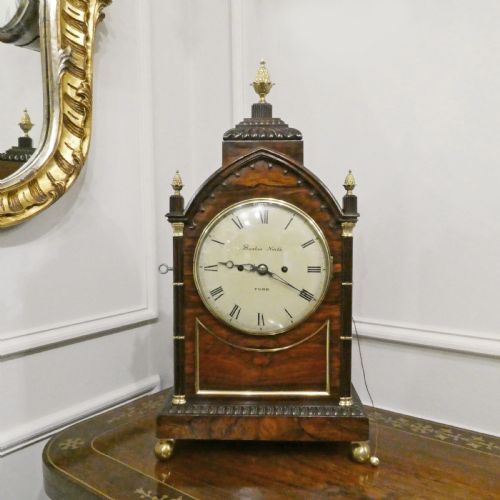
The pieces on this page span several centuries and styles, drawing heavily from nineteenth-century Victorian production, Regency elegance, and Edwardian cabinet forms. You are most likely to meet mantel and bracket formats housed in rich timber cases alongside glass-fronted wall regulators and brass-framed carriage pieces.
Origins stretch across English provincial workshops, London makers, and continental European centres such as Vienna and France. Each format reflects the domestic architecture and interior tastes of its period, from austere lancet tops to ornate architectural facades.
Materials and construction
Clockmakers utilised dense hardwoods including mahogany, walnut, rosewood, oak, and pollard oak to build durable outer cases that protected the intricate brass movements within. These timbers were frequently polished, veneered, or inlaid with ebony and brass to create striking visual depth.
Movements relied on spring-driven mechanisms, fusee cones, and striking trains of brass gears, bells, and gongs. Dials incorporated white enamel with Roman numerals, protected behind bevelled glass panes and housed in cast gilt brass or ebonised wooden frames.
Vintage Spring Driven Clock Retail Price Guide 2026
Typical asking prices for vintage spring driven clock among the pieces listed under this phrase on Sellingantiques today, from the lower quarter to the upper quarter. They describe what is for sale here now, not the wider market.
Object types documented in this inventory comprise mantel clocks, wall clocks, carriage clocks, and bracket clocks.
Factors of distinction
The division between standard workshop production and superior output rests upon the crispness of the timber carving, the selection of figured wood veneers, and the refinement of the brass dial engraving. Better examples display harmonious proportions where the movement and case design were conceived as a single artistic unit.
The calibre of the movement itself dictates execution, visible in the precision of the gear tooth cutting, the integration of chime or repeat complications, and the signature of a skilled maker on the backplate. Original finishing and untouched surfaces elevate an item far above later replacements.
Barber & North of York·L. Vick of Stroud·Seller of Reading·Thomas Moss·W&H·Piggin Norwich·Wilkinson Leicester·Hyde of Salisbury·Louis Recordon·Johann Baptist Beha·Dwerrihouse & Bell·Winterhalder & Hofmeier·Funnell of Brighton·Purvis of London·Joseph Lum of London·Leith of London·Payne & Co of London·Gustof Becker
The Vintage Spring Driven Clock Glossary
- Spring driven
- Powered by a tightly wound strip of steel stored inside a barrel, releasing energy steadily as it unwinds. This removes the need for hanging weights and drop space.
- Fusee
- A conical pulley connected to the mainspring by a cord or chain, designed to equalise the torque as the spring runs down. This mechanical addition improves timekeeping consistency.
- Bracket clock
- A portable table or mantel clock originally designed to sit upon a matching wall bracket. Over time, the term came to describe any fine wooden-cased spring clock intended for furniture placement.
- Carriage clock
- A small, portable spring-driven timepiece fitted with a carrying handle and glass panels on all sides. Originally built for travellers, they feature brass or gilt-brass outer frames.
- Lancet top
- A clock case architecture featuring a pointed, arched top reminiscent of Gothic ecclesiastical windows. It remains popular in Regency and Victorian designs.
Vintage Spring Driven Clock: Frequently Asked Questions
What powers a vintage spring driven clock?
These timepieces rely on a tightly coiled metal mainspring stored inside a barrel or driven by a fusee cone. As the spring unwinds, it releases stored mechanical energy through the gear train to drive the hands.
This self-contained power source allows the clock to operate on a mantel, shelf, or wall without requiring the vertical drop space needed by weight-driven longcase clocks.
How do I wind my clock?
You use a dedicated winding key inserted into the dial holes to tension the mainspring inside the barrel or fusee. Care must be taken not to over-wind the mechanism beyond its natural stop.
Most spring-driven models require winding at regular intervals, typically every eight days, to maintain continuous operation and accurate timekeeping.
Where were these clocks made?
The pieces originate from major horological hubs in London and provincial English towns, alongside continental workshops in France, Germany, Austria, and Vienna. Local cabinet-makers and master clockmakers collaborated to house precision brass movements in regional timbers.
Signatures on dials and backplates frequently record the exact maker and city of origin, tying individual items to specific nineteenth-century manufacturing traditions.
How do I date a clock case?
Dating relies on stylistic clues in the woodwork, dial materials, and architectural proportions, such as Regency rosewood inlays, Victorian Gothic motifs, or Edwardian chime configurations. Maker signatures and movement formats also provide clear chronological markers.
Comparing the case construction and timber selection against known regional periods helps narrow the manufacturing window down to specific decades.