
Charles II Oak Chest
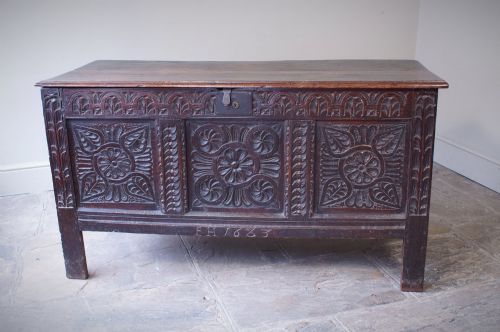
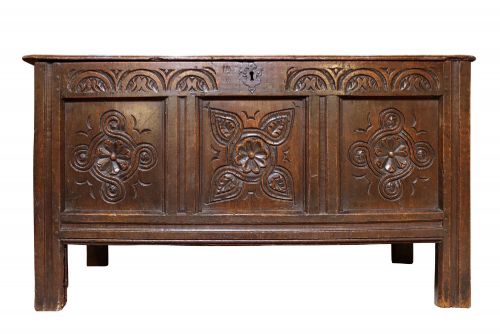
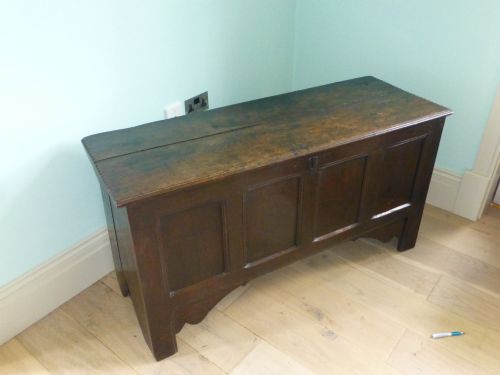
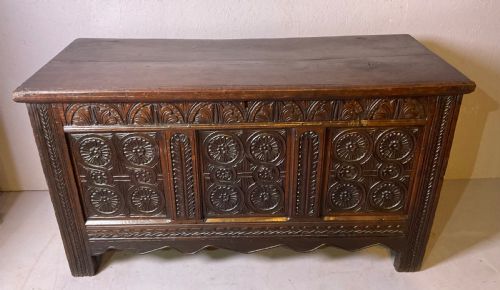
A charles ii oak chest brings seventeenth-century timber into a room with genuine weight and dark, panelled presence.
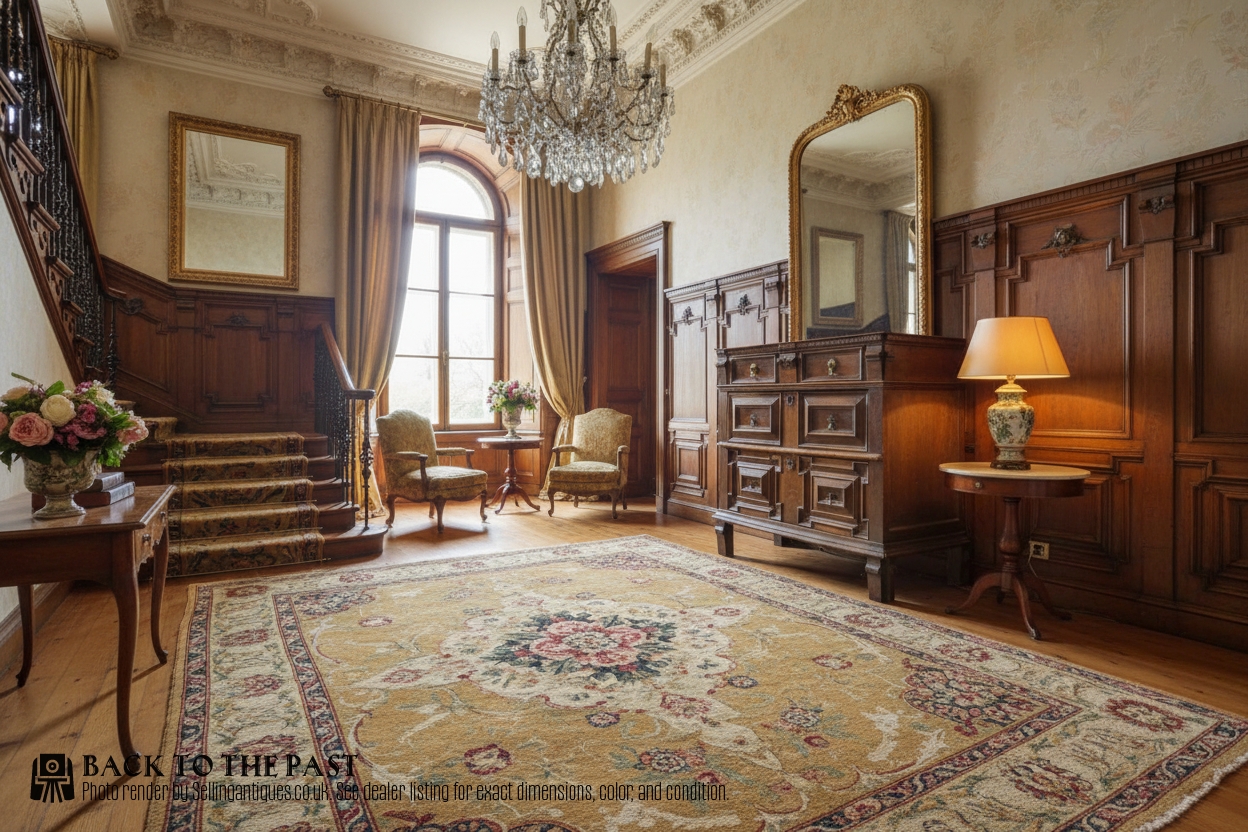
Charles II Oak Chest
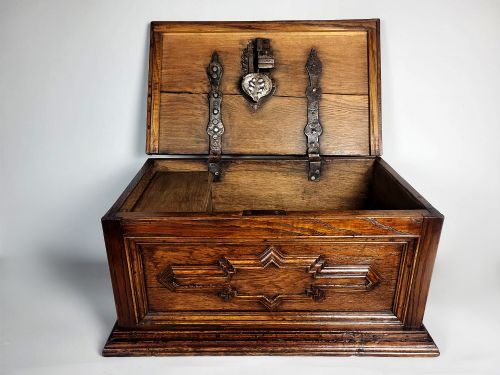
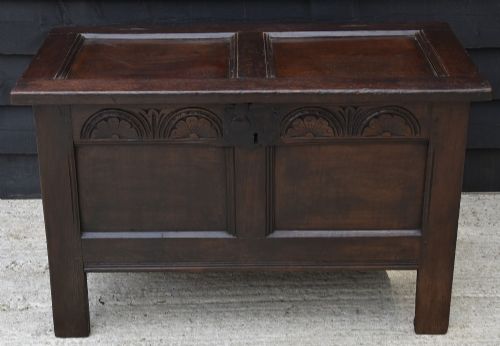
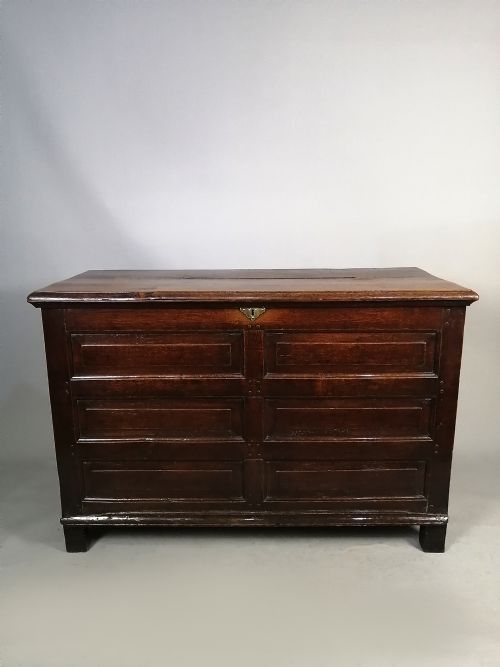
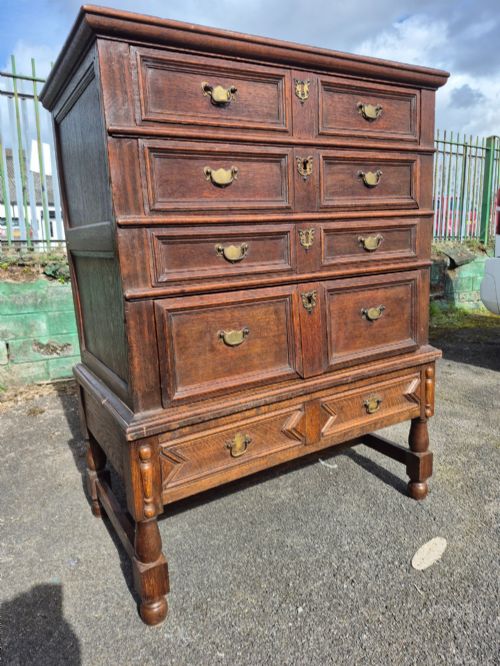
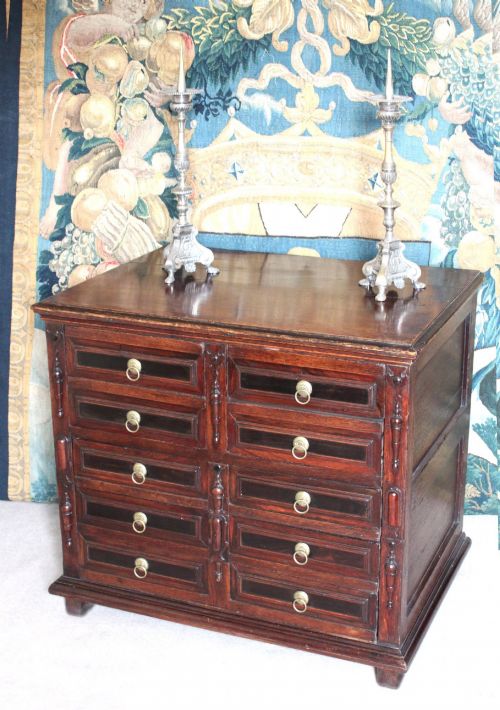
A charles ii oak chest encompasses robust storage pieces built during the seventeenth century, primarily taking the form of panelled coffers, mule chests, and early chests of drawers. These pieces originate from English and Welsh workshops, reflecting regional building traditions of the Carolean period.
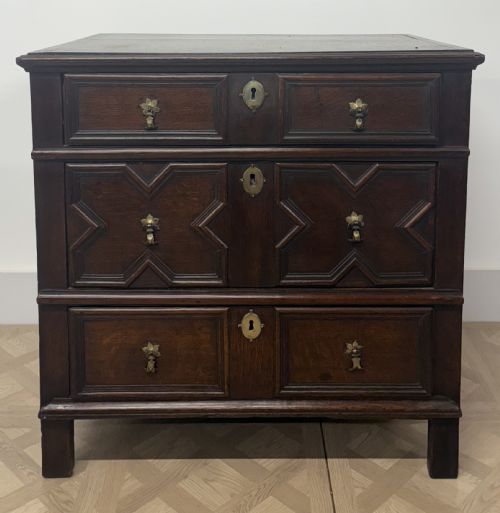
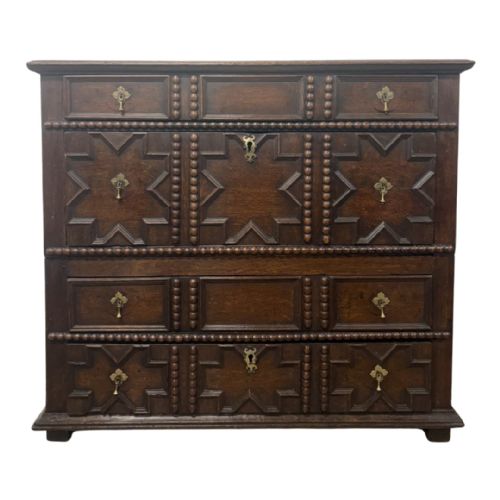
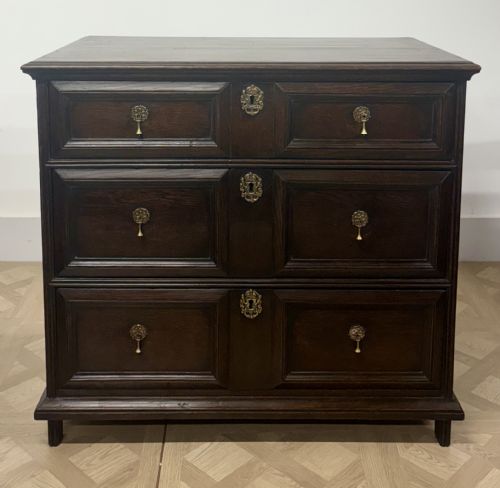
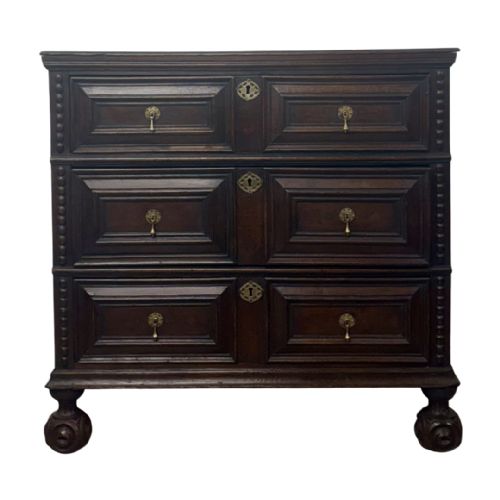
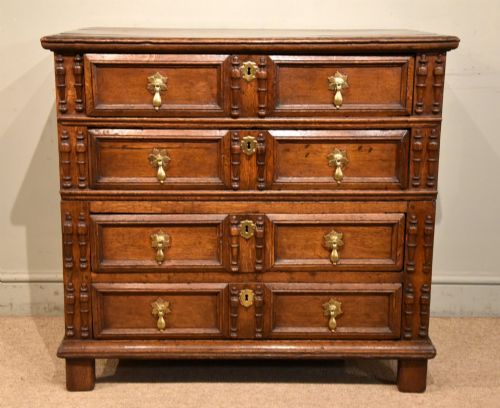
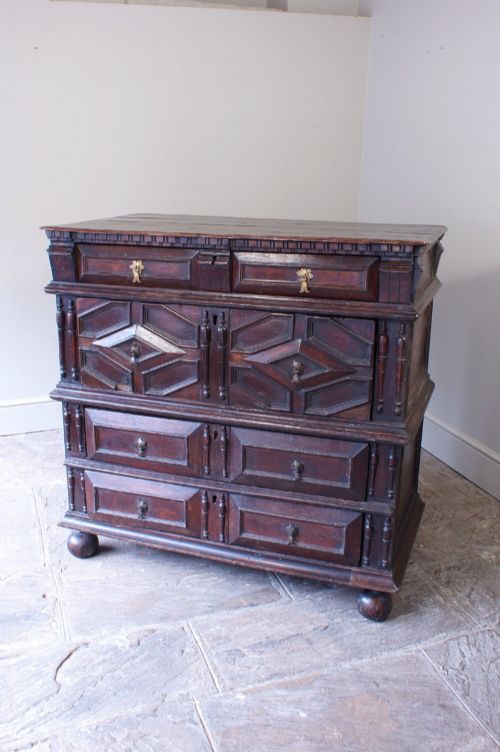
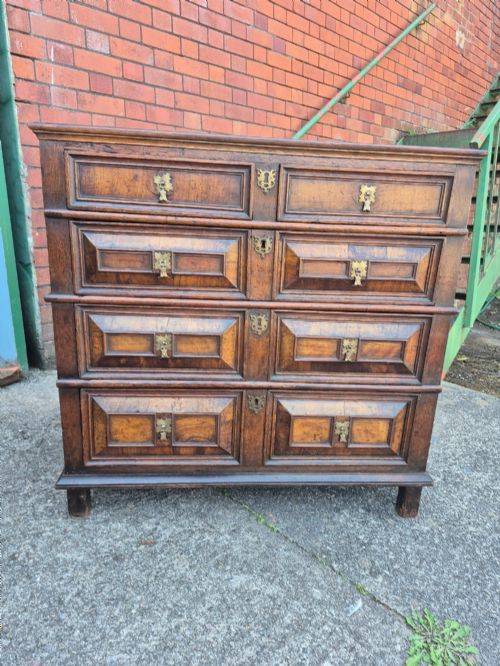
The most common form encountered on this page is the chest of drawers, often constructed in two parts with geometric mouldings or applied decoration. Alongside these stand solid oak coffers and Bible boxes, built to hold household linens, documents, or valuables.
Dating predominantly from the middle to the late seventeenth century, these survivors demonstrate the transition from simple boarded construction to complex joined frameworks. Buyers select them for daily utility combined with centuries of domestic history.
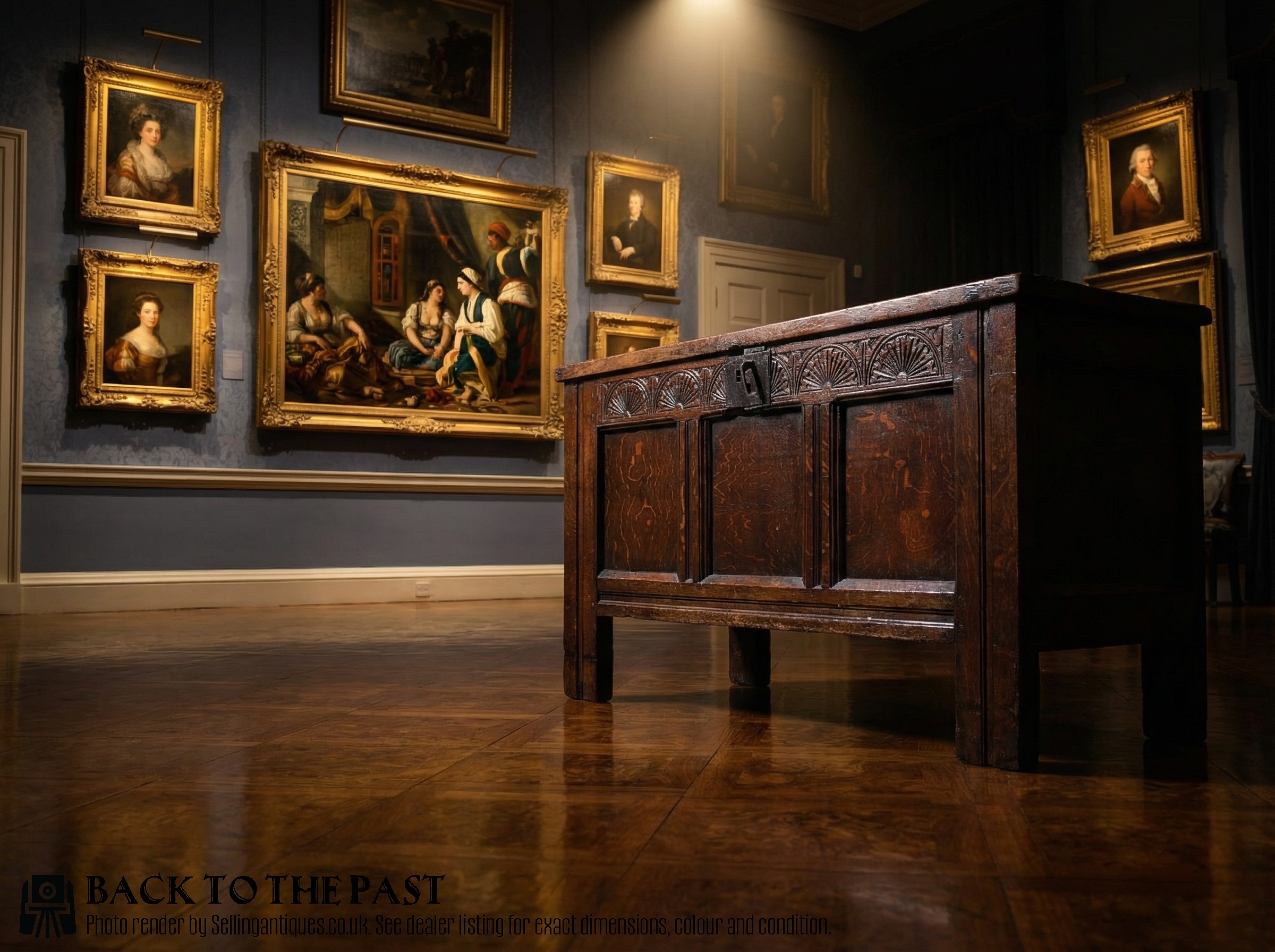
Materials and Construction
Makers relied primarily on native oak, supplemented by secondary timbers such as walnut, fruitwood, and assorted softwoods for internal framing or secondary panels. Boards were frequently cleft or quarter-sawn to expose the characteristic silver grain figure of the wood.
Construction relied on mortise and tenon joints secured with wooden pegs, forming rigid frames that accommodated seasonal wood movement without failing. Applied geometric mouldings, often in walnut or ebony-stained wood, created contrasting panel fronts on case pieces.
Hardware consisted of hand-forged iron hinges, latches, and complex steel locks, occasionally accompanied by brass drop handles and escutcheons on later drawer fronts.
Charles II Oak Chest Retail Price Guide 2026
Typical asking prices for charles ii oak chest among the pieces listed under this phrase on Sellingantiques today, from the lower quarter to the upper quarter. They describe what is for sale here now, not the wider market.
Surviving pieces frequently incorporate geometric mouldings, scratch carving, and original steel locks.
Assessing Quality
Quality rests on the integrity of the original construction and the survival of primary surfaces, such as untouched timber patination and period hardware. Pieces retaining their original feet, stands, and backboards command greater interest among collectors.
The sophistication of the joinery distinguishes standard utility furniture from finer examples, particularly where intricate geometric mitres, scratch-carved details, or marquetry inlay are executed with precision. Proportions also dictate value, with smaller coffers and two-part chests being less common than large storage trunks.
The Charles II Oak Chest Glossary
- Coffer
- A heavy wooden storage chest with a hinged lid, typically constructed using frame-and-panel techniques. These boxes served as versatile furniture for sitting or storing valuables.
- Mule chest
- A storage chest featuring one or more drawers at the base beneath the main compartment. They bridge the evolution between the traditional coffer and the chest of drawers.
- Geometric moulding
- Applied strips of wood arranged in repeating rectilinear patterns on drawer fronts or panels. This technique defined much of the decorative vocabulary during the late seventeenth century.
- Quarter-sawn
- A method of cutting logs radially from the centre to the bark, producing stable boards with a decorative grain pattern. This cut minimises warping in large panels.
- Bible box
- A small, sloped-lid desk or box designed to hold sacred texts and writing implements. They frequently rest on tabletops or dedicated stands.
Charles II Oak Chest: Frequently Asked Questions
How do I date a charles ii oak chest?
Dating relies on examining construction methods, timber preparation, and decorative motifs such as geometric mouldings or scratch carving. Tool marks left by pit saws and hand chisels help distinguish seventeenth-century work from later reproductions.
Hardware placement and lock mechanisms also provide chronological clues, as hand-forged iron and complex steel locks were standard during the Carolean era.
Were these chests used for clothing?
Households utilised these pieces primarily for storing heavy woollen garments, household linens, blankets, and valuable documents. The dense oak construction and tight lids helped protect contents from moths, dust, and damp conditions.
As chests of drawers developed towards the end of the century, garments were sorted more easily into sliding tiers rather than packed into deep top-opening trunks.
How should I care for seventeenth-century oak?
Maintain stable indoor humidity and temperature levels to prevent the ancient timber from drying out or splitting. Avoid placing the wood near direct heat sources or in prolonged direct sunlight.
Apply traditional beeswax sparingly to nourish the surface and preserve the historic patina without forming a glossy artificial barrier.
What is a two-part chest?
A two-part chest consists of an upper and lower cabinet section designed to stack together securely. This construction method made heavy drawer units easier to transport through narrow doorways and up winding staircases in seventeenth-century homes.
The separation point is usually concealed by a horizontal moulding running around the waist of the carcass.