
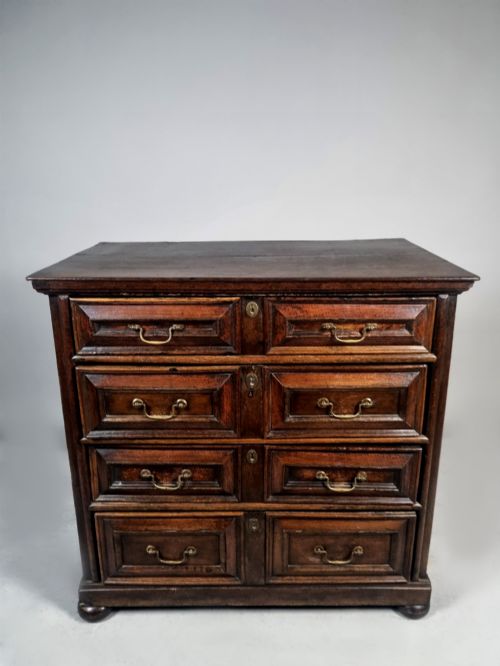
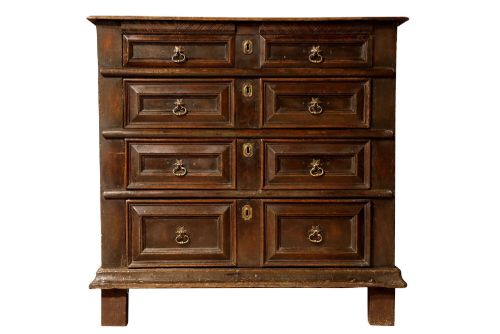
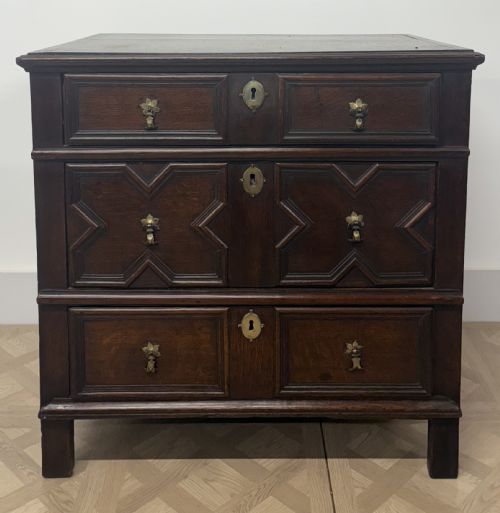
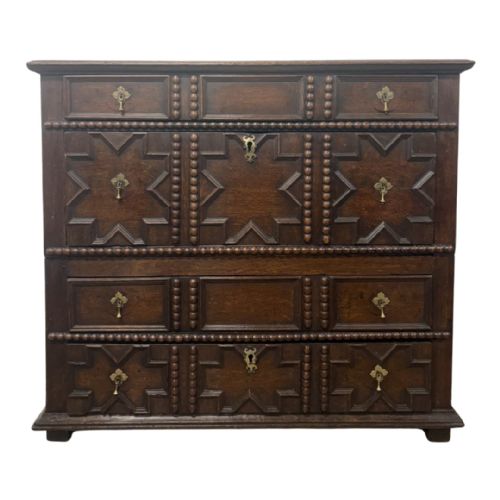
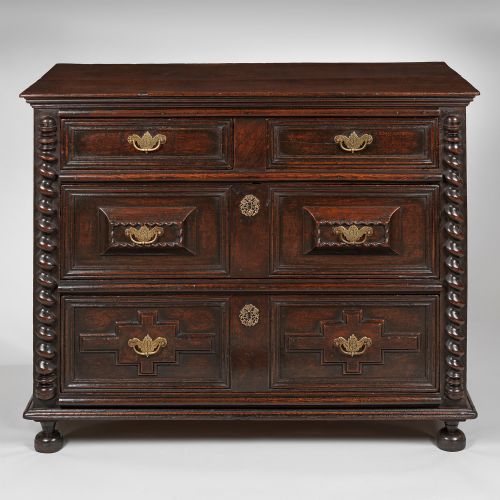


Charles II Geometric Chest
A charles ii geometric chest brings seventeenth-century architectural rigour to an interior through layered mouldings and timber construction.
Charles II Geometric Chest
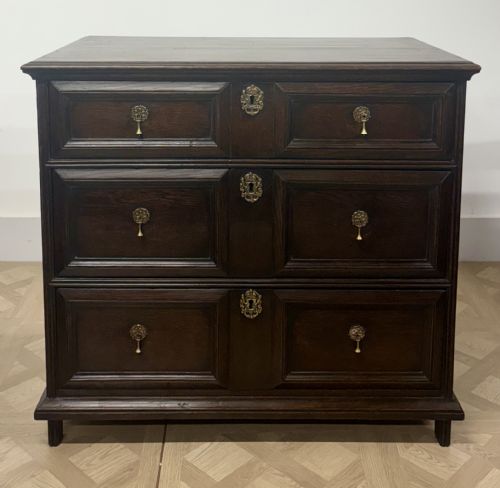
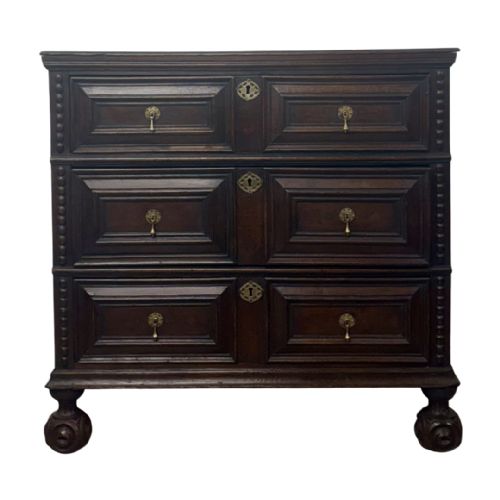
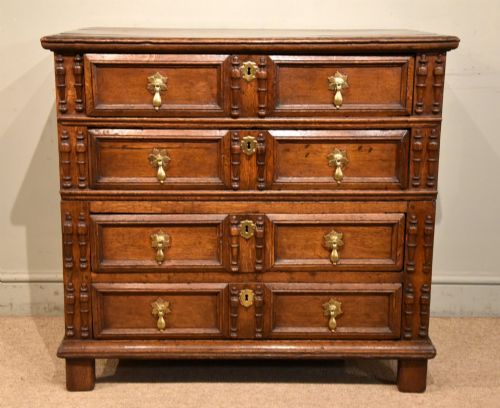
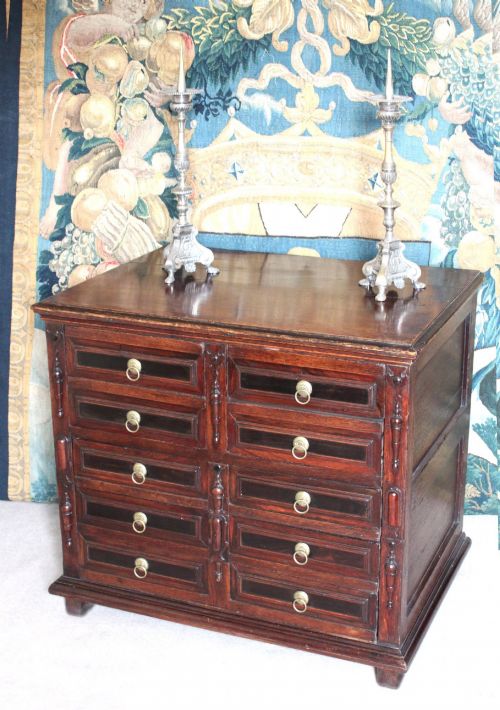
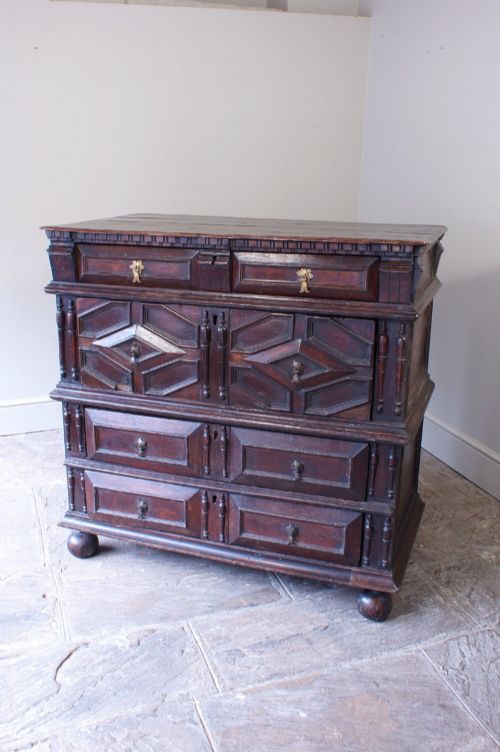
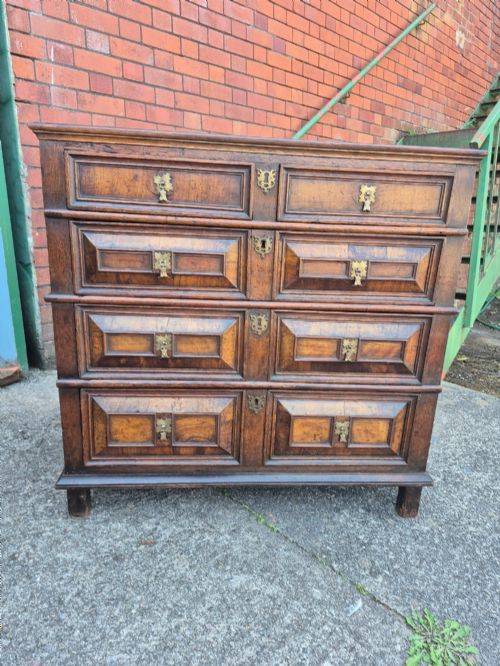
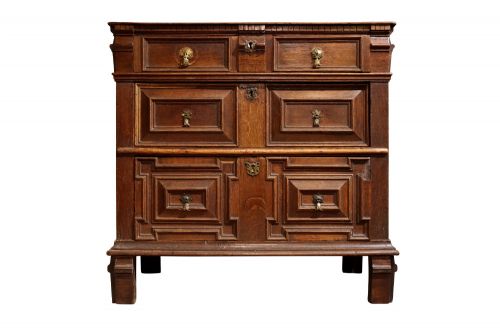
A charles ii geometric chest is fundamentally a storage piece built during the seventeenth century, most frequently taking the form of a chest of drawers or a two-part chest. These examples demonstrate the architectural joinery typical of the period, often categorised under Jacobean, Carolean, or Charles II and Restoration styles.
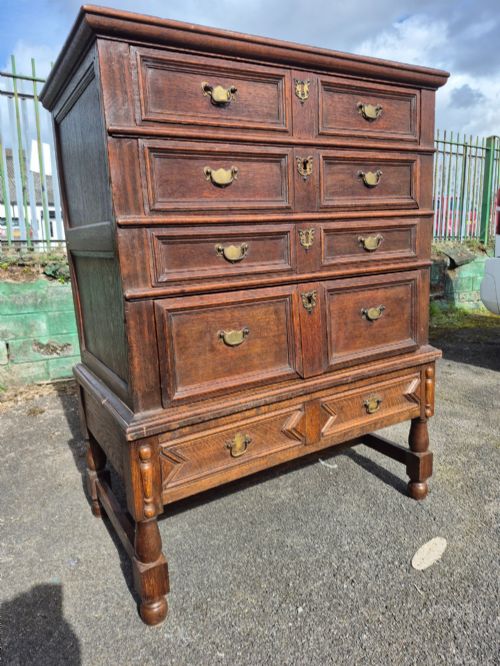
The version most commonly encountered on this page is constructed from oak, sometimes paired with walnut or fruitwood, featuring distinct geometric mouldings across the drawer fronts. Alongside standard chests of drawers, the selection incorporates variants such as chests on stands, enclosed chests, cabinets and cupboards, and safe boxes.
Makers of the era designed these pieces to serve as functional domestic furniture, utilising timber frames that often separate into two distinct sections for transportation. The influence of the seventeenth century remains visible in the substantial proportions and the deliberate arrangement of applied mouldings.
Distinctions in Standard
The upper tier of these pieces is distinguished by the crispness of the geometric mouldings and the intentional selection of contrasting timbers such as walnut and fruitwood against the primary oak. Finer examples retain their original two-part configuration and complex steel locks rather than relying on later alterations or replacements.
The integrity of the timber grain and the complexity of the applied geometric patterns separate standard regional examples from more ambitious pieces of the period. Subtle variations in the depth of the mouldings and the integration of auxiliary woods like cedar define the gradation within the surviving selection.
The listings on this page span the seventeenth century and the year 1700, showcasing forms built from oak, walnut, fruitwood, cedar, and iron.
The Charles II Geometric Chest Glossary
- Geometric chest
- A storage piece characterised by applied raised mouldings on the drawer fronts arranged in geometric patterns. This style defines much of the cabinet-making seen in the latter half of the seventeenth century.
- Two-part chest
- A case furniture form constructed in two separate modular sections, allowing easier movement of heavy timber furniture. The upper and lower halves stack together to form a full chest of drawers.
- Carolean
- The art and furniture style associated with the reign of King Charles II, spanning the mid-to-late seventeenth century. It follows the Jacobean period and embraces more complex surface ornamentation.
- Moulded front
- A decorative facade treatment where shaped strips of wood are applied to flat surfaces to create depth and shadow. These mouldings form the signature geometric layouts of the era.
Charles II Geometric Chest: Frequently Asked Questions
What is a geometric chest?
A geometric chest is a seventeenth-century storage piece defined by applied wooden mouldings arranged in repeating patterns across the drawer fronts. These patterns create a textured, architectural facade.
Craftsmen built these pieces primarily in oak and walnut, reflecting the design sensibilities of the Charles II period. They remain distinctive examples of early English joinery.
How were these chests used?
These pieces served as domestic storage for textiles, valuables, and household goods during the seventeenth century. The compartmentalised drawers allowed owners to organise their belongings securely.
Many examples were built in two parts to facilitate transport between residences by wealthy households. Some incorporate complex steel locks to safeguard particularly prized possessions.
How do I date a seventeenth-century chest?
Dating relies on observing construction methods, timber selection, and stylistic markers such as applied geometric mouldings. Pieces from this era typically employ solid oak framing combined with period hardware like iron and brass.
Comparing the drawer construction and carcass assembly helps distinguish seventeenth-century work from later reproductions. Secondary woods like cedar and fruitwood also provide contextual clues.
How do I live with one?
Integrating an antique chest into a modern interior requires stable room humidity and protection from direct heat sources. Solid oak and walnut furniture responds best to consistent environmental conditions.
The strong architectural lines of geometric mouldings allow these pieces to function as focal points in hallways, living rooms, or bedrooms while providing practical storage.