



Ceramic Lion Ornament
These ceramic lion ornament pieces bring spirited presence into a room, spanning Staffordshire pottery figures and heavy terracotta garden sculptures.
Ceramic Lion Ornament
A ceramic lion ornament brings sculptural character to an interior or garden, taking the form of traditional hearth figures, bookends, and large patio sculptures. These pieces range from Staffordshire earthenware models to substantial Italian and English terracotta figures.
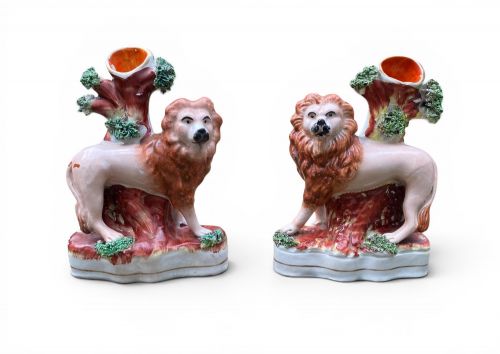
Victorian Staffordshire pottery examples dominate the available selection, often appearing in pairs with treacle or lead glazes. Collectors also encounter Japanese Kutani models, Chinese sancai figures, and German tin-glazed earthenware.
Forms vary from recumbent bookends and spill vases to imposing garden sculptures and architectural masks. The diverse origins span English potteries, European kilns, and Asian workshops across the eighteenth, nineteenth, and early twentieth centuries.
How they were made
Potters shaped these figures using earthenware, terracotta, and pearlware clays, often utilising moulds for Staffordshire pottery and hand sculpting for larger garden sculptures. Kiln firing prepared the clay bodies to receive decorative coatings.
Glazing techniques defined the surface finish, employing lead glazes, treacle glaze, tin glaze, copper lustre, and enamel paint. These liquid glass coatings were applied before a second firing to seal the ceramic body and add colour.
Terracotta pieces relied on porous clay fired at moderate temperatures, suited to both interior display and garden placement. Earthenware figures received glossy lead or treacle finishes to create reflective coats over moulded details.
The selection includes forms from nineteenth-century English potteries alongside Japanese Kutani models and Chinese sancai figures.
What varies in quality
Glaze application and consistency set apart superior pieces, whether through an even copper lustre, rich treacle coating, or precise enamel painting. Surface wear and firing variations reveal the age and original workshop standards of each piece.
Rockingham Pottery·Lancaster and Sons of Hanley·Hurlford Kilmarnock
The Ceramic Lion Ornament Glossary
- Medici Lion
- A classical lion sculpture form modelled after the ancient marble pair in Florence, featuring one paw resting on a sphere. These designs heavily influenced nineteenth-century Staffordshire and terracotta makers.
- Treacle Glaze
- A dark, translucent brown lead glaze that pools richly in the recesses of earthenware figures. It imparts a glossy, treacle-like appearance popular on Victorian pottery.
- Terracotta
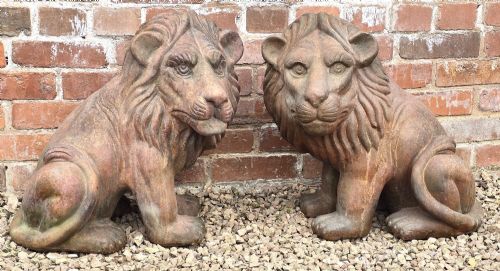
- Fired unglazed or slip-coated clay ranging from buff to deep orange-red, frequently utilised for substantial garden statues and architectural ornaments. The material weathers naturally outdoors.
- Pearlware
- A refined earthenware developed in the late eighteenth century featuring a pale bluish-white glaze that pooled slightly blue in crevices. It served as a smoother canvas for underglaze painting.
- Spill Vase
- A hollow ceramic figure incorporating an attached cylinder designed to hold wooden spills for lighting candles and fires. These functional vessels were standard household items on Victorian mantelpieces.
Ceramic Lion Ornament: Frequently Asked Questions
How do I care for terracotta lions?
Terracotta garden sculptures require protection from severe winter frost to prevent the porous clay from cracking as absorbed moisture freezes. Placing them on stone bases keeps them clear of damp soil.
Indoor terracotta and glazed earthenware need only occasional dusting with a dry cloth. Avoid harsh chemical cleaners that can damage historic glazes or aged clay surfaces.
Are these figures glazed or unglazed?
Finishes vary by origin and intended placement, with indoor Staffordshire figures receiving glossy lead, tin, or treacle glazes. These smooth coatings protected the earthenware and added bright decorative colour.
Larger garden sculptures are typically formed from terracotta, leaving the fired clay porous and matte. Some decorative pieces combine unglazed terracotta bodies with lustrous painted or glazed details.
What are spill vases used for?
Spill vases combined a decorative ceramic animal figure with an upright cylindrical holder designed to store thin wood tapers. Before matches were common, people used these tapers to transfer flames from the hearth.
Placed on mantelpieces, they kept spills tidy and accessible while doubling as domestic ornaments. The lion figures added strength and sculptural interest to this everyday household object.