


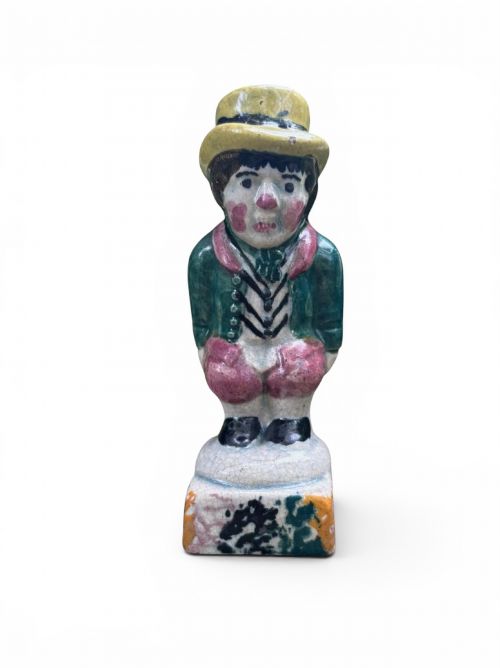
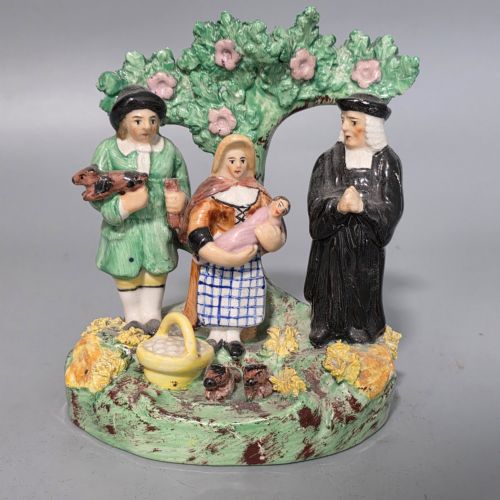


Georgian Pearlware Figure
A georgian pearlware figure brings tactile earthenware warmth and crisp polychrome enamel to a mantelpiece, offering an enduring piece of early pottery history.
Georgian Pearlware Figure
When you search for georgian pearlware figure, you enter a world of decorative ceramic sculptures, spill vases, and pepper pots produced during the eighteenth and nineteenth centuries. The pieces on this page span the Georgian and Regency styles, showcasing subjects ranging from literary groups and biblical scenes to animals and portrait busts.
The most common formats you will encounter are Staffordshire and Yorkshire figures set upon flat or slightly raised bases, often modelled as pairs or single figures. These span periods from the late eighteenth century through to the early Victorian era, reflecting the rich output of English potteries during the height of earthenware production.
How they were made
Makers formed these objects using refined earthenware clay, which was then coated in a characteristic pearlware glaze designed to mimic the whiteness of Chinese porcelain through a subtle bluish pooling in the recesses. Artisans applied vibrant enamel pigments by hand to highlight details on garments, animals, and architectural elements before a final firing.
Potters utilised moulds to shape the bodies of animals, human figures, and utilitarian forms like pepper pots and creamer milkmaids. The combination of pressed ceramic bodies, liquid glazes, and hand-painted colours created the distinctive tactile finish visible across the range.
The listings on this page span multiple periods including the eighteenth century, the nineteenth century, and the Victorian era, utilising earthenware and glazed ceramic.
What varies in quality
The depth and consistency of the pearlware glaze also distinguish finer output, where the characteristic bluish tint pools evenly without obscuring the underlying detail. Pieces originating from known workshops or specific identified modellers often display a superior balance of proportion and anatomical accuracy.
Ralph Wood·Lakin & Poole·Enoch Wood factory
The Georgian Pearlware Figure Glossary
- Pearlware
- A refined earthenware body developed in the late eighteenth century featuring a subtle bluish glaze that sat over a whitish slip. This innovation aimed to provide an affordable alternative to true porcelain.
- Spill vase
- A hollow cylindrical ceramic holder designed to keep wooden spills or matches for lighting candles and fires. These are frequently incorporated into the background of figural groups.
- Prattware
- Earthenware decorated with specific underglaze metallic oxide colours, typically blue, ochre, brown, and green, often associated with northern potteries. The pigments fused directly into the glaze during firing.
- Flat base
- A characteristic form of underside lacking a recessed footring, commonly found on early Staffordshire figures produced before the widespread adoption of hollow, glazed undersides.
Georgian Pearlware Figure: Frequently Asked Questions
What is a pearlware figure?
A pearlware figure is an earthenware ceramic sculpture produced in Britain during the late eighteenth and nineteenth centuries, finished with a pale bluish glaze.
These pieces depict human characters, animals, and mythological or biblical scenes, hand-painted with coloured enamels.
How were these figures used?
Most pieces served as decorative ornaments displayed on mantelpieces, sideboards, and tables in domestic interiors.
Some specialised forms, such as spill vases, pepper pots, and creamer milkmaids, combined decorative figural sculpture with practical household utility.
How can I tell the period?
Dating relies on stylistic markers such as Georgian or Regency drapery, modelling conventions, and the characteristic blue tint of the pearlware glaze.
Earlier pieces from the late eighteenth century often feature distinct colour palettes and simpler flat bases compared to nineteenth-century examples.
What subjects do they show?
The subjects range widely across popular culture, literature, religion, and pastoral life, including lions, sheep, milkmaids, and literary characters.
Many were produced in symmetrical pairs representing characters from stories, contemporary theatre, or moral tales.