



Antique Earthenware Lion
An antique earthenware lion brings domestic Staffordshire pottery and international ceramic figures together in robust forms that anchor any mantelpiece.
Antique Earthenware Lion
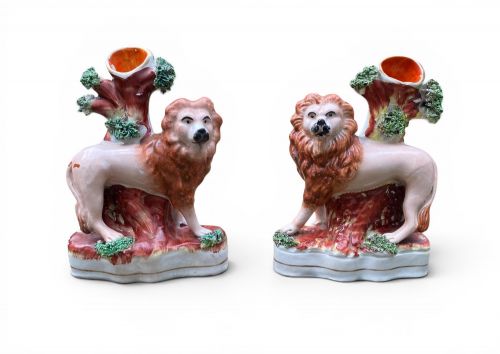
The antique earthenware lion spans Staffordshire figures, jelly moulds, and spill vases produced across the nineteenth century. Buyers encounter pairs of recumbent beasts alongside standing models and spirited Medici types.
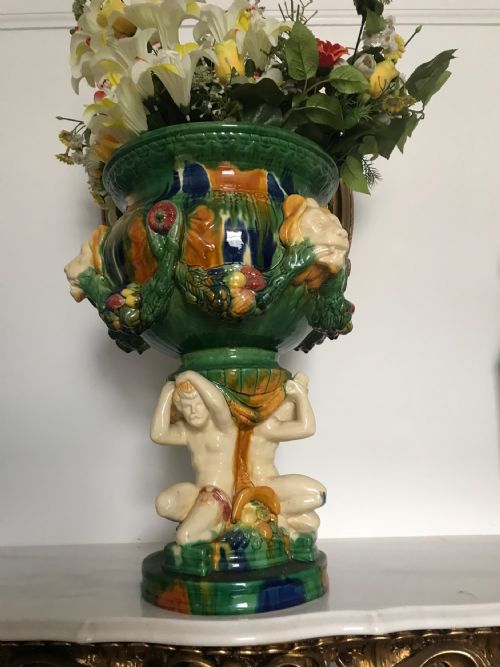
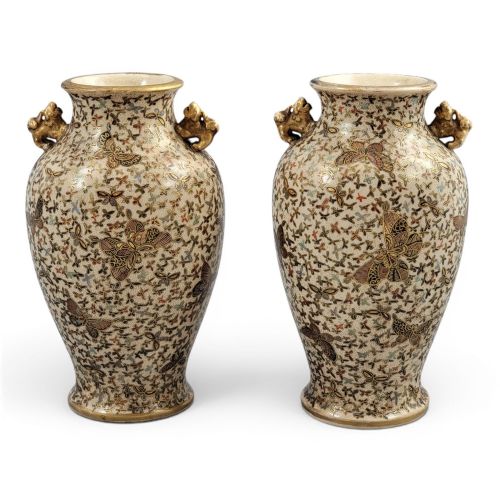
English pottery dominates the selection, particularly Staffordshire figures finished with treacle glaze or cream glazes. Continental and Asian works appear through Italian majolica planters, German tin-glazed pieces, and Japanese Satsuma models.
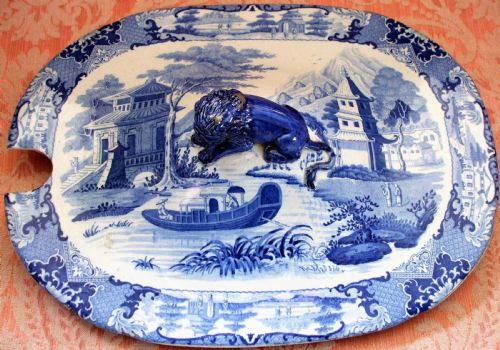
Moulded ceramic bodies define these figures, whether shaped as sugar bowl handles, tureen covers, or standalone decorative ornaments. The nineteenth century yields the highest volume of domestic examples on this page.
How they were made
Potters shaped these earthenware figures using press moulds or slip casting before applying surface decoration. Glazes ranged from simple cream finishes to rich treacle, tin glazes, and polychrome enamels.
Firing in traditional kilns set the earthenware body beneath various protective coats. Artisans added details through hand-painted enamel, blue and white transfer printing, or occasional gilding.
Victorian Staffordshire lions often sport remarkably serene human-like expressions that suggest the potter modelled them after local household cats.
What varies in quality
The application of glaze and enamel dictates visual depth, separating routine factory output from finer modelled pairs. Hand-painted touches and well-balanced colour distribution elevate individual figures.
Robert Hamilton·Kinzan·Minton·Rogers·Lancaster and Sons of Hanley
The Antique Earthenware Lion Glossary
- Medici lion
- A classical sculptural pose derived from the ancient marble lions in Florence. Staffordshire potters frequently adapted this majestic stance for earthenware figures and spill vases.
- Pearlware
- A refined fine earthenware developed in the late eighteenth century with a bluish-white glaze. It served as a smooth canvas for transfer-printed and painted decoration.
- Majolica
- A heavy earthenware covered in an opaque lead glaze and painted with coloured metal oxides. This technique produced vibrant planters, jardinieres, and figural bases.
Antique Earthenware Lion: Frequently Asked Questions
How do I display an antique earthenware lion?
Place pairs symmetrically on mantelpieces, sideboards, or bookshelves where their weight anchors the display. Ensure they sit out of direct sunlight to protect enamel and glaze surfaces over time.
Keep them away from damp areas that might affect the underlying porous earthenware. Dust them gently with a dry cloth rather than using liquid cleaners.
What is the difference between Staffordshire figures and jelly moulds?
Staffordshire figures are solid or hollow decorative ornaments designed purely for display on tables and mantelpieces. They capture lions in recumbent or standing poses with detailed glazes.
Jelly moulds are functional kitchenware shaped on the interior to impress jellies or blancmanges. They utilise cream or earthenware glazes intended to withstand culinary use.
Are all these lions of English origin?
English Staffordshire potteries produced the majority of the decorative figures and jelly moulds listed here. However, the selection also includes international works from German, Italian, and Japanese kilns.
Continental majolica planters and Japanese Satsuma or Kutani Shishi figures introduce different stylistic interpretations. Each regional tradition employs distinct glazing methods and clay bodies.